
 Worksheets
Exam U1 and 2 revision
Total questions: 68
Worksheet time: 1hrs 25mins
Diffusion is the net movement of molecule from a region of ...1...to region of ...2....
1: lower concentration, 2: higher concentration
1: higher concentration, 2: lower concentration
1: lower concentration, 2: lower concentration
1: higher concentration, 2: higher concentration
Osmosis is the passage of ...1... molecules from a region of their higher concentration to a region of their lower concentration through a ... 2 ... permeable membrane
1: sugar, 2: completely
1: sugar, 2: partially
1: water, 2: completely
1: water, 2: partially
Active transport is movement of particles through the cell membrane from a region of ...1... to a region of ...2... using energy in the form of ...3...
1: lower concentration, 2: higher concentration, 3: NADPH
1: higher concentration, 2: lower concentration, 3: NADPH
1: higher concentration, 2: lower concentration, 3: ATP
1: lower concentration, 2: higher concentration, 3: ATP
A phospholipid has two parts. What are they called?
Hydrophilic Head, Hydrophobic Tail
Hydrophobic Head, Hydrophilic Tail
Which of the following molecules pass easily through the cell membrane, requiring little extra help or energy? Select all that apply.
sodium
glucose
oxygen
carbon dioxide

Select all that apply.
Plasma membranes are composed of a bilayer of phospholipids with ________, _________, and ________ embedded within.
proteins
carbohydrates
DNA
cholesterol

What do E and F represent?
phosphlipids
carbohydrates
membrane proteins
cholesterol

After examining this diagram showing the concentration of water inside and outside of the cell, identify the tonicity of the solution.
hypertonic
hypotonic
isotonic

After examining this diagram showing the concentration of water inside and outside of the cell, identify the tonicity of the solution.
isotonic
hypotonic
hypertonic

This egg has shrunk, what type of solution was it placed in?
hypotonic solution
hypertonic solution
isotonic solution
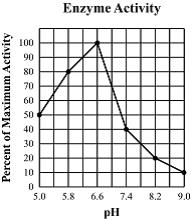
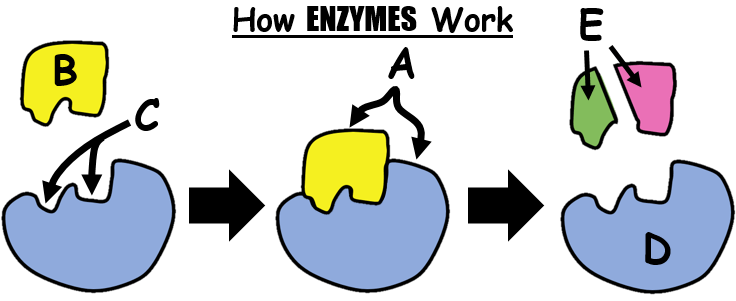
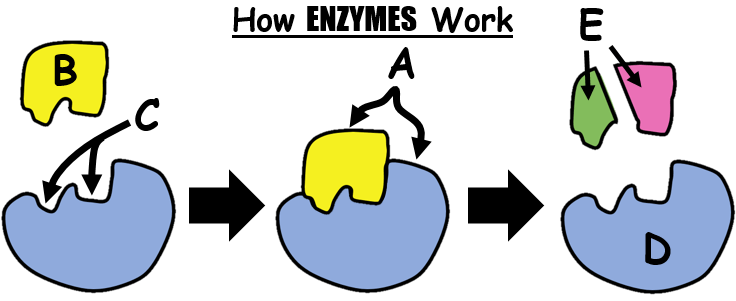
What happens to an enzyme when it denatures?
The activation energy of the reaction is doubled.
The activation energy of the reaction is lowered.
It's optimal conditions for temperature of the enzyme are doubled.
The shape of the enzyme molecule is changed.
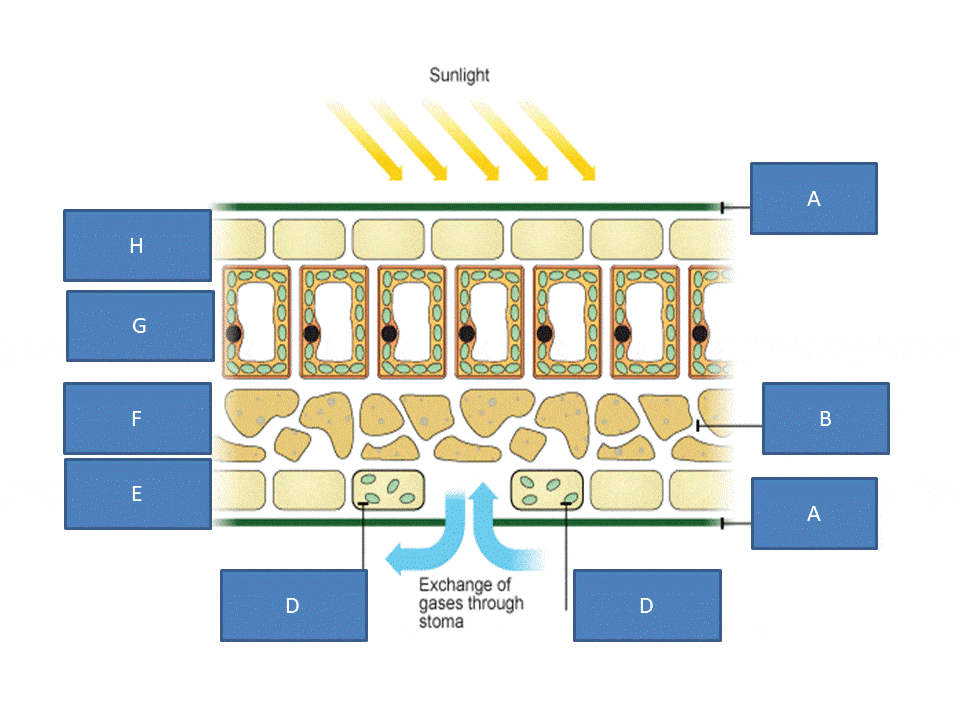
What is the name of the elongated, packed cells (part G) directly under the upper epidermis?
Palisade cells
Guard cell
Spongy layer
Lower epidermis
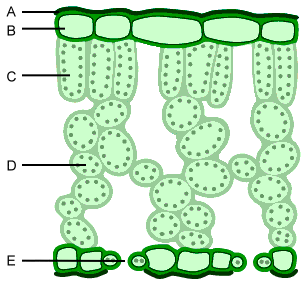
What is letter "D" pointing to?
upper epidermis
palisade mesophyll
spongy mesophyll
bundle sheath
Most photosynthesis occurs in this part of the leaf:
upper epidermis
cuticle
palisade mesophyll
spongy mesophyll
Which of the following is NOT a product of the light reactions?
Oxygen
NADPH
ATP
Glucose (Sugar)
Most hormones are ________.
regulated by a positive feedback mechanism
classified as steroids
released upon stimulation by other hormones
controlled by blood levels of ions or nutrients
Water-soluble hormones, such as proteins and peptide hormones, activate target cells using ________.
direct gene activation
the second-messenger system
steroid hormone action
diffusion
How would you classify a hormone that is made from cholesterol, such as a sex hormone?
steroid hormone
amine hormone
peptide hormone
protein hormone
In the second-messenger system, what serves as the first messenger?
cyclic AMP (cAMP)
DNA
ATP
the hormone
Being lipid soluble, steroids can do all the following EXCEPT ________.
diffuse through the plasma membranes of target cells
catalyze a reaction that produces cyclic AMP (cAMP)
enter the nucleus
bind to receptor proteins within the nucleus

When food is scarce ( not much available), bears hibernate.What type of adaptation is this?
Structural and Behavioral
Physiological and Behavioral
Physiological and Structural


Plants grow towards sunlight to help them acquire as much sunlight as possible.
behavioral
structural
Which type of tissue stores fat for heat, primarily in infants and hibernating mammals?
White areolar tissue
Brown adipose tissue
Grey adipose tissue
Yellow areolar tissue
A --> B + C
Anabolic
Catabolic
Net release of energy
endergonic
exergonic
Which hormone stimulates reabsorption of water by the kidneys?
Insulin
Glucagon
Antidiuretic hormone
Thyroxine
Upregulation can be defined as:
when a cell is prompted to produce more of a particular cellular component, such as enzymes or receptors.
prompting cells to produce all possible hormones in a hormone flush.
when a cell is prompted to produce less of a particular cellular component, such as enzymes or receptors.
inhibiting cells from producing any hormones until a downregulation trigger is received.
Which hormone is antagonistic to insulin?
Calcitonin
Glucagon
Prolactin
Thyroid hormone
Which item listed below is not involved in some way in signal transduction for the cell?
Protein kinase
Small cyclic nucleotide
Membrane receptor protein
phosphorylated protein
None of the above

What is the name of the part of the neuron that is pointed out in the image?
Cell Body (Soma)
Axon
Myelin Sheats
Dendrites
The extension that transmit electrical impulses from the som to other parts is:
Myelin Sheaths
Soma
Dendrites
Axon
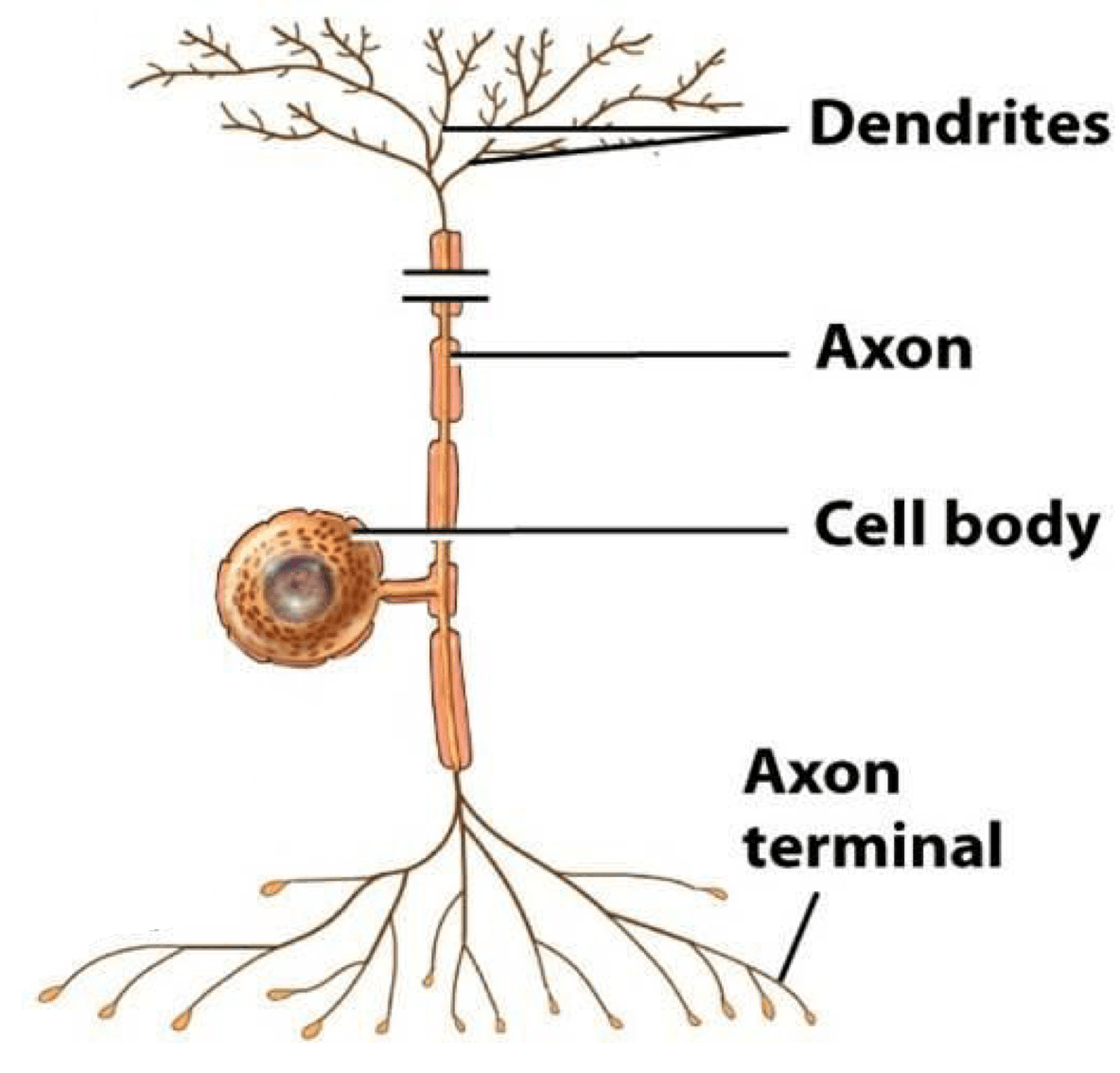
What type of neuron is represented on the image?
Motor Neuron
Interneuron
Sensory Neuron
Type of neuron that perceive information about your environment.
Motor Neuron
Interneuron
Sensory Neuron

According to the feedback loop, what does high blood sugar promote?
Insulin Release
Glucagon Release
Insulin Uptake
Glycogen Uptake
Three ways you body can lose heat
Evaporation of sweat
Warm air exhaled out
Hairs becoming erect
Vasodilation

Recall where in the nephron reabsorption of glucose occurs.
Loop on Henle
Bowman's capsule
Proximal convoluted tubule
Distal convoluted tubule

Recall where in the nephron reabsorption of water using a counter current system occurs.
Collecting duct
Bowman's capsule
Loop of Henle
Urethra
After the process of filtration, the filtrate enters into the proximal convoluted tubule where most of the water, amino acids, and glucose are...
stored in the bladder
excreted through the ureters
reabsorbed
concentrated in the urine
Where are you at in your revision?
Well and truly done
Nearly there
Have not started

