wayground logo

Free Printable Worksheets

Font size

S
M
L
XL
Worksheets

BiOnline

Total questions: 91

Worksheet time: 2hrs 49mins

Name
Class
Date
1.
A colorless, odorless gas that decreases the blood's ability to carry oxygen.  Can cause faintness, death.
a)
Nitrogen oxides
b)
Ground-level ozone
c)
Carbon monoxide
d)
Sulfur dioxide
2.

The Clean Air Act- regulates vehicle emissions.

a)

true

b)

false

3.
Used on factory stacks to remove gases and particulate.
a)
Filters
b)
Emission reducers
c)
Scrubbers
d)
Filter Strips
4.

______________ ______________ is produced when fuels containing sulfur are burned in the presence of oxygen.

a)

Carbon dioxide

b)

Sulfur dioxide

c)

Carbon monoxide

d)

Greenhouse gas

5.

Source of carbon monoxide

a)

Incomplete combustion of fossil fuels

b)

Combustion of fossil fuels

c)

Decomposition of plant and animal matters

d)

Photochemical reaction of CO2

6.
An air pollution prevention mechanism found in vehicles. 
a)
combustion chamber
b)
electrostatic precipitator
c)
scrubber
d)
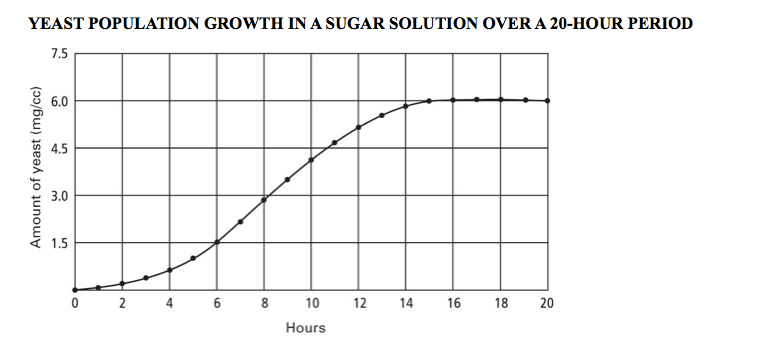
catalytic converter
7.
An air pollution prevention mechanism found in vehicles. 
a)
combustion chamber
b)
electrostatic precipitator
c)
scrubber
d)
catalytic converter
8.
What is a primary pollutant? 
a)
pollutant that is put directly into air by human activities
b)
pollutants that react with other primary pollutants
9.

A type of pollution found both indoors and outdoors, which includes pollen, dander, soot, carbon, and dust.

a)

Water droplets

b)

Allergens

c)

Particulate matter

d)

Combustibles

10.

Which of the following are examples of VOC's ? (Select 3)

a)

paint and paint thinners

b)

gasoline

c)

water vapor

d)

formaldehyde

e)

smog

11.

This primary pollutant creates a reddish brown gas creating photochemical smog and tropospheric ozone.

a)

sulfuric acid

b)

VOC

c)

nitrogen dioxide

d)

particulate matter

12.

This atmospheric compound is critical to the planet in its protection against UV radiation, but when found close to the ground is part of photochemical smog that can cause serious health problems.

a)

particulate matter

b)

carbon monoxide

c)

stratospheric ozone

d)

tropospheric ozone

13.

Electrostatic precipitators can be used to remove this type of air pollutant.

a)

volatile organic compounds

b)

sulfur dioxide

c)

particulate matter

d)

ground level ozone

14.

Which of the following is NOT a primary pollutant?

a)

nitric oxides

b)

smog

c)

sulfur dioxide

d)

volatile organic compounds

15.
What is a secondary pollutant? 
a)
pollutant that is put directly into air by human activities
b)
pollutants that react with other primary pollutants
16.

Which of the following government agencies is responsible for the Clean Air Act?

a)

the USGS

b)

the USDA

c)

the EPA

d)

the USDOJ

17.
Which two primary pollutants most often result in acid rain?
a)
sulfuric dioxide and nitric oxide
b)
carbon monoxide and VOCs
c)
ZEVs and VOCs
d)
carbonic acid and citric acid
18.

Which of the following is an example of a primary pollutant?

a)

Acid rain

b)

Ozone

c)

Carbon monoxide

d)

Asbestos

19.

What is the major cause for air pollution?

a)

deforestation

b)

oil spills

c)

transportation

d)

cigarretes

20.
Ozone and acid rain are both pollutants formed through reactions in the atmosphere. This makes them
a)
primary air pollutants
b)
secondary air pollutants 
c)
atmospheric transport
d)
atmospheric deposition
21.
Which of these problems can be caused by air pollution?
a)
Respiratory problems
b)
Reduced food sources for humans
c)
Increased disease for humans
d)
Decrease in global temperatures
22.
Acid rain can damage
a)
Drinking water sources
b)
Aquatic life
c)
Architecture/buildings
d)
All options are correct
23.
Increase in which gas is primarily responsible for increased global warming?
a)
Carbon dioxide
b)
Water vapor
c)
Methane
d)
Nitric oxides
24.
The ____________________ protects people from the effects of too much ultraviolet radiation.
a)
ozone layer
b)
smog layer
c)
cloud cover
d)
temperature inversion
25.
A colorless, odorless gas
a)
Nitrogen oxides
b)
Ground-level ozone
c)
Carbon monoxide
d)
Sulfur dioxide
26.
Pollution hanging over urban areas that causes reduced visibility is called
a)
Air pollution
b)
Temperature inversion
c)
Light pollution
d)
Smog
27.

The gradual downward flow of water that soaks into surface

a)

river

b)

erosion

c)

infiltration

d)

water uptake

28.

The water found in cracks and pores in sand, gravel and rocks below the surface

a)

sediment

b)

ground water

c)

ocean water

d)

surface water

29.

Smog or ground ozone forms in the troposphere. Which pollutants are most responsible for smog or ground ozone?

a)

sulfur and particulate matter

b)

volatile organic compounds and nitrogen oxides

c)

carbon monoxide and carbon dioxide

d)

none of these answers are correct

30.

What percentage of the Earth's fresh water is available to us?

a)

97 %

b)

7 %

c)

1 %

d)

50 %

31.

What word in the text tells us that the Earth's water supply is limited?

a)

Accessible

b)

Finite

c)

Degrading

d)

Jeopardizing

32.

An example of a waterborne disease is:

a)

Cholera

b)

Giardia

c)

Typhoid

d)

All of the above.

33.

We can prevent water pollution by:

a)

Reduce the use of plastic.

b)

Properly dispose of chemicals.

c)

Clean up after your animals.

d)

All of the above

34.

Canada's lakes have _____ % of the world's surface freshwater

a)

20

b)

60

c)

100

d)

0.03

35.

How much of water on Earth is FRESH SURFACE water?

a)

0.3%

b)

3%

c)

97%

d)

30%

36.

Where is the majority (>60%) of the world's surface freshwater?

a)

Canada

b)

Near unpopulated areas

c)

In large cities

d)

On islands

37.

How many gallons of water are used from Lake Michigan EACH DAY?

a)

100

b)

1 billion

c)

3 million

d)

1 million

38.

What is virtual water?

a)

Water on a computer screen

b)

Water that is salty

c)

Amount of water to create a product

d)

Water that is frozen

39.

Which of the following is NOT a major use of freshwater?

a)

Residential

b)

Agricultural

c)

Industrial

d)

Clouds

40.

Which of the following affects how freshwater is used?

a)

Age

b)

Population size

c)

Education

d)

GPA

41.

What is water used for in agriculture?

a)

As a pesticide

b)

Cleans crops

c)

Water parks

d)

Irrigation

42.

Which is true of air pollution and human health?

a)

Years of research link air pollution to lung diseases, birth defects, and cancer

b)

Air pollution is commonly listed as a cause of death.

c)

None of the health effects of air pollution are reversible.

d)

Healthy adults are most affected by air pollution.

43.

Acid precipitation can lead to all of the following EXCEPT…

a)

a decrease in a community’s standard of living.

b)

an increase in respiratory ailments.

c)

an increase of aquatic biodiversity.

d)

a destruction of historic monuments.

44.

Which of the following pH measurements of rainwater would indicate acid precipitation/rain?

a)

pH 6.0

b)

pH 4.1

c)

pH 7.3

d)

pH 9.6

45.

Which range indicates a base/alkaline?

a)

1-6

b)

8-14

46.

How do we call animals which are threatened with extinction _______________

a)

dangerous species

b)

endangered species

47.
How do Amphibians breath?
a)
Gills
b)
Blow Hole
c)
Gills and Lungs
d)
Lungs
48.
The fish shown in the pictures below is the Anglerfish. The stalk in front of its eyes is a flashing light that it uses to lure prey to its mouth. This structural adaptation enables the Anglerfish to survive in a very dark and deep aquatic habitat.
Where are anglerfish likely to be found? 
a)
A shallow freshwater lake
b)
An estuary or wetland area on the coast
c)
In the shallow water of a creek or stream
d)
The deep abyssal zone of the ocean
49.
Some mammals such as Moose, Deer, and Water Buffalos have defensive adaptations such as horns or antlers to fight predators. Males also use them to fight other males during mating season.
Select the choice that correctly describes the adaptations described in the narrative above. 
a)
The antlers and horns are structural adaptations, and the fighting is a behavioral adaptation.
b)
 These mammals are carnivores that use their antlers to attack and kill their prey.
c)
Antlers are examples of behavioral adaptations used by Moose and Deer
d)
Deer and Moose antlers are structural adaptations, but horns are not. 
50.
Variation happens as a result of the exchange of genetic information as it is passed fromparent to offspring.Which of the following is true about inherited variation?
a)
Variation can influence the resources that are available to an organism.
b)
Variation can influence whether organisms are more likely to survive to reproduce.
c)
Variation can influence the amount of rainfall in an ecosystem
d)
Variation can influence the amount of available food in an ecosystem
51.
In a population of spiders there are three different sizes: small, medium, and large.
---The large spiders are easily seen by predators.
---Small spiders have a difficult time finding food.
What will most likely happen to this population of spiders after many generations?
a)
Small and large spiders will mutate
b)
Medium spiders will be the most plentiful
c)
Large spiders will learn to hide from predators
d)
Small and medium spiders will be the least plentiful
52.
The habitat of a moth species included trees with both light and dark colored bark.Therefore the moth species included both light and dark colored variants.Then the light-colored trees were wiped out by a disease, and within a few years nearly all the moths in this forest were dark colored. Which of the following choices BEST explains what happened?
a)
The light moths that survived all had dark offspring in order to adapt to the change.
b)
The dark moths were less visible to predators, so mostly light moths were eaten.
c)
The few light moths that survived did not mate, and therefore they had no offspring.
d)
The light moths changed their wing pigments to darker colors to avoid being eaten.
53.
Organisms need all of the following things EXCEPT
a)
Food
b)
Water
c)
Shelter
d)
Ability to hunt
54.
Which statement best explains how natural selection occurs?
a)
when adaptations help an organism reproduce and survive.
b)
when organisms are geographically isolated.
c)
when an organism’s offspring grow vestigial structures.
d)
when characteristics from the parent organism are inherited.
55.
Why is biodiversity important in fighting disease in food crops?
a)
It prevents one disease from wiping out an entire food crop.
b)
It prevents habitat loss of native species.
c)
It provides different foods for different populations.
d)
It prevents fungal disease from wiping out corn crops.
56.
Forests are often preserved to protect biodiversity. This helps preserve the unique characteristics of the organisms that live there. Sometimes these forests are divided into separate sections that are spread out instead of one continuous forest. This is known as forest fragmentation. Which types of organisms will be the least likely to be affected by forest fragmentation?
a)
herbivorous birds that are able to migrate great distances
b)
omnivores that hibernate in winter in order to conserve energy
c)
omnivores that burrow underground deep in to the soil.
d)
herbivorous mammals that are dependent upon specific plants for food
57.
If layer W is 100 million years old and layer Z is 500 million year old, how old is layer X?
a)
over 500 million years old
b)
under 100 million years old
c)
there is no way to estimate the age of layer X
d)
between 100 and 500 million years old
58.
The diagram below represents several sedimentary layers of Earth’s crust after erosion from a river has exposed some of the lower layers. 
Which would be the most significant benefit to a scientist studying Earth’s past at this location?
a)
Scientists would be able to determine that volcanic activity was present during the time of the oldest exposed sediment layer.
b)
Scientists would be able to determine if the rocks were metamorphic or igneous.
c)
Scientists would be able to determine if there was water at this location.
d)
Scientists would be able to look at fossilized remains of past life dating back to the oldest exposed layer of sediment.
59.
The diagram below shows a stack of rock layers.  
Layer R contains a well-known index fossil that is 100 million years old. Based on this information and the law of superposition, you can make the following claim.
a)
Layers T and M are younger than 100 million years.Layers X and G are older than 100 million years.
b)
Layers T, M, X, and G are all younger than 100 million years.
c)
Layers T, M, X, and G are all older than 100 million years.
d)
Layers T and M are older than 100 million years.Layers X and G are younger than 100 million years.
60.
During the early settlement of the United States, pioneers cut down large tracts of forests on the east coast to use for home construction, for firewood, and to create cleared spaces to plant crops.What was the most likely effect of this kind of action?
a)
decreased plant and animal diversity
b)
decreased human populations
c)
decreased carbon dioxide production
d)
increased organism biodiversity.
61.
Shawn is planning a scientific experiment. He wants to learn whether the time of day has an affect on how far the rose petals in his mother’s rose garden open. He plans to measure the diameter of each flower every hour during a sunny day in the spring.What is the independent variable in Shawn’s experiment?
a)
the number of flowers
b)
the time of year
c)
the time of day
d)
the diameter of the flowers
62.
During the early settlement of the United States, pioneers cut down large tracts of forests on the east coast to use for home construction, for firewood, and to create cleared spaces to plant crops.What was the most likely effect of this kind of action?
a)
decreased plant and animal diversity
b)
decreased human populations
c)
decreased carbon dioxide production
d)
increased organism biodiversity.
63.

Biodiversity, aka biological diversity, usually refers to

a)

the same species in a general location

b)

the number of different species in a given area

c)

the number of animal species in a given area

d)

the number of plant species in a given area

64.

A population is

a)

a group of similar species in different areas

b)

a group of the same species in the same geographic area.

c)

a group of several species in the same geographic area

d)

a group of several species along with their abiotic factors in a small area.
65.
Which of the following will increase the size of a population?
a)
emigration and births
b)
immigration and deaths
c)
immigration and births
d)
emigration and deaths
66.
Diseases may spread more rapidly when an area is crowded, so disease is considered to be a
a)
type I survivorship curve
b)
population crasher
c)
density-dependent limiting factor
d)
population enhancer
67.
What type of growth is shown on this graph?
a)
logistic
b)
exponential
c)
average
d)
density-independent
68.
What type of population growth is shown in the graph?  
a)
logistic growth
b)
logical growth
c)
exponential growth
d)
density-dependent growth
69.
 What is the name for this leveling off shown in the graph?
a)
logistic line
b)
carrying capacity
c)
climax point
d)
mediocre
70.
When a population grows past the ecosystem's carrying capacity, what happens to the population?
a)
Continues to grow
b)
The population starts to die off to return to carrying capcity
c)
The population will go extinct due to lack of resources
d)
The population grows then finds a new carrying capacity
71.

Estimate the carrying capacity.

a)

100 deer

b)

80 deer

c)

60 deer

d)

40 deer

72.

What does the term carrying capacity describe?

a)

The maximum number of birth rates for a population.

b)

The ability of a population to accept new immigrants.

c)

The ratio of birth rates to death rates in a population.

d)

The population size that the environment can sustain.

73.

The lionfish is a venomous fish found primarily in the Red Sea and the Indian Ocean. In the 1990s, lionfish were accidentally released into the Atlantic Ocean, where they found abundant resources and favorable environmental conditions. Which of the following scenarios is most likely to result in the lionfish having a major impact on the communities into which they were introduced?

a)

With no natural predators, the lionfish population will become very large.

b)

Some native species of invertebrates will develop a resistance to lionfish venom.

c)

Random mating will allow the lionfish population to reach Hardy-Weinberg equilibrium.

d)

A virus that specifically infects lionfish will become more prevalent.

74.

There is strong evidence that two species of

cliff-dwelling birds have nested in the same

environment and fed in the same water for

thousands of years, with each having stable

population sizes. Based on this information,

which of the following statements is the best

conclusion?

a)

The two birds compete for food.

b)

One species will displace the other.

c)

The two birds have different ecological niches that allow coexistence.

d)

One species eats a more diverse diet than the other does.

75.

An organisms population growth is shaped by its reproductive pattern. Which combination of traits characterizes a rapid life history pattern (r-species)?

a)

short life span, produces many offspring, small body size

b)

short life span, live in more stable environments, small body size

c)

long life span, produces many offspring, grows into adults slowly

d)

long life span, large body size, grows into adults slowly

76.
This population would be characterized as which kind of species?
a)
r-selected
b)
S-selected
c)
K-selected
d)
C-selected
77.

What factor describes when populations decrease because animals are moving out of a population?

a)

Emigration

b)

Limiting Factors

c)

Immigration

d)

Exponential Growth

78.
Melting of glaciers and polar ice caps....
a)
will result in cooler temperatures in the Arctic
b)
will result in sea-levels rising
c)
Will have no effect on ecosystems
d)
None of the above
79.
Food, water, sunlight, shelter, and space are resources that are often __________.
a)
limiting factors
b)
wet
c)
messy
d)
found in rocks
80.
What happened to the wolf population between 1980 and 1982?
a)
it increased rapidly
b)
it decreased rapidly
81.

true or false selective breeding is by man kind

a)

true

b)

flase

82.

true or flase naurtale slcetion is by man

a)

true

b)

false

83.

true or flase selective breeding took more than a 1000 years

a)

true

b)

flase

84.

how are the wanted animals keept alive

a)

cages

b)

not hunting them

85.

About 85% of Earth's plants are found in the ocean.

a)

True

b)

False

86.

There is no such thing as a carnivorous (eats meat) plant.

a)

True

b)

False

87.

The Amazon rainforest produces less than 10% of the Earth's oxygen.

a)

True

b)

False

88.

A large oak tree lets around 40,000 gallons of water evaporate out of its leaves in one year.

a)

True

b)

False

89.

Strawberries are the only fruit that has its seeds on the outside of its fruit.

a)

True

b)

False

91.

Plants can clone themselves.

a)

True

b)

False

91.

Plants can clone themselves.

a)

True

b)

False