wayground logo

Free Printable Worksheets

Font size

S
M
L
XL
Worksheets

Honors Biology (PreAP) - Units 1 & 2 Review

Total questions: 137

Worksheet time: 1hrs 26mins

Name
Class
Date
1.

The work of scientists generally begins with

a)

analyzing results

b)

drawing conclusions

c)

asking questions

d)

testing a hypothesis

2.

A well-tested explanation that is backed by experimental results is a (an)

a)

theory

b)

controlled experiment

c)

inference

d)

hypothesis

3.

The control group in an experiment is the

a)

point at which observations are made.

b)

one that does not receive any experimental treatment.

c)

careful measuring and recording of data.

d)

point at which variables are made.

4.

If you measure how acidic or basic a liquid is, you will find the value of the _____.

a)

inference

b)

weight

c)

metabolism

d)

pH

5.

The ability of an organism to maintain stable internal conditions is

a)

homeostasis

b)

a response to growth

c)

reproduction

d)

metabolism

6.

Which characteristic is shared by all living things?

a)

ability to move in response to the environment

b)

use of tiny organs to control cell processes

c)

ability to store hereditary information

d)

use of respiration for energy release

7.

Which of the following lists shows the level of biological organization from smallest to largest?

a)

cells, organisms, tissues, populations

b)

populations, organs, tissues, cells

c)

cells, tissues, organs, organisms

d)

organs, cells, tissues, organelles

8.

Snakes move onto a warm rock in the sun to heat up. What characteristic of life does this describe?

a)

homeostasis

b)

reproduction

c)

heredity

d)

interdependence

9.

Which organizational level includes all of the other levels?

a)

ecosystem

b)

cell

c)

biosphere

d)

organism

10.

Biology

a)

study of living things

b)

study of chemicals

c)

study of space

d)

study of soil

11.

Process of organizing and running experiments

a)

living things

b)

botany

c)

scientific method

d)

variables

12.

An educated guess

a)

hypothesis

b)

opinion

c)

inference

d)

theory

13.

The variable that a scientist is testing (can change)

a)

dependent

b)

control

c)

independent

d)

experimental

14.

The variable that a scientist is measuring

a)

dependent

b)

control

c)

independent

d)

experimental

15.

The process of testing a hypothesis

a)

experiment

b)

data collection

c)

conclusion

d)

inference

16.

A _________ compares your data to your hypothesis.

a)

experiment

b)

data

c)

graphs

d)

conclusion

17.

The group that receives no change.

a)

control

b)

experiemental

c)

tested

d)

metabolism

18.

The group that is being tested on.

a)

control

b)

experiemental

c)

tested

d)

metabolism

19.

DNA stands for

a)

do not apply

b)

deoxyribonucleic acid

c)

ribonucleic acid

d)

deoxycarbohydrate acid

20.

Regulating your temperature is an example of ____.

a)

metabolism

b)

response to stimuli

c)

homeostasis

d)

reproduction

21.

Running away in fear from a loud noise is an example of __.

a)

metabolism

b)

response to stimuli

c)

homeostasis

d)

reproduction

22.
All organisms need oxygen to be considered living. 
a)
true 
b)
false 
23.
Do all living organisms have a brain? 
a)
yes 
b)
no 
24.
Which of the following is a characteristic of all living things? 
a)
breathing 
b)
exhaling nitrogen 
c)
having a brain 
d)
reproducing 
25.
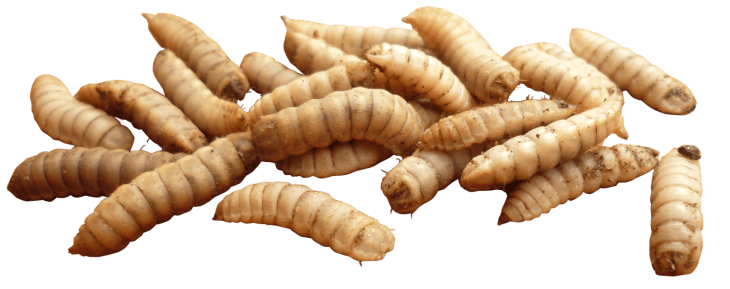
A maggot changing into a fly is an example of 
a)
reproduction.
b)
growth and development.
c)
homeostasis.
d)
evolution.
26.
What is the most basic unit of structure and function of all living things?
a)
cell
b)
tissue
c)
organ
d)
organ system
27.
Which of the following should be included in the characteristics of life?
a)
breathing
b)
locomotion
c)
photosynthesis
d)
adapting to the environment
28.
What is the term for any living thing?
a)
reproduction
b)
organism
c)
development
d)
homeostasis
29.
These combine to make an organism.
a)
cells
b)
control groups
c)
organ systems
d)
communities
30.
Living things do all the following EXCEPT:
a)
Respond to stimulus
b)
Grow and develop
c)
Maintain homeostasis
d)
They do not change
31.

Which of the following will make your data more reliable?

a)

Control group

b)

Constants

c)

Multiple Trials

d)

Correct Hypothesis

32.

The independent variable goes on the:

a)

x-axis

b)

y-axis

33.

The dependent variable goes on the:

a)

x-axis

b)

y-axis

34.

Which type of graph would best show data that changes over time?

a)

Line graph

b)

Bar graph

c)

Pic chart

d)

Scatter plot

35.

What is wrong with the graph?

a)

Missing axis label

b)

Should be a line graph

c)

Numbers are not in equal increments

d)

x and y axis need to be switched

36.

Identify the dependent variable.

a)

Color of the light

b)

Growth of the plant

c)

Number of plants

d)

Number of lights

37.

Identify the independent variable.

a)

Color of the light

b)

Growth of the plant

c)

Number of plants

d)

Number of lights

38.

Identify the independent variable.

a)

Number of push ups

b)

Day of the week

39.

Identify the dependent variable.

a)

Number of push ups

b)

Day of the week

40.

Identify the dependent variable.

a)

Number of students

b)

Month of the year

41.

Identify the independent variable.

a)

Number of students

b)

Month of the year

42.

This type of graph is used when comparing data by counting.

a)

Line graph

b)

Bar graph

c)

Circle graph

d)

Histogram

43.
What is the smallest unit of matter that cannot be broken down by chemical means?
a)
Atom
b)
Element
c)
Ion
d)
Isotope
44.
What is the strongest of all the bonding types?
a)
Covalent
b)
Ionic
c)
Hydrogen
d)
Metallic
45.
What are the four elements that all life is made up of?
a)
Hydrogen, Oxygen, Nitrogen and Carbon
b)
Helium, Oxygen, Neon and Carbon
c)
Hydrogen, Titanium, Carbon, Nitrogen
d)
Oxygen, Chlorine, Iron, Nitrogen
46.
This biomolecule is used to make energy for our cells. The simplest is glucose, a monosaccharide.
a)
Carbohydrates
b)
Lipids
c)
Nucleic Acids
d)
Proteins
47.
These biomolecules are fats, oils, waxes and steroids. They are also a result if we eat too many carbohydrates and why we don't melt in water.
a)
Carbohydrates
b)
Lipids
c)
Nucleic Acids
d)
Enzymes
48.
Examples of these biomolecules are DNA and RNA...
a)
Nucleic Acids
b)
Carbohydrates
c)
Lipids
d)
Proteins
49.
Nucleic Acids are made up of smaller subunits called....
a)
Nucleotides
b)
Lipids
c)
Monosaccharides
d)
Subunits
50.
These biomolecules are the main building blocks of you. They are large and complex and special ones do jobs all over your body as catalysts.
a)
Proteins
b)
Carbohydrates
c)
Lipids
d)
Nucleic Acids
51.
Proteins are made up of two things...
a)
Amino Acids and Peptide Bonds
b)
Amino Acids and Covalent Bonds
c)
Amino Acids and Hydrogen Bonds
d)
Amino Acids and Ionic Bonds
52.
How many Amino Acids does our body use to make proteins?
a)
20
b)
10
c)
6
d)
2
53.
What are special types of proteins that act as catalysts?
a)
Enzymes
b)
Lipids
c)
Polysaccharides
d)
DNA
54.
Enzymes make chemical reactions go faster by doing what?
a)
Lowering the activation energy of a reaction
b)
Making energy
c)
Absorbing energy
d)
Having a dance off with other enzymes
55.
Kayla has a cat with blue eyes. The color of her cat’s eyes is determined by deoxyribonucleic acid (DNA). The DNA directs which substance to construct these eyes?
a)
lipids
b)
water
c)
proteins
d)
carbohydrates
56.
Carbohydrates are made up of three of the six major molecules found in living things. The general chemical formula for a carbohydrate is CH2O. Which elements combine to make a carbohydrate?
a)
copper and cobalt
b)
chlorine and oxygen
c)
carbon, helium, and oxygen
d)
carbon, hydrogen, and oxygen
57.
When people eat foods high in proteins, such as meat, eggs and cheese, the body breaks down the proteins into smaller molecules. What is supplied to cells when the body breaks down proteins?
a)
amino acids
b)
nucleic acids
c)
phospholipids
d)
carbohydrates
58.
What are the four main types of molecules found in the cells of living things?
a)
carbohydrates, lipids, nucleic acids, and proteins
b)
lipids, nutrients, nucleic acids, and carbon dioxide
c)
carbon dioxide, hydrogen, oxygen, and various salts
d)
atoms, molecules, chemical compounds, and carbohydrates
59.
What type of molecule provides immediate energy in cells?  
a)
lipids
b)
proteins
c)
carbohydrates
d)
nucleic acids
60.
Animal cells have four main molecules that keep the body healthy. What type of molecule in animal cells provides a “map” for making proteins?
a)
lipids 
b)
proteins
c)
nucleic acids
d)
carbohydrates
61.
The cells in living things contain four main molecules that allow the cells to function. Which of these molecules cannot mix with water?
a)
lipids
b)
proteins
c)
nucleic acids
d)
carbohydrates
62.
Which of these statements best describes a molecule?
a)
All molecules must contain carbon and oxygen.
b)
All molecules must have two different elements.
c)
All molecules are made up of two or more atoms
d)
All molecules must have at least three different atoms.
63.
What 3 subatomic particles make up atoms?
a)
Isotopes, protons, covalent bonds
b)
quarks, quirks, compounds
c)
protons, neutrons, isotopes
d)
protons, neutrons, electrons
64.
The isotopes of an element all have the same number of:
a)
electrons
b)
neutrons
c)
protons
65.
A chemical ________ is a pure substance made entirely of 1 type of atom.
a)
element
b)
compound
c)
mixture
d)
blend
66.
The nucleus of an atom usually contains:
a)
protons and neutrons
b)
electrons
c)
electrons and protons
d)
isotopes
67.
The main types of chemical bonds are:
a)
ionic and subliminal
b)
covalent and hydrogenated
c)
ionic and covalent
d)
ionic and flourite
68.
A slight attraction between oppositely charged regions of nearby molecules are called:
a)
Van Der Waals forces
b)
ionic bonds
c)
covalent bonds
d)
hydrogen bonds
69.
The electrons involved in chemical bonds are called ___________ electrons.
a)
valence
b)
ionic
c)
Van Der Waals
d)
covalent
70.
Substances that dissociate in water and release hydrogen ions (H+)
a)
bases
b)
acids
c)
compounds
d)
ions
71.
Used to indicate acidity or alkalinity of a substance. Ranges from 0-14. Each unit has a 10 times difference in acidity or alkalinity
a)
acid scale
b)
base scale
c)
pH scale
d)
ion scale
72.
Which is NOT one of the four elements that make up over 90% of the human body
a)
Carbon
b)
Nitrogen
c)
Chlorine 
d)
Oxygen
73.
Which of the following is NOT true of atoms?
a)
They are composed of molecules.
b)
They can combine with other atoms.
c)
They make up elements
d)
They are extremely small
74.
A negatively charged particle moving around the nucleus of an atom
a)
neutron
b)
proton
c)
electron 
d)
ion
75.
What particle is found in the nucleus and has no charge?
a)
electron
b)
neutron
c)
proton
d)
atom
76.
An atom becomes negatively charged by
a)
gaining an electron
b)
losing an electron
c)
losing a proton
gaining a neutron
77.
The space surrounding the nucleus of an atom contains
a)
protons
b)
electrons
c)
neutrons
d)
ions
78.
Number of protons that an atom has
a)
Atomic symbol
b)
Atomic Number
c)
Atomic Mass
d)
Mass Number
79.
What determines the chemical properties of an atom?
a)
The number of protons in the nucleus
b)
Number of electrons in the outside shell
c)
The number of protons in the outside shell
d)
The number of electrons in the nucleus
80.
Two or more different atoms combined
a)
Molecule
b)
Compound
c)
Isotope
d)
Ion
81.
Bond created by electrical attraction between atoms (+ and -)
a)
Ionic bond
b)
Covalent bond
c)
Hydrogen bond
d)
van der Waals
82.
Attraction between slightly positive atom of one molecule to a slightly negative atom of another molecule 
a)
ionic bond
b)
hydrogen bond
c)
covalent bond
d)
van der Waals
83.
Bond created by the sharing of electrons
a)
Ionic Bond
b)
Hydrogen Bond
c)
Covalent Bond
d)
van der Waals
84.
A charged atoms (caused by gain or loss of electrons)
a)
Ion
b)
molecule
c)
element
d)
compound
85.
Attractions between molecules of the same substance
a)
adhesion
b)
cohesion
c)
mixture
d)
acid
86.
Substances formed by a chemical reaction
a)
products
b)
reactants
c)
coefficients
d)
solution
87.
Who am I? I'm a polymer composed of amino acids that are linked by peptide bonds. Amino acid bonds determine my folds. 
a)
Lipid
b)
Carbohydrate
c)
Protein
d)
Sugar
88.
Which type of carbohydrate is this?
a)
monosaccharide
b)
disaccharide
c)
polysaccharide
d)
glyceride
89.
This group functions in structure, the immune system, and giving uniqueness to organisms.
a)
Carbohydrates
b)
Proteins
c)
Lipids
d)
Nucleic Acids
90.
All compounds that end in ASE are..
a)
Sugars
b)
Enzymes
c)
DNA
d)
Fats
91.
What is a substance called if it speeds up a chemical reaction?
a)
reusable
b)
catalyst
c)
specific
d)
fragile
92.
Refers to the shape of sections of the amino acid chain in a protein molecule
a)
tertiary structure
b)
secondary structure
c)
primary structure
d)
globular proteins
93.
Refers to the three-dimensional structure of an entire amino acid chain in a protein molecule
a)
tertiary structure
b)
primary structure
c)
secondary structure
d)
fibrous proteins
94.
The order of the amino acids occur in the chain
a)
disulfide cross-link
b)
hydrophobic
c)
primary structure
d)
secondary structure
95.
This molecules is a
a)
amino acid
b)
nucleic acid
c)
carbohydrate
d)
lipid
96.
Which is NOT a unique property of water?
a)
Frozen water floats on liquid water.
b)
Water covers most of the Earth’s surface and retains a large amount of heat.
c)
Water molecules stick to each other through hydrogen bonds.
d)
Water cools very rapidly.
97.
What property of water helps to moderate earth's temperature?
a)
adhesion
b)
chohesion
c)
Specific heat capacity
d)
Latent heat of vaporization
98.

What makes carbon so important to life?

a)

bonding properties

b)

its place on the Periodic Table

c)

it is a reactant in all chemical reactions

d)

it is an enzyme

99.

What gives water so many important properties for life?

a)

adhesion and cohesion

b)

the amount of carbon in each molecule

c)

energy released exothermically

d)

hydrogen bonds give it polarity

100.

What makes a chemical reaction?

a)

matter is conserved

b)

breaking and forming of chemical bonds

c)

when products form reactants

d)

when you do a lab

101.

Which of the following solutions has the highest Hydrogen ion concentration?

a)

a solution with a pH of 1

b)

a solution with a pH of 4

c)

a solution with a pH of 7

d)

a solution with a pH of 10

102.

What are the reactants in this chemical equation?

a)

CH4 and 2O2

b)

carbon and oxygen

c)

CO2 and 2 H2O

d)

water and methane

103.

Activation energy

a)

is the term for the amount of energy in each reactant

b)

helps the enzyme to increase the rate of the reaction

c)

is the term for the amount of energy that needs to be added for a chemical reaction to start

d)

is the term for the amount of energy released by the reaction after it starts

104.

What are proteins made of?

a)

amino acids

b)

monosaccharides

c)

nucleic acids

d)

fatty acids

105.

Which carbon-based molecule includes sugar and starches?

a)

carbohydrates

b)

lipids

c)

proteins

d)

nucleic acids

106.

What is the primary function of DNA?

a)

to make nucleic acids

b)

long term energy storage

c)

store genetic information

d)

to function as RNA

107.

The building blocks of most living things contain the element

a)

carbon

b)

nitrogen

c)

calcium

d)

sodium

108.

Changes in the pH, temperature, enzyme concentration, and/or substrate concentration can negatively affect

a)

the activation energy of chemical reactions

b)

the bond energy released by reactants in a reaction

c)

the efficient function of an enzyme or catalyzed reaction

d)

the polarity of water used for evaporative cooling

109.
Water is polar and oil is nonpolar.
a)
True
b)
False
110.
What are the monomers of carbohydrates?
a)
Amino acids
b)
Fatty acids
c)
Nucleotides
d)
Monosaccharides (simple sugars)
111.
All carbohydrates are —
a)
composed of carbon, hydrogen and oxygen atoms
b)
are made of amino acids
c)
composed of carbon, hydrogen, oxygen and nitrogen atoms
d)
composed of carbon, hydrogen, oxygen, nitrogen and phosphorus atoms
 D are made of fatty acids 
112.
What word describes when water is attracted to other substances?
a)
cohesion
b)
adhesion
c)
capillary action
d)
surface tension
113.

When water and other liquids stick together to form drops or thin films called ________________.

a)

adhesion

b)

capillary action

c)

cohesion

d)

surface tension

114.
molecule in which opposite ends have opposite electric charges
a)
cohesion
b)
polar molecule
c)
hydrogen bond
d)
solution
115.
Why does ice float?
a)
As water freezes, it expands and its density decreases.
b)
As water freezes, it takes up more hydrogen from the atmosphere, causing it to have a greater buoyancy.
c)
As water freezes, air becomes trapped between the hydrogen bonds of water molecules.
d)
As water freezes, it takes up more oxygen from the atmosphere, causing it to have a greater buoyancy.
116.
Water is a universal solvent because it...
a)
It can be found anywhere
b)
It freezes when it gets cold
c)
floats when frozen
d)
Dissolves most substances
117.
Water striders can walk across the surface of calm water. Their feet push the surface of the water down slightly, but they do not break the surface. Why?
a)
The insects are light enough so they do not break the hydrogen bonds holding the water molecules together
b)
The insects actually use their wings to hover slightly above the water’s surface and they only skim it with their feet.
c)
The insect’s feet are non-polar, so they are repelled by the polar water molecules and are pushed away from the water’s surface.
d)
The insects are small enough to see the individual water molecules, so they are able to step carefully from one molecule to the next
118.
Proteins are made of monomers called ___________
a)
Nucleotides
b)
Monosaccharides
c)
Amino Acids
d)
Glycerol and fatty acids
119.
Waxes, oils and fats are examples of
a)
Carbohydrates
b)
Lipids
c)
Proteins
d)
Nucleic Acids
120.
Which macromolecule stores energy, insulates us, and makes up the cell membrane?
a)
lipids
b)
proteins
c)
carbohydrates
d)
nucleic acids
121.
All polymers are made up of...
a)
monosaccharides
b)
monomers
c)
proteins
d)
None of these
122.
The three main parts of a nucleotide are the sugar, the phosphate group, and the _____________  base.
a)
carbon
b)
oxygen
c)
nitrogen
d)
hydrogen
123.
Which is an example of a lipid
a)
fat
b)
starch
c)
glucose
d)
hemoglobin
124.
Glycerol and fatty acids combine to form...?
a)
Carbohydrates
b)
Lipids
c)
Proteins
d)
Nucleic Acids
125.
Glucose (sugar) is an example of a
a)
Carbohydrate
b)
Lipid
c)
Protein
d)
Nucleic Acid
126.
Carbon, Hydrogen, Oxygen and Nitrogen are elements in what biomolecule?
a)
Carbohydrate
b)
Lipid
c)
Protein
d)
Nucleic acid
127.
The word saccharide means:
a)
sugar
b)
glucose
c)
sweetener
d)
carbohydrate
128.
The best definition of "organic" in Biology would be:
a)
 to be "fresh"
b)
to be alive
c)
to be chemical-free
d)
to contain Carbon and Hydrogen
129.
Important to the structural integrity of plant cells, this is the single most popular polysaccharide in the world.
a)
Starch
b)
Glycogen
c)
Cellulose
d)
Chitin
130.
Which factor denatures a enzyme?
a)
Excessive heat
b)
Nothing can
c)
Exposure to light
d)
Exposure to bacteria
131.
The "lock and key hypothesis" attempts to explain the mechanism of?
a)
Vacuole formation
b)
Pinocytosis
c)
Sharing of electrons
d)
Enzyme are specific to a substrate
132.
Which line represents an enzyme-catalyzed reaction? 
a)
Line 1
b)
Line 2
133.
The diagram shows the structure of an amino acid. Which type of molecule is formed from amino acids?
a)
lipids
b)
proteins
c)
carbohydrates
d)
nucleic acids
134.
Glycerol and fatty acids are the monomers of
a)
Carbohydrates
b)
Lipids
c)
Proteins
d)
Nucleic Acids
135.
This is one job proteins do NOT have in the body
a)
insulation
b)
structure for tissues and organs
c)
speed up chemical reactions
d)
transport things through cell membrane
136.
Lipids can be digested into what smaller subunits?
a)
nucleic acids
b)
amino acids
c)
fatty acids
d)
glucose
137.
Is found in the cell membrane as a bilayer. 
a)
lipids
b)
protein
c)
nucleic acid
d)
carbohydrate