Wayground logo

Free Printable Worksheets

Font size

S
M
L
XL
Worksheets

Chapter 2 Test Review

Total questions: 43

Worksheet time: 1hrs 18mins
Name
Class
Date
1.
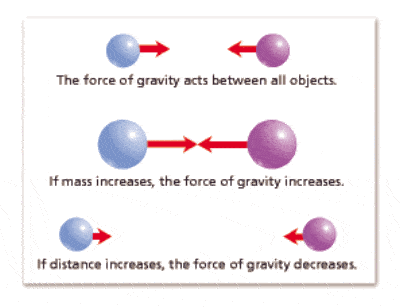
Two factors effecting the magnitude of force of gravity between 2 objects are...
a)
weight and mass 
b)
distance and weight 
c)
mass and matter 
d)
mass and distance 
2.
Gravity attracts all objects towards one another. 
a)
True
b)
False 
3.
An object with mass has gravity.
a)
True
b)
False 
4.
As distance between objects increases the pull of gravity...
a)
increases 
b)
decreases 
c)
Stays the same 
5.
The amount of matter in an object.
a)
force 
b)
mass
c)
weight 
d)
pressure 
6.
Which of the following never changes no matter where you are in the universe? 
a)
Pounds 
b)
weight 
c)
Force
d)
Mass
7.
As mass increases, what happens to gravitational force?
a)
increases
b)
decreases
c)
stays the same
d)
i don't know
8.
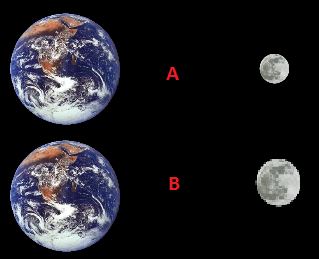
Which system has the greater gravitational attraction between the two objects (if any)?
a)
System A
b)
System B
c)
Same gravitational attraction fro System A and System B
9.
The force of gravity acting on an object is the object's ______.
a)
mass
b)
matter
c)
weight 
d)
friction 
10.
What type of friction is not moving?
a)
static
b)
sliding
c)
fluid
d)
rolling
11.
How can friction be reduced?
a)
reduce the force acting between the 2 surfaces
b)
reduce the roughness of the 2 surfaces coming in contact
c)
use wax, grease or oil
d)
all of the above are ways of reducing friction
12.

A type of friction that occurs when air pushes against a moving object causing it to slow down.

a)

surface area

b)

air resistance

c)

velocity

d)

gravity

13.
Rougher surfaces have ...
a)
greater friction
b)
less friction
c)
the same level of friction
14.
How does friction affect speed?
a)
more friction decreases speed
b)
more friction increases speed
c)
less friction decreases speed
15.
What does friction produce?
a)
light
b)
sound
c)
heat
d)
gravity
16.
Sally experiences-
a)
Rolling Friction
b)
Sliding Friction
c)
Fluid Friction
d)
Static Friction
17.
Wheels on a skateboard most likely experiences-
a)
Rolling Friction
b)
Sliding Friction
c)
Fluid Friction
d)
Static Friction
18.
Swimming fish experience-
a)
Rolling Friction
b)
Sliding Friction
c)
Fluid Friction
d)
Static Friction
19.
The tendency of an object to resist change in motion.
a)
Force
b)
Motion
c)
Friction
d)
Inertia
20.
Objects with more mass or heavier have LESS inertia.
a)
True
b)
False
21.
An object will remain at rest or in uniform motion in a straight line unless acted upon by an external force.
a)
Newton's First Law of Motion
b)
Newton's Second Law of Motion
c)
Newton's Third Law of Motion
d)
Newton's Fourth Law of Motion
22.
A greater applied force is required to move an object with a greater mass than one with a smaller mass.
a)
True
b)
False
23.

A 20 kg bike accelerates at 10 m/s2. what was the force


Force=mass x acceleration

a)

25 Newtons

b)

20 Newtons

c)

200 Newtons

d)

10 Newtons

24.
F=MA
An object of mass 10 kg is accelerated upward at 2 m/s2.  What force is required? 
a)
20 N
b)
2 N
c)
5 N
d)
0 N
25.

An object accelerates 5 m/s2 when a force of 20 newtons is applied to it. What is the mass of the object?


Mass=Force / Acceleration

a)

4 Kg

b)

20 Kg

c)

0.5 Kg

d)

2 Kg

26.
Newton's Third Law States...
a)
Objects in motion stay in motion and objects at rest stay at rest
b)
Force is equal to mass times acceleration
c)
For each action there is an equal and opposite reaction
27.
An archer shoots an arrow. The action force is the bowstring against the arrow, the reaction force is...
a)
Air resistance against the bow
b)
the arrow's push against the bowstring
c)
the grip of the archer's hand on the bow
28.
A baseball player bats a ball with a force of 1,000 N. The ball exerts a reaction force (without any additional forces action on it) against the bat of...
a)
Less than 1, 000 N
b)
1,000 N
c)
More than 1,000 N
29.
Who was the scientist who gave us the Laws of Motion?
a)
Sir Isaac Newton
b)
Albert Einstein
c)
Galileo Galilei
d)
Aristotle
30.
Which best explains why we are able to accelerate forward when starting to run?
a)
As one leg moves backward, it provides an equal and opposite force for the other foot to move forward.
b)
No acceleration takes place. Runners are always at a fixed velocity.
c)
The striking foot pushes backward against the ground. The friction with the ground provides an equal and opposite force forward.
d)
The runner's upper body quickly leans forward, causing the entire body to begin accelerating forward
31.

What happens when two objects, such as a baseball and a bat, collide?

a)

They hit each other with the same force in the same direction.

b)

They hit each other with the same force in opposite directions.

c)

They hit each other with unequal force in opposite directions.

d)

One remains still while the other one moves in the same direction.

32.

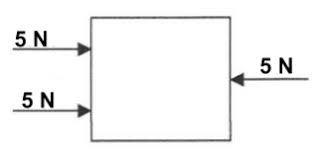
What is the net force and to what direction.

a)

210 N to the right

b)

280 N to the right

c)

110 N to the left

d)

180 N to the left

33.

What is the Overall Net Force and which side has a greater Net Force?

a)

12, Right

b)

0, Both are balanced

c)

12, Both are balanced

d)

0, Left

34.

Is the Net Force balanced or Unbalanced?

a)

Balanced

b)

Unbalanced

35.

If a person is picking up a book with the force of 50 N and the gravity is pushing down with 15 N, what is the net force?

a)

50 N

b)

35 N

c)

65 N

d)

15 N

36.
The momentum of an object depends upon the object's ___________&_____________.  
a)
size and shape
b)
mass and speed
c)
mass and veloctiy
d)
mass and energy
37.
Which has more momentum: a car stopped at a red light or a bike moving at 15 mph?
a)
car
b)
bike
c)
they are equal
d)
cannot determine using the info provided
38.
In any collision (crash) the ______ is ALWAYS constant
a)
Total Momentum
b)
total speed
c)
total Velocity
d)
Energy
39.
Which of the following has the least amount of momentum?
a)
An ant walking along the ground
b)
An ant at rest
c)
An elephant walking
d)
An elephant running
40.

A 0.250 kg cart moving at 0.400 m/s has how much momentum?


Momentum=mass x velocity

a)

0.1 kg-m/s

b)

1 kg-m/s

c)

10 kg-m/s

d)

100 kg-m/s

41.

When one object runs into another and energy is transferred, we call that a ...

a)

explosion

b)

hit

c)

strike

d)

collision

42.
Jorge noticed a collision outside the coffee shop where two cars collided and stuck together.  What type of collision did he observe?
a)
Elastic
b)
Inelastic
c)
Completely inelastic
d)
none
43.
While playing pool, Emma notices that the pool balls bounce apart.  What type of collision is this?
a)
Elastic
b)
Inelastic
c)
Explosive
d)
Force