wayground logo

Free Printable Worksheets

Font size

S
M
L
XL
Worksheets

Properties of Matter

Total questions: 90

Worksheet time: 48mins

Name
Class
Date
1.
The amount of matter in an object is a measure of the object's ________________.
a)
volume
b)
density
c)
mass
d)
solubility
2.
Which of the following units provides the best measure for the amount of space that matter occupies?
a)
mL
b)
grams
c)
cm3
d)
Both mL and cm3
3.
What is the volume of the rock? The water level is displaced from 20 mL to 23 mL with the rock.
a)
3 mL
b)
23 mL
c)
20 mL
d)
43 mL
4.
What would be the best way to measure the volume of a small rock?
a)
L x W x H with a ruler
b)
Put on triple beam balance
c)
Mass ÷ Volume
d)
Displacement method using graduated cylinder
5.
Which of the following is not a characteristic property of matter?
a)
Density
b)
Mass
c)
Phase/State
d)
Solubility
6.
What is the formula for calculating density?
a)
Mass ∗ Volume
b)
Volume ∗ Mass
c)
Mass ÷ Volume
d)
Volume ÷ Mass
7.
What is the density of water?
a)
1 mL
b)
1 gram
c)
1 g/cm3
d)
All of the above
8.
True or False: 1 mL of water has a mass of 1 gram.
a)
True
b)
False
9.
Which statement is true?
a)
Oil is the most dense substance.
b)
Corn syrup is less dense than water.
c)
Oil is less dense than water.
d)
Oil and corn syrup have the same density but different masses.
10.
An object has a density of 3 g/cm3. When submerged in water, the object will ___________.
a)
float
b)
sink
c)
float halfway in the water
d)
float then sink
11.
What is the most dense metal?
a)
Aluminum 
2.7 g/cm3
b)
Steel
7.14 g/cm3
c)
Nylon
1.2 g/cm3
d)
Copper 
8.14 g/cm3
12.
In which state does matter completely fill its closed container?
a)
Gas
b)
Liquid
c)
Solid
d)
Ice
13.

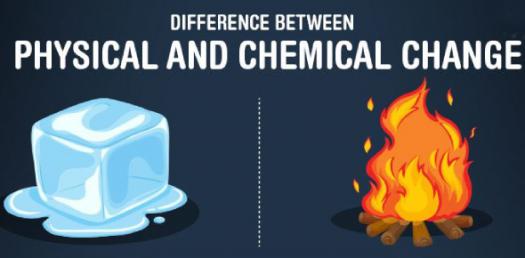
Color is what type of property?

a)

Physical

b)

Chemical

14.

Reactivity is what type of property?

a)

Physical

b)

Chemical

15.

What is a sign of a physical change?

a)

Bubbles forming

b)

Color changing

c)

Stretching

d)

Producing heat

16.

What is a sign of a chemical change?

a)

Stretching

b)

Tearing

c)

Compressing

d)

Bubbles

17.

Which of the following changes is a physical change of matter?

a)

water evaporating

b)

paper burning

c)

a nail rusting

d)

a silver spoon tarnishing

18.

Which of these observations would likely be an indication of a chemical change?

a)

A change in odor when two substances are mixed

b)

A change in temperature when a hot substance is left standing in air

c)

A change in volume as a substance is heated

d)

The disappearance of a liquid as it boils

19.

You mixed two liquids and a precipitate formed, what kind of change occured?

a)

Physical

b)

Chemical

20.

Signs of a physical change:

a)

Compress

b)

Shatter

c)

Tear

d)

Precipitate

21.

Signs of a chemical change:

a)

Precipitate

b)

Light

c)

Heat

d)

Shatter

22.

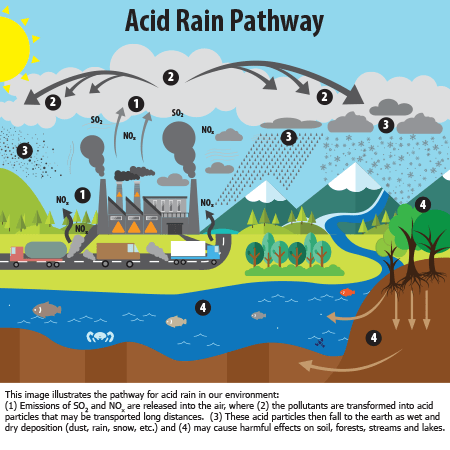
Acid Rain

a)

Physical Change

b)

Chemical Change

23.

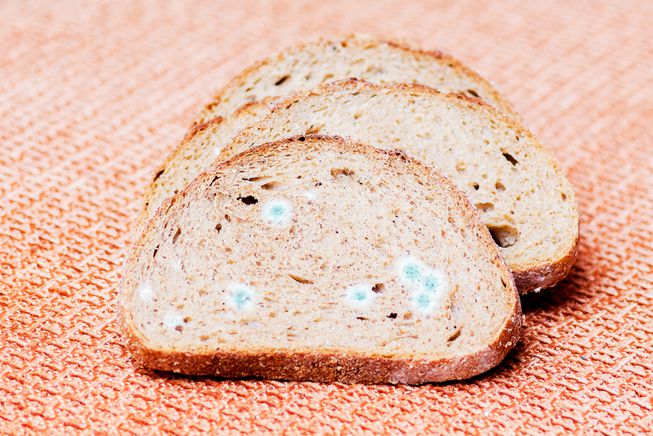
Moldy Bread

a)

Physical Change

b)

Chemical Change

24.

Which of the following can be classified as matter?

a)

an idea

b)

the letter A

c)

a lake

d)

the month August

25.

True or false? Taste is not a physical property of matter.

a)

true

b)

false

26.

Which of the following tools can be used to measure the volume of a rock?

a)
b)
c)
d)
27.

A floating block is ___________ dense than water.

a)

more

b)

less

28.

True or false? Physical properties are things that can be observed about matter.

a)

true

b)

false

29.

A tower is built with 5 identical blocks. What is the mass of each block if the total mass is 35 grams?

a)

2 grams

b)

5 grams

c)

7 grams

d)

10 grams

30.

True or false? The amount of matter increases when ice melts into a liquid.

a)

True

b)

False

31.

Mark builds a structure with 12 red blocks. Each block has a mass of 4 grams. What is the total mass of the structure?

a)

58 grams

b)

42 grams

c)

18 grams

d)

48 grams

32.

What is matter?

a)

Anything that takes up space

b)

Anything that has mass

c)

Anything that has mass and takes up space

d)

I don't know Ms. Turner, I did not take notes

33.
The amount of space something takes up.
a)
matter
b)
mass
c)
volume
d)
element
34.
A change in which the form or shape of a substance changes but the chemical makeup of the substance remains the same.
a)
chemical change
b)
reaction
c)
physical change
d)
solution
35.
The state of matter in which a substance does not have a definite shape or volume.
a)
element
b)
compound
c)
gas
d)
liquid
36.
The state of matter in which a substance has a definite shape and definite volume.
a)
solid
b)
gas
c)
atom
d)
liquid
37.
The state of matter in which a substance has a definite volume but no definite shape.
a)
gas
b)
liquid
c)
solid
d)
matter
38.
The smallest unit into which an element can be divided and still retain all the properties of that element.
a)
atomic theory
b)
compound
c)
element
d)
atom
39.
If a solid block of wood has a volume of 10 cm3 and a mass of 40 grams, what is its density?
a)
40 grams
b)
4 cm3
c)
4 g/cm3
d)
40 g/cm3
40.
What are some things that are true of ALL metals?
a)
they are magnetic
b)
they are soluble in water
c)
they are all good conductors of electricity
d)
they all have the same melting point
41.
True or False.  If you have the same volume of two different substances, they may have different densities.
a)
True
b)
False
42.
Which one is not a chemical change?
a)
a wick burning
b)

a nail rusting

c)
metal corroding
d)
wax melting
43.
True or False.  When a chemical change takes place, a new substance is formed every time.
a)
True
b)
False
44.
Which one is not a physical change?
a)
paper ripping
b)
chopping wood
c)
gold melting into a liquid
d)
a match burning
45.
Observation or Inference?  The substance turned black when iodine was added.
a)
Observation
b)
Inference
46.
Observation or Inference?  The acid caused the surface to wear down.
a)
Observation
b)
Inference
47.
Observation or Inference?  The box had a volume of 400 cm3.
a)
Observation
b)
Inference
48.
What would be the best way to measure the volume of a small rock?
a)
L x W x H with a ruler
b)
Put on triple beam balance
c)
Mass ÷ Volume
d)
Displacement method using graduated cylinder
49.
This tool could be used to find the _______ of an object.
a)
temperature
b)
volume
c)
density
d)
mass
50.
Matter is anything that has _______ and takes up space. 
a)
weight
b)
mass 
c)
the ability to float
51.
__________ is the amount of space something takes up. 
a)
matter
b)
volume
c)
weight
d)
density
52.
Weight is the measure of the pull of ________ on the mass of an object. 
a)
magnetism
b)
the Earth
c)
volume
d)
gravity
53.
Which state of matter has no definite shape or volume?
a)
Solids have no definite shape or volume.
b)
Liquids have no definite shape or volume.
c)
Gases have no definite shape or volume.
d)
Displacements have no definite shape or volume. 
54.
Study the diagram  and carefully read the description below the diagram. Gases have no definite shape or volume. Instead, they take the shape of their container. The particles of a gas spread out within the available space. Which diagram illustrates gas particles? 
a)
Diagram A illustrates gas particles.
b)
Diagram B illustrates gas particles
c)
Diagram C illustrates gas particles.
d)
None of these illustrates gas particles.
55.
Melting is the change in state of a
a)
solid to a gas.
b)
 liquid to a gas.
c)
solid to a liquid.
d)
 liquid to a solid.
56.
Has no definite shape or volume, but take the shape and volume of their containers, filling the space available. The particles easily move far apart from each other and spread out through the available space.
a)
solid
b)
liquid
c)
gas
d)
mass
57.
Has a definite shape and volume. Particles are very close to one another (dense).They vibrate, but do not move about. 
a)
solid
b)
liquid
c)
gas
d)
mass
58.
Has a definite volume, but their shape changes according to the shape of their containers. The particles are close to one another, but they are able to move apart from each other and flow from place to place.
a)
solid
b)
liquid
c)
gas
d)
mass
59.

Which is a chemical property of matter?

a)

Reactivity

b)

Color

c)

Density

d)

Solubility

60.
To determine if a piece of matter will sink or float, a student would...
a)
Use a hand lense to examine its physical properties.
b)
Measure its mass by using a spring scale.
c)
Use a magnet to see if it attracts.
d)
Place the object in a container of water.
61.
Which scientific tool should a student use to see if a piece of matter is magnetic?
a)
Hand lens
b)
Thermometer
c)
Hot place
d)
Magnet
62.
Mass
a)
Anything that has mass and takes up space.
b)
The property of attraction to a magnet.
c)
Group together based on similar traits.
d)
The amount of stuff in something; can be measured in kg.
63.
Matter
a)
Anything that has mass and takes us space.
b)
Group together based on similar traits.
c)
Stay on the surface level in a liquid.
d)
The amount of stuff in something; can be measured in kg. 
64.
Which of the following belongs in
 Group B?
Group A: beach ball, balloon, soccer ball
Group B: orange juice, water, ?
Group C: stuffed bear, apple, sock
a)
Dog bone
b)
Vegetable oil
c)
Pillow
d)
Ice cube
65.

What state of matter is water in?

a)

soild

b)

liquid

c)

gas

d)

thermo

66.
What state of matter is ice in? 
a)
Solid
b)
Liquid
c)
Gas
d)
Thermo
67.
Steam is an example of what state of matter?
a)
Solid
b)
Liquid
c)
Gas
d)
Thermo
68.

A reversible change is

a)

ice turning to water and then back to ice.

b)

a baked cake turning back into batter

c)

dried glue turning back to liquid glue.

69.
An insulator is 
a)
something that resists heat.
b)
allows heat through it. 
c)
allows texture through it. 
d)
resists color. 
70.

A conductor

a)

allows heat through it.

b)

resists heat going through it.

c)

allows color through it.

d)

allows texture through it.

71.

The amount of matter in a substance

a)

volume

b)

weight

c)

mass

d)

matter

72.

Measurement of how gravity affects an object's mass

a)

mass

b)

matter

c)

volume

d)

weight

73.

The amount of space something takes up

a)

matter

b)

mass

c)

weight

d)

volume

74.

A state of matter that has a fixed shape and volume

a)

state of matter

b)

solid

c)

liquid

d)

gas

75.

The amount of space something takes up

a)

matter

b)

mass

c)

weight

d)

volume

76.

A state of matter that changes volume and shape

a)

state of matter

b)

gas

c)

solid

d)

liquid

77.

A state of matter that can change shape, but has a fixed volume

a)

state of matter

b)

gas

c)

solid

d)

liquid

78.

Whether something sinks or floats in water

a)

relative density

b)

solubility

c)

conductivity

d)

state of matter

79.

The ability of a substance to dissolve in another substance

a)

relative density

b)

volume

c)

property

d)

solubility

80.

A physical property that describes matter as a solid, liquid, or gas

a)

relative density

b)

solubility

c)

state of matter

d)

conductivity

81.

Something that ALLOWS energy to flow through it easily

a)

conductor

b)

insulator

c)

property

d)

dissolve

82.

Something that ALLOWS energy to flow through it easily

a)

conductor

b)

insulator

c)

property

d)

dissolve

83.

A characteristic that can be observed or measured

a)

conductor

b)

insulator

c)

property

d)

dissolve

84.

How tightly packed matter is in an object.

a)

Volume

b)

Density

c)

Mass

d)

Mixture

85.

When two or more substances are put together.

a)

Volume

b)

Density

c)

Mixture

d)

Mass

86.

When one substance dissolves into another.

a)

Volume

b)

Mixture

c)

Density

d)

Solution

87.

The measure of the force of gravity on an object.

a)

Weight

b)

Mass

c)

Mixture

d)

Density

88.

If you traveled from Earth to the moon, your weight would change due to __________ gravity than the Earth’s gravity.

a)

more

b)

less

89.

The unit of measurement used for mass in physics.

a)

Newton

b)

Kilograms

90.

_____________ stays the same no matter where you are.

a)

Mixture

b)

Mass

c)

Weight

d)

Volume