Wayground logo

Free Printable Worksheets

Font size

S
M
L
XL
Worksheets

Unit conversions, Vectors, Motion Graphs

Total questions: 58

Worksheet time: 59mins
Name
Class
Date
1.

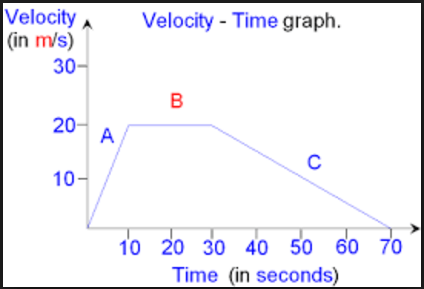
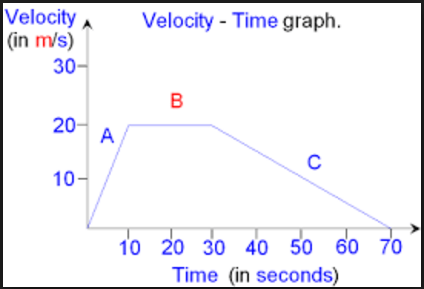
This is a velocity-time graph. What is the object doing in segment A?

a)

Speeding up

b)

Slowing down

c)

Constant Velocity

d)

Not moving

2.
This is a velocity-time graph.  What is the object doing in segment B?
a)
Positive acceleration
b)
Negative acceleration
c)
Constant Velocity
d)
Not moving
3.

This is a velocity-time graph. What is the object doing in segment C?

a)

Speeding up

b)

Slowing down

c)

Constant Velocity

d)

Not moving

4.

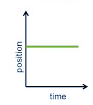
Describe the motion of the object in the graph

a)

Moving with constant speed

b)

Speeding up

c)

Not moving

5.
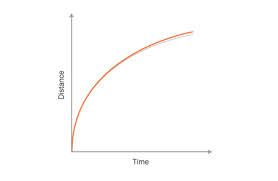
What is this graph showing?
a)
Constant Speed
b)
Acceleration (speeding up)
c)
Deceleration (slowing down)
d)
No motion
6.
Which graph shows the object standing still?
a)
A
b)
B
c)
C
d)
D
7.
Which graph represents zero acceleration (constant velocity)?
a)
A
b)
B
c)
C
d)
D
8.
Which graph represents the greatest acceleration?
a)
A
b)
B
c)
C
d)
D
9.

1 Metre = ______cm

a)

100

b)

10

c)

1

d)

1000

10.
1 cm = ________mm
a)
1
b)
100
c)
10
d)
1000
11.
1 Km = ______m
a)
1
b)
10
c)
100
d)
1000
12.

Find the direction and magnitude of the resultant vector for the drawing of two forces.

a)

Direction 90°

Magnitude 139.0N

b)

Direction 52.3°

Magnitude 195N

c)

Direction 52.3°

Magnitude 139.0N

d)

Direction 37.7°

Magnitude 139.0N

13.
George Washington throws a baseball with an initial velocity of 20.2 feet per second at an angle of 69° with the horizontal.  Find the initial vertical and horizontal velocity of the ball.
a)
Horizontal 18.9
 Vertical 7.2
b)
Horizontal 7.2
 Vertical 18.9
c)
Horizontal 15.2
 Vertical 9.6
d)
Horizontal 9.6
 Vertical 15.2
14.

A vector is a ray with both ____________ and _____________.

a)

Wings and halos

b)

Space and time

c)

Direction and magnitude

d)

Radicals and exponents

15.
A car moved 60 km East and 90 km West. What is the displacement and the direction?
a)
30 km, West
b)
60 km. East
c)
90 km
d)
150 km
16.
Find the length of the missing side. 
a)
17 cm
b)
22 cm
c)
15 cm
d)
13 cm
17.
solve for the value of y
a)
13
b)
5
c)
23
d)
10
18.
Solve for the missing angle. Round the nearest degree. 
a)
50
b)
1
c)
37
d)
95
19.
Which section represents no movement?  
a)
A
b)
B
c)
C
20.
The speedometer on your car tells you
a)
average velocity
b)
instantaneous velocity
c)
average speed
d)
instantaneous speed
21.
The rate at which velocity changes is called 
a)
motion
b)
average speed
c)
instantaneous speed
d)
acceleration
22.
Acceleration of an object happens when things ________
a)
slow down
b)
go faster
c)
change direction (turn)
d)
All of the above
23.
What is happening between 3 seconds and 4 seconds?
a)
The object is moving in a negative direction.
b)
The object is returning to its starting position.
c)
The object is slowing to a stop.
d)
The object is changing direction.
24.
What happens at 4 seconds?
a)
The object changes direction.
b)
The object is at the starting point.
25.

A resultant vector is

a)

equal to the sum of one vector.

b)

equal to the sum of two or more vectors.

c)

equal to the difference of one vector.

26.

What is the resultant of the two vectors shown above?

a)

+5

b)

-5

c)

+15

d)

-15

27.

A vector includes ______ and ________.

a)

direction, magnitude

b)

magnitude, units

c)

direction, units

d)

scalars, scalars

28.

Which of the following describes the vector above?

a)

45 cm

b)

45 cm at 30 degrees North of East

c)

45 cm at 30 degrees East of North

d)

45 cm North East

29.

A man drives 30 km south and 5 km east. What quadrant does the man wind up in?

a)

I

b)

II

c)

III

d)

IV

30.

If vector A has an x component of 12 units and a y component of 7 units, what is the magnitude of vector A?

a)

19 units

b)

13 units

c)

14 units

d)

193 units

31.
A hiker walks 5 kilometers due north and then 7 kilometers due east. What is the magnitude of the resultant vector?
a)
2 km
b)
8.6 km
c)
12 km
d)
12.6 km
32.
If you throw a baseball straight up, what is its velocity at the highest point?
a)
9.8 m/s2
b)
9.8 m/s
c)
0 m/s2
d)
0 m/s
33.

Bob walks 2 miles north and turns west and walks 2 miles. What is Bob's displacement?

a)

4 miles northeast

b)

4 miles northeast

c)

3 miles northwest

d)

3 miles southeast

34.
What is the y component of the vector?
a)
14sin(30)
b)
-14sin(30)
c)
14cos(30)
d)
-14cos(30)
35.

What is the x component of the vector?

a)

14cos(30)

b)

14sin(30)

c)

14tan(30)

d)

14tan-1(30)

36.

Vector A (15 m, 90O), Vector B (9.0 m, 0O), and Vector C (11 m, 300O) combine to form Vector R. Which of the following describe Vector R?

a)

15 m, 69O

b)

15 m, 21O

c)

16 m, 69O

d)

16 m, 21O

37.

Add these two vectors and find the resultant vector.

a)

52.9 m , 89.9O

b)

0.529 m , 89.9O

c)

35.5 m , -89.9O

d)

35.5 m, 90.1O

38.

Which are mathematical/analytical methods of vector addition?

a)

Polygon Method

b)

Phythagorean Method

c)

Component Method

d)

Parallelogram Method

39.

The sum of two or more vectors

a)

Resultant vector

b)

Equilibrant vector

c)

Sum vector

d)

Addition vector

40.
Wind blowing at 20 mph.Vector or scalar?
a)
Scalar
b)
Vector
41.
30 m/sec, East. Scalar or Vector
a)
Scalar
b)
Vector
c)
Neither
42.
Velocity
a)
Vector
b)
Scalar
43.
Which of the following describes distance and displacement correctly?
a)
The blue arrow shows distance and the orange arrows show displacement
b)
The blue arrow shows displacement and the orange arrows show distance
c)
Both arrows show distance only
d)
Both arrows show distance and displacement
44.
Sara walks from Point A to Point B. Which is true?
a)
Distance and displacement are EQUAL
b)
Distance is less than displacement
45.
Find the magnitude of vector AB if the initial point is (-3, 1) and the terminal point is (3, 9).
a)
6
b)
8.2
c)
10
d)
10.4
46.

If two vectors to be added are at right angles to each other, you will need to

a)

just add them together.

b)

use the Pythagorean theorem.

c)

use the Law of Cosines.

d)

subtract the smaller for the larger.

47.
How do you combine vectors if they are at a right angle to each other, and you know two sides?
a)
Multiply
b)
Divide
c)
Pythagorean Theorem
d)
Use trigonometry
48.

An important rule concerning vector addition is:

a)

A+B=B+A

b)

that you cannot add vectors together.

c)

A+B=C+D

d)

that the order of vector addition maters.

49.

The Pythagorean theorem which provides us with the relationship between the sides in a right triangle states:

a)

a2 + b2 = c2

b)

a + b = c

c)

a4 + b3 = c7

50.

The place an object begins its motion is often referred to the:

a)

origin

b)

the spot

c)

destination

d)

displacement

51.

A displacement is a vector whose length is:

a)

the shortest distance from the initial to the final position of an object.

b)

the longest distance from the initial to the final position of an object.

c)

the total distance from the initial to the final position of an object.

52.

Displacement...

a)

quantifies both the distance and direction of an object's motion along a straight line from its initial position to its final position.

b)

quantifies only the distance of an object's motion along a straight line from its initial position to its final position.

c)

quantifies only the direction of an object's motion along a straight line from its initial position to its final position.

d)

is the same as distance.

53.

The rate of change of displacement is known as:

a)

velocity

b)

distance

c)

trajectory

d)

magnitude

54.
Which are equivalent vectors?
a)
u and -u
b)
u and a
c)
u and v
d)
u and b
55.
How should you add two vectors?
a)
Add them head to tail
b)
Add them tail to tail
c)
Add them with the addition key
d)
just add the length of each
56.

You and your dad are moving the couch from one side to another. Your dad pushes with a force of 35 N to the right and you push with a force of 25 N right. What is the net force on the couch?

a)

60 N right

b)

10 N left

c)

50 N left

57.
Can you combine vectors that aren't displacement?
a)
Yes
b)
Depends on what equation you use
c)
What? Two accelerations? I'M FREAKING OUT!!!
58.
Remember: DRAW THE VECTORS!!!
A plane is traveling at 100 m/s South when it encounters a cross-wind from Hurricane Irma of 78 m/s from the West.
What is the plane's resultant velocity?

a)
126.82 m/s SW
b)
1.28 m/s SW
c)
7800 m/s SW
d)
0.78 m/s SW