
 Worksheets
Unit 1 Test Review Game
Total questions: 61
Worksheet time: 40mins
What is the key role (function) of carbohydrates?
energy storage
immunity, muscles, structure for tissues, cell metabolism
instant energy for cells and body functions
genetic information (heredity)
How how carbohydrates and lipids similar?
both contain C, H, O, N, P and store energy
both contain C, H, O, N and give energy
both contain C, H, O, N, S and store energy
both contain C, H, O and give energy
The monomer for carbohydrates is a monosaccharide.
True
False
Lipids key role (function ) is:
immunity, chemical reactions in the body, cell metabolism, contract muscles, regulate other proteins
store energy
instant energy for cells/body
heredity/genetic information
What elements (monomers) make up a protein?
C, H, O
C, H, O, N
C, H, O, N, P
What is the smallest unit of a macromolecule?
micromolecule
glucose
monomer
polymer
What elements (monomers) make up nucleic acids?
C, H, O
C, H, O, N, (S)
C, H, O, N, P
Carbohydrates are necessary for chemical reactions in our body.
true
false
Sugars (saccharides) are not carbohydrates.
false
true
Match the protein with the correct picture.


What is the key role (function) of a protein?
instant energy for the cell/body
hormones, buoyancy, forms cell membranes, insulation, energy storage
growth, repair, and energy, immune system, enzymes
store and transmit genetic information/heredity
Identify the monosaccharide:


Identify the lipid:


Identify the nucleic acid:


Identify the key role of nucleic acids:
instant energy
hormone, buoyancy, forms cell membranes, insulation, energy storage
transport hemoglobin, immunity,chemical reactions, regulate proteins, tissue structure
store and transmit heredity, genetic information
Carbohydrates have C, H, O. What is the ratio of elements?
2:1:2
1:3:1
1:2:1
3:1:3
The monomer for a lipid is:
monosaccharide
fatty acid
nucleotide
amino acid
The monomer for a nucleic acid is:
fatty acid
monosaccharide
nucleotide
amino acid
The monomer for a protein is:
amino acid
fatty acid
monosaccharide
nucleotide
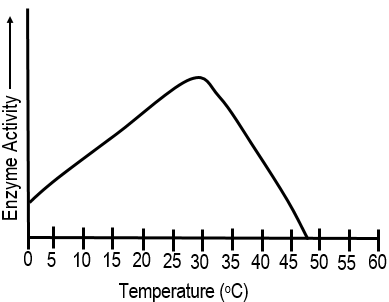
Changes in pH and temperature can ___________________ an enzyme which causes it to lose its shape and affects its function.
puncture
denature
double
delete
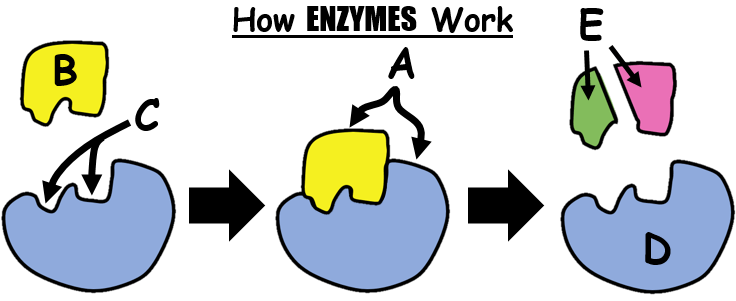
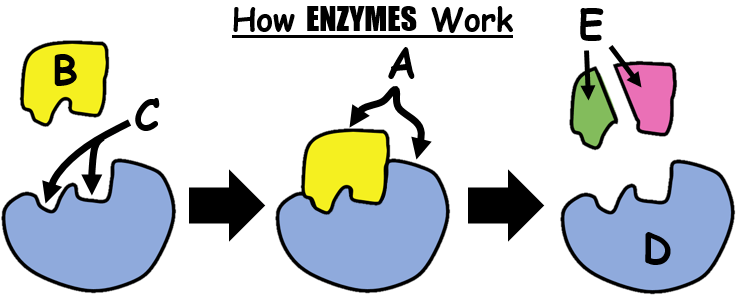
An enzyme and substrate can be compared to
lock and key
a faucet
a door hinge
light switch
Which of the following statements is true about catalysts (enzymes)?
Catalysts slow down the rate of chemical reactions.
Enzymes help regulate pH.
Catalysts are used up during a chemical reaction.
Catalysts lower the activation energy of a chemical reaction.

Which characteristic is shown in the image?
Organisms grow and develop
Organisms react to stimuli
Organisms can adapt
Organisms use and obtain energy
Organisms are made up of cells

Which characteristic is shown in the image?
Organisms reproduce
Organisms react to stimuli
Organisms can adapt
Organisms use and obtain energy
Organisms are made up of cells

Which characteristic is shown in the image?
Organisms reproduce
Organisms react to stimuli
Organisms can adapt
Organisms use and obtain energy
Organisms are made up of cells

Which characteristic is shown in the image?
Organisms reproduce
Organisms react to stimuli
Organisms can adapt
Organisms use and obtain energy
Organisms are made up of cells
What is a cell?
Groups of similar types of cells that work together to carry out a specific task
Groups of different tissues working together to perform a particular job
Groups of different organs working together to complete a series of tasks
The smallest unit of life
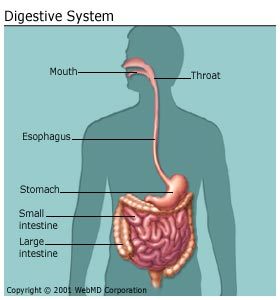
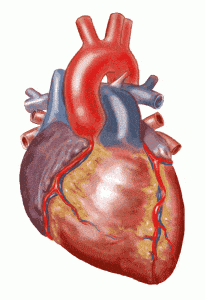
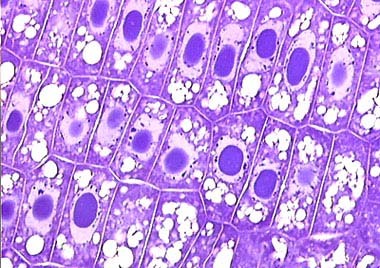

What are organs made out of?
cells
organisms
tissues
organ systems
How does carbon dioxide return to the atmosphere?
Photosynthesis
Combustion and Cellular Respiration
Consumption
Decomposition
Which one of these is not a way that carbon cycles?
Transpiration
Photosynthesis
Cellular Respiration
Burning Fossil Fuels
What is the main thing that carries out Nitrogen Fixation?
Lightning
Bacteria
Plants
Humans
Decomposition is found during which of the following cycles?
Choose all the apply.
Phosphorus
Cycle
Carbon
Cycle
Nitrogen
Cycle
Water Cycle
Nitrogen is found in which of the following:
Fats
(lipids)
Nucleic Acids
(DNA + RNA)
Proteins
Carbohydrates
(Sugar + Starch)
Which of the following is evaporation of water from plants?
Precipitation
Nitrification
Transpiration
upllift
The Phosphorus cycle is important because phosphorus is contained in
sugars
DNA
proteins
starches
Carbon Dioxide (CO2) is released in which of the following processes?
photosynthesis
decomposition
combustion
cellular respiration
Animals get the carbon they need by
Nitrogen fixation
photosynthesis
cellular respiration
ingestion of plants and animals
In the carbon cycle, the only process that removes CO2 from the atmosphere is
combustion
cellular respiration
decomposition
photosynthesis
The main way nitrogen is removed from the atmosphere and changed into a form plants can use is
Nitrogen Fixation
Nitrification
Ammonification
Denitrification
Each process in the nitrogen cycle is carried out by
bacteria
mice
cows
plants
Decomposers include which of the following?
plants
fungi
bacteria
algae
Ammonification is the process by which decomposers convert wastes and dead organisms into ____.
ammonium
NH4+
Nitrate
NO3-
Nitrite
NO2-
nitrogen gas
N2
Biogeochemical Cycles are important because
matter in an ecosystem is finite and must be recycled
living things need Nitrogen, Carbon, and Phosphorus to make the building blocks of cells
they aren't important and it is a waste of time learning about them
If matter didn't cycle, organisms would eventually run out of materials to build new cells
Plants can take in Nitrogen directly from the air.
TRUE
FALSE
Which of the following are true of biogeochemical cycles?
They ensure that nutrients are used only once by organisms.
The create new materials to replace lost ones.
They increase the total amount of matter over time.
They can be affected by human activity.
A viruses are considered
Living
Non-living
What is a host?
An organism that eats another organism
An organism or a cell that the virus needs to reproduce in
Something that causes harm to the cell
The person that greats you at a resturant

