wayground logo

Free Printable Worksheets

NEW

Font size

S
M
L
XL
Worksheets

PBS 1.1 Test Review

Total questions: 60

Worksheet time: 47mins

Name
Class
Date
1.

What part of the hair is represented by letter A?

a)

cuticle

b)

cortex

c)

medulla

d)

root

2.

Which crime scene search method is shown in the diagram?

a)

zone

b)

link

c)

wheel

d)

line

3.

Which crime scene search method is shown in the diagram?

a)

zone

b)

link

c)

line/strip

d)

wheel/ray

4.

When telling a lie, a person will often experience ...

a)

increased heart rate.

b)

increased respiration rate.

c)

sweating.

d)

All of the other options.

5.

______ is the number of beats per minute while ______ is the number of breaths per minute.

a)

Respiration Rate, Heart Rate

b)

Heart Rate, Respiration Rate

c)

Respiration Rate, Skin Conductivity

d)

Skin Conductivity, Heart Rate

6.

If a polygraph test shows that a person's heart rate and respiration rate has increased compared to their baseline, this person is most likely ...

a)

telling the truth.

b)

lying.

c)

having a heart attack.

d)

having trouble breathing.

7.

Match the fingerprint.

a)

Whorl

b)

Loop

c)

Arch

d)

Helix

8.

Match the fingerprint

a)

Loop

b)

Whorl

c)

Helix

d)

Arch

9.

Match the fingerprint.

a)

Loop

b)

Whorl

c)

Helix

d)

Arch

10.

Other than ridge patterns scientists also have to use another pattern to identify and match fingerprints. What are these patterns called?

a)

Medulla

b)

Keratin

c)

Whorls

d)

Minutiae

11.
What type of evidence can be processed by looking at shape, size, number of lines and minutiae?
a)
Blood sample
b)
Hair Sample
c)
DNA sample
d)
Fingerprint Sample
12.

Which part of the hair is the right arrow pointing at?

a)

Cortex

b)

Cuticle

c)

Medulla

d)

split end

13.

Which part of the hair is the arrow pointing at? (hint: the outside portion)

a)

Cortex

b)

Cuticle

c)

Medulla

d)

split end

14.

Which part of the hair is the left arrow pointing at?

a)

Cortex

b)

Cuticle

c)

Medulla

d)

split end

15.

What part of the hair is represented by letter A?

a)

cuticle

b)

cortex

c)

medulla

d)

root

16.

What part of the hair is represented by letter B?

a)

cuticle

b)

cortex

c)

medulla

d)

root

17.

What part of the hair is represented by letter C?

a)

cuticle

b)

cortex

c)

medulla

d)

root

18.

What is the ridge pattern on this fingerprint?

a)

arch

b)

tented arch

c)

loop

d)

whirl

19.

What is the ridge pattern on this fingerprint?

a)

arch

b)

tented arch

c)

loop

d)

whirl

20.

Which blood type is known as the universal recipient?

a)

AB

b)

B

c)

O

d)

A

21.
Which component of blood is responsible for helping to stop bleeding?
a)
platelets
b)
red blood cells
c)
white blood cells
d)
plasma
22.
Which component of blood is responsible for carrying oxygen?
a)
red blood cell
b)
white blood cell
c)
platelets
d)
plasma
23.
The fluid portion of blood that carries blood cells, glucose, proteins, fats, and wastes throughout the body.
a)
red blood cells
b)
white blood cells
c)
plasma
d)
platelets
24.

What is the purpose of presumptive testing?

a)

Find out who the blood belongs to.

b)

Find out the blood type of the blood sample.

c)

Find out if a substance may be or is not blood.

d)

Make the cotton swabs turn pretty colors.

25.

The proteins found on the surface of RBCs that allow us to type blood as A, B, O or AB are called

a)

Rh factors

b)

Antigens

c)

Antibodies

d)

Aggluntates

26.

What is produced by your body in response to foreign antigens, such as the wrong type of blood?

a)

Agglutinates

b)

Clotting factors

c)

Antibodies

d)

Phagocytes

27.

The Kastle-Meyer test is a _____________ blood test because it gives basic information in a short amount of time.

a)

presumptive

b)

definitive

c)

confirmatory

d)

positive

28.

What is this blood type?

a)

A+

b)

AB+

c)

AB-

d)

A-

29.

What is the blood type?

a)

AB+

b)

AB-

c)

A+

d)

B-

30.

What is the blood type?

a)

O+

b)

B+

c)

AB-

d)

AB+

31.

These are found in blood and help fight infections...

a)

white blood cells

b)

platelets

c)

plasma

d)

red blood cells

32.

These are found in blood and help the blood to clot...

a)

white blood cells

b)

platelets

c)

plasma

d)

red blood cells

33.

This is the colorless liquid in which the components of blood are suspended...

a)

red blood cells

b)

platelets

c)

plasma

d)

white blood cells

34.

Someone with Type A blood also has...

a)

Type A antibodies

b)

Type B antibodies

c)

both Type A & B antibodies

d)

neither Type A nor B antibodies

35.

Someone with Type A blood has...

a)

A antigens

b)

A antibodies

c)

B antigens

d)

A & B antigens

36.

Which blood type is known as the universal donor? (can be used by all)

a)

AB +

b)

AB -

c)

O+

d)

O-

37.
Mike has type O blood. Mike can receive blood from someone who has Type A or Type B.
a)
True
b)
False
38.
Someone who has Type O blood has what for antibodies (clumping proteins)?
a)
No antibodies
b)
A antibodies
c)
B antibodies
d)
A and B antibodies
39.
What types of antigens are present in a person with O+ blood?
a)
A and B
b)
Rh, only
c)
A, B and Rh
d)
None
40.
Which blood type is also known as the universal recipient?
a)
O-
b)
O+
c)
AB+
d)
AB-
41.

A car wreck victim is in need of a blood transfusion. The victim's blood type is B+. What type of blood can they safely receive?

a)

B+ or O+ only

b)

B+ or AB+ only

c)

B+, B-, O+ or O-

d)

Anything but type A+ or A- blood

e)

B+, B-, AB+ or AB-

42.
Which of the following units are repeatedly joined together to form a strand of DNA?
a)
amino acids
b)
nucleotides
c)
fatty acids
d)
polysaccharides
43.
Adenine bonds with ______________.
a)
Guanine
b)
Thymine
c)
Cytosine
d)
Adenine
44.
Guanine bonds with ______________.
a)
Adenine
b)
Guanine
c)
Cytosine
d)
Thymine
45.
What are the 4 nitrogen bases?
a)
adenine, thymine, cytoplasm, and guanine
b)
adenine, thymine cytosine, and guanine
c)
adenine, thymine, cytosine, and gylcerol
d)
adenine, thymine, cytosine, and glucose
46.

What makes up the SIDES of a DNA ladder?

a)

nitrogen bases

b)

sugars & phosphates

c)

genes & chromosomes

d)

RNA

47.

What makes up the rungs (steps) of a DNA ladder?

a)

sugars & phosphates

b)

nitrogen bases

c)

sugars

d)

genes & chromosomes

48.
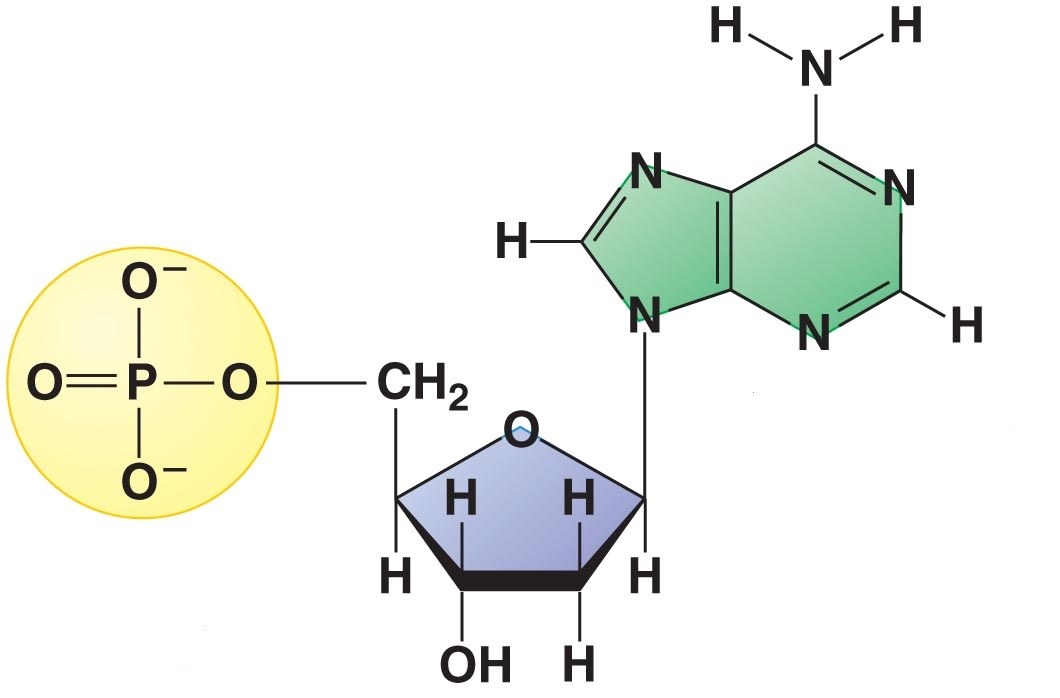
What are the three components of a nucleotide?
a)
sugar, hydrogen, nitrogen base
b)
sugar, oxygen, nitrogen base
c)
sugar, phosphate, nitrogen base
d)
sugar, phosphate, protein
49.
Name this structure
a)
double helix
b)
nucelotide
c)
twisted ladder
d)
hydrogen bond
50.
If a DNA molecule consists of 29% Guanine, how much cytosine will it contain?
a)
29%
b)
58%
c)
21%
d)
I have no idea.
51.
X outlines a(n) ___________.
a)
amino acid
b)
nitrogen base 
c)
nucleotide
d)
nitrogen base pair
52.

A student performed a gel electrophoresis experiment. The results are represented in the diagram

below. Compared to the fragments at the top of the gel, the fragments at the lower end are

a)

larger, and move slower

b)

larger, and move faster

c)

smaller, and move faster

d)

smaller, and move slower

53.
Based on these results whose blood was found in the blood stain at the crime scene?
a)
Bob
b)
Sue
c)
John
d)
Lisa
54.
What is the purpose of gel electrophoresis?
a)
helps cut DNA
b)
count the genes in DNA
c)
separates DNA based on size
d)
allows for an exact replicated organism
55.
Why do the fragments of DNA in gel electrophoresis travel away from the negative electrode?
a)
DNA is negatively charged so attracted to the positive end of the unit
b)
DNA is positively charged to attracted to the negative end of the unit
c)
the agarose gel in negatively charged
d)
the agarose gel is positively charged
56.

In preparation for an electrophoresis procedure, enzymes are added to DNA in order to

a)

convert the DNA into gel

b)

cut the DNA into fragments

c)

change the color of the DNA

d)

produce longer sections of DNA

57.
DNA fingerprinting works because
a)
Most genes are dominant
b)
All organisms contain RNA
c)
The most important genes are different among most people
d)
No two people, except identical twins, have exactly the same DNA 
58.
In gel electrophoresis, the largest DNA fragment will appear
a)
closest to the starting wells
b)
farthest from the starting wells
c)
three quarters away from the starting wells
d)
it depends on how many fragments there are
59.
Which is the primary purpose of using restriction enzymes in gel electrophoresis?
a)
It allows the strands of DNA to be cut into various lengths for testing
b)
It restricts the number of base pairs that can be tested in a sample
c)
It makes the testing simpler by moving the strands into the gel faster
d)
It charges the DNA strands
60.

How many fragments resulted from the cut above?

a)

1

b)

2

c)

3

d)

4