wayground logo

Free Printable Worksheets

NEW

Font size

S
M
L
XL
Worksheets

Moon Review

Total questions: 60

Worksheet time: 55mins

Name
Class
Date
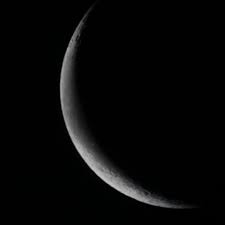
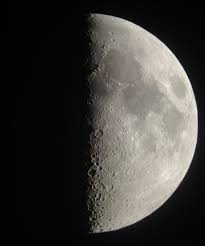
1.

What phase of the moon is this?

a)

waning crescent

b)

waxing crescent

c)

waning gibbous

d)

waxing gibbous

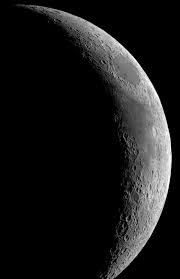
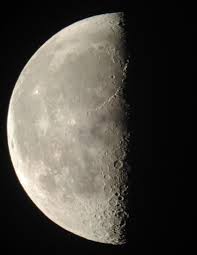
2.

What phase of the moon is this?

a)

Waning gibbous

b)

Waxing gibbous

c)

full mone

d)

3rd quarter

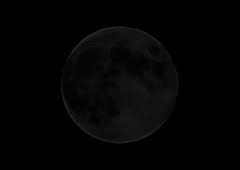
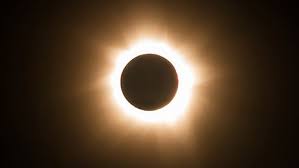
3.

What phase of the moon is shown here?

a)

full moon

b)

new moon

c)

first quarter

d)

third quarter

4.

The moon appears to change shape from day to day in a cycle that lasts about a month as it goes through _.

a)

revolutions

b)

phases

c)

rotations

d)

eclipses

5.
Movement of Earth around the sun.
a)
Rotation
b)
Revolution
6.
Which of the following lists the Earth, Sun, and Moon in order of size, from largest to smallest?
a)
Earth, Sun, and Moon
b)
Earth, Moon, and Sun
c)
Sun, Earth, and Moon
d)
Sun, Moon, and Earth
7.
Why do we always see the same side of the moon from Earth?
a)
because the phases change
b)
because it rotates and revolves at the same rate
c)
because half of the moon always receives sunlight
d)
The moon changes positions
8.
In this diagram, the motion of the Earth can best be described as -
a)
Rotation
b)
Revolution
9.

How much of the moon is always lit up by the sun's light?

a)

can't tell

b)

always changes

c)

half

d)

3/4

10.
Any natural or artificial object that orbits another is called what?
a)
asteroid
b)
comet
c)
satellite
d)
moon
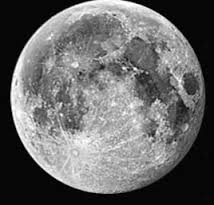
11.
Name the moon phase
a)
waning crescent
b)
waxing crescent
c)
waning gibbous
d)
waxing gibbous
12.
Name the moon phase
a)
waning crescent
b)
waxing crescent
c)
waning gibbous
d)
waxing gibbous
13.
Name the moon phase
a)
First Quarter
b)
Last Quarter
c)
New Moon
d)
Full Moon
14.
Name the moon phase
a)
First Quarter
b)
Last Quarter
c)
New Moon
d)
Full Moon
15.
Name the moon phase
a)
First Quarter
b)
Last Quarter
c)
New Moon
d)
Full Moon
16.
Name the moon phase
a)
First Quarter
b)
Last Quarter
c)
New Moon
d)
Full Moon
17.
What is illuminating the Moon?
a)
Nuclear Fusion
b)
Sunlight
c)
Mirrors
d)
Flood Lights
18.

Why does the moon appear to shine?

a)

Because it reflects sunlight.

b)

Because it reflects lights from Earth.

c)

Because it makes its own light.

d)

Because it reflects light from the stars.

19.

Which force keeps the planets in their orbits around the Sun?

a)

Gravity

b)

Magnetism

c)

Electricity

d)

Friction

20.

Approximately how long does it take for the moon to complete one orbit around Earth?

a)

1 day

b)

1 week

c)

1 month

d)

1 year

21.

What motion do the arrows in the diagram represent?

a)

Earth's rotation

b)

Earth's revolution

c)

The Sun's rotation

d)

The Sun's revolution

22.

A full Moon is observed on June 1. Approximately when will the next full Moon be observed in Hanoverton?

a)

June 7

b)

June 15

c)

June 29

d)

July 7

23.

Approximately how long does it take Earth to complete one orbit around the Sun?

a)

4 days

b)

365 days (1 year)

c)

1 month

d)

2 years

24.

Which motion causes day and night on Earth?

a)

Rotation

b)

Revolution

25.

Does the moon emit it's own light?

a)

No

b)

Yes

c)

Sometimes

d)

Only in winter

26.
What is the central, darker part of a shadow called?
a)
the umbra
b)
the penumbra
27.
What is the lighter part of a shadow where light is partially blocked called?
a)
the umbra
b)
the penumbra
28.
A lunar eclipse occurs when the Moon casts a shadow on Earth.
a)
True
b)
False
29.
A solar eclipse occurs when Earth casts a shadow on the Moon.
a)
True
b)
False
30.

This model is showing us a...

a)

lunar eclipse

b)

solar eclipse

c)

phases of the moon

d)

earth eclipse

31.

This image is showing us a.....

a)

solar eclipse

b)

lunar eclipse

c)

phases of the moon

d)

earth eclipse

32.

In order to have an eclipse, the Moon, Sun and Earth have to be?

a)

Below each other

b)

Above each other

c)

In alignment

33.
During a solar eclipse...
a)
The sun is blocked by the moon
b)
The Earth is blocked moon
c)
The moon is blocked by the sun
d)
You are blocked
34.
The bulge of water on the side of the Earth closest to the moon produces ___________.
a)
high tide
b)
low tide
c)
neap tide
d)
spring tide
35.
Tides are the cycle of rising and falling ocean water that repeats automatically every
a)
24 hours
b)
12.5 hours
c)
25 hours
d)
6.25 hours
36.
What do we call a tide that has a large range?
a)
gravity
b)
wind
c)
spring
d)
neap
37.
What do we call tides that have a smaller range that happen when the sun and moon are at right angles to each other?
a)
Neap Tide
b)
Spring Tide
c)
Larger Change
d)
Smaller Change
38.
What causes tides?
a)
gravity
b)
wind
c)
spring
d)
neap
39.
At the same time the sea is drawn to the moon, another tidal bulge takes place on other side of Earth.  True or False?
a)
True
b)
False
c)
Maybe
d)
I don't know!
40.
If tides alternate from high to low and there are two of each type of tide a day, about how many hours will generally be between each different tide?
a)
2 hours
b)
6 hours
c)
12 hours
d)
24 hours
41.
How many high tides are there in Myrtle Beach every day?
a)
One
b)
Two
c)
Three
d)
Four
42.
How many times per month does a spring tide occur?
a)
Once
b)
twice
c)
three times
d)
it changes every month
43.
Wha type of tide would this arrangement of earth-moon-sun create?
a)
full moon tide
b)
new moon tide
c)
neap tide
d)
spring tide
44.
What type of tides would this arrangement of earth-moon-sun create?
a)
neap tide
b)
spring tide
c)
new moon tide
d)
full moon tide
45.
What type of tide will occur at 9:30 a.m.?
a)
low 
b)
high 
c)
none
d)
high and low
46.

The moon phases occur because...

a)

the sun, the earth, and the moon do a dance and create shadows

b)

the moon grows and shrinks

c)

the moon revolves around the earth

d)

the moon produces its own light

47.
Shortest day of the year
a)
Autumnal Equinox
b)
Summer Solstice 
c)
Winter Solstice
d)
Vernal Equinox
48.
Imaginary line that runes through Earth. 
a)
orbit
b)
day
c)
tilt
d)
axis
49.
The earth is a tilted planet.  What is the degree of tilt?
a)
Approximately 25 degrees
b)
Exactly 25 degrees
c)
23.5 degrees
d)
90 degrees with respect to the sun
50.
Which of the following best describes equinoxes?
a)
The earth is tilted neither toward or away from the sun
b)
The norther hemisphere is tilted toward the sun
c)
The northern hemisphere is tilted away from the sun
d)
The southern hemisphere is tilted toward the sun
51.
Which  of the following best describes the tilt of the earth during the spring and fall equinoxes?
a)
The earth is tilted away from the sun (Northern hemisphere)
b)
The earth is tilted neither toward or away from the sun (tilt is side to side)
c)
The earth is tilted toward the sun (Northern hemisphere)
d)
The earth is not tilted during spring and fall
52.
Which of the following best describes solstice.
a)
Either the longest or shortest day of the year for a hemisphere
b)
December 21 or 22
c)
June 21 or 22
d)
All of the above
53.
What does the earth's tilt cause?
a)
The seasons
b)
Day and Night
c)
Tsunamis
d)
Earthquakes
54.
What is the shape of the earth's orbit around the sun?
a)
Circular
b)
Elliptical (slightly oval)
c)
Square to rectangular
d)
Variable and changes with the seasons (no particular shape)
55.
What effect does the tilt of the earth have?
a)
It changes the angle that the sun strikes the earth in different land areas
b)
It causes the earth to be farther away from the sun at different times of the year
c)
When the earth is tilted away from the sun we have night
d)
When the earth is tilted away from the sun we have day
56.
Why does the area around the equator stay the same temperature all year?
a)
The equator rotates slower than the poles.
b)
The equator remains the same distance from the sun.
c)
The equator always receives direct sunlight.
d)
The equator has 18 hour days.
57.
What would seasons be like if Earth's axis were straight up and down?
a)
Seasons would be the same.
b)
Seasons would be more extreme.
c)
There would be no seasons.
58.
Day & night are caused by the ______________ of earth on its axis
a)
revolution
b)
orbit
c)
rotation
d)
tilt of the axis
59.
What are the reasons for the season?
a)
Earth's tilt & rotation
b)
Earth's tilt & revolution
c)
Earth's rotation & rovolution
d)
Earth's tilt & resolution
60.
In winter, the axis of the earth is pointed away or toward the sun?
a)
towards
b)
up
c)
down
d)
away