wayground logo

Free Printable Worksheets

Font size

S
M
L
XL
Worksheets

Nutrition

Total questions: 41

Worksheet time: 51mins

Name
Class
Date
1.
Which vitamin helps your body heal cuts and scratches? (found in citrus fruits like oranges and grapefruits)
a)
Vitamin A
b)
Vitamin B
c)
Vitamin C
d)
Vitamin D
2.
Which vitamin helps build strong bones? (found in milk)
a)
Vitamin A
b)
Vitamin B
c)
Vitamin C
d)
Vitamin D
3.
Which of the following gives you energy and is found in grains.
a)
Carbohydrates
b)
Proteins
c)
Water
d)
Fats
4.
Which of the following are used to build muscles and used for energy?
a)
Carbohydrates
b)
Protein
c)
Water
d)
Fats
5.
Where are the calories located on a food label?
a)
Top
b)
Middle
c)
Bottom
6.

Promotes repairing and rebuilding of muscle tissue

a)

Protein

b)

vitamins

c)

minerals

d)

fats

7.
The purpose of carbohydrates is:
a)
to provide a layer of insulation for protection.
b)
to boost the immune system and fight off infection.
c)
to provide the body with energy.
d)
to help us get a good night's rest.
8.

The body's main source of energy

a)

Protein

b)

Vitamins

c)

minerals

d)

Carbohydrates

9.

This nutrient helps keep your bones and teeth strong

a)

vitamins

b)

carbohydrates

c)

Minerals

d)

Fats

10.
Which nutrient carries nutrients to cells and waste from the body?
a)
carbohydrates
b)
proteins
c)
fats
d)
water
11.
Which of the following foods is NOT a carbohydrate?
a)
rice
b)
bread
c)
fruit 
d)
fish
12.
Which of the following foods is NOT a protein?
a)
Orange
b)
Steak
c)
Eggs
d)
Chicken
13.
True or False:  Water is essential to every body function you have.  
a)
True
b)
False
14.

These help your body fight diseases

a)

protein

b)

carbohydrates

c)

vitamins

d)

minerals

15.

This nutrient helps in digestion, removes waste, and regulates body temperature.

a)

Fats

b)

Water

c)

Carbohydrates

d)

Saturated fats

16.

The role of fibre is to

a)

Strengthen teeth and bones

b)

Keep the digestive system healthy

c)

Provides the body with energy

d)

Repairs muscle and tissues

17.

Vitamin C is important because...

a)

It keeps the immune system healthy

b)

Provides the body with energy

c)

Improves eye health and vision

d)

Reduces the risk of brittle bones

18.

Which of the following two statements define a macro and micro nutrient.

a)

A macro nutrient is a nutrient needed in large quantities.

b)

A macro nutrient is a nutrient needed in small quantities.
c)

A micro nutrient is a nutrient needed in large quantities.

d)

A micro nutrient is a nutrient needed in small quantities.

19.
The amount of energy released when nutrients are broken down is measured in units called
a)
grams
b)
calories
c)
ounces
d)
pounds
20.
The chemical process by which your body breaks down food to release energy is called
a)
metabolism
b)
nutrition
c)
saturation
d)
constipation
21.
Nutrients that occur naturally in rocks and soil and are required only in small amounts are
a)
supplements
b)
antioxidants
c)
minerals
d)
vitamins
22.
Which is an example of a nutrient dense food?
a)
cake
b)
low-fat yogurt
c)
candy
d)
soft drinks
23.
The three classes of nutrients that supply our body with energy are
a)
Glucose, Sucrose, Lactose
b)
Fat, proteins, carbohydrates
c)
Vitamins, minerals, fiber
d)
Protein, water, carbohydrates
24.
Nutrients that build and repair tissues and cells e.g. meat, milk, eggs.
a)
Fat
b)
Minerals
c)
Vitamins
d)
Protein
25.
Elements essential for good health. e.g. Calcium, Iron, Potassium 
a)
Protein
b)
Fat
c)
Minerals
d)
Carbohydrates
26.
Energy storage nutrients that help the body store some vitamins e.g. oils, butter, margarine
a)
Fats
b)
Carbohydrates
c)
Minerals
d)
Vitamins
27.
This nutrient makes up 75% of your body:
a)
water
b)
vitamin A
c)
carbohydrates 
d)
protein 
28.
You get the energy you need for your daily activities from the food you eat.
a)
True
b)
False
29.
We should exercise _______ minutes each day to be healthy.
a)
120
b)
90
c)
30
d)
60
30.

Which of the following is considered a bad fat?

a)

Monosaccharide

b)

Unsaturated fat

c)

Saturated fat

d)

Carbohydrate

31.

People with anorexia...

a)

have a real fear of weight gain

b)

have a distorted view of their body size and shape

c)

restrict their food intake by dieting, fasting, or exercising excessively

d)

All of the above

32.

Health risks associated with this eating disorder include the following:

-weight gain/obesity

-diabetes

-heart disease

-hypertension

-anxiety

-depression

a)

binge eating disorder

b)

anorexia nervosa

c)

bulimia nervosa

d)

starvation complexity disorder

33.

Mental illness like anxiety, depression & substance abuse can be a result of eating disorders.

a)

True

b)

False

34.
Bulimia Nervosa is a cycle of __________ and ____________.
a)
binge eating and passivity
b)
burping and splurging
c)
starving and over exercising
d)
binge eating and purging
35.
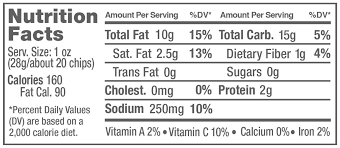
Based on the label, how many chips are in 1 serving of this bag of potato chips?
a)
20 chips
b)
28 chips
c)
160 chips
d)
90 chips
36.
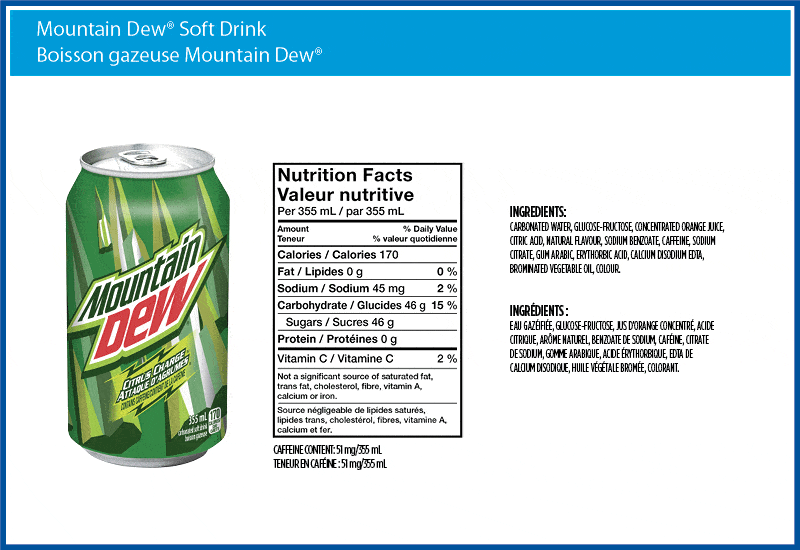
How many calories in a can of Mountain Dew?
a)
170
b)
45
c)
12 oz
d)
355
37.

What is the healthiest Starbucks drink in the table above?

a)

Iced Juniper Latte

b)

Iced Latte Macchiato

c)

Iced Peppermint Mocha

d)

Iced Peppermint White Chocolate Mocha

38.
What information must be listed on a food label?
a)
Ingredient List
b)
Calories per serving
c)
Serving size
d)
All of these answers
39.

Nutrients you should get less of is Dietary Fiber, Vitamin D, Calcium, Iron, and Potassium.

a)

true

b)

false

40.

This type of nutrient is needed in larger amounts and includes proteins, fats, and carbohydrates

a)

Carbohydrate

b)

Micronutrient

c)

Mineral

d)

Macronutrient

41.

The starches and sugars found in foods; esp. in plant based foods. They are the main source of energy.

a)

Fat

b)

Protein

c)

Carbohydrates

d)

Nutrients