Wayground logo

Free Printable Worksheets

Font size

S
M
L
XL
Worksheets

9 Weeks Testlet 1 Review

Total questions: 58

Worksheet time: 2hrs 22mins

Name
Class
Date
1.
All of the following are characteristics of all living things EXCEPT
a)
Respond to stimulus
b)
Grow and develop
c)
maintain homeostasis
d)
Movement
2.
A camel has eyelashes that work to keep the dust and sand out of its eyes.
a)
All living things adapt to their environment
b)
All living things grow
c)
All living things have cells
d)
All living things use energy
3.
A tulip opens in the morning at sunrise and closes in the evening at sunset.
a)
All living things have cells
b)
All living things use energy
c)
All living things respond to their environment
d)
All living things grow
4.

Maintaining a stable internal

environment is called

a)

homeostasis

b)

equilibrium

c)

balance

d)

evenness

5.
In order for something to be considered a living organism, it must display _____ of the eight characteristics of living things.
a)
all
b)
some
c)
one
d)
more than half
6.
What part of a virus is the protein capsule that houses the genetic material (DNA/RNA)?
a)
tail
b)
nucleus
c)
capsid
d)
glycoprotein
7.
Is a virus considered living or non-living?
a)
Living
b)
Non-Living
c)
Neither
8.
What do viruses have in common with living cells? They both...
a)
store genetic information
b)
have chloroplasts
c)
use glucose for cellular respiration
d)
have endoplasmic reticulum
9.
What do viruses need to reproduce?
a)
they need genetic material
b)
They need a host cell
c)
They need  bacteria
d)
They need insulin
10.
Viruses are cells. 
a)
True 
b)
False
11.
What part of the virus is number 3?
a)
Capsid
b)
DNA
c)
Surface Markers
d)
Envelope
12.
What part of the virus is number 1?
a)
Capsid
b)
DNA
c)
Surface Markers
d)
Envelope
13.
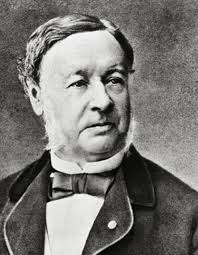
Robert Hooke, Anton van Leeuwenhoek, Theodor Schwann, Rudolf Virchow, and Matthias Schliden were all responsible for what theory?
a)
The Theory of Gravity
b)
The Theory of Relativity
c)
The Cell Theory
d)
The Theory of Continental Drift
14.
Which of the following scientists concluded that all animals are made of cells?
a)
Rudolf Virchow
b)
Matthais Schleiden
c)
Robert Hooke
d)
Theodor Schwann
15.

Who looked at cork and named the cell?

a)

Robert Hooke

b)

Van Leeuwenhoek

c)

Robert Brown

d)

Francesco Redi

16.

This scientist stated: "All animals are made of cells".

a)

Matthias Schleiden

b)

Theodor Schwann

c)

Robert Hooke

d)

Rudolf Virchow

17.

The scientist who stated: All plants are made of cells.

a)

Matthias Schleiden

b)

Rudolf Virchow

c)

Robert Hooke

d)

Aristotle

18.

What did Hooke first examine?

a)

Pond water

b)

Plant cells

c)

Cork

d)

Animal fat

19.

What scientist proposed that all cells come from preexisting cells

a)

Theodor Schwann

b)

Robert Hooke

c)

Rudolf Virchow

d)

Matthias Schleiden

20.
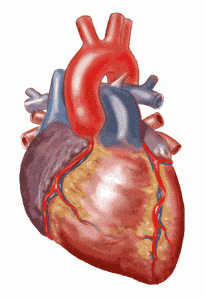
A group of tissues that perform a similar function is called_____. (Examples include the heart, lungs or stomach)
a)
cells
b)
tissues
c)
organs
d)
organ system
21.
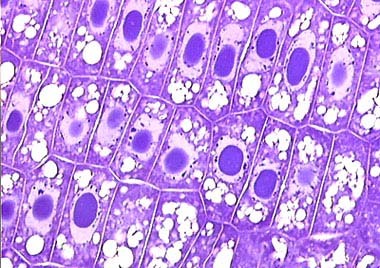
 A group of cells that have similar functions? Examples are nervous, epithelial, muscle and connective
a)
cells
b)
tissues
c)
organs
d)
atoms
22.
The ___________ is the basic unit of life
a)
organ
b)
cell
c)
atom
d)
tissue
23.
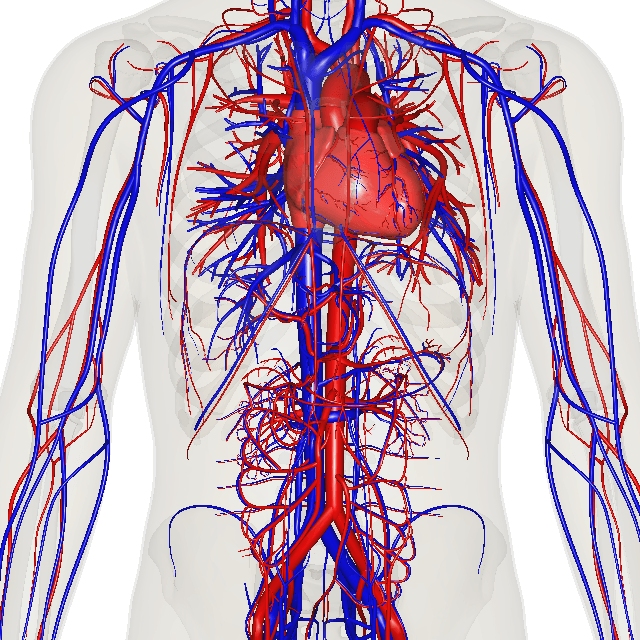
When many organ systems work together it can form...
a)
organ
b)
cells
c)
organ system
d)
organism 
24.
This is a example of ........
a)
organ
b)
organ system
c)
tissue
d)
cell
25.
What is the correct order of organization
a)
tissues-cells-organs-organ systems-organism
b)
cell-tissue-organs-organ systems-organism
c)
organism-cells-tissues-organ systems-organism
d)
tissues-cells-organs-organ sytems-organism
26.
This is a example of ........
a)
cell
b)
tissue
c)
organ 
d)
organ system
27.
This is a example of ........
a)
cell
b)
organ system
c)
organ
d)
tissue
28.

Which macromole is the MAIN ENERGY source for all organisms

a)

Nucleic Acid

b)

Lipids

c)

Carbohydrates

d)

Protein

29.

Which macromolecule helps with cell membrane formation and includes Fats?

a)

Carbohydrates

b)

Lipids

c)

Protein

d)

Nucleic Acid

30.

Which macromolecule has amino acids as its monomer and is involved in nearly all cell functions?

a)

Nucleic Acid

b)

Lipids

c)

Carbohydrates

d)

Protein

31.

Which macromolecule transmits (sends) genetic information and has the monomer of nucleotides?

a)

Protein

b)

Nucleic Acid

c)

Carbohydrates

d)

Lipids

32.
The element _______is found in all of the organic compounds.
a)
Iron
b)
Nitrogen
c)
Carbon
d)
Oxygen
33.
What happens when enzymes are heated to a high temperature?
a)
The enzymes die.
b)
The shapes of the enzyme are altered or denatured
c)
The enzymes' amino acid sequence changes.
d)
The enzymes remain the same
34.
What happens when enzymes are heated to a high temperature?
a)
The enzymes die.
b)
The shapes of the enzyme are altered denature
c)
The enzymes' amino acid sequence changes.
d)
The enzymes remain the same
35.

Enzymes have a optimum ph

a)

true

b)

false

36.

What affects Enzyme activity?

a)

pH, temperature, & concentration

b)

pH, temperature, & environmental factors

c)

pH, only low temperatures, & salt

d)

pH, temperatures, & water pressure

37.

Which organelle contains DNA and controls the cell?

a)

Cell membrane

b)

nucleus

c)

nucleolus

d)

lysosme

38.

The gelatinous material inside the cell

a)

ribosomes

b)

lysosome

c)

granum

d)

cytoplasm

39.

Proteins are produced at this organelle.

a)

golgi body

b)

ribosome

c)

cytoskeleton

d)

cilia

40.

this organelle makes ATP.

a)

chloroplast

b)

mitochondria

c)

ribosome

d)

nucleolus

41.

This organelle packages and processes proteins

a)

Smooth ER

b)

Rough ER

c)

Golgi body

d)

vacuole

42.

Ribosomes are produced here

a)

nucleus

b)

nuclear membrane

c)

nucleolus

d)

chromosomes

43.

uses sunlight, carbon dioxide, and water to make glucose and oxygen

a)

chloroplast

b)

nucleus

c)

endoplasmic reticulum

d)

lysosome

44.
What three organelles are found in plant cells but not animal cells?
a)
Cell wall, Cell membrane and Chloroplasts
b)
Cell membrane, Permanent vacuole and Chloroplasts
c)
Cell wall, Permanent vacuole and Chloroplasts.
d)
Cell wall, Permanent vacuole and Cytoplasm
45.
What type of cell has a nucleus? 
a)
eukaryotic
b)
prokaryotic 
46.
What type of cell does not have a nucleus?
a)
eukaryotic 
b)
prokaryotic 
47.
Which of the following in NOT a characteristic of eukaryotic cells?
a)
DNA is separated from the cytoplasm by a nuclear membrane
b)
Large
c)
Complex 
d)
Lack membrane-bound organelles
48.
Prokaryotic and eukaryotic cells have many differences, but they also share some common features.  Which of the following may be found in either type of cell?
a)
Golgi bodies
b)
ribosomes
c)
mitochondria
d)
nucleus
49.
Osmosis is the diffusion of _____ across a selectively permeable membrane.
a)
food
b)
air
c)
water
d)
oxygen
50.
 An animal cell placed in a hypertonic (salty) solution will
a)
Stay the same
b)
Shrink- get smaller
c)
Swell- get bigger
51.
If you looked at red blood cells under a microscope and saw the blood cells exploded, what would you say happened?
a)
The cells were placed in a hypotonic solution.
b)
the solution was isotonic.
c)
The solution was hypertonic.
52.
What does selectively-permeable mean?
a)
The cell controls what passes in and out of the cell
b)
Nothing gets through
c)
The cell lets only large substances through
53.
Both side of a selectively- permeable membrane are equal. The sides are ______.
a)
isotonic
b)
hypertonic
c)
hypotonic
54.
If a cell is placed in a hypotonic solution, the cell will _______.
a)
stay the same
b)
swell (get bigger)
c)
shrink (get smaller)
55.
Diffusion and Osmosis are examples of...
a)
Active Transport
b)
Passive Transport
56.

Check the box next to what PLANT cells have/contain:

a)

cell wall

b)

nucleus

c)

chloroplast

d)

mitochondria

57.

Check the box next to what ANIMAL cells have/contain

a)

cell wall

b)

nucleus

c)

chloroplast

d)

mitochondria

58.

Which of the following plant parts are considered ORGANS?

a)

chloroplast

b)

root

c)

stem

d)

xylem

e)

leaf