
 Worksheets
AP bio 2020 Unit 1 Review
Total questions: 62
Worksheet time: 1hrs 25mins


Which of the following is NOT involved in capillary action in plants?
Xylem (transport tissue)
Adhesion
Cohesion
pH


These are all related to carbohydrate EXCEPT
Glucose
Nucleotides
Glycosidic bond
Cellulose
One of amino acids
Ribose
Adenosine
Sucrose
Methionine
The difference of DNA and RNA is the presence of
Uracil
Guanine
Adenine
Cytosine
When 2 amino acids undergo condensation, what bond is formed?
Hydrogen bond
Peptide bond
Van der Waals
Hydrophobic interaction
All amino acids must have these EXCEPT
carboxyl group
Aldehyde
Amine group
Hydrogen
The significance of a lipid
Thermal insulator
Catalysis
Transmit genetic information
Control growth
The polymer of carbohydrate EXCEPT
Starch
Collagen
Cellulose
Glycogen
the polysacchrides used for structure are
digestible by humans
beta glucose polymers
alpha glucose polymers
include glycogen
chitin
is found in some animals
is found in your liver
is digestible by humans
is a polymer of alpha glucose
An alpha helix
is the same as a beta pleated sheet
occurs when alpha glucoses bind
is the result of backbone interactions
the result of side chain interactions
disulfide bridges
are the result of backbone interactions
contribute to tertiary structure
are the result of hydrogen bonds
are the result of ionic bonds
secondary structure
is the direct result of primary structure
is the result of side chain interactions
include beta pleated sheets and alpha helixes
can be saturated or unsaturated
the difference between a purine and a pyrimidine
purines are larger
purines are smaller
purines have many more double bonds
purines are found in RNA not in DNA
Pyrimidines include
Uracil, Cytosine and Guanine
Uracil, Adenine and Thymine
Uracil, Cytosine and Thymine
all possible DNA nitrogen bases, but not RNA
phospholipids
have two fatty acid chains
make up the cell membrane
are considered lipids
have a part that is hydrophilic
all of these
saturated fatty acids
are found in many plants
are found in animals
are liquid at room temperature
have bent carbon chains
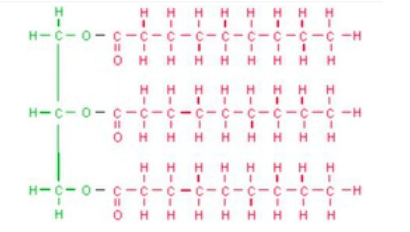
What makes up the vertical part of a triglyeride
a 3 carbon sugar
a 3 carbon fat
a fatty acid
none of these
Which biomolecule helps form muscles?
Nucleic Acid
Carbohydrate
Protein
Lipids

Which of the following is NOT a lipid?
Fats
Oils
Waxes
Proteins
Carbon's ability to make up to 4 covalent bonds is called
tetris
convolenence
tetravalence
volitivity
the average of a group of numbers is called the
mode
mean
median
range

