wayground logo

Free Printable Worksheets

Font size

S
M
L
XL
Worksheets

Chemistry - Concepts Covered Review

Total questions: 100

Worksheet time: 2hrs 40mins

Name
Class
Date
1.
This number is used to represent the number of each atom being represented.  What is the name of this number? 
a)
An Exponent
b)
The Coefficient
c)
A Molecule
d)
The Subscript
2.

The atomic number of oxygen is

a)

8

b)

15.9994

c)

16

d)

O

3.

Which of the following are true regarding Dalton's atomic theory? (Select all correct options)

a)

It failed to explain the nature of forces that bind together atoms in a molecule.
b)

It could not explain how and why atoms of different elements combine with each other to form compound atoms or molecules.

c)

It completely explained why atoms of different elements have different masses, sizes, valencies, etc.

d)

It explained the nature of forces that bind together atoms in a molecule.
4.
What are the 3 particles that make-up the atom?
a)
protons, neutrons, and isotopes
b)
neutrons, isotopes, and electrons
c)
positives, negatives, and electrons
d)
protons, neutrons, and electrons
5.

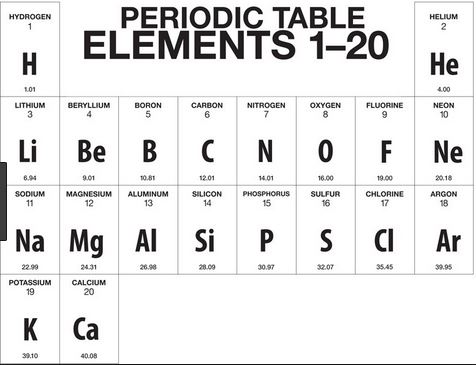
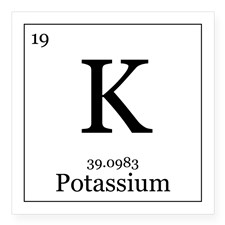
How many neutron are in the atom "K"?

a)

7

b)

2

c)

39

d)

12

6.
Most of the mass in an atom is concentrated in the...
a)
electrons
b)
nucleus
c)
protons
d)
empty space
7.

True or False? Neutrons have a negative charge

a)

True

b)

False

8.
If I gain electrons I become
a)
Positive because I've added to my atom
b)
negative because I've added electrons
c)
same because i'm balanced
d)
equal because now I have electrons
9.
An ion with a positive charge is a/an 
a)
anion
b)
cation
10.
An isotope of an element has the same number of _________, but a different number of _________.
a)
Protons, electrons
b)
Protons, neutrons
c)
Electrons, neutrons
11.
An elements reactivity and other chemical properties are determined by the number of….
a)
isotopes it has.
b)
oxidation states
c)
orbitals in an atom.
d)
valence electrons
12.
Which pair of elements have the same number of valence electrons?
a)
Lithium and Beryllium
b)
Magnesium and Sodium
c)
Lithium and Sodium
d)
Magnesium and Lithium
13.
What do elements in group 1 have in common?
a)
Number of valence electrons 
b)
Melting point of the element
c)
Possible number of bonds formed
d)
Metallic characteristics of the element
14.
Which of the following statements is true….
a)
A period is another name for a row
b)
Elements in the same period share similar physical properties
c)
Elements in the same period have the same number of energy shells surrounding the nucleus
d)
All of the above
15.
I which location on the Periodic Table are nonmetals found?
a)
Location 1
b)
Location 2
c)
Location 3
d)
Location 4
16.

Water is a universal solvent because it ...

a)

freezes when it gets cold.

b)

can be found anywhere.

c)

floats when frozen.

d)

dissolves most substances.

17.

What happens when water turns into ice?

a)

The water makes a crystal structure.

b)

All of the above.

c)

The water becomes a solid.

d)

The water expands when it freezes.

18.

Water particles ___________________.

a)

are attracted to each other.

b)

repel against each other.

c)

stick to water striders.

d)

cannot be broken down.

19.

Why is water considered polar?

a)

It makes 4 covalent bonds

b)

It is cohesive and adhesive

c)

It is a universal solvent

d)

It has a partial charge

20.

Which is true about a water molecule?

a)

The oxygen has a partially positive charge

b)

The hydrogen has a partially negative charge

c)

The carbon is neutral

d)

The oxygen has a partially negative charge

21.

Water has a high specific heat compared to other liquids.


A high specific heat means...

a)

It heats up quickly with energy added

b)

It requires more energy to change temperature

22.

Water is attracted to the sides of a glass tube due to which of its properties?

a)

Cohesion

b)

Adhesion "adhere, to stick"

c)

Universal Solvency

d)

Heat Capacity

23.

Attractions between the negative Oxygen atom of one water molecule and the positive Hydrogen atom of another water molecule are called

a)

Covalent bonds

b)

Ionic bonds

c)

Hydrogen bonds

d)

Polar bonds

24.

Large bodies of water, such as lakes and oceans, do not quickly change in temperature. Why?

a)

Water acts as a buffer.

b)

Water is a great solvent.

c)

Water is an acid.

d)

Water has a high heat capacity.

25.
Which statement best describes an effect of the low density of frozen water on a lake?
a)
When water freezes it contracts, decreasing the water level in the lake.
b)
Water in a lake freezes from the bottom up
c)
Water removes thermal energy from the land, causing the lake to freeze
d)
When water in a lake freezes, it floats and provides insulation for the organisms below
26.
Water is cohesive, the molecules are attracted to one another because of hydrogen bonds. This attraction helps create...
a)
surface action
b)
surface tension
c)
ice
d)
solvents
27.
A water molecule is polar. Its bent shape results in the following...
a)
slightly positive charge on hydrogen and slightly negative charge on oxygen
b)
slightly positive charge on hydrogen and slightly  positive charge on oxygen
c)
slightly negative charge on hydrogen and slightly positive charge on oxygen
d)
no change because its neutral
28.
When water travels up the stem of a plant, this is a result of
a)
surface tension
b)
capillary action and adhesion
c)
capillary action and cohesion
d)
capillary action, cohesion and adhesion
29.
What property of water is being shown?
a)
polarity
b)
freezing point
c)
hydrogen bonds
d)
solution/universal solvent
30.
What property of water is being shown?
a)
cohesion
b)
adhesion
c)
polarity
d)
freezing point
31.
What property of water is being shown?
a)
cohesion
b)
specific heat
c)
capillary action
d)
hydrogen bonds
32.
What property of water is being shown?
a)
cohesion
b)
adhesion
c)
freezing point
d)
capillary action
33.
What property of water is being shown?
a)
polarity
b)
hydrogen bonds
c)
surface tension
d)
capillary action
34.
What property of water is being shown?
a)
cohesion
b)
hydrogen bonds
c)
adhesion
d)
polarity
35.
Ice forming on top of a lake
a)
pH
b)
polar molecule
c)
universal solvent
d)
density
36.

Ice forming on top of a lake can be explained because of its

a)

low pH

b)

polar molecule

c)

universal solvent

d)

density

37.

Which of the following is the CORRECT list of water's properties?

Read Carefully!

a)

adhesion, cohesion, high specific heat, universal solvent

b)

adhesion, cohesion, low specific heat, universal solvent

c)

adhesion, no cohesion, low specific heat, universal solute

d)

no adhesion, cohesion, high specific heat, universal solute

38.

You body sweats to help prevent you from overheating. How does water regulate temperature?

a)

it lets heat pass through it

b)

it absorbs a lot of heat, then decreases in temperature

c)

it absorbs a lot of heat, but only increases a little in temperature

d)

heat is afraid of water and avoids it

39.

Water is polar. What does that mean?

a)

it is a molecule with opposite charges on opposite ends

b)

it is a molecule with no charge

c)

it is a molecule with identical charges on opposite ends

d)

it is a molecule with too many protons
40.

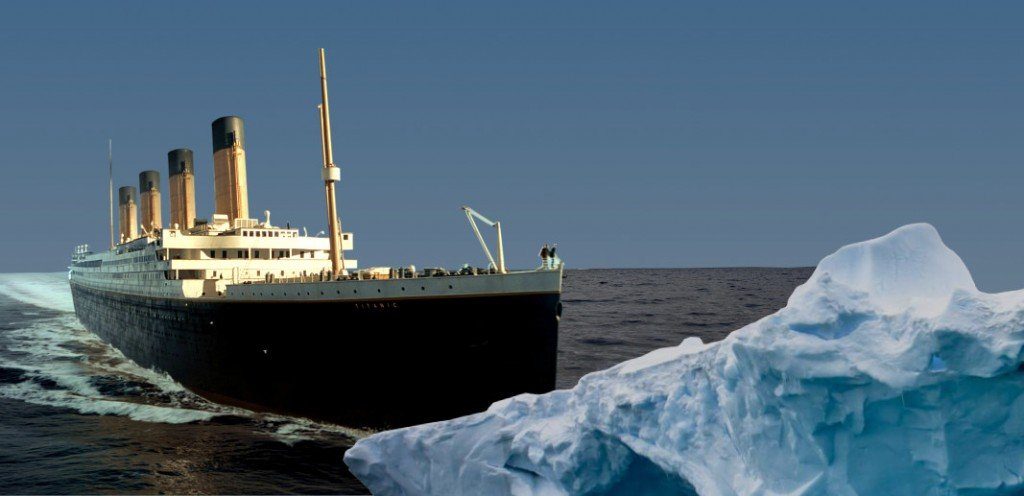
Why does ice float?

a)

water expands when it freezes, making ice less dense than water

b)

water compacts when it freezes, making ice more dense than water

c)

hydrogen bonds in water push the ice to the surface

d)

ice is afraid of water, and avoids it

41.

What are the bonds called between a slightly positive hydrogen in a polar molecule and a negatively charged atom?

a)

Hydrogen Bonds

b)

Water Bonds

c)

Covalent Bonds

d)

Bail Bonds

42.

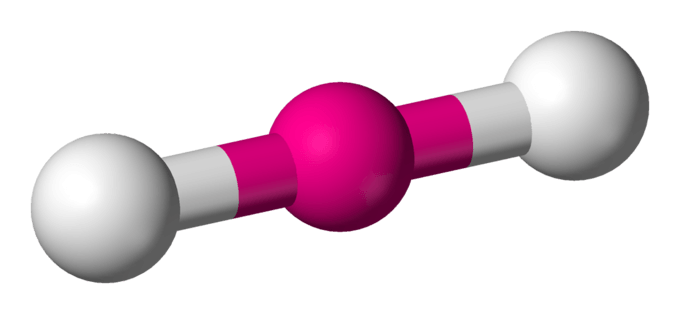
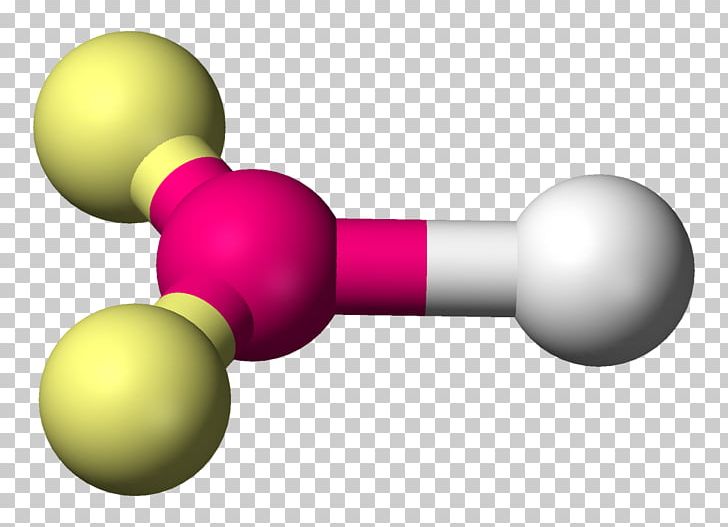
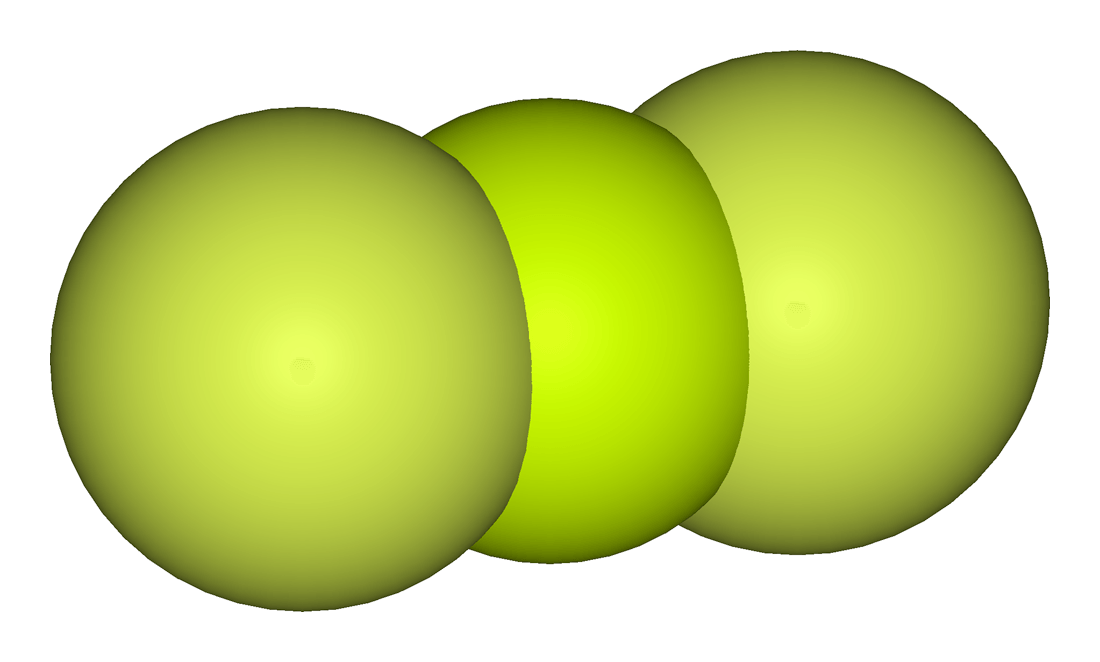
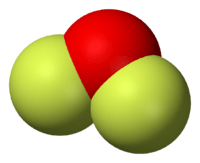
Which of the following is the correct molecular structure for water, H2O?
a)
b)
c)
d)
43.

A water strider can skate along the top of a pond because:

a)

covalent bonds result in water cohesion (surface tension)

b)

hydrogen bonds result in water cohesion (surface tension)

c)

water striders have adapted to take advantage of water cohesion

d)

water striders are afraid of water and avoid it

44.
The atomic number tells you what?
a)
number of electrons
b)
number of protons
c)
number of neutrons
d)
both electrons and protons in an atom.
45.
Which group of the periodic table is composed of inert (not reactive)  gases?
a)
alkali metals
b)
alkaline earth metals
c)
halogens
d)
noble gases
46.
Which is a halogen?
a)
Helium
b)
Chlorine
c)
Oxygen
d)
Neptune
47.
Elements in a ..................have similar chemical properties.  
a)
period
b)
group
c)
row
48.
Which of the following is the most reactive group of metals? 
a)
Alkali
b)
Alkaline Earth
c)
Halogen
d)
Transition Metals
49.
Which of the following groups is inert? 
a)
Alkali
b)
Transition Metals
c)
Halogens
d)
Noble Gas
50.
How many valence electrons does an alkaline earth metal have? 
a)
1
b)
2
c)
7
d)
8
51.

Which scientist edited the Periodic Table and arranged elements in increased atomic number?

a)

Rutherford

b)

Dalton

c)

Mendeleev

d)

Moseley

52.

Which scientist created the Periodic Table and arranged elements in increasing atomic mass?

a)

Rutherford

b)

Thomson

c)

Mendeleev

d)

Moseley

53.

What is the ability of an atom in a chemical compound to attract electrons from another atom in the compound?

a)

ionization energy

b)

electronegativity

c)

atomic radius

d)

electron affinity

54.

Isotopes of an element have different number of ___________ and therefore have different masses.

a)

Proton

b)

Neutron

c)

Electon

55.

Electron in the outermost energy level are called?

a)

Valence Electron

b)

Valence Proton

c)

Valence Neutron

56.

If an atom has an atomic mass of 11 and contains 5 electrons, its atomic number would be______

a)

11

b)

5

c)

6

57.

What is the Valence Electron of Neon (Ne)?

a)

1

b)

5

c)

8

58.

The abbreviation is commonly used to express atomic masses?

a)

amu

b)

grams

c)

protons

59.

What is the correct Lewis Dot Structure for ammonia NH3

a)
b)
c)
d)
60.
Which of the following is the correct Lewis dot structure for the molecule fluorine (F2)?
a)
A
b)
B
c)
C
d)
D
61.

CO2 has how many lone pairs?

a)

0

b)

1

c)

2

d)

3

e)

4

62.

In HCN (Carbon is usually the central atom) what kind of bond is between the C and N

a)

Single

b)

Double

c)

Triple

63.

How many valence electrons does Nitrogen Have?

a)

1 Valence electron

b)

2 Valence electron

c)

3 Valence electron

d)

4 Valence electron

e)

5 Valence electron

64.

This is a correct dot diagram for neon (Ne)

a)

true

b)

false

65.

How would you draw a Lewis dot diagram for Magnesium?

a)
b)
c)
d)
66.

Which of these is correct?

a)
b)
c)
67.
What is the octet rule?
a)
Elements can only have 8 electrons in its outermost shell
b)
The elements must form an octopus like structure
c)
Is the outermost electrons
d)
Elements can only have 6 electrons in its outermost shell
68.
Electron dot notation is . . . .
a)
A representation of an element in which only valence electrons of an atom are shown
b)
A representation of how compounds are formed.
c)
A representation of how the universe is made
d)
A representation of how Ionic bonds are made
69.
In the correct Lewis structure for water, how many unshared pairs of electrons will oxygen have?
a)
1
b)
4
c)
3
d)
2
70.
Which of the following elements will NOT be surrounded by an octet of electrons in a correctly drawn Lewis structure?
a)
carbon
b)
oxygen
c)
chlorine
d)
hydrogen
71.
Which of the following is an ionic bond?
a)
H3N
b)
CaCl2
c)
NO2
d)
SCl
72.
In a Lewis structure, what do you do  with the total number of valence if your ion is + charged?
a)
Divide the valence number by 1
b)
Multiply the valence number by 1
c)
Add 1 to the valence number
d)
Subtract 1 from the valence number
73.
In a Lewis structure, what do you do  with the total number of valence if your ion is 2- charged?
a)
Add 2 to the valence number
b)
Subtract 2 from the valence number
c)
Multiply the valence number by 2
d)
Divide the valence number by 2
74.
After drawing in your bonds, what do you do if you don't have enough electrons to get each atom to its octet?
a)
Place dots until everything has eight
b)
Place dots only around the terminal atoms
c)
Add a multiple bond
d)
Have eight only around the central atom
75.

The electron is not included in the calculations for the atomic mass because

a)

It has negative charge

b)

It is located in the outer energy levels of the atom

c)

Its mass is basically zero

d)

It attracts neutral particles

76.

What is the atomic number of this atom?

a)

1

b)

3

c)

4

d)

7

77.
In order for an atom to be neutral what has to be true?
a)
The atom has more protons than neutrons
b)
The atom has more neutrons than protons
c)
The atom has the same number of protons and neutrons
d)
The atom has the same number of protons and electrons
78.

Which of the following determines the identity of an element?

a)

number of protons

b)

atomic mass

c)

number of neutrons

d)

number of shells

79.

Typically, atoms are more stable when they are

a)

bonded together

b)

apart from each other

80.

An interaction that holds two atoms together called?

a)

Chemical Bond

b)

Covalent Bond

c)

Ionic Bond

d)

Metallic Bond

81.

Why do atoms bond?

a)

They typically don't bond

b)

To add or take away energy levels

c)

To have a full valance shell.

d)

To have a full inner shell

82.
How many valence electrons in this structure?
a)
6
b)
5
c)
4
d)
7
83.

2. Ionic Bonding involves:

a)

The transfer of protons

b)

The transfer of neutrons

c)

The transfer of electrons

d)

None Of the above

84.

Ionic bonding is between a

a)

nonmetal and nonmetal

b)

metal and nonmetal

c)

metal and metal

d)

Depends on the situation

85.

5. What happens when the sodium atom loses an electron?

a)

It become negatively charged

b)

It become positively charged

c)

none

86.

Which bond does this picture best represent?

a)

Metallic bond

b)

ionic bond

c)

covalent bond

d)

James Bond

87.

The most electronegative element is

a)

Chlorine

b)

Fluorine

c)

Iodine

d)

Sodium

88.

The reason for the existance of water in liquid state is

a)

covalent bonding

b)

hydrogen bonding

c)

permanent dipole attractions

d)

Van der Waals forces

89.

Metals are found in Group

a)

I only.

b)

II only.

c)

III only.

d)

I, II and III.

90.

During ionic bonding, electron(s) is/are

a)

shared between atoms.

b)

shared between metal and non-metal.

c)

transferred between atoms.

d)

transferred from metal to non-metal.

91.

Metals ........ electron(s) to form ................... ions.

a)

gain ; positive

b)

gain ; negative

c)

lose ; positive

d)

lose ; negative

92.

Non-metals .......... electron(s) to form .................... ions.

a)

gain ; positive

b)

gain ; negative

c)

lose ; positive

d)

lose ; negative

93.

Atoms go through chemical bonding so as to achieve

a)

a complete inner electron shell.

b)

an outer electron shell with 2 electrons.

c)

an outer electron shell with 8 electrons.

d)

a noble gas structure.

94.
All chemical bonds involve two atoms sharing electrons.
a)
True
b)
False
95.

If I was trying to determine if two atoms will bond, what would be helpful to know:

a)

Valence electrons, found by group number

b)

Whether the elements are metals or nonmetals

c)

The electronegativity of the atoms

d)

All of the above, all of which can be found on the Periodic Table

96.
Why does ice float?
a)
As water freezes, it expands and its density decreases.
b)
As water freezes, it takes up more hydrogen from the atmosphere, causing it to have a greater buoyancy.
c)
As water freezes, air becomes trapped between the hydrogen bonds of water molecules.
d)
As water freezes, it takes up more oxygen from the atmosphere, causing it to have a greater buoyancy.
97.
Which of the following is LEAST likely to dissolve in water?
a)
nonpolar fats and oils
b)
polar sugar molecules
c)
salt made of a positive sodium ion and a negative chloride ion
d)
all of the substances will dissolve easily in water
98.
 Small insects can walk across the surface of calm water. Their feet push the surface of the water down slightly, somewhat like a person walking across a trampoline, but they do not break the surface. What is the best explanation for why this happens?
a)
The insects are light enough so that they do not break the hydrogen bonds holding the water molecules together
b)
The insects actually use their wings to hover slightly above the water's surface and they only skim it with their feet
c)
The insects' feet are non-polar, so they are repelled by the polar water molecules and are pushed away from the water's surface
d)
The insects are small enough to see the individual water molecules, so they are able to step carefully from one molecule to the next
99.
Why does water move from the roots to the leaves of plants?
a)
Water is pushed by solutes
b)
Capillary action pulls the water molecules like a chain
c)
Water is pulled by gravity
d)
Water’s cohesion causes it to “pull” towards the leaves
100.

Water is polar. What does that mean?

a)

it is a molecule with opposite charges on opposite ends

b)

it is a molecule with no charge

c)

it is a molecule with identical charges on opposite ends

d)

it is a molecule with too many protons