Wayground logo

Free Printable Worksheets

Font size

S
M
L
XL
Worksheets

Evolution and Ecology

Total questions: 63

Worksheet time: 44mins

Name
Class
Date
1.

How many pests were in Mao Zedong's campaign?

a)

1

b)

2

c)

3

d)

4

2.

The Four Pests Campaign is an example of...

a)

a successful government campaign

b)

unintended consequences

c)

how to get rid of disease carrying insects

d)

thinking things through before action is taken

3.

What happened about 2 years into the Four Pests Campaign? (Select all that apply)

a)

locust plague

b)

overplanting

c)

overplowing

d)

drought

e)

successful removal of the sparrow completely

4.
What does biotic mean?
a)
Living
b)
Non living
c)
Man made
5.
Which of the following is biotic?
a)
Building
b)
Apple
c)
Rock
d)
Sun
6.
The study of how living things interact in an environment is called
a)
Ecosystem
b)
Biology
c)
Ecology
7.

How is water an important abiotic factor?

a)

You drink it and hydrate

b)

Animals live in it

c)

Plants need it to grow

d)

Allows you to carry out life processes

8.

A group of similar cells working together is called...

a)

cell

b)

tissue

c)

organ

d)

organ system

e)

multicellular organism

9.

A system of organs that are functioning together to perform a specific job is called:

a)

cell

b)

tissue

c)

organ

d)

organ system

e)

multicellular organism

10.

The basic unit of structure and function in any living thing is:

a)

cell

b)

tissue

c)

organ

d)

organ system

e)

organism

11.

A living thing composed of different organ systems working together is called a(n)

a)

cell

b)

tissue

c)

organ

d)

organ system

e)

multicellular organism

12.

Which level of organization should letter C represent?

a)

organ

b)

cell

c)

organ system

d)

multicellular organism

e)

tissue

13.

In this photo, what is an abiotic factor?

a)

Deer

b)

Grass

c)

rain

14.
Which of the following is not an example of an ecosystem?
a)
Jungle
b)
Pond
c)
Your yard
d)
Desert
15.
What does abiotic mean?
a)
Living
b)
Non-living
c)
Man made
16.

Mark ALL the abiotic factors listed.

a)

Waterfall

b)

Flowers

c)

Grass

d)

Clouds

17.
Examples of a producer
a)
frog
b)
algae
c)
worm
d)
mouse
18.
What is a producer?
a)
an organism that gets energy from eating other organisms
b)
an organisms that uses sunlight to make its own food
c)
an organism that gets energy from eating dead organisms, non-living material or waste
d)
an organism that uses chemical energy to make its own food
19.
An individual belonging to a specific species
a)
Biotic
b)
Community
c)
Organism
d)
Reptile
20.
All of the living and nonliving things in an area that interact with each other are called a/an ______.
a)
community
b)
habitat
c)
population
d)
ecosystem
21.
An area where an organism finds food, shelter and water in a specific arrangement
a)
niche
b)
biosphere
c)
biome
d)
habitat
22.
Organisms that look similar and can produce fertile offspring
a)
Species
b)
Fish
c)
Community
d)
Trees
23.
Two or more members of a particular species living and interacting in the same area
a)
Community
b)
Population
c)
Organisms
d)
Biosphere
24.
Different populations living and interacting with each other in the same area
a)
Biome
b)
Ecosystem
c)
Community
d)
Niche
25.
The area between the highest mountain and the deepest ocean where life can be found
a)
Biosphere
b)
Biome
c)
Farm
d)
Ecosystem
26.
A collection of organisms that make up a community as well as all of the nonliving aspects of the environment.
a)
Population
b)
Community
c)
Habitat
d)
Ecosystem
27.

Tolerance is

a)

the relationship in which two species live close together.

b)

series of gradual changes that occur in a community following a disturbance.

c)

any necessity of life, such as water, light and food.

d)

the ability of an organism to survive and reproduce under circumstances that differ from their optimal conditions.

28.

The fish, algae, plants, insects and other organisms that reside in the local pond.

a)

Population

b)

Community

c)

Ecosystem

d)

Biosphere

29.

What does letter C represent?

a)

optimal range

b)

zone of physiologic stress

c)

zone of intolerance

30.

What does letter E represent?

a)

optimal range

b)

zone of physiologic stress

c)

zone of intolerance

31.

Which area has too little of the critical factor?

a)

A

b)

B

c)

C

32.

What does letter B represent?

a)

optimal range

b)

zone of physiologic stress

c)

zone of intolerance

33.

What type of adaptation is this: Birds migrate south during the winter

a)

Physical

b)

Behavioral

c)

Physiologic

34.

What type of adaptation is this: Deer that live in colder climates have thick fur.

a)

Physical

b)

Behavioral

c)

Physiologic

35.

What type of adaptation is this: Certain fish living in Antarctica have special proteins in their cells that act as antifreeze.

a)

Physical

b)

Behavioral

c)

Physiologic

36.

Which of the following is an example of a vestigial structure?

a)

The presence of carpel bones in humans and penguins.

b)

The similar DNA present in primates and humans.

c)

The shrunken appendix in humans that is not longer necessary for survival.

d)

Peacocks grow large bright feathers to attract a mate.

37.

A turtle and an armadillo have similar body designs - they both have hard, outer shells to protect them. They originate from different continents. What is this an example of?

a)

Divergent speciation

b)

Convergent speciation

c)

Competition

d)

Mutualism

38.
In this tolerance diagram, the optimal or ideal range of conditions is:
a)
Across the whole chart
b)
Where the line of the curve is at its highest
c)
On the far right and left of the bell curve
d)
There is no way to tell
39.
The change over time in populations of related species.
a)
biological evolution
b)
transition
c)
variation
d)
adaptation
40.
These cause variations.
a)
mutations
b)
adaptations
c)
a desire to change
d)
injuries
41.
Body parts of organisms that are the same in structure and position but different in function.
a)
embryos
b)
homologous structures
c)
analogous structures
d)
vestigial structures
42.
Body parts that function like each other, but are different in structure.
a)
embryos
b)
homologous structures
c)
analogous structures
d)
vestigial structures
43.
Body parts that have lost their original function.
a)
embryos
b)
homologous structures
c)
analogous structures
d)
vestigial structures
44.
Studying the development of ____ can provide scientists with evidence that certain species are related.
a)
fish
b)
embryos
c)
Tiktaalik
d)
vestigial structures
45.
When an organism of a species is born with a variation in a trait that gives it an advantage in its environment, we call that trait an adaptation.
a)
true
b)
false
46.
When an organism of a species has an adaptation, it will compete for resources better, survive longer and pass that adaptation on to it's offspring. This process is called
a)
evolution by natural selection
b)
artificial selection
c)
inbreeding
d)
outbreeding
47.
What is it called when humans decide which traits of an organism are the most desirable and only allow those organisms with the specific, desired traits to breed.
a)
biological evolution
b)
evolution by natural selection
c)
artificial selection
d)
inbreeding
48.
The English naturalist that developed the theory of how evolution works.
a)
Charles Darwin
b)
Charles M. Schulz
c)
Charles Dickens
d)
Charles Norris
49.
Why do peppered moths tend to be the same color as the trees on which they live?
a)
The coloring goes along with tasting like the tree. 
b)
It keeps the moth the same temperature as the tree. 
c)
It makes the moths faster than the birds
d)
It makes the moths harder to see.
50.
Which of these is an example of natural selection?
a)
The largest animal in a population will have more opportunities for reproduction.
b)
Several species of organisms work together so that they all succeed.
c)
One species takes all the resources in an environment leaving none for others.
d)
Organism that are best suited to an environment tend to survive and reproduce more often.
51.
Evolution works by 
a)
individuals changing to suit their environment
b)
Individuals learned new traits and pass them on
c)
sudden change in the environment cause a species change 
d)
small changes pass down through many generations
52.
What might account for the fact that all of these limbs share similar structures?
a)
They came from the same source
b)
They are all from one animal
c)
They are very similar organisms
d)
Cooincidence
53.
Why are advantageous traits more likely to be passed onto offspring?
a)
Because they are more likely to survive and reproduce.
b)
Because they come from dominant alleles.
c)
Because they come from recessive alleles.
d)
Because the trait is an acquired phenotype.
54.
Which organisms are most likely to survive?
a)
the best adapted
b)
the fastest
c)
the strongest
d)
the most domesticated (tamed)
55.
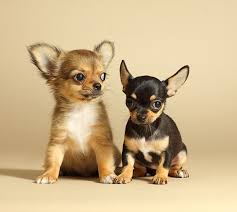
Dogs such as Chihuahuas are examples of....
a)
Artificial Selection 
b)
Natural Selection 
c)
Mutations 
56.

A species could go extinct if:

a)

food becomes more plentiful.

b)

members of the species have adaptations to enhance survival.

c)

the environment changes drastically and no one can adapt.

d)

there is less competition for resources.

57.

Natural selection occurs during the lifetime of a single organism.

a)

True

b)

False

58.

TRUE or FALSE: Natural selection will still occur if each individual has the same exact traits

a)

TRUE

b)

FALSE

59.

How do you "win" at natural selection?

a)

survive

b)

go extinct

c)

survive & reproduce

60.

Female water frogs tend to be attracted to the males with the loudest and most distinctive mating call (an acoustical display).

a)

directional selection

b)

stabilizing selection

c)

disruptive selection

d)

artificial selection

e)

sexual selection

61.
Organisms with traits that are favorable to their survival and reproduction are ________ likely to pass on their genes to the next generation, and thus ________ common in the population
a)
more, less
b)
more, more
c)
less, less
d)
less, more
62.
speciation
a)
Formation of new species
b)
idk
c)
Formation of old species
d)
none of the above
63.

Females increase the fitness of their offspring by choosing males with superior fitness; females are therefore concerned with quality.

a)

stabilizing selection

b)

directional selection

c)

disruptive selection

d)

sexual selection