
 Worksheets
Dr. Potts - Q1 Test Review
Total questions: 93
Worksheet time: 57mins
Air is:
An element
A compound
A mixture
None of these
Most of the mass of an atom is because of the total mass of the .......
The electrons and protons
The protons & neutrons
The electrons and neutrons
The electron cloud


Pure substances include:
Elements
Homogeneous Mixtures
Compounds
Heterogeneous Mixtures
An element is?
Chemically combined
Pure substances that can be broken down
Pure substances that cannot be broken down into simpler substances
One or more elements chemically combined.
If Oxygen has an atomic mass of 16. What does this tell you about oxygen?
the number of electron shells in an oxygen atom
the number of protons and neutrons in the nucleus of an oxygen atom
the number of electrons orbiting the nucleus of an oxygen atom
the number of electron shells in an oxygen atom

Pure Substance
MIxture
The horizontal rows on the PTE are
The groups, The group # tells how many electron shells are required to house the electrons of one atom of each element.
The families, The family # tells how many electron shells are required to house the electrons of one atom of each element.
The period. It list elements that are similar in chemical and physical properties
The period, The period # tells how many electron shells are required to house the electrons of one atom of each element.
Nickel has the chemical symbol Ni and atomic number 28. It is a silvery-white metal and cannot be broken down physically or chemically into a more simple substance. Nickel is a ___________________ .
element
compound
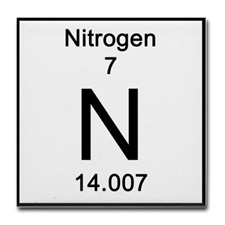
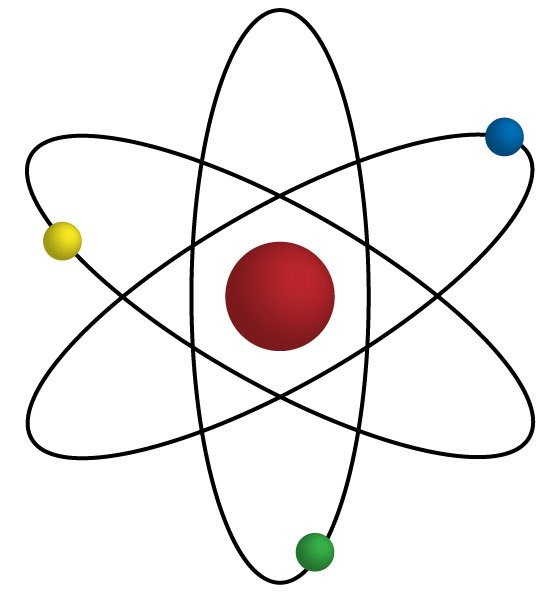
Fruit Loops, pizza, and Skittles are examples of ____________________ mixtures.
heterogeneous
homogeneous
pure


In a ______________, one substance is dissolved in another substance.
solution
suspension
colloid
A ______________ mixture is one that does not have a uniform composition.
heterogeneous
homogenous
pure substance
Which group reacts explosively with water?
Metals
Alkali metals
Transition metals
Non-metals

The atomic mass tells you....
The average # of protons and neutrons in the nucleus of one atom of an element
The total # of electrons and neutrons in the nucleus of one atom of an element
The total # of electrons in the nucleus of one atom of an element
The total # of neutrons in the nucleus of one atom of an element
A _________________ mixture is one where the substances are evenly spread throughout.
heterogeneous
homogeneous
pure substance


Which element has more in common with Argon (Ar)?
Chlorine (Cl) because it's electrons fill the same number of shells as Argon (Ar)
Neon (Ne) because it's in the same period as Argon (Ar)
Neon (Ne) because it's in the same family/group as Argon (Ar)
Chlorine (Cl) because it's in the same family/group as Argon (Ar)

In the Atom the......
Electrons have a positive charge
Neutrons have a neutral charge
Protons have a neutral charge
Neutrons have a negative charge
Coffee, mouthwash, and vinegar are examples of __________________ mixtures.
heterogeneous
homogeneous
pure
What is the acronym that you learned to help you with Atomic structure?
MAN-DOWN
APE-MAN
MAN-APE
PEMDAS

The element in period 5, group 4 is?
Dubnium (Db)
Antimony (Sb)
Tin (Sn)
Zirconium (Zr)
APE-MAN means that.....
Mass - atomic # = Neutrons
Atomic # = Protons = Electrons = Mass
Atomic # = Nuetrons = Electrons
Mass - Neutrons =Atomic #
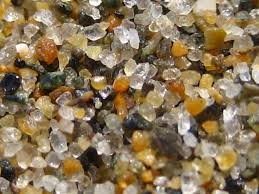

What is it?
Pure Substance
Mixture


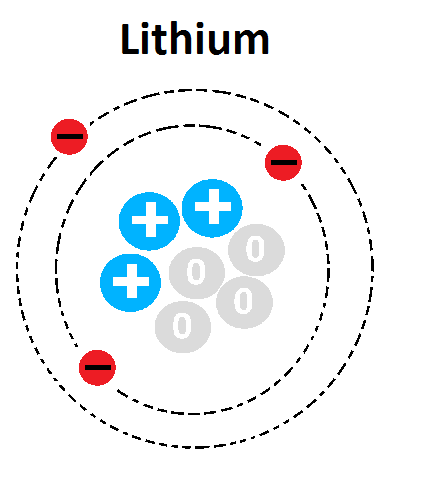


Pure substances include:
Elements
Homogeneous Mixtures
Compounds
Heterogeneous Mixtures

Look at the image and make your selection
The object in the first picture is most likely a liquid
The object in the first picture is most likely a gas
The object in the first picture is most likely a solid
The object in the first picture is most likely a plasma
Anything that has mass and takes up space (the STUFF all things are made of – solids, liquids, and gases)
Weight
Density
Volume
Matter
The amount of matter (stuff) in an object or substance solid, liquid, gas. Measured in kg, g, or mg.
Matter
Density
Mass
Volume
The force of gravity pulling on an object (solid, liquid, gas)
Weight
Mass
Volume
Density

What best explains the graphic and information that you see above?
The astronaut's weight and mass are the same, because weight and mass measure the same thing.
The astronaut's weight and mass are the different, because density varies when you travel to outer space.
The astronaut's mass changes as he travels to different places because the gravitational pull is different in each place.
The astronaut's weight changes as he travels to different places because the gravitational pull is different in each place.
A measurement of how much space something takes up, is the objects.....
Volume
Mass
Density
Weight

What is the volume of this object?
80 cm3
10 ml3
80ml2
80cm2
How do you get the volume of an irregularly shaped object?
V= L x W x H
V= M/D
Water Displacement
Using a scale

What is the combined volume of the two objects that are pictured above?
4 ml
6 ml
10 ml
2 ml

What is the volume of one of the objects placed in the water above?
2ml
4 ml
1 ml
6 ml
How much mass is in a given amount of space is an objects......
Mass
Density
Volume
Weight
Density =????
M/V
V/M
L x W x H
M x V
An object will float on top of a liquid if.......
It has a density that is less than the liquid that you place it in
It has a density that is more than the liquid that you place it in
It has a density that is equal to liquid that you place it in
It has a volume that is equal to liquid that you place it in

The following objects will float on water based on the picture above.
Air & methanol
Ice & Aluminum
Lead & Gold
Wood & Air
100 mL of Coca Cola has a mass of 110 g. What is the density of the Coca Cola?
1.1 g/cm3
0.90 g/cm3
11,000 g/cm3
1000 g/cm3
The state of matter with a definite volume but NOT definite shape is a.....
liquid
solid
gas
plasma
1) Particles are not free to move around very much
2) Particles vibrate back and forth in the same position -
3) Have definite shape and volume
This describes which state of matter?
Plasma
Solid
Liquid
Gas
The following is a description of which state of matter?
1) Molecules are spread apart and move around at high speeds
2) No definite shape or volume
3) Particles Do not interact much with each other
4) The Intermolecular forces between the particles have little to effect on motion
plasma
gas
solid
liquid
The following is a description of which state of matter?
1) Has no definite shape or volume
2) Is the result of superheated and electrically charged ions
3) Found on the sun or in lightning
plasma
gas
liquid
solid
_____________is a measure of the average kinetic energy of all particles in an object
Weight
Volume
Mass
Temperature
Adding or removing _________ in the form of heat to a substance may result in a change of state
Heat
Energy
Temperature
Mass
What would you say about molecules of a solid in the fridge vs molecules of a solid sitting on the counter?
The molecules of the solid sitting in the fridge are vibrating faster than those of the solid sitting on the counter.
The molecules of the solid sitting in the fridge are vibrating just as fast than those of the solid sitting on the counter.
The molecules of the solid sitting in the fridge and those of the solid sitting on the counter are not moving at all, because they are a solid.
The molecules of the solid sitting in the fridge are vibrating slower than those of the solid sitting on the counter.

What is the outcome (DEPENDENT) variable?
plant height
time in days
sunflower
daisy
Which phrase defines a scientific theory?
A well supported explanation
An untested idea
An educated guess
An accepted description
A student hypothesized that the amount of sunlight a sunflower plant receives determines the number of sunflower seeds the plant produces. In her experiment, the number of seeds produces is the______
Test (independent) variable
Outcome (dependent) Variable
Control Variable
Control group
Students measured the temperature of the water at different depths in Lake Skywalker and found that the temperature varied.
What is the outcome (dependent) variable?
The temperature of the water
The depth of the thermometer
The location of the lake
The air temperature
Which goes on the x axis?
independent variable
dependent variable
control variables
monkeys

What is the general trend of this line graph?
You make the same amount of money regardless of how long you mow.
The more you mow, the more money you make.
The more you mow, the less money you make
Mowing is dangerous.
If Dr. Potts jumped off the Brooklyn Bridge and you did the same thing after, this is considered
replication
repetition
both of these
neither of these
The purpose of repetition in a scientific investigation is....
To find averages of data
data
To validate another scientist's work
To make the teacher happy
To ensure accuracy in the data
The things that are kept the same to ensure the results are due to the experiment is called....
independent variables
dependent variables
Control variables
placebo variable
A scientific theory...
Can eventually become a Scientific law
is based on lots of evidence
has not been tested many times
is not reliable
A(n) ____________ is a statement that describes what always happens under certain conditions in nature
scientific theory
scientific law
a hypothesis
independent variable
Theory or law? The cell _________ of living things: living things are made of cells, which explains how things grow and live.
theory
law
Theory or Law? Tectonic ________ of Geology: the surface of the earth is made of tectonic plates, which move slowly. Explains why mountains are formed, earthquakes happen, etc.
law
theory
Theory or Law? Newton's first ______ of Motion: Objects will stay in motion unless stopped. Shows what happens with moving objects.
law
theory
What is a pseudoscience?
A set of beliefs whose conclusions and predictions that is not based on observation, objective reasoning, or scientific evidence.
A set of beliefs whose conclusions and predictions that is based on observation, objective reasoning, or scientific evidence.
The same thing as science
The scientific method
If experimental findings are not reproducible
it is an indication of scientific fraud.
the results are not considered valid.
the results are considered valid, but not usable.
It's an indication that scientific method was not followed.
A scientist is performing an experiment to determine the melting point of a new substance. Which action could increase the likelihood of obtaining accurate results?
repeating the experiment three times
writing out the procedure after the experiment
experimenting with multiple substances
using three types of thermometers
A substance that has a PH of 6 is.....
A weak/slightly basic substance
A strong/highly basic substance
A weak/slightly acidic substance
A strong/highly acidic substance
A substance that has a PH of 14 is......
slightly basic
neutral
Highly basic
Highly acidic
A Neutralization reaction occurs when.....
An acid and base are combined and a slightly acidic substance and water are produced.
An acid and base are combined and a slightly basic substance and water are produced.
An acid and base are combined and a highly acidic substance and water are produced.
An acid and base are combined and salt and water are produced.
An example of a neutral substance is....
Rain Water PH - 6
Lemon Juice PH- 2
Distilled Water - PH-7
Laundry detergent - PH -11

