
 Worksheets
Unit 1: Chapters 1 - 4 Test Review
Total questions: 135
Worksheet time: 7hrs 45mins
Governments came about when people agreed to a contract; the people gave the state the power needed to maintain order; the state, in turn, agreed to protect its citizens
Divine Right Theory
Social Contract Theory
Force Theory
Evolutionary Theory
Institution which the state maintains social order, provides public services, and enforces decisions
Government
Territory
Politics
Magna Carta
Form of autocratic government; a king, queen, or emperor exercises the supreme powers of government
Monarchy
Democracy
Republic
Oligarchy
Any system of government in which a small group holds power
Monarchy
Democracy
Republic
Oligarchy
Any system of government in which rule is by the people
Monarchy
Democracy
Oligarchy
Autocracy
The people elect representatives and give them the responsibility and power to make laws and conduct government; an indirect democracy
Direct Democracy
Representative Democracy
The power of the monarch, or government, was limited not absolute
Rule of law
Limited government
Due process
Laissez-faire
Established rights for people (i.e. habeus corpus, civil liberties); first British document that set out individual rights
Limited government
Common Sense
The Social Contract
Magna Carta
Included elements of the Magna Carta; set clear limits on what a ruler could & could not do; monarchs: do not have absolute authority (rule with the consent of the governed); must have Parliament's consent to suspend laws, levy taxes, & maintain an army; cannot interfere with elections; people have a right to a speedy trial & jury of their peers; no cruel & unusual punishment or excessive bail
Magna Carta
English Bill of Rights
The Social Contract
The Leviathan
Enlightenment Philosopher who supported the social contract theory. He advocated that everyone is born with natural rights. In addition to this, he had a significant influence on the founding fathers, Thomas Jefferson in particular.
Thomas Hobbes
Thomas Paine
John Locke
Niccolo Machiavelli
Enlightenment Philosopher who supported to social contract theory. He said that people were selfish and an absolute monarchy was the best form of government. In his book, The Leviathan, he explained his views.
Thomas Paine
Thomas Jefferson
John Locke
Thomas Hobbes
Life, liberty, and property
Consent of the governed
Natural rights
Political rights
Social rights



Which clause states that the Constitution, laws and treaties of the national government are the “supreme law of the land.”
Extradition Clause
Supremacy Clause
Full Faith & Credit Clause
Privileges & Immunities Clause
Which clause is the Constitution's requirement that each State accept the public acts, records, and judicial proceedings of every other State.
Privileges and Immunities Clause
Extradition Clause
Full Faith & Credit Clause
Supremecy Clause
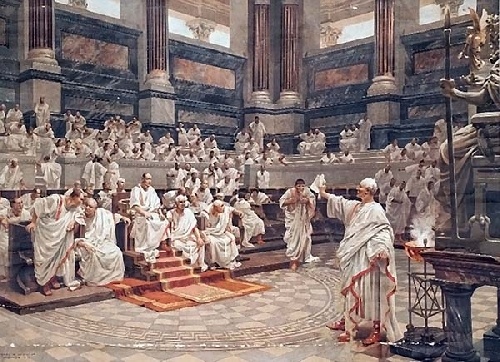
America's government is most similar to:
the Vatican's Theocracy
Middle Ages Monarchy
Athenian Democracy
Roman Republic

A government ruled by religious leaders
Democracy
Theocracy
Cheerocracy
Under the Articles of Confederation, most of the power was where?
Legislative branch
the president
the states
national government
Who chooses the President after citizens vote?
Commerce compromise
Great Compromise
Three-fifths Compromise
Electoral College
The job of the Legislative branch is to
make the laws.
interpret the laws.
carry out the laws.
enforce the laws.
Ratify means
to approve or give formal consent
to deny
to change a document
a branch in the government
Term for a change or addition to a document
amendment
ratify
more
unicameral
The United States constitutional system incorporates democratic elements that were developed in ___________ and Rome.
Washington, D.C.
New York
Paris
Athens
No quartering of troops
Which earlier document influenced this amendment in the United States Constitution?
Declaration of Independence
English Bill of Rights
Articles of Confederation
Mayflower Compact
Who signed the Magna Carta, limiting the King’s power?
King John
William the Conqueror
William and Mary
Charles I
Which document was written by Thomas Paine?
Social Contract
Common Sense
Mayflower Compact
Declaration of Independence
Why was the 9th Amendment added to the Constitution?
the framers worried they might have forgotten an important right
the framers wanted to make clear that basic rights were guaranteed even if they were not stated specifically
the Bill of Rights had to have ten parts
the English Bill of Rights listed nine rights
The 10th Amendment states that:
most powers belong to the national government
powers not given to the national government or prohibited from the states belong to the states of the people
the people are the source of all government powers
the states are the most important part of our government system
Nine out of the thirteen states had to ______ or pass the Constitution to make it law.
veto
amend
ratify
decline
The Anti Federalists would not approve of the Constitution unless
women won the right to vote
slavery was abolished.
a bill of rights was added.
the poor were given more help.

The newspaper headline below describes an event in U.S. history,
Based on the headline, what happened before the event presented in the image?
Two-thirds of each house of Congress voted to support the amendment.
The president rejected the amendment after Congress voted to support it
Three-fourths of each house of Congress voted to support the amendment.
The president forwarded the amendment to the states after Congress voted to support it
Why is a formal amendment process important?
To prevent the Supreme Court from being eliminated
To keep some states from being too powerful
To allow the Constitution to be adjusted as times change
To give the president a role in changing the government
Read the following scenario and answer the question below.
Congress has just passed a bill, and the president has approved it.
Which statement best explains how the law can still be prevented from being enacted?
The Speaker of the House can veto the law.
The people in each state can vote against the law.
The governors in each state can refuse to approve the law.
The Supreme Court can determine the unconstitutionality of the law.

Congress cannot make a law establishing a national religion. This is an example of which fundamental principle?
Rule of Law
Consent of the Governed
Limited Government
Representative Government
Which document protects peoples rights of freedom to petition?
The Declaration of Independence
The Articles of Confederation
The Bill of Rights
VA Statute for Religious Freedom
After a change to the constitution has been proposed by 2/3 of both Houses of Congress, what fraction of the state legislatures must ratify (approve) the amendment before it is added to the U.S. Constitution?
2/3
1/2
3/4
1/3
What fraction of the House of Representatives and Senate must pass a proposed amendment before it goes to the state legislatures for ratification?
2/3
3/4
1/2
1/4

Which amendment is represented in the picture?
19th
24th
26th
15th
It is difficult to amend the constitution because the framers wanted to make sure _____.
changes were only made when absolutely necessary
no one ever changed the Constitution
hardly anyone got a say
the President got all the say
gives citizens the right to formally ask for government changes
Freedom of Assembly
Freedom of Press
Freedom of Religion
Freedom of Speech
Right to Petition
Which two amendments declare that no person can be deprived "of life, liberty, or property without due process of law”?
5th Amendment
14th Amendment
15th Amendment
19th Amendment
23rd Amendment

What are interstate compacts or contracts?
trade among states
written agreements between two or more states
a group of states getting together to fight the federal government
the idea that laws past by congress will be the supreme law of the land
What does extradition mean?
giving up one's citizenship by leaving to live in a foreign country
the right of Congress to refuse to seat an elected member by a majority vote
a law that makes a crime of an act that was legal when it was commited
to return a criminal or fugitive who flees across state lines back to the original state
What are Elastic Powers?
powers that the government requires to carry out expressed constitutional powers
powers the Constitution grants to the national government
powers that the National Gov’t may exercise simply because it is a government
What are Inherent Powers?
powers that the government requires to carry out the expressed constitutional powers
powers that the national government may exercise simply because it is a government
powers that are directly stated in the constitution
What does Full Faith and Credit mean?
the requirement that states settle their differences with one another without the use of force
each state must give one another's citizens all the "privileges and immunities" of their own citizens
each state must return to a state criminals who flee across state lines
each state must recognize the laws and proceedings of every other state
What is a Block Grant?
a reverse grant-in-aid, in which money flows from the states back to the federal government
a grant of money used for broader programs with more local discretion in spending
a grant with an amount based upon population
a grant for a very specific purpose, and usually requires matching funds from local government
Which of the following is NOT and aspect of Categorical Grants?
is growing more slowly that block grants
usually requires matching funds
the main source of federal aid to states
must be used for a specific purpose
Which method of ratification was used for almost all the amendments to the Constitution?
two-thirds vote in Congress
state conventions
three-fourths of state legislatures
national convention
Article 1 of the Constitution is about....
The Legislative Branch
Executive Branch
Judicial Branch
How did it come about that the President’s Cabinet is made up of the heads of the 15 executive departments?
Custom and tradition have made it so.
This is outlined in the Constitution.
Congress wrote legislation requiring it.
The first President demanded this arrangement.
Which is one of the basic ideas of democracy?
People are equal except under the law.
The majority should keep control of the minority.
Compromise is not usually effective when settling differences.
Democracy should keep a balance between personal freedom and the law.
Most resolutions calling for amendments that are proposed in Congress
are rejected by the States.
just become regular laws.
never make it to the States.
become official amendments.
How does Congress fill in the blanks left by the Framers of the Constitution?
through basic legislation
through State conventions
by asking the Supreme Court to decide
by reading the Federalist Papers
A central notion of the American concept of democracy is that...
minority interests must always be subordinated to majority interests.
each individual has complete and absolute freedom.
the individual is of paramount importance.
all persons have a right to an equal share of worldly goods.
Services provided by the U.S. government are mostly intended to
provide for the common defense.
promote the general welfare.
keep Americans dependent on the government.
duplicate those already provided by private agencies.
Which keeps a state court from ruling against a national treaty?
Supremacy Clause
Bill of Rights
Full Faith and Credit Clause
reserved powers
Which is an exclusive power of the national government?
start a police force
borrow money
acquire territory
regulate elections
Which is an example of cooperative federalism?
The national government has no funds for block grants.
A state finds it difficult to understand federal laws.
A state moves its capital, though Congress disagrees.
The national government grants federal lands to the states.
Which does the Privileges and Immunities Clause require of all states?
Any citizen can become a resident of any state.
Out-of-state students cannot be charged higher tuition.
State residents get hired first when jobs become available.
Every state must enforce the criminal laws of all states.
What was the purpose of the Northwest Ordinance of 1787?
to help new states join the Union
to help Pennsylvania become a state
to give Congress the power to admit new states to the Union
to help the Northwest become a new nation
Which type of federal grant requires the states to contribute money?
contributory grants
project grants
block grants
categorical grants
Which of the following keeps a state from denying that a birth certificate is valid because it was issued by a different state?
Full Faith and Credit Clause
Supremacy Clause
interstate compact
division of powers
Which of the following types of discrimination would not be allowed under the Privileges and Immunities Clause?
A resident of one state cannot use the court system in another state.
A resident of one state must pay higher college tuition in another state.
A resident of one state must pay higher fishing license fees in another state.
A resident of one state cannot vote in another state.
Interstate compacts can be made
with the agreement of the President and the State governors involved.
only with the consent of Congress.
only for reasons stated in the Constitution.
at any time by any States.
Which of the following is an exception to the Full Faith and Credit Clause?
car registrations
criminal cases
property titles
birth certificates
Which of the following statements is true of categorical grants?
They are usually made with conditions attached.
They are appropriated by States rather than by Congress.
Grant recipients do not have to obey a set of guidelines.
They are made for very broadly defined purposes.
According to the Constitution, which must the national government guarantee for each state?
job training and employment programs
federal grants-in-aid programs
a republican form of government
a share of money from the federal income tax

