
 Worksheets
Biology- Communities, Biomes, and Ecosystems
Total questions: 104
Worksheet time: 2hrs 23mins


The amount of oxygen in a fish tank is a _______ that affects the number of fish that can live in the tank
Tolerance zone
Limiting factor
An area of forest that experiences very little change in species composition is a
Climax community
Primary succession
secondary succession
ecological succession
Which is a place you most likely would find pioneer species growing?
Climax forest
Coral reef
Disturbed grassland
Newly formed volcano
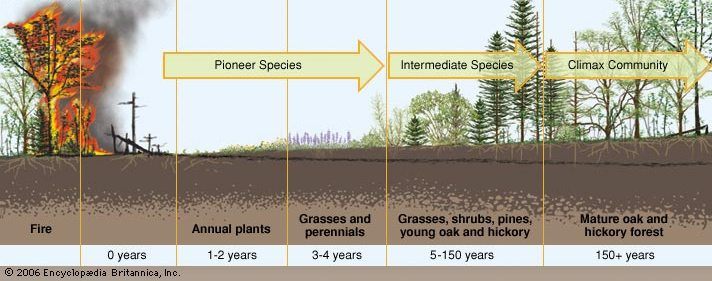
Which statement describes the first changes in a forest that would follow a forest fire?
A climax community is established
New plants grow from seeds that the wind carries to the area
New soil forms
Pioneer species are established
Ponds and lakes are
flowing-water ecosystems.
wetlands.
standing-water ecosystems.
estuaries.
The chemistry of aquatic ecosystems is determined by the
amount of salts, nutrients, and oxygen dissolved in the water.
the number of other organisms present in the water.
amount of rainfall the water receives.
biotic and abiotic factors in the water.
Which two biomes have the least amount of precipitation?
tropical rain forest and temperate forest
tropical savanna and tropical dry forest
tundra and desert
boreal forest and temperate woodland and shrubland
What is one difference between primary and secondary succession?
Primary succession is slow and secondary succession is rapid.
Secondary succession begins on soil and primary succession begins on newly exposed
surfaces.
Primary succession modifies the environment and secondary succession does not.
Secondary succession begins with lichens and primary succession begins with trees.
The series of predictable changes that occurs in a community over time is called
population growth.
ecological succession.
climax community.
climate change.
Which land biome contains the greatest species diversity?
tundra
desert
grassland
tropical rain forest
Where is the largest percentage of water located?
groundwater
rivers
oceans
glaciers
The first stage of succession after a volcanic eruption is probably the development of
mosses
shrubs
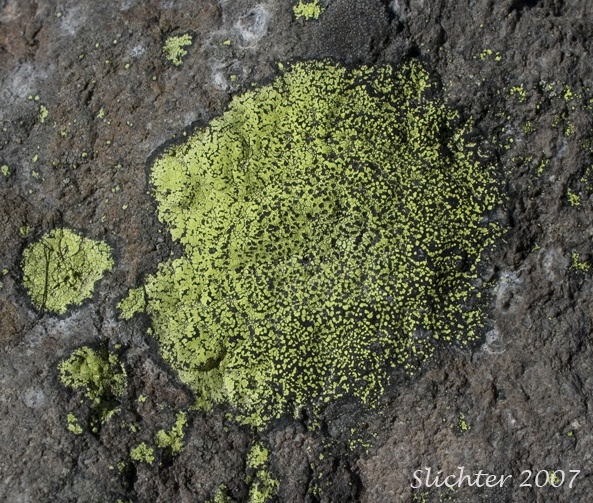
lichens
trees
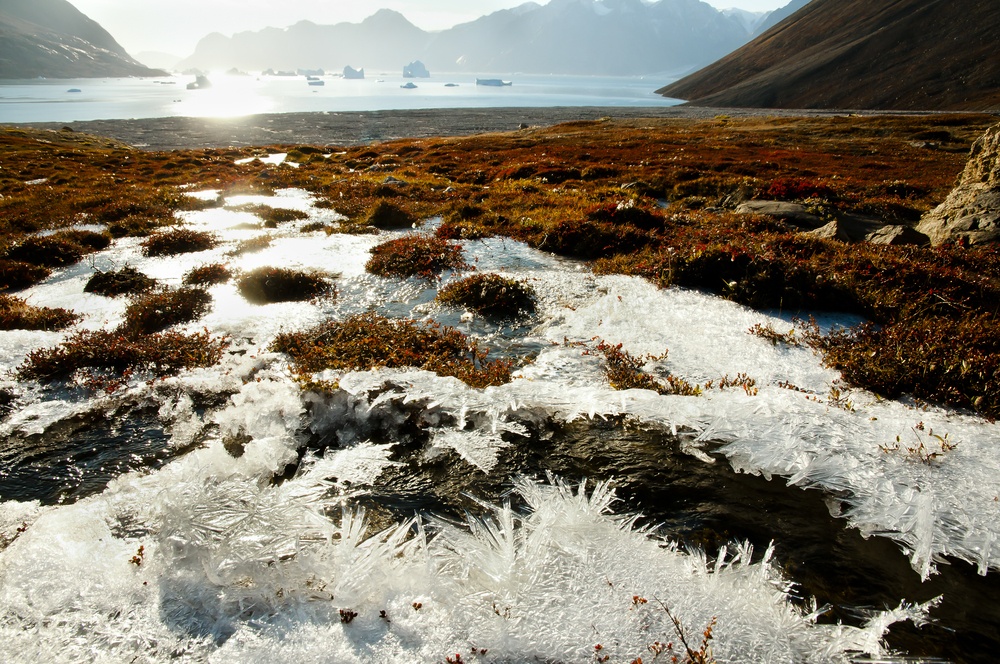
Permafrost is a characteristic of which biome?
Desert
Tundra
Temperate forest
Tropical rain forest
Which explains why secondary succession generally occurs more rapidly in an area than does primary succession?
Average precipitation is higher.
Moderate climatic conditions exist.
Pioneer species are microscopic.
Soil formation has already occurred.
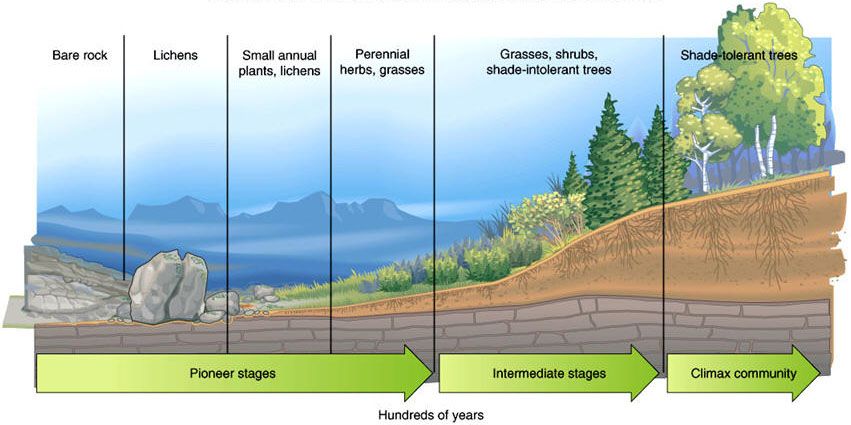
Analyze each of the sequences in the primary succession of species colonizing a newly formed volcanic island and select the option in the correct order.
bare rock, small annual plants, lichens, shade-intolerant trees, shade-tolerant trees
bare rock, lichens, small annual plants, perennial herbs and grasses, shade- intolerant trees
bare rock, lichens, perennial herbs and grasses, small annual plants, shade- intolerant trees
bare rock, lichens, small annual plants, perennial herbs and grasses, shade-tolerant trees
Besides plants, what other factor distinguishes one biome from another biome?
the number of plants in the biome
the variety of animal species
average temperature and precipitation
geographic location

All of the populations that live in one area together
limiting factors
populations
community
speed limit

Biotic factors include...
living things like animals, fungi, and plants
landfills
nonliving things like soil, rocks, and water
both living and nonliving things
Abiotic factors include...
living things like animals, fungi, and plants
landfills
nonliving things like soil, rocks, and water
both living and nonliving things

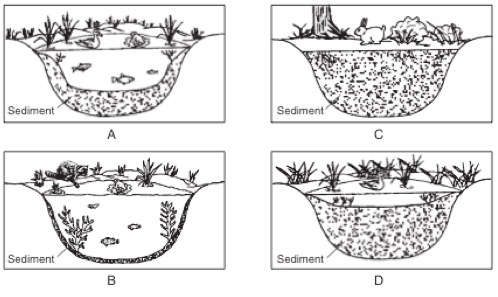

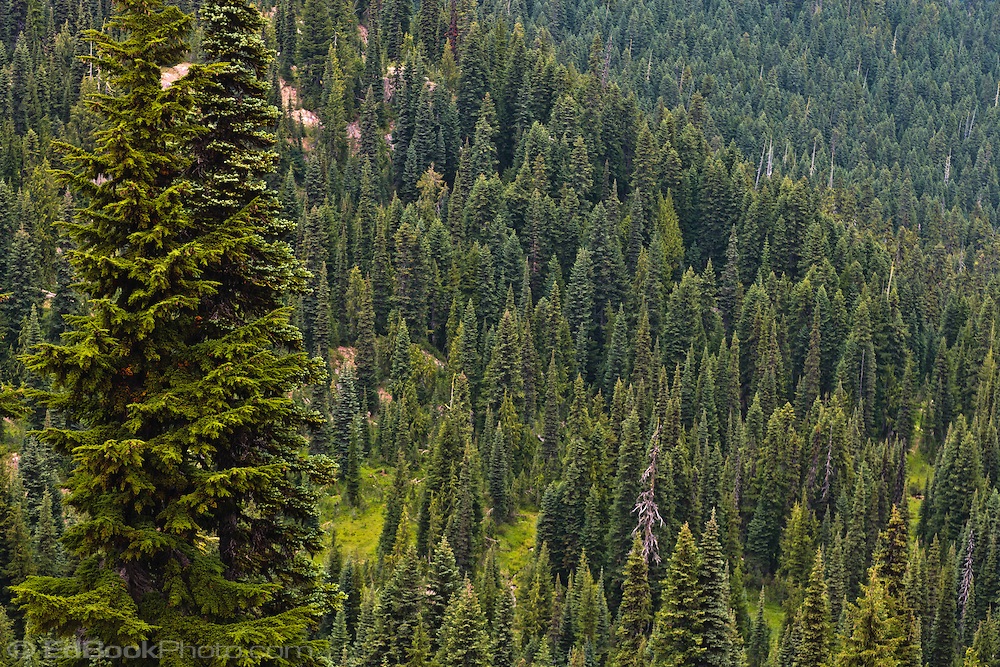


Which of the following are the two simplest classification of biomes?
Terrestrial and spacial
Terrestrial and aquatic
Land and air
Aquatic and marine
What is the difference between a biome and an ecosystem?
A biome is the interaction of living and nonliving things. An ecosystem is a large geographic area with living things.
A biome is is a large geographic area with living things. An ecosystem is the interaction of living and nonliving things.
There is no difference, biomes and ecosystems are the same thing.
None of these answers.
Which of the following could cause a biome to turn into a completely different biome over a long period of time?
Climate
Animals
Humidity
Rocks
What are the 4 main things that determine what life exists in a biome?
Temperature, soil, light, water
Humidity, light, temperature, food
Water, light, soil, humidity


What term best relates to equilibrium?
pioneer species
primary succession
secondary succession
climax community
Which would result in primary succession?
volcano destroying habitat leaving only soil and ash
Tornado destroying a crop leaving very little soil
Glacier retreating exposing bare rock
limiting factors
Which of the following is the correct order of ecological succession?
grass - shrubs - lichens - trees
lichens - shrubs - grasses - trees
lichens - grasses - shrubs - trees
grasses - lichens - shrubs - trees


All of these are environmental functions of wetlands EXCEPT
trapping pollutants
prevents erosion
adds runoff/pollution to the ecosystem
reduce chances of flooding
Area in a body of water where it is cool and dark and bottom-feeders are located.
Littoral Zone
Benthic Zone
Limnetic Zone
Aquatic life is abundant, diverse, and full of sunlight at which zone?
littoral zone
benthic zone
limnetic zone
How do ecologists classify aquatic ecosystems?
Salinity
Depth
Movement
All of the above
The arrangement of organisms in the open ocean is determined by the
increase in salt content from shallow to deep waters
size of the benthic zone, where photosynthesis occurs
amount of nutrients and sunlight that are available
distribution of zooplankton
Why doesn’t photosynthesis occur in deep ocean water?
The water temperature is too cold
There is no sunlight
There are not enough nutrients
The salinity level of the water is too high
All of the following are factors that organisms in intertidal zones need to deal with EXCEPT:
Extremely high salinity as tide pools evaporate
Extreme changes in temperature
Constant wind and waves
Low levels of sunlight

