
 Worksheets
Chemistry of life
Total questions: 63
Worksheet time: 42mins
Which statement about the bonding of carbon atoms is true?
Carbon has the ability to form up to four bonds
Carbon can only form bonds with one other carbon atom.
compounds that contain carbon must contain double bonds
Carbon atoms form ring structures each time they bond
A(n) is the building block of matter.
nucleus
atom
proton
electron
An atom becomes negatively charged by
gaining an electron
losing an electron
losing a proton
gaining a neutron

Which organelle is responsible making food (Glucose) using sunlight?
Cell Membrane
Nucleus
Chloroplast
Mitochondria
A plant’s leaves are green because the color green is _________________back to our eyes.
Absorbed
Reflected
Transmitted
None of the Above
What are the products of photosynthesis?
carbon dioxide and glucose
oxygen and glucose
water and carbon dioxide
oxygen and carbon dioxide

The diagram shows a model of the conversion between ATP and ADP. Which statement is supported by the model?
ATP and ADP do not contain energy
ADP contains more energy than ATP
ATP contains more energy than ADP
ATP and ADP contain the same amount of energy
Changes in temperature and pH can decrease an enzyme’s activity by breaking __________.
amino acids
sulfur-sulfur bonds
hydrogen bonds
peptide bonds
Atoms connected by covalent bonds share ____________.
ionic compounds
pairs of electrons
hydrogen ions
carbon and oxygen
Which of these macromolecules includes sugars and starches?
Proteins
Fatty Acids
Nucleic Acids
Carbohydrates
Which of these is formed when an atom gains or loses electrons?
Element
Ion
Molecules
Compound
How is water a polar molecule?
It has a charge
It contains two hydrogen atoms for each oxygen atom
Different parts of the molecule have slightly different charges
It does not have a charge

How many bonds will a C atom form?
1
2
3
4
Hydrophobic means...
An attraction to water
To fear/dislike water
To like water
Hydrophilic means
An attraction to water
To fear/dislike water

The entire molecule shown is a(n) ____ the part circled in red is a(n) ___.
polymer, macromolecule
polymer, monomer
macromolecule, monomer
monomer, polymer

CHECK ALL THAT APPLY!
The following macromolecules contain Sulfur:
Carbohydrates
Lipids
Proteins
Nucleic Acids
Which is NOT a function of proteins?
They provide a hydrophobic membrane
They act as antibodies in the immune system
They make-up structures such as muscles
They regulate cell processes by helping to speed up chemical reactions (enzymes)
This macromolecule provides the genetic code to pass on to offspring and the template to make proteins.
carbs
lipids
proteins
nucleic acids

This image depicts a
monosaccharide
disaccharide
polysaccharide


Which macromolecule is shown?
lipid
protein
nucleic acid
carbohydrate
Enzymes influence chemical reactions in living systems by ______ .
affecting the rate at which reactions occur
absorbing water released when polymers are formed
providing the substrate required for the reaction to occur
combining with excess hydrogen to form gaseous wastes
Any substance that is acted upon by an enzyme is called a(n) _______ .
Coenzyme
Substrate
Polypeptide
Vitamin
Which chemical is classified as an enzyme?
Galactose
fructose
cellulase
lipid
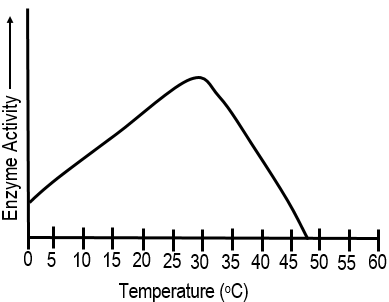
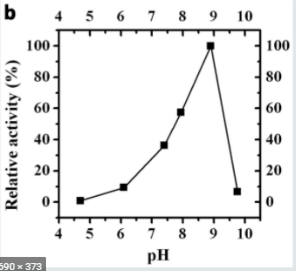
What is the optimal pH for this enzyme?
6
10
9
7
The light-independent reactions of photosynthesis need __________.
Oxygen
Water
Carbon dioxide
Cellulose
The function of the light-dependent reactions is to __________.
release carbon dioxide
capture and transfer energy
build sugars
form water molecules
Which of these is the location of the photosystems in the light-dependent reactions of photosynthesis?
cell membrane
Thylakoid membrane
mitochondria
Stroma
Which of these are the products of the light-dependent reactions of photosynthesis that are required by the light-independent reactions?
oxygen and NADPH
oxygen and ATP
ATP and NADPH
water and oxygen
NADPH is important in photosynthesis because it __________.
is needed to form chlorophyll and carotenoids
provides high-energy electrons used to store energy in organic molecules
provides additional oxygen atoms from the breakdown of water molecules
becomes broken down to form NADP
What process that takes place in the mitochondria provides the electron transport chain in cellular respiration with the energy it needs to function?
Krebs cycle
Calvin Cycle
photosystem II
Light-dependent reaction
What happens to the sugars that are made during photosynthesis?
They make ATP by bonding together.
They go back into the Calvin cycle.
They can be used for cellular respiration.
They move directly into an electron transport chain.
The part of cellular respiration that needs oxygen takes place inside the __________.
Thylakoid
Cytoplasm
Nucleus
Mitochondria
Which of these statements is true of ATP?
It contains less stored energy than ADP.
It converts sunlight into chemical energy.
It stores energy for cellular processes.
It stores energy as glucose.
The overall purpose of the Calvin cycle is to _____________.
generate NADP.
generate molecules of ATP.
give off oxygen for animal use.
build sugar molecules.
Most of the atmospheric oxygen occurs as a result of photosynthesis. From which of the following molecules is the oxygen derived?
Water
nitrate
Glucose
Carbon dioxide
The fluid portion of the chloroplast where light-independent reactions occur is called?
Matrix
Stroma
Cytoplasm
Thylakoid
The first stage of cellular respiration, called __________, takes place in the cytoplasm of the cell and needs no oxygen.
Krebs cycle
Glycolysis
Photorespiration
Oxidation
The first stage of cellular respiration, called __________, takes place in the cytoplasm of the cell and needs no oxygen.
Krebs cycle
Glycolysis
Photorespiration
Oxidation
Which stage of cell respiration makes the majority of ATP?
Glycolysis
Krebs cycle
Electron transport chain
Fermentation
How many net ATP are made in glycolysis?
1
2
6
34
How many net ATP are made in cellular respiration?
2
6
30
36

