
 Worksheets
Ecology
Total questions: 100
Worksheet time: 2hrs 0mins

Which land biome is covered mainly with conifer trees?
Tropical Rain Forest
Deciduous Forest
Tundra
Taiga

Which is the largest land biome in the world?
Taiga
Tundra
Grassland
Desert

Which land biome is divided into 4 levels/layers?
Deciduous Forest
Tropical Rain Forest
Tundra
Taiga

Which land biome do we live in?
Grassland
Tundra
Deciduous Forest
Taiga
The following animals are common to which land biome? (anaconda, gorilla, monkey, toucan bird, red-eyed tree frog, python, jaguar, three-toed sloth, anteater, macaw bird)
Deciduous Forest
Tropical Rain Forest
Tundra
Taiga
The following animals are common to which land biome?
(polar bear, walrus, arctic fox, seal, penguin, snowy owl, caribou, arctic hare, musk oxen)
Tundra
Taiga
Temperate Forest
Coniferous Forest
The following animals are common to which land biome? (white-tailed deer, black bear, turkey, chipmunk, skunk, raccoon, groundhog, and squirrel)
Grassland
Tundra
Deciduous Forest
Coniferous Forest
The following animals are common to which land biome? (zebra, ostrich, lion, giraffe, bison, elephant, cheetah, hyena, hippo, rhino, prairie dog, and ostrich)
Desert
Grassland
Tundra
Tropical Rain Forest
The following animals are common to which land biome? (moose, elk, lynx, red deer, bobcat, mountain goat, grizzly bear, and gray wolf)
Temperate Forest
Tundra
Deciduous Forest
Taiga
The following animals are common to which land biome? ( scorpion, camel, fennec fox, kangaroo rat, black widow spider, roadrunner, and jackrabbit)
Desert
Tundra
Deciduous Forest
Grassland

The most important abiotic factors when studying biomes are...
Food and Water
Water and Sunlight
Temperature and Oxygen
Precipitation and Temperature


The removal of which of the following groups would cause a decrease in energy flowing through the system?
Producers
Consumers
Decomposers
Inorganic nutrients

Symbiotic relationship in which both organisms benefit?
competition
mutualism
nitrogen fixation
energy pyramid
Symbiotic relationship in which one organism benefits and the other organism is not affected?
invasive (non-native) species
mutualism
nitrogen fixation
commensalism

A pond ecosystem is shown. Which statement describes an interaction that helps maintain the dynamic equilibrium of this ecosystem?
The frogs make energy available to this ecosystem through the process of photosynthesis.
The algae directly provide food for both the rotifers and the catfish.
The green-backed heron provides energy for the mosquito larvae.
The catfish population helps control the populations of water boatman and waterfleas.


Why are bees considered a keystone species?
The honey they make supports the bear population
They pollinate flowers that produce fruit which supports the ecosystem
They sting when threatened
They live in hives
Why are some sharks considered a keystone species?
Because they are a top predator
They scare off smaller fish that may overgraze an area of sea grass
They are tertiary consumers
They are cartilaginous
If 50 crabs were captured and marked and then released and then a few days later 25 were caught and of those 5 were marked. What would the estimate of the population be?
500
250
75
200
Species that are clearly critical to the functioning of an ecosystem are known as
biodiversity
keystone species
main species
native species
A species that is likely to become extinct if protective measures are not taken immediately is known as
threatened species
endemic species
keystone species
endangered species
An exotic species is
a species that is not native to a particular region
a newly discovered species in a particular region
a genetically modified species in a particular region
a species that is native to a particular region
a species that is not native to a particular region and has no natural predators and little competition
consumer species
producer species
invasive species
adapted species
An endemic species is
exotic and found everywhere
exotic and found only in certain regions
native and found only in a limited area
native and found everywhere
Succession that occurs in areas that previously didn't support life, such as on rocks or ice
tangential succession
primary succession
secondary succession
quaternary succession
A common type of succession that occurs where an event such as a forest fire has occurred, or a farmer's field has been abandoned is called
common succession
primary succession
secondary succession
Quaternary succession
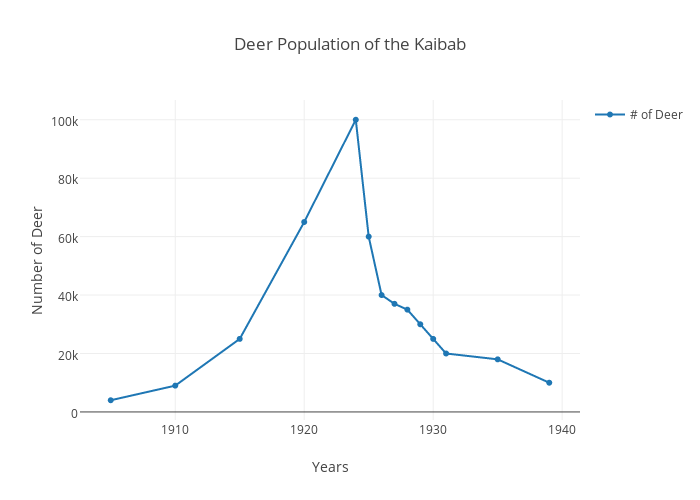
The graph above shows the variation in a deer population. Between 1907-1923, the natural predators were eliminated from the area by hunters. What was the most likely reason for the decline in the deer population after 1924?
The deer stopped competing for resources because they had no predators.
The increased number of deer led to increased competition for resources.
A large number of deer left the region in search of new predators.
The removal of predators caused fewer resources to be available to the deer.


What is the MOST likely consequence of a fungal disease killing the grass in this WOODLAND ECOSYSTEM?
Only the rabbits would be affected, because they are the ones who eat the grass.
The blueberry bush would begin to grow wild, because it would have more space to grow.
Nothing would happen; the animals would eat something else.
The ecosystem would most likely be disrupted, because the grass is one of its primary producers


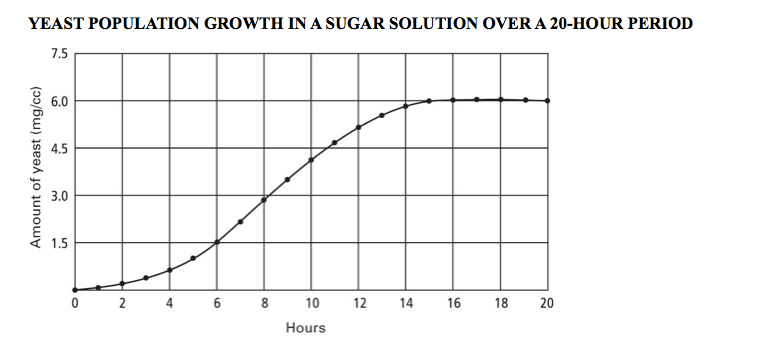
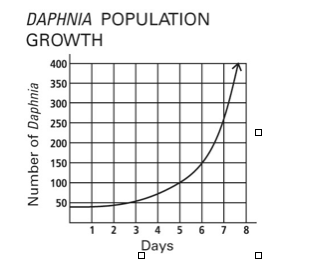
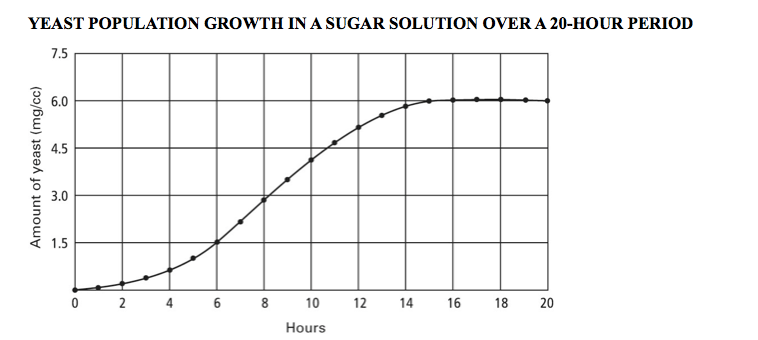
When a population grows past the ecosystem's carrying capacity, what happens to the population?
Continues to grow
The population starts to die off to return to carrying capcity
The population will go extinct due to lack of resources
The population grows then finds a new carrying capacity
When a population has reached carrying capacity
Births & Immigration are equal to Death & emigration
Births & Immigration are less than Death & emigration
Births & Immigration are greater than Death & emigration
Births are exponential

Estimate the carrying capacity.
100 deer
80 deer
60 deer
40 deer
What does the term carrying capacity describe?
The maximum number of birth rates for a population.
The ability of a population to accept new immigrants.
The ratio of birth rates to death rates in a population.
The population size that the environment can sustain.
Identify which image below is showing a population:


An organisms population growth is shaped by its reproductive pattern. Which combination of traits characterizes a rapid life history pattern (r-species)?
short life span, produces many offspring, small body size
short life span, live in more stable environments, small body size
long life span, produces many offspring, grows into adults slowly
long life span, large body size, grows into adults slowly

Which of the following results in the breakdown of the ozone layer?
CFCs
Acid Rain
Carbon Dioxide
Nitrogen Oxides
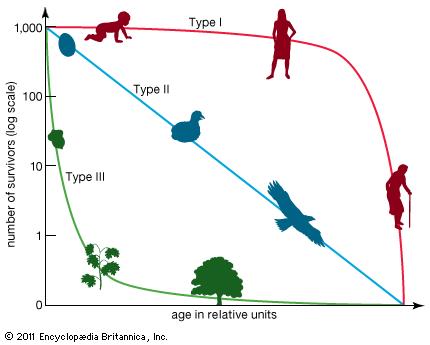
The mortality rate of organisms following a type I survivorship curve is __________.
fairly constant throughout life
higher in post-reproductive years
lower after the organisms become established
unrelated to age
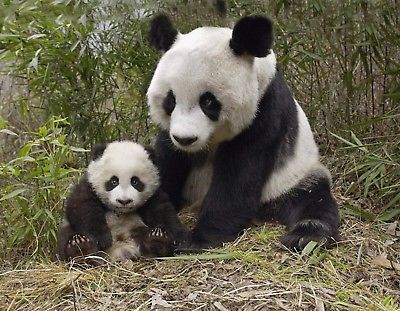
Animals such as pandas are long lived, mature slowly, and generally produce fewer offspring during their life spans but place a greater investment in each. What term is applied to this type of reproductive strategy?
K-strategy
r-strategy
Which of the following is NOT an outcome of high population density?
mortality increase
predators tend to ignore prey that is overabundant
reduction in births
decreased resource availability
What type of factor has an increasing impact as the population size increases?
density-independent
density-dependent
cohort effect
survivorship factor
Which of the following are density dependent factors?
competition for resources
predation
disease
natural disasters
Which of the following are examples of a density independent factors?
forest fire
seasonal cycles
storms
disease
Factors like predation can have a positive benefit to the population of prey organisms because predators tend to keep prey populations below their ___________.
carrying capacity
sustainibility number
exponential growth point
competition level
As a population of a species increases within a territory, which of the following most likely also increases?
Immigration
Food supply
Carrying capacity
Competition
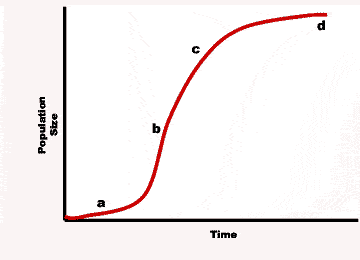
What point on the graph represents carrying capacity?
a
b
c
d
At carrying capacity, a population __________.
increases rapidly
increases slowly
decreases slowly
is in dynamic equilibrium
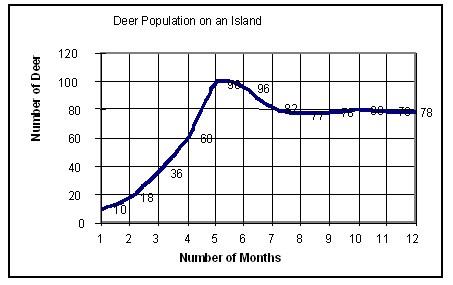
Which mathematical model most closely describes the population growth curve shown in deer population graph from the previous question?
logistic growth
exponential growth
Which of the following populations is most likely to go extinct?
a very small population in an unstable environment
a moderate-sized population of r strategists
a large population with lots of genetic variability
all would be equally likely to go extinct
What is the the closest approximation of the size of the human population today?
850 million
7.5 billion
20.8 billion
1.7 trillion
If a population grows larger than its environmental carrying capacity, then
death rate may rise.
death rate may fall significantly.
birth rate may rise significantly.
immigration rate may increase.
What do we call land that can be used to grow crops?
under-developed land
potential land
arable land
agricultural land

What do we call the capacity for population growth under ideal conditions?
Intrinsic rate of increase
logistic growth
population growth
biotic potential
Most invasive species are..
k-selected
r-selected
j-selected
Survivorship curves. Typically produce few offspring that are well cared for?
Type I
Type II
Type III
Type VI
Survivorship curves. R-selected species are typically..
Type I
Type II
Type III
Type VI
A wide base on a age-structure diagram means..
low birth rate
high birth rate
low death rate
high death rate
Birds typically have which survivorship curve?
Type 1
Type II
Type III
Type IV

