Wayground logo

Free Printable Worksheets

Font size

S
M
L
XL
Worksheets

respiratory and nervous systems

Total questions: 50

Worksheet time: 1hrs 4mins

Name
Class
Date
1.
Which part of the body is like a highway for sending messages?
a)
Blood
b)
Spinal Cord
c)
Atrium
d)
Ventricle
2.
What is the function of the nervous system?
a)
Transport nutrients around the body
b)
Send and receive messages to respond to a change in an organisms environment
c)
Brings oxygen into the body
d)
Moves body parts
3.
The bony structure that protects the brain.
a)
Back bone 
b)
Teeth 
c)
Skull
d)
Helmet 
4.
What type of cell gathers and carries information?
a)
Nerve Ending
b)
Sense Organ
c)
Sensory Cell
d)
Nerve Cell
5.
Bundle of wire-like nerves threaded through the backbones, through which electrical messages travel between the brain and body.
a)
neurons
b)
spinal cord
c)
spaghetti
d)
brain
6.
A body system that controls and coordinates all body activities through electric impulses/messages between brain, spinal cord and nerves.
a)
endocrine system 
b)
nervous system
c)
nerve
d)
neuron
7.
Main organ of the nervous system. protected by the skull, and made of neurons, it is the control center for all actions, thoughts and emotions.
a)
brain
b)
electrical impulse
c)
gland
d)
heart
8.
What is the main function of the nervous system?
a)
clean waste from the cells
b)
absorb nutrients for energy
c)
deliver messages to the brain
9.
What is the central nervous system (CNS) made of?
a)
brain and spinal cord
b)
brain and cranial nerves
c)
spinal cord and spinal nerves
d)
cranial nerves and spinal nerves
10.
What is the job of the spinal cord?
a)
To protect your muscles
b)
To communicate from your brain to the rest of your body
c)
To open and close your lungs.
11.
What sense organ is responsible for our sense of touch?
a)
Ears
b)
Face
c)
Nose 
d)
Skin
12.
The nervous system controls:
a)
only the heart
b)
all body systems and the whole entire body
c)
the digestive system
d)
the brain
13.
What does the cerebrum control?
a)
controls thoughts and voluntary actions
b)
controls vital and involuntary actions 
c)
controls balance
d)
controls the uvula
14.
The nervous system is composed of the ___, ___, and ___.
a)
heart, brain, kidneys
b)
lungs, liver, stomach
c)
brain, spinal cord, nerves
d)
eyes, pancreas, veins
15.
Which part of the brain controls vital functions such as breathing and heart rate?
a)
Diencephalon
b)
Frontal Lobe
c)
Brain Stem
d)
Cerebellum
16.
What is the part highlighted in red?
a)
Cerebrum
b)
Cerebellum
c)
Brain Stem
d)
Diencephalon
17.
What is the largest area of the brain that controls everything conscious?
a)
Cerebellum
b)
Cerebrum
c)
Diencephalon
d)
Brain Stem
18.
This part is known as the "Little Brain" and is in charge of balance and coordinating movements.  
a)
Thalamus
b)
Reticular Formation
c)
Hypothalamus
d)
Cerebellum
19.
Which part of the brain controls reflexes?
a)
Cerebrum
b)
Cerebellum
c)
Brain stem
d)
Spinal cord
20.
The cerebrum is part of the nervous system.
a)
True
b)
False
21.
The cerebellum is part of the nervous system.
a)
True
b)
False
22.
The trachea is part of the nervous system.
a)
True
b)
False
23.
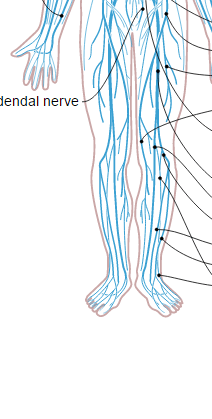
This is a picture of the 
a)
peripheral nervous sysyem
b)
central nervous system
c)
respiratory system
d)
circulatory system
24.
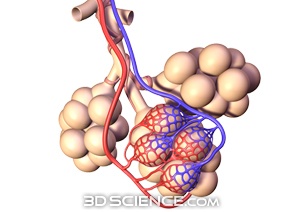
This is a picture of the 
a)
peripheral nervous sysyem
b)
central nervous system
c)
respiratory system
d)
circulatory system
25.
Which of the following describes the relationship between sensory neurons and motor neurons?
a)
Motor neurons bring a stimulus input to the brain and sensory neurons carry a movement output. 
b)
Sensory neurons tell motor neurons what to do.
c)
Sensory neurons bring a stimulius input to the spinal cord or brain and the brain or spinal cord sends a motor neuron  response.
d)
Sensory neurons do more than motor neurons
26.
Brain cells are called
a)
hemoglobin
b)
neurons
c)
brainpoppers
d)
alveoli
27.
The __________ system is made up of the lungs and the passageways that lead to them.
a)
respiratory
b)
circulatory
c)
nervous
d)
digestive
28.
Oxygen enters the body through the _______ or ________.
a)
ears or mouth
b)
nose or ears
c)
mouth or nose
d)
eyes or ears
29.
Air travels through the ______ to the lungs.
a)
diaphragm
b)
trachea
c)
arteries
d)
neurons
30.
The ______ is a muscle that helps the lungs breathe the air in and out.
a)
esophagus
b)
trachea
c)
heart
d)
diaphragm
31.
The respiratory system is responsible for bringing ______ into your body and removing ______ from your body.
a)
hydrogen; carbon dioxide
b)
hydrogen; oxygen
c)
carbon dioxide; oxygen
d)
oxygen; carbon dioxide
32.

As organisms get more complex, cells become specialized to perform specific functions in the body. What is the function for the cell shown?

a)

contract and shorten movement

b)

provide coverage and protection

c)

carry impulses around the body

d)

connects parts together

33.

The function of sneezing is to expel mucus containing foreign particles from the nasal cavity. A person sneezes when foreign particles pass through the nasal hair which triggers the release of chemical that activates body system causing sneezing. What body part is activated?

a)

circulatory system

b)

digestive system

c)

nervous system

d)

excretory system

34.

The brain has 3 major sections that send and receive signals to control all the activities that keep a person functioning efficiently. Which major section controls breathing and heart beat?

a)

cerebellum

b)

cerebrum

c)

brain stem

d)

cortex

35.

Which statement is MOST TRUE about the movement of oxygen molecules between the lungs and cells of the body?

a)

A. Oxygen molecules enter and leave the body by way of lungs, but they do not move between the lungs and the blood.

b)

B. Most oxygen molecules move from cells of the body to the lungs by moving through the circulatory system and then leaving the circulatory system by way of capillaries at the lungs.

c)

C. Most oxygen molecules move from the lungs directly to the body by way of special respiratory tubes where the oxygen molecules mix with the blood.

d)

D. Most oxygen molecules move from the lungs to cells in the body by entering microscopically small blood vessels (capillaries) and then move to the heart which pumps it to the cells of the body.

36.

What does our body use oxygen for in cellular respiration?

a)

A. to react with glucose in order to get energy

b)

B. To absorb the CO2

c)

C. To react with water

d)

D. To help blood flow

37.

Notice that some points on the graph are numbered. When was Patricia most likely running on the treadmill?

a)

from point 2 to point 4

b)

from point 1 to point 5

c)

from point 3 to point 4

d)

from point 3 to point 5

38.

Tyler pulled his arm and hand away from a hot light bulb. Which list below correctly traces the path of the nerve impulse ?

a)

sensory neuron--brain--motor neurons

b)

sensory neuron--spinal cord--motor neurons

c)

sensory neuron--motor neurons--brain--spinal cord

d)

sensory neuron--spinal cord--brain--spinal cord--motor neurons

39.

Which is an example of a reflex?

a)

A. Blinking

b)

B. The pupil of the eyes getting bigger when there is less light

c)

C. Coughing when you breathe in dust

d)

D. All of the above

40.

Why is breathing necessary for humans?

a)

A. Breathing allows us to take in oxygen needed for cellular respiration

b)

B. Breathing allows us to take in oxygen needed for photosynthesis

c)

C. Breathing allows us to take in CO2 needed for cellular respiration

d)

D. Breathing allows us to take in nitrogen needed to maintain homeostasis

41.
Large, sponge like organs where oxygen and carbon dioxide are passed between blood and the environment
a)
lungs
b)
heart
c)
trachea
d)
bronchi
42.
The body system that brings oxygen into the body and removes carbon dioxide from the body
a)
digestive 
b)
circulatory
c)
respiratory
d)
muscular
43.

The nervous system receives information from

a)

inside your body

b)

outside your body

c)

inside AND outside your body

d)

nowhere

44.
When you breathe, your lungs take in ___ and remove ___. 
a)
air/oxygen
b)
oxygen/carbon dioxide 
c)
carbon dioxide/waste 
d)
waste/air 
45.
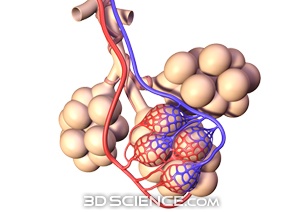
The air sacs that are covered with capillaries where gas exchange takes place
a)
bronchi
b)
lungs
c)
oxygen
d)
alveoli
46.

What part of your brain controls your voluntary muscle movements as well as interprets senses?

a)

Cerebellum

b)

Cerebrum

c)

Spinal Cord

d)

Nerves

47.

What are the three major parts of your brain?

a)

Cerebrum

b)

Nerves

c)

Cerebellum

d)

Spinal Cord

e)

Brain Stem

48.

What part of your brain controls involuntary muscle movements?

a)

olfactory

b)

Cerebrum

c)

Brain Stem

d)

cerebellum

49.

What is the number 2 pointing to?

a)

brain stem

b)

cerebrum

c)

cerebellum

d)

spinal cord

50.

What is the number 1 pointing to?

a)

Spinal Cord

b)

Brain Stem

c)

Cerebellum

d)

Cerebrum