
 Worksheets
Nitrogen and Carbon Cycles
Total questions: 43
Worksheet time: 22mins

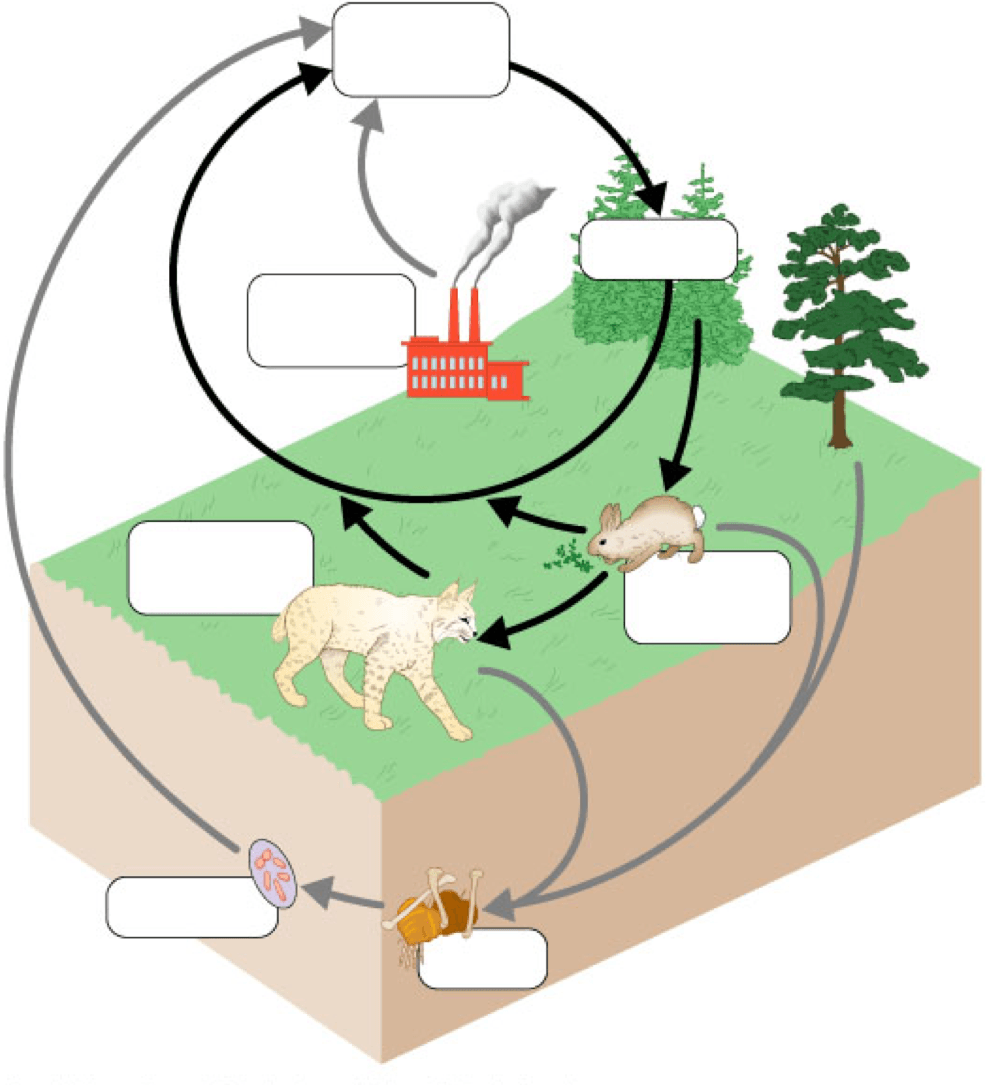
How does carbon in a grass plant get into a lion?
The lion eats an antelope that ate the grass
Carbon from grass doesn't end up in a lion.
The lion absorbs the carbon given off by transpiration
The lion breathes in carbon given out by the plant
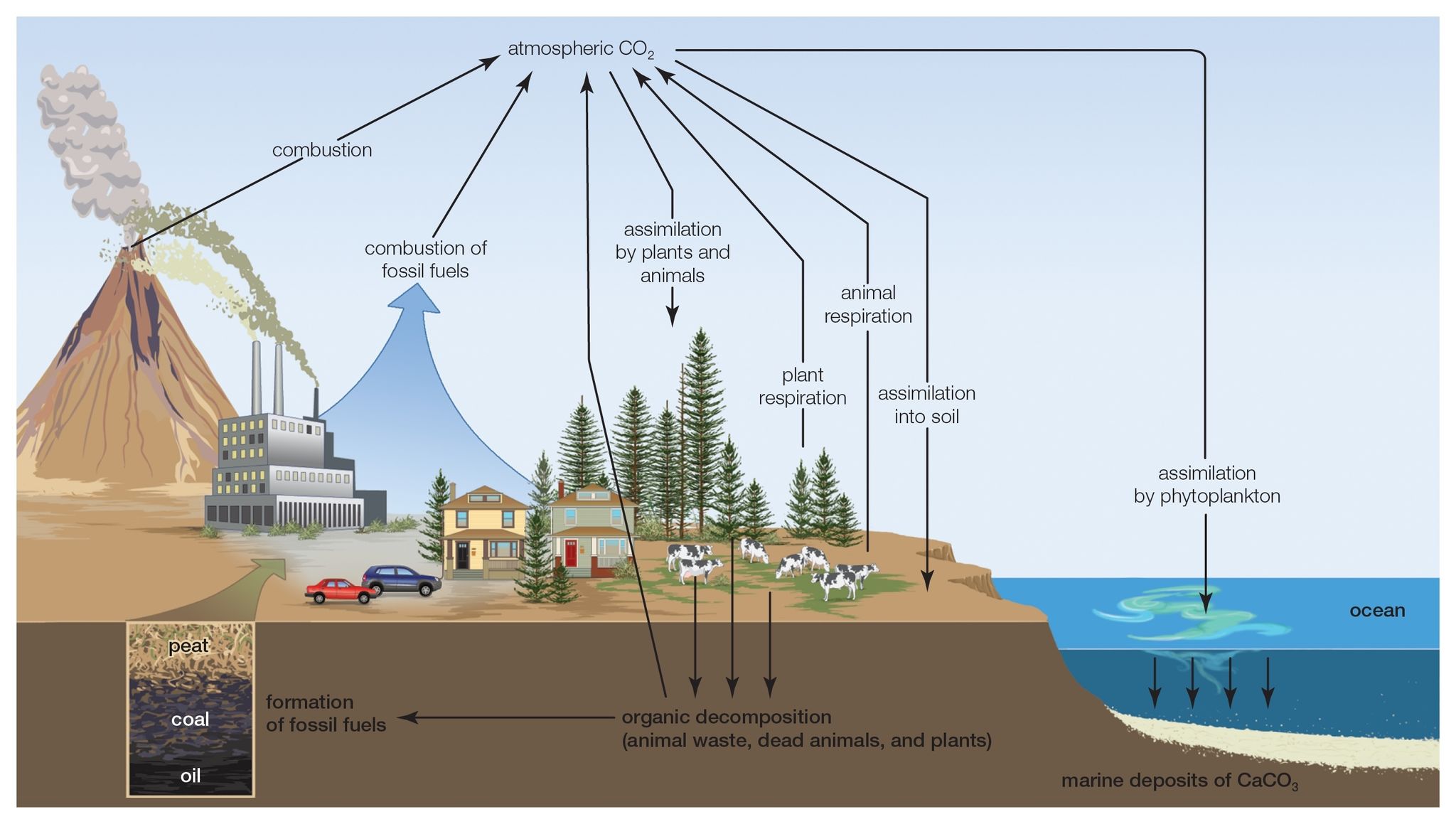
Which of the following add carbon dioxide to the atmosphere?
volcanoes
combustion of fossil fuels
animal respiration
all of these
All of the carbon in existence is continually recycled in the carbon cycle.
Which describes the relationship between plants and animals in the carbon cycle?
Plants produce and release oxygen that animals need
Plants produce and release carbon dioxide that animals need
Animals produce and release oxygen that plants need
Animals produce oxygen that plants turn into carbon dioxide

The process of converting nitrogen into ammonium by bacteria.
ammonification
denitrification
nitrofication
detrivore
The continuous movement of carbon among the abiotic environment and living things.
nutrient cycle
carbon cycle
nitrogen cycle
water cycle
The reduction of oxidized forms of nitrogen (nitrates), ultimately resulting in molecular nitrogen.
ammonification
denitrification
nitrification
nitrogen fixation
A family of plants including beans, alfalfa, and peas, most of which harbor symbiotic, nitrogen-fixing bacteria in nodules in their roots.
producers
legumes
prokaryotes
tubers


Plants and animals cannot use nitrogen directly from the air.
True
False

What is denitrification?
Conversation of nitrite back to nitrogen gas
Conversation of ammonia back to nitrogen gas

Which of the following removes carbon from the atmosphere?
Combustion
Respiration
Photosynthesis
Death
What are two ways that CO2 is released into the atmosphere?
Vacuuming and dusting.
Combustion and decomposition.
Swimming and decomposition.
None of the above.
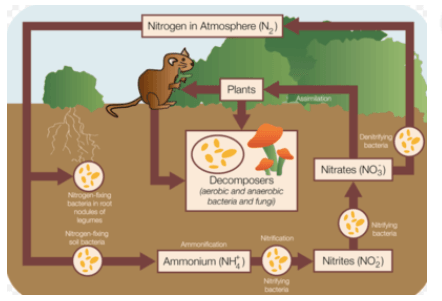
A correct path that nitrogen could take would be
air -> animals -> plants -> bacteria
animals -> air -> bacteria -> plants
bacteria -> air -> plants -> animals
air -> bacteria -> plants -> animals


___________ is absorbed by _____________ from the air as CO2.
Nitrogen, plants
Nitrogen, living things
Carbon, plants
Carbon, living things

Carbon is dissolved in the _____________ and found in ocean sediments.
ocean
river
lake
stream

Carbon is stored in ___________ _________ like coal, oil, and natural gas.
nucleic acids
hard rocks
fossil fuels
large oceans

______________ converts N2 gas in the air into NH3, then the
rain carries this nitrogen down to the soil!
Thunder
Lightning
Rain
Floods

__________ ____________ occur when runoff carries fertilizers into waterways.
Algal blooms
Fertilizer blooms
Green stuff
Mossy plants
What is the largest reservoir for carbon?
the ocean
rocks and minerals
the atmosphere
glaciers
What is the largest reservoir for nitrogen?
the ocean
rocks and minerals
the atmosphere
bacteria

The rapid growth of a population of algae in either a freshwater or saltwater environment is call a(n)
red tide
algal bloom
protozoan

In general, algal blooms occur when
toxins accumulate in shellfish.
nutrients decrease in the water.
nutrients increase in the water.
The rapid growth of algae, called an algal bloom, can lead to the formation of dead zones that cannot sustain aquatic life. This is mainly because the algal bloom lowers the amount of –
chemical pollutants
dissolved oxygen
freshwater runoff

