wayground logo

Free Printable Worksheets

Font size

S
M
L
XL
Worksheets

Electron Configuration

Total questions: 85

Worksheet time: 2hrs 57mins

Name
Class
Date
1.
What atom matches this electron configuration?
1s2s2p3s2
a)
Neon
b)
Magnesium
c)
Aluminum
d)
Potassium
2.
Which is the electron configuration for an oxygen atom?
a)
1s22s22p63s23p64s2
b)
1s22s22p4
c)
1s22s22p6
d)
1s22s22p63s23p6
3.
How many electrons can the first energy level hold?
a)
1
b)
2
c)
8
d)
0
4.
How many valence electrons does Chlorine have?
a)
5
b)
2
c)
7
d)
5
5.
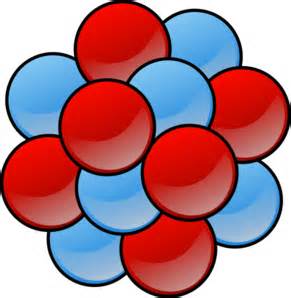
Which element is pictured?
a)
neon
b)
fluorine
c)
magnesium
d)
argon
6.
What do you start electron configuration with?
a)
1s2
b)
1d10
c)
1f14
d)
1p6
7.
There are 4 different types of subshells s,p,d,f
a)
true
b)
false
8.
Electrons occupy orbitals of lowest energy first is part of what electron configuration rule?
a)
Hund’s Rule
b)
Aufbau Principle
c)
Pauli Exclusion Principle
9.
What does Pauli exclusion principle state ?
a)
states that each electron occupies the lowest energy orbital available
b)
states that a maximum of two electrons can occupy a single atomic orbital, but if only if the electros have opposite spins
c)
states that single electrons electrons with the same spin must occupy each-energy orbital before additional electrons with opposite spins can occupy the same orbitals
10.
What does Hund's rule states ?
a)
states that single electrons electrons with the same spin must occupy each-energy orbital before additional electrons with opposite spins can occupy the same orbitals
b)
states that each electron occupies the lowest energy orbital available
c)
states that a maximum of two electrons can occupy a single atomic orbital, but if only if the electros have opposite spins
11.
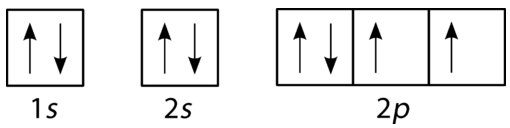
Which element is depicted from this orbital diagram
a)
Fluorine
b)
Neon
c)
Chlorine
d)
Argon
12.
This orbital diagram represents:  
a)
C
b)
B
c)
N
d)
O
13.
This orbital diagram represents:  
a)
C
b)
B
c)
N
d)
O
14.
What is incorrect about this orbital diagram?
a)
Both arrows in the 2p box should be pointing up
b)
There is nothing incorrect with this diagram
c)
In the 2p box there should only be 1 electron in the first 2p box and one in the 2nd 2p box
d)
All the arrows should be pointing up.
15.
Electrons occupy orbitals of lowest energy first is part of what electron configuration rule?
a)
Hund’s Rule
b)
Aufbau Principle
c)
Pauli Exclusion Principle
16.
Which orbital shows a violation of Hund's Rule?
a)
A
b)
B
c)
C
d)
D
17.
Which orbital shows a violation of the Aufbau Principle?
a)
A
b)
B
c)
C
d)
D
18.
Which orbital shows a violation of the Pauli Exclusion Principle?
a)
A
b)
B
c)
C
d)
D
19.
Which element is depicted from this atomic orbital diagram?
a)
Carbon
b)
Nitrogen
c)
Oxygen
d)
Phosphorus
20.
Which element is depicted from this atomic orbital diagram?
a)
Carbon
b)
Nitrogen
c)
Oxygen
d)
Phosphorus
21.
1.  What is the shape of an s orbital?
a)
sphere
b)
dumbbell
c)
double dumbbell
d)
TOO COMPLEX TO KNOW IT.
22.
What is the shape of a p orbital?
a)
sphere
b)
it's just too complex to thing about it
c)
dumbbell
d)
I don't know this stuff.
23.
How many electrons can each p orbital hold?
a)
6
b)
3
c)
2
d)
4
24.
How many d orbitals are there in a given sublevel?
a)
1
b)
3
c)
5
d)
7
25.
How many p orbitals are there in a sublevel?
a)
2
b)
1
c)
4
d)
3
26.
How likely is it that an electron occupying a p or a d orbital would be found very near an atom’s nucleus? 
a)
likely...that's where you find it
b)
not likely
c)
not likely, but there is a f orbital near the nucleus
d)
what's near the orbital
27.
How many electrons can the d sublevel hold?
a)
8
b)
10
c)
2
d)
4
28.
Which is associated with more energy? 
a)
2p
b)
2s
c)
3p
d)
1s
29.
How many total electrons can the f orbitals in a sublevel hold?
a)
2
b)
14
c)
6
d)
10
30.
Which orbital has the least amount of energy? 
a)
p orbital
b)
d orbital
c)
s orbital 
d)
What is an orbital?
31.
The electron configuration of an atom is 1s22s22p6.  The number of electrons in the atom is 
a)
3
b)
6
c)
8
d)
10
32.
How many atomic orbitals are there in the p sublevel?
a)
2
b)
3
c)
4
d)
5
33.
Electrons occupy orbitals of lowest energy first is part of what electron configuration rule?
a)
Hund’s Rule
b)
Aufbau Principle
c)
Pauli Exclusion Principle
34.

How many orbitals are there in the d sublevel?

a)

1

b)

3

c)

5

d)

7

35.
What is the maximum number of electrons that an orbital can have?
a)
1 electron
b)
2 electrons
c)
3 electrons
d)
4 electrons
36.
How many electrons can the s sublevel hold?
a)
14
b)
10
c)
2
d)
6
37.

Which electron configuration shows a violation of Hund's Rule?

a)

A only

b)

A, B and C

c)

C and A

d)

A, B and D

38.

Which are the four energy sublevels?

a)

s,p,d,f

b)

a,b,c,d

c)

s,t,e,p

d)

d,r,o,f

39.

What rule(s) do you need to know for Electron Configuration?

a)

Aufbau Principle only

b)

Pauli Exclusion Principle only

c)

Hund's Rule only

d)

All three of them

40.

Within an energy level, which sublevel is the lowest in energy?

a)

s

b)

f

c)

d

d)

p

41.

The electron-configuration notation for sodium (Na) is 1s2 2s2 2p6 3s1. Which of these options is the correct orbital notation for Sodium?

a)
b)
c)
d)
42.

In writing the noble gas notation for elements in the 4th period, which noble gas will be used?

a)

Period 1 noble gas (Helium)

b)

Period 2 noble gas (Neon)

c)

Period 3 noble gas (Argon)

d)

Period 4 noble gas (Krypton)

43.

Which of these IS NOT a way to indicate electron configuration?

a)

Orbital Notation

b)

Electron-configuration Notation

c)

Noble gas Notation

d)

Alkaline-earth Notation

44.
What is the noble gas configuration for beryllium?
a)
[He]1s2
b)
[He]2s2
c)
[Li]2s1
d)
[Li]2s2
45.
What is the noble gas configuration for boron?
a)
[He]1s22s2
b)
[He]2s22p2
c)
[He]2s22p1
d)
[Li]2s22p1
46.
What is the noble gas configuration for Sulfur?
a)
[Ar] 3p4
b)
[He] 3s2 3p4
c)
[Ne] 3s2 3p4
d)
[Na] 3s2 3p4
47.
What is the noble gas configuration for phosphorus?
a)
[Ar] 3p5
b)
[He] 3s2 3p5
c)
[Ne] 3s2 3p3
d)
[Na] 3s2 3p5
48.
What is the noble gas configuration for Neon?
a)
[Ne]
b)
[He]2s22p6
c)
[F]2p1
d)
[Ne]2s21p6
49.
[Ne]3s1 is the noble gas configuration for which element?
a)
sodium
b)
lithium
c)
fluorine
d)
aluminum
50.
[Ne]3s23p1 is the noble gas configuration for which element?
a)
scandium
b)
boron
c)
nitrogen
d)
aluminum
51.
What is the noble gas configuration for Argon?
a)
[Ne]2s22p6
b)
[He]2s22p6
c)
[He]3s23p6
d)
[Ne]3s23p6
52.
[He]2s22p4 is the noble gas configuration for which element?
a)
oxygen
b)
sulfur
c)
phosphorus
d)
fluorine
53.

Which of the following shows a stable electronic configuration of an atom?

a)

2

b)

2:5

c)

2:7

d)

2:8:8:1

54.

Which of the following shows a correct Lewis dot structure?

a)
b)
c)
d)
55.

Which element could X represent?

a)

iron

b)

Chlorine

c)

Silicon

d)

Oxygen

56.
How many valence electrons does chlorine (Cl) have?
a)
2
b)
5
c)
6
d)
7
57.
What element is represented in this Bohr Model? 
a)
Carbon
b)
Hydrogen
c)
Aluminum
d)
Lithium
58.

What is the electron configuration of Ag?

a)

1s2 2s2 2p6 3s2 3p6 4s2 3d10 4p6 5s2 4d9

b)

[Kr] 5s2 4d9

c)

1s2 2s2 2p6 3s2 3p6 4s2 4p6 5s2 4d9

d)

1s2 2s2 2p6 3s2 3p6 3d10 4s2 4d10 4p6 5d10 5s2 4d9

59.
Which electron configuration belongs to Copper (Cu)?
a)
1s2 2s2 2p6 3s2 3p6 4s2 3d8
b)
1s2 2s2 2p6 3s2 3p6 4s2 3d9
c)
1s2 2s2 2p6 3s2 3p6 4s2 3d10
60.
What is this element? 
1s22s22p63s23p6
4s23d104p6
a)
Argon
b)
Krypton
c)
Selenium
d)
Bromide
61.
Electron arrangement that uses arrows
a)
Electron configuration
b)
Shorthand configuration
c)
Lewis dot structure
d)
Orbital diagram
62.
How can you tell how many valence electrons an atom has? 
a)
APE MAN
b)
By the Group 
c)
By the Period
d)
By the atomic number
63.
How can you tell how many energy levels an atom has? 
a)
APE MAN
b)
By the Group
c)
By the Period
d)
By the atomic mass
64.
According to the octet rule most elements need _______ valence electrons.
a)
2
b)
8
c)
6
d)
18
65.

What atom matches this electron configuration?

[Xe] 6s24f145d9

a)

Mercury

b)

Gold

c)

Platinum

d)

Thallium

66.
"Everything is composed of atoms" was stated by:
a)
Democritis
b)
Dalton
c)
Moseley
d)
Einstein
67.
John Dalton stated:
a)
elements are made of atoms
b)
atoms of a given element are identical
c)
atoms cannot be subdivided, created, nor destroyed
d)
all of the above
68.
The scientist responsible for "discovering" the nucleus is:
a)
Bohr
b)
Rutherford
c)
Schroedinger
d)
Einstein
69.
The nucleus of an atom can be described as:
a)
spacious and negatively charged
b)
dense and positively charged
c)
spacious and positively charged
d)
dense and negatively charged
70.
Electrons are not factored into atomic mass because:
a)
They are so small their mass is negligible
b)
They're not in the nucleus
c)
They're too big
d)
They move so quickly their mass is zero
71.
How did Rutherford discover the proton?
a)
Cathode tube ray experiment
b)
Gold Foil Experiment
c)
Planetary Model
d)
Plum Pudding Model
72.
What does the nucleus of an atom contain?
a)
Electrons and neutrons
b)
Protons and neutrons
c)
Neutrinos and positrons
d)
DNA and RN
73.
True or False: The majority of an atom is made up of empty space
a)
True
b)
False
74.
Electrons can be found in
a)
The protons
b)
The nucleus
c)
Electron Clouds
75.
Safety is
a)
Not necessary
b)
sometimes important
c)
preventing injury, hurt or loss
76.
When mixing chemicals students should always wear
a)
hair bows
b)
goggles
c)
flip flops
77.
When using a hot plate a student needs to wear
a)
a ruler
b)
thick gloves
c)
a compass
78.
The FIRST thing a student should do in a science investigation is -
a)
read the steps of the investigation
b)
clean off the table
c)
get out safety equipment
79.
What do scientist do?
a)
ignore safety rules
b)
do NOT repeat their investigations
c)
affect the lives of humans through their scientific breakthroughs and inventions
80.
Which tool protects clothing?
a)
googles
b)
apron
c)
eye wash
81.
You should never ______ chemicals in the lab. 
a)
taste
b)
touch
c)
smell
d)
all of the above
82.

Which Groups are in The S Block

a)

1 and 2

b)

7 and 8

c)

3-12

d)

just 8

83.

Which Groups are in the P Block

a)

1 and 2

b)

3-8 (13-18)

c)

3-12

d)

The Transition Metals

84.

Which Groups are in the D Block

a)

Noble Gases

b)

Halogens

c)

Transition Metals

d)

Alkali Metals

85.

Thompson's Experiment?

a)

Gold Foil

b)

Cathode Ray Tube

c)

Mass Spec

d)

Oil Drop