wayground logo

Free Printable Worksheets

Font size

S
M
L
XL
Worksheets

Chapter 19 Review

Total questions: 51

Worksheet time: 41mins

Name
Class
Date
1.
What do paleontologists study?
a)
space
b)
fossils
c)
atmosphere
d)
weather
2.
What can we learn from studying fossils?
a)
how earth's environment has changed
b)
how hurricanes form
c)
what causes earthquakes
d)
how the solar system has changed
3.
A fossil is
a)
any dead organism
b)
a copy of a rock
c)
the preserved remains or traces of an organism
d)
none of these
4.
Most fossils are formed by
a)
being preserved in amber
b)
being frozen
c)
drying out
d)
being buried in sediment
5.
Which of the following could form a fossil?
a)
Bone
b)
Shell
c)
Seeds
d)
All of the above
6.
In layers of sedimentary rock, the _________ layer is usually at the bottom. Each higher layer is _________ than the layers below it.
a)
oldest, younger
b)
youngest, older
c)
youngest, younger
d)
oldest, older
7.
What are fossilized feces called?
a)
coprolites
b)
index fossils
c)
gastroliths
d)
amber
8.
What does it mean when an animal is extinct?
a)
Something once lived but no longer exists.
b)
Animals that is at risk of extinction.
c)
Place that protects animals at risk.
9.
How are fossils created?
a)
A. Traces of organisms harden like rock. 
b)
B. Dead organisms are quickly buried for millions of years.
c)
C. Animals get trapped.
d)
D. All of the above
10.

When did Precambrian time start?

a)

When the Earth was born.

b)

Proterozoic Eon

c)

During the Archean Eon

d)

During the Phanerozoic Eon

11.

The Earth is ______________ of years old

a)

hundreds

b)

thousands

c)

millions

d)

billions

12.

Which of the following is not an eon of geologic time?

a)

Hadean

b)

Proterozoic

c)

Archean

d)

Paleozoic

13.

True or False? The Paleozoic is the oldest era of the Phanerozoic eon.

a)

True

b)

False

14.

The longest units of geologic time are

a)

eons

b)

eras

c)

periods

d)

epochs

15.

The shortest units of geologic time are

a)

eons

b)

eras

c)

periods

d)

epochs

16.

Eons are subdivided into _________.

a)

eons

b)

eras

c)

periods

d)

epochs

17.

Eras are subdivided into _________.

a)

eons

b)

eras

c)

periods

d)

epochs

18.

Describe the most likely relationship between these mountains and nearby tectonic plates.

a)

The mountains are probably formed by earthquakes

b)

The mountains are probably formed by the movement of glaciers

c)

The mountains are probably located near the edge of 2 tectonic plates.

d)

The mountains are probably formed by running water.

19.

A force caused the continents to drift apart over time. Once scientists figured out what that force was, the theory of plate tectonics was born! The image above shows what Geologists think the Earth looked like millions of years ago. What name was given to this land mass.

a)

Plate Tectonics

b)

Oceana

c)

Pangea

d)

North America

20.
Earth's plates are....
a)
Constantly moving and changing the face of the Earth
b)
Never moved
c)
Move seldom and very fast
d)
move when they feel like it
21.
Earth's crust is broken up into several large rocky pieces called ...
a)
plates
b)
faults
c)
fossils
d)
puzzle pieces
22.

Slow change over time, such as snakes slowly evolved from reptiles with shorter and shorter legs

a)

Gradualism

b)

Punctuated Gradualism

c)

Adaptive radiation

d)

Convergent Evolution

23.

Periods of rapid change followed by long periods of little to no change, such as sudden color changes in animals

a)

Gradualism

b)

Punctuated Gradualism

c)

Adaptive radiation

d)

Convergent Evolution

24.

What are two patterns of macroevolution?

a)

Adaptive radiation (Divergent Evolution)

b)

Convergent Evolution

c)

Macroevolution

d)

microevolution

25.

Descendants of an ancestral species may diversify overtime into related species adapted to different niches

a)

Adaptive radiation

b)

Convergent Evolution

c)

Macroevolution

d)

microevolution

26.

The appearance of similar characteristics in unrelated organisms

HINT: Wings in birds and bats.

a)

Adaptive radiation (Divergent Evolution)

b)

Convergent Evolution

c)

Macroevolution

d)

microevolution

27.

The death of every member of a species

a)

disease

b)

epidemic

c)

extinct

d)

population

28.

What is a mass extinction?

a)

When all the species in a particular area on earth suddenly go extinct

b)

When many species from all over the earth suddenly go extinct

c)

When one species goes extinct due to habitat changes

d)

When all life on earth is wiped out

29.
The hypothesis that evolution of a species occurs gradually over time as a slow and constant process is known as
a)
speciation
b)
punctuated equilibrium
c)
gradualism
d)
microevolution
30.
The hypothesis that evolution of a species occurs in periods of rapid change separated by periods of little or no change is called
a)
divergence
b)
gradualism
c)
punctuated equilibrium
d)
isolation
31.
 What type of evolution is demonstrated in this photo?
a)
Coevolution
b)
Convergent evolution
c)
Punctuated evolution
d)
Gradualistic evolution
32.

This is the extinction of a species one by one, not a sudden loss of many species

a)

background extinction

b)

mass extinction

c)

fragmentation

d)

biotic potential

33.
This experiment was conducted by the scientists:
a)
Stanley Miller and Harold Urey
b)
Harold Urey and Albert Einstine
c)
Harrison Ford and Denzel Washington
d)
James Watson and Francis Crick
34.
Which question were the scientists trying to answer with this experiment?
a)
Where do cells come from?
b)
What came first the chicken or the egg?
c)
How are biomolecules formed?
d)
What gave rise to the Eukaryotic cell?
35.
The apparatus in the experiment was used to mimic what?
a)
proteins
b)
Earth's present conditions
c)
early Earth's conditions
d)
they didn't mean to mimic anything in particular
36.
The gas in the apparatus mimicked? 
a)
space
b)
time
c)
stars
d)
atmosphere
37.
The electrical sparks mimicked?
a)
heat waves
b)
lightening
c)
volcano
d)
hurricane
38.
The water used in the apparatus was used to mimic what part of early Earth?
a)
sea
b)
swimming pool
c)
ocean
d)
rain
39.
What was the result of the Miller-Urey Experiment?
a)
amino acids
b)
nucleotides
c)
lipids
d)
glucose
40.
Which type of cell came first?
a)
Eukaryotic
b)
Prokaryotic
c)
Plant
d)
Both Eukaryotic and Prokaryotic cells evolved around the same time
41.
Which of the following was probably not present in the atmosphere of the primitive Earth? 
a)
Methane
b)
Oxygen
c)
Water
d)
Carbon dioxide
42.
Earth formed 4.5 billion years ago, but life did not show until around...
a)
3.5 billion years ago
b)
1 million years ago
c)
200,000 years ago
d)
4.2 billion years ago
43.

What two ways do autotrophs create their own food

a)

photosynthesis

b)

oxidation

c)

chemosynthesis

d)

spontaneous generation

44.
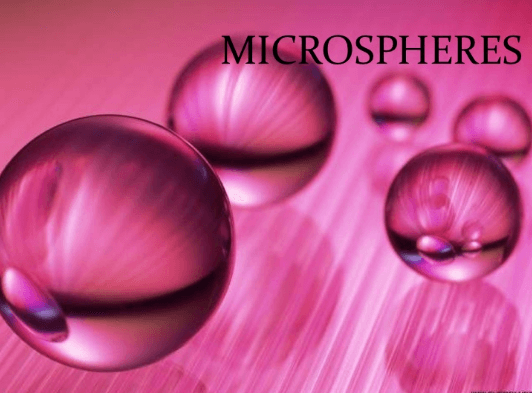
Cellular life may have begun with ____________ made of amino acids.
a)
macrospheres
b)
microspores
c)
microspheres
d)
macrospores
45.
Microspheres had DNA so they were able to pass their characteristics along to their offspring.
a)
true
b)
false
46.
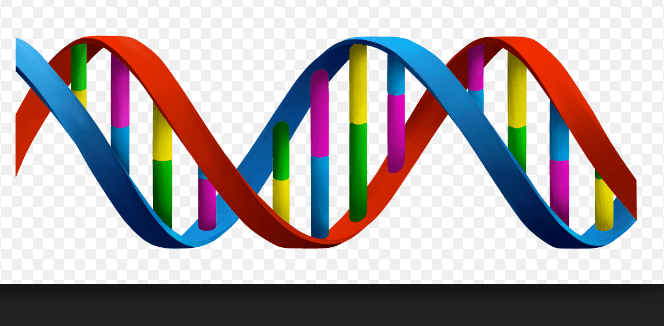
___________________ evolved after RNA
a)
amino acids
b)
atoms
c)
DNA
d)
molecules
47.

"Endosymbiosis" means

a)

Living together

b)

Entering together

c)

Living separately

d)

Joining together

48.

The theory of Endosymbiosis explains

a)

The origin of eukaryotes

b)

How bacteria live

c)

How species develop

d)

Why cells rely on one another

49.

____________ & _________________ are organelles that definitely arose from endosymbiosis.

a)

Nucleus and cell membrane

b)

Chloroplast and mitochondria

c)

Mitochondria and nucleus

d)

Cell wall and chloroplast

50.

What are evidence to support endosymbiotic theory?

a)

Mitochondria is found outside the cells

b)

Mitochondria and chloroplast can divide independently

c)

Mitochondria and chloroplast have their own cell membrane

d)

Mitochondria and chloroplast have their own genetic material
51.
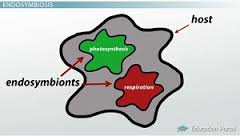
Theory that says eukaryotic cells formed from symbiosis among several different prokaryotes.
a)
Natural Selection
b)
Biogenesis Theory
c)
Evolutionary Theory
d)
Endosymbiotic Theory