Wayground logo

Free Printable Worksheets

Font size

S
M
L
XL
Worksheets

Skeletal-Cardiovascular-CNS Systems

Total questions: 90

Worksheet time: 3hrs 12mins

Name
Class
Date
1.

The number of bones in an adult skeletal system is

a)

602

b)

206

c)

260

2.
The main purpose of the ____________ system is to break food particles into pieces that can be used.
a)
circulatory
b)
respiratory
c)
digestive
d)
skeletal
3.
What is responsible for delivering oxygen and removing carbon dioxide from the body?
a)
cell nucleus
b)
excretory system
c)
nervous tissue
d)
respiratory system
4.
The __________ is the main organ of the nervous system.
a)
heart
b)
lungs
c)
brain
d)
skin
5.
___________ are the building blocks of life.
a)
cells
b)
legos
c)
blocks
d)
blood
6.

Tissues are made of _______.

a)

organs

b)

systems

c)

cells

d)

blood

7.
When tissues come together, they form ___________.
a)
cells
b)
atoms
c)
organs
d)
systems
8.

Which of the following body systems work together for support, protection, and movement?

a)

respiratory and circulatory

b)

skeletal and muscular

c)

skeletal and respiratory

d)

digestive and respiratory

9.
Which of the following shows the levels of organization of an organism from LEAST to MOST complex.
a)
cells-tissues-systems-organs
b)
organs-cells-systems-tissues
c)
systems-organs-tissues-cells
d)
cells-tissues-organs-systems
10.

Which of the following is NOT a function of bones?

a)

Protection

b)

Support

c)

Movement

d)

Blood movement

11.

Your skeletal system is in charge of making your blood.

a)

True

b)

False

12.
Humans have ______ bones in their bodies, on average.
a)
106
b)
201
c)
206
13.

The ribs protect your...

a)

heart

b)

lungs

c)

all of the above

14.
The part of the bone that makes blood cells is...
a)
compact bone
b)
spongy bone
c)
marrow
15.

The main purpose of the heart is to pump blood throughout the body.

a)

True

b)

False

16.

Blood is only pumped to a few major parts of the body.

a)

True

b)

False

17.

Which blood vessel carries oxygen rich blood

a)

veins

b)

arteries

18.

Which blood vessels takes blood away from the heart?

a)

arteries

b)

veins

19.

Pressure exerted on the walls of the blood vessels is termed

a)

Hypertension

b)

Vesicular pressure

c)

Blood Pressure

d)

Heart pressure

20.

Blood pressure is recorded as

a)

Hydrostatic /diastolic

b)

Diastolic/ hydrostatic

c)

Systolic/diastolic

d)

Diastolic/systolic

21.

Blood pressure is used to determine

a)

electrical current though the heart

b)

function of coronary artery

c)

if adequate blood is getting to tissues.

d)

Speed of blood through veins

22.
For a blood pressure reading, the number on top measures...
a)
Diastolic Pressure
b)
Systolic Pressure
c)
Diastemic Pressure
d)
Systemic Pressure
23.
Normal blood pressure is...
a)
120/80 mmHg
b)
80/120 mmHg
c)
140/90 mmHg
d)
80/140 mmHg
24.
Hypertension is anything above...
a)
120/80 mmHg
b)
90/120 mmHg
c)
140/90 mmHg
d)
80/140 mmHg
25.

All of the below are factors that increase or decrease the blood pressure except for:

a)

medication

b)

exercise

c)

heart disease

d)

toothache

26.

Why don't turkeys eat at Thanksgiving dinner?

a)

They don't eat people food

b)

They are already stuffed

c)

They are allergic

d)

Turkeys don't eat

27.

What is a Pilgrim's favorite kind of music?

a)

Plymouth Rock

b)

Jazz

c)

Hip Hop

d)

Turkey Tunes

28.

If April showers bring May flowers, what do May Flowers bring?

a)

Pollen

b)

Bees

c)

Pilgrims

d)

What are May Flowers?

29.

Why did the farmer drive over his potato field on Thanksgiving?

a)

He didn't want to pick them

b)

He wanted to ruin them

c)

He wanted Mashed Potatoes

d)

He was a bad farmer

30.
The nervous system_________
a)
receives information about what is going on in your body as well as what is going on around you. 
b)
tells your body how to react to the information it receives. 
c)
helps your body maintain homeostasis. 
d)
all of the above.
31.
What is "stimuli"?
a)
A major organ in the brain that is a part of the nervous system. 
b)
What your body does to a change or a signal. 
c)
A change or a signal your body receives. 
32.
Name the two major parts of the central nervous system.
a)
The brain and the skull. 
b)
The brain and the body.
c)
The spinal cord and the brain.
d)
The spinal cord and the body. 
33.
What is "homeostasis"?
a)
The body's ability to react to a stimuli. 
b)
The body's ability to keep everything inside it in balance. 
34.
What are the two divisions of the nervous system?
a)
The brain and spinal cord. 
b)
The central nervous system and the skeletal system. 
c)
The central and peripheral nervous systems. 
35.
the central nervous system______________
a)
is the control center of the body. 
b)
the main body system. 
36.
A bundle of nerve tissue that links the brain to the nerves in peripheral nerve system is called the________________
a)
brain stem. 
b)
central nervous system. 
c)
spinal cord. 
37.
The brain is made up of three major parts. What are they?
a)
The occipital lobe, the parietal lobe, and the frontal lobe. 
b)
The spinal cord, the cerebrum, and the cerebellum. 
c)
The brain stem, the cerebrum, and the cerebellum. 
38.
The frontal, parietal, occipital, and temporal lobes make up the_______
a)
brain stem.
b)
cerebrum.
c)
cerebellum. 
39.
Which part of the brain controls all involuntary actions?
a)
brain stem
b)
cerebrum
c)
cerebellum
40.
Which part of the brain coordinates the actions of muscles and helps you maintain balance?
a)
brain stem
b)
cerebrum
c)
cerebellum
41.

What is the area where all living things are called?

a)

Geosphere

b)

Biosphere

c)

Inner Core

d)

Food chain

42.

What Happens In A Minute,

That's In A Month,

But Never In A Year?

a)

Tomorrow

b)

The letter M

c)

Yesterday

d)

The Letter E

43.

What Is Always In Front Of You But Can't Be Seen?

a)

Air

b)

Gravity

c)

Future

d)

Past

44.

Why Did The Football Player Shake The Vending Machine?

a)

He Wanted his Quarter Back

b)

He Wanted A Drink

c)

He Had A Protean Bar Stuck

d)

He Wanted All The Snacks

45.

What Animal Can You Never Trust With Your Homework?

a)

Cheetahs

b)

Lions

c)

Leopards

d)

Jaguars

46.

Why Couldn't The Music Teacher Open His Classroom?

a)

There Were No Key Slot

b)

There Were No Door

c)

His Keys Were On The Piano

d)

His Keys Were On Key Board

47.

What Kind Of Flower Grows On Your Face?

a)

Tulips

b)

Daisies

c)

Sunflowers

d)

Roses

48.

Your heart is an involuntary muscle that is always working.

a)

True

b)

False

49.

The heart is made of which of the following types of muscles?

a)

Cardiac muscle

b)

Striated muscle

c)

Smooth muscle

d)

None of the above

50.

Your heart always pumps at the same rate.

a)

True

b)

False

51.

Which of the following are chambers of the heart?

a)

Valves

b)

Atrium and ventricle

c)

Arteries and veins

d)

Sinoatrial nerve

52.

Which of the following is true about your heart?

a)

Your heart may stop beating from time to time.

b)

You have to think in order to keep your heart beating.

c)

Your heart pushes blood through your body.

d)

All of the above

53.

What can happen sometimes when you stand up to quickly?

a)

You become light-headed.

b)

Your blood stays down at your legs and feet.

c)

Your blood does not get to your head fast enough.

d)

All of the above.

54.

The pulmonary artery is the artery that carries the blood to your heart from your lungs.

a)

True

b)

False

55.

How are arteries and veins different?

a)

One is bigger than the other.

b)

The arteries carry more blood than the veins.

c)

The arteries carry blood away from the heart while veins carry blood to the heart.

d)

The veins carry blood away from the heart while arteries carry blood to the heart.

56.

How many chambers does the heart have?

a)

4

b)

10

c)

3

d)

1

57.

What does your heart do?

a)

Pump carbon dioxide through your body

b)

Give your body energy

c)

Pump oxygen through your body

d)

Nothing

58.

What side of your chest is your heart on?

a)

Left

b)

Right

59.

How many ventricles are there?

a)

1

b)

2

c)

10

d)

0

60.

What keeps blood flowing in the right direction?

a)

Atria

b)

Chambers

c)

Valves

d)

Veins

61.

Where does your heart get oxygen?

a)

Lungs

b)

Mouth

c)

Toes

d)

Fingernails

62.
Name this part.
a)
Right atrium
b)
Left ventricle
c)
Right ventricle
d)
Left atrium
63.
Name this part.
a)
Right ventricle
b)
Aorta
c)
Right atrium
d)
Atrium
64.
Name this part.
a)
Right ventricle
b)
Pulmonary artery
c)
Left ventricle
d)
Right atrium
65.
Which side of the heart pumps blood into the lungs?
a)
Right
b)
Left
66.
______ are tiny vessels that pass blood from arteries and veins.
a)
Veins
b)
Artery
c)
Capillaries
d)
Sysole
67.
Name the part.
a)
Left ventricle
b)
Vena cava
c)
Right atrium
d)
Right ventricle
68.
Separates the chambers of the heart.
a)
Septum
b)
Veins
c)
aortic valve
69.
A flap of tissue that prevents blood from flowing backward
a)
Aorta
b)
Atrium
c)
Septum
d)
Valve
70.

Why didn't the skeleton go to the party?

a)

He didn't have no body to go with

b)

He wasn't invited

c)

He didn't feel like it

71.
What did the tomato say to the other tomato during a race?
a)
Ketchup!
b)
You can't beat me!
c)
Loser!
d)
Hurry Up!
72.

Why are parallel lines sad?

a)

They have so much in common and will never meet.

b)

They are related to math

73.
Movement of anything from an area of high concentration to low concentration.
a)
Diffusion
b)
Hypotonic
c)
Isotonic
d)
Passive Transport
74.

The following is found inside the nucleus

a)

Cytoplasm

b)

DNA

c)

Mitochondria

d)

Nucleolus

75.
Damage to the cerebellum would most affect the career of
a)
an architect
b)
a teacher
c)
an athlete
d)
a librarian
76.
The parietal lobe controls __________.
a)
Vision
b)
Problem Solving
c)
Memory
d)
Sense of touch, pain, pressure
77.
The lobe responsible for making plans and evaluating consequences
a)
Frontal Lobe
b)
Temporal Lobe
c)
Parietal Lobe
d)
Occipital Lobe
78.
Controls hearing and smell
a)
Frontal Lobe
b)
Temporal Lobe
c)
Occipital Lobe
d)
Parietal Lobe
79.
The lobe responsible for vision
a)
Frontal Lobe
b)
Temporal Lobe
c)
Parietal Lobe
d)
Occipital Lobe
80.

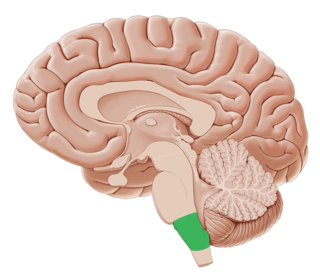
What is this?

a)

Corpus callosum

b)

Medulla Oblongata

c)

Cerebellum

d)

Hypothalamus

81.
Which structure is E?
a)
midbrain
b)
thalamus
c)
pons
d)
hypothalamus
82.

Which lobe is this?

a)

Occipital Lobe

b)

Parietal Lobe

c)

Temporal Lobe

d)

Frontal Lobe

83.
what controls your balance ?!
a)
thalamus 
b)
cerebellum
c)
basal ganglia
d)
frontal lobes
84.
what controls your personality ?!
a)
parietal lobes
b)
occipital lobes
c)
temporal lobes
d)
frontal lobes
85.

What is always coming, but never arrives?

a)

yesterday

b)

today

c)

tomorrow

d)

nothing

86.

What is it that goes up, but never comes down?

a)

tree

b)

house

c)

age

d)

index

87.

What has a head, a tail, but does not have a body?

a)

a coin

b)

a dog

c)

a horse

d)

a bottle

88.

Which room has no walls?

a)

bedroom

b)

bathroom

c)

classroom

d)

mushroom

89.

What goes up and down, but never moves?

a)

waves

b)

elevators

c)

stairs

d)

people

90.

If a monkey, a squirrel, and a bird are racing to the top of a coconut tree, who will get the banana first?

a)

monkey

b)

squirrel

c)

bird

d)

no one