wayground logo

Free Printable Worksheets

Font size

S
M
L
XL
Worksheets

7 Physics

Total questions: 133

Worksheet time: 4hrs 54mins

Name
Class
Date
1.

Scott travels north 5 miles and then goes west 3 miles before coming straight back south 2 miles. What is his distance?

a)

10 miles

b)

7 miles

c)

8 miles

d)

6 miles

2.
 Jermaine runs exactly 2 laps around a 400 meter track. What is the displacement?
a)
800
b)
400
c)
0
d)
200
3.

Which is the length of the path an object has traveled?

a)

displacement

b)

distance

c)

motion

d)

reference point

4.

1. Amy runs 2 miles south, then turns around and runs 3 miles north. What is displacement?

a)

5 miles

b)

1 mile North

c)

2 miles South

d)

2 miles

5.
65 miles per hour North is an example of an objects what?
a)
Speed
b)
Velocity
c)
Average Speed
d)
Constant Speed
6.
10 miles per hour is an example of an objects what?
a)
Velocity
b)
Speed
c)
Acceleration
d)
Inertia
7.
Velocity is 
a)
speed
b)
direction
c)
speed with a direction
8.
Speed is equal to 
a)
Distance/Time
b)
Time/Distance
c)
Time x Distance
d)
Acceleration
9.
A proper quantity showing velocity would be
a)
25 m/s.
b)
30 m south.
c)
15 m/s north.
d)
10 m.
10.

A horse follows a dangling carrot for 20 m, if it took her 5 seconds to reach it, what was her average speed?

a)

1,000 m/s

b)

2.5 m/s

c)

4 m/s

d)

20 m/s

11.

Which of the following has INCORRECT units?

a)

speed = m/s

b)

time = s

c)

displacement = m

d)

velocity = s

12.

Which is a vector?

a)

Displacement

b)

Distance

c)

Speed

13.

What is a difference between distance and displacement

a)

Distance is measured in seconds and displacement is measured in meters

b)

Distance is always shorter than displacement

c)

Displacement can be equal to zero if the object ends in the place it began in

14.
What does magnitude mean?
a)
size
b)
unit of measure
c)
level of significance
d)
point of view
15.

What is the equation for velocity?

a)
b)
c)
d)
16.

Select the equation for speed

a)
b)
c)
d)
17.
The scientific (SI) unit for measuring distance is the ________ .
a)
mile
b)
foot
c)
kilometer
d)
meter
18.

What describes a vector best?

a)

Magnitude

b)

Magnitude and unit

c)

Magnitude, unit, and direction

d)

Direction

19.
A runner races in the 100 meter dash.  It takes her 10 seconds to finish.  What is her average speed?
a)
10 m/s
b)
1000 m/s
c)
100 seconds
d)
10 seconds
20.

Two horses are running in a field. The gray horse runs 12 m/s north. The black horse runs 12 m/s east.

Which is true about their motions?

a)

Equal speeds.

b)

Equal velocities.

c)

Equal displacements.

21.
Scott travels north 5 miles and then goes west 3 miles before coming straight back south 2 miles. What is his distance?
a)
10
b)
7
c)
8
d)
6
22.
Distance and direction of an object's change in position from a starting point
a)
displacement
b)
distance
c)
motion
d)
reference point
23.

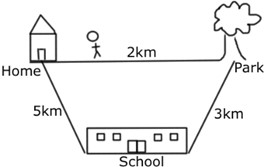
Jerry walked from home to school, then from the school to the park. What is his total distance?

a)

2 km

b)

5 km

c)

8 km

d)

10 km

24.

Jerry walked from home to school, then from the school to the park. What is his total distance?

a)

2 km

b)

5 km

c)

8 km

d)

10 km

25.

Jerry walked from home to school, then from the school to the park. What is his total displacement?

a)

2 km

b)

5 km

c)

8 km

d)

10 km

26.
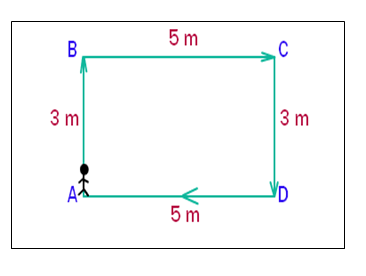
Sara walks from Point A to Point B. Which is true?
a)
Distance and displacement are EQUAL
b)
Distance is less than displacement
27.
Find the distance Sara walks from A to B,  B to C then C to D?
a)
11m
b)
3m
c)
5m
28.

After completing one trip on a roller coaster, the roller coaster's ________ is zero.

a)

displacement

b)

reference point

c)

length

d)

distance

29.
Scott drives a Jeep 12 km east, then 4 km north, then finally 3 km west. He traveled a total distance of:
a)
5 km
b)
10 km
c)
13 km
d)
19 km
30.
A ping-pong ball rolls forward 6 meters, and bounces backward 3 meters. It traveled a total distance of:
a)
9 meters
b)
6 meters
c)
3 meters
d)
0 meters
31.
Ivan walks 10 meters west to the water fountain, then runs 2 meters east to his class to avoid a lockout. His displacement would be:
a)
8 meters
b)
8 meters, east
c)
8 meters, west
d)
12 meters
32.
During a game of dodgeball, Marina runs 2.45 meters forward to grab a dodgeball, then runs 1.25 meters backward to avoid a opponent's dodgeball. Her displacement would be:
a)
3.7 meters backwards
b)
1.2 meters backwards
c)
3.7 meters forwards
d)
1.2 meters forwards
33.
1. Which of the following statements about speed and velocity is correct?
a)
Velocity only describes an object’s rate of motion.
b)
Speed describes how an object is changing its velocity.
c)
Speed and velocity both describe how an object is speeding up.
d)
Only velocity includes the direction an object is traveling.
34.
Acceleration describes how an object’s velocity is changing.  Which of the following scenarios provides the best example of an accelerating object?
a)
A car driving at a constant speed
b)
A book sitting on top of a high shelf
c)
A toy train traveling in a circle
d)
A toy boat floating in a bathtub
35.
When a car goes around a corner at 20 mph, why do we say it  accelerates?
a)
The car is accelerating because of the velocity is constant
b)
The car accelerates because it's going 20 mph
c)
Cars always accelerate when they are in motion
d)
The car is accelerating because it's changing direction
36.
The gees fly 23 mph to the south when they migrate for the winter. 
a)
speed
b)
velocity
c)
acceleration
37.
The tornado is traveling northwest at 20 mph. 
a)
speed
b)
velocity
c)
acceleration
38.
Which of the following is a unit for acceleration?
a)
km/s
b)
m/s2
c)
mi/hr
d)
ft
39.

The starting speed of a car is called its speed.

a)

initial speed

b)

beginning speed

c)

fastest

d)

slowest

40.

To find change in speed, subtract initial speed from speed.

a)

beginning speed

b)

time

c)

final speed

d)

distance

41.

Slowing down is called

Choose all that apply.

a)

negative acceleration

b)

velocity

c)

speed

d)

deceleration

42.

To find acceleration, divide the change in speed by the

a)

time

b)

distance

c)

speed

d)

velocity

43.

A roller coasters accelerates from an initial velocity of 6.0 m/s to a final velocity of 70 m/s over 4 seconds. What's the acceleration?


Remember: A = Change in Velocity / time

a)

24 m/s2

b)

16 m/s

c)

18 m/s/s

d)

16 m/s2

44.

A dog runs with an initial speed of 7.5 m/s on a waxed floor. It slides to a stop in 15 seconds. What is the acceleration?

a)

-0.5 m/s

b)

-7.5 m/s2

c)

-0.5 m/s2

d)

-7.5 m/s

45.

A drag racer accelerated from 0 m/s to 200 m/s in 5 s. What was the acceleration?

a)

0 m/s

b)

-40 m/s2

c)

40 m/s2

d)

40 m/s

46.

The energy we use to function in our everyday lives can be classified as...

a)

Renewable or non-renewable

b)

Natural or non-renewable

c)

Renewable and Natural

d)

All of them

47.
Why is solar energy considered renewable energy?
a)
It's cheaper than fossil fuels
b)
The sun's energy would not run out for billions of years
c)
Solar energy recharges batteries
d)
All of them
48.

Renewable energy resources produce less_____________ than fossil fuels.

a)

pollution

b)

energy

c)

wind

d)

light

49.
_____________ power is electricity produced by flowing water.
a)
Solar 
b)
Wind 
c)
Hydroelectric 
d)
water
50.

What is a renewable resource?

a)

A resource you can reuse over and over

b)

An object you cannot replace

c)

Fossil fuels

d)

A resource that has a nearly unlimited supply
51.
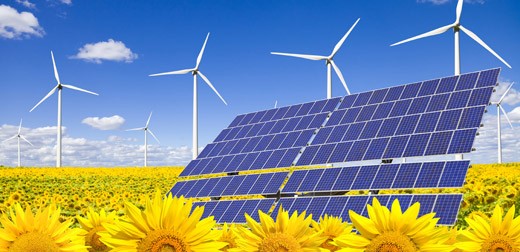
Wind Energy is...
a)
 Energy that comes from harnessing the movement of the air
b)
Energy that comes from the Sun
c)
A source of renewable energy, such as solar, wind, or geothermal energy
d)
Fuel from plant material
52.
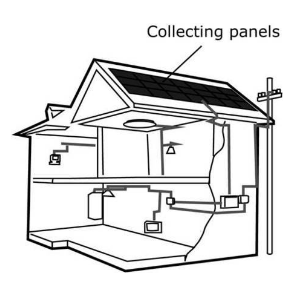
The house illustrated here uses panels on the roof to collect a natural resource and convert it into electricity that can be used.
Which alternative energy source does this house use?
a)
Water
b)
Wind
c)
Solar
d)
Geothermal
53.
Water is renewable because it.......
a)
can be frozen
b)
important to all life
c)
can be replaced constantly
d)
can evaporate
54.
__________ is an energy resource that WILL NOT run out in the next several hundred years.
a)
Renewable Energy Resource
b)
Nonrenewable Energy Resource
55.
Hyrdo Power is a __________ energy resource.
a)
Renewable
b)
Nonrenewable
56.
Solar Power is a __________ energy resource.
a)
Renewable
b)
Nonrenewable
57.
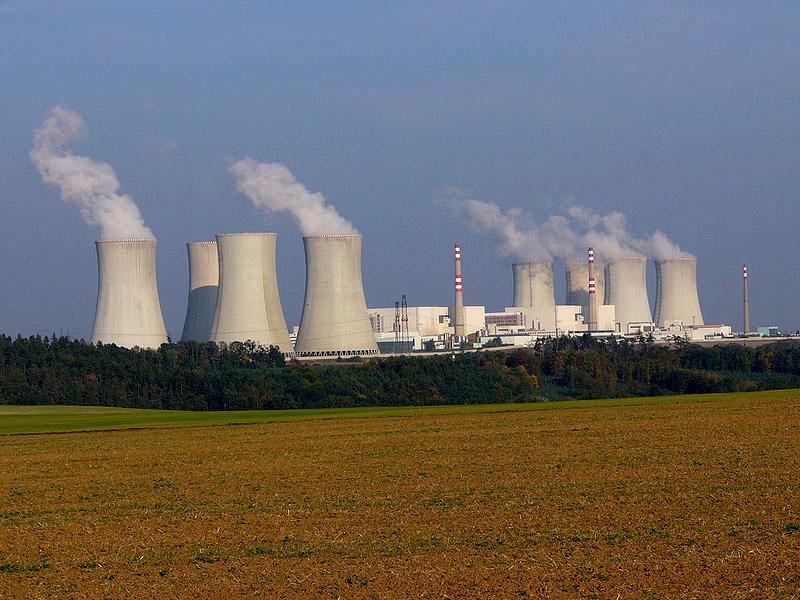
Nuclear Power is a __________ energy resource.
a)
Renewable
b)
Nonrenewable
58.
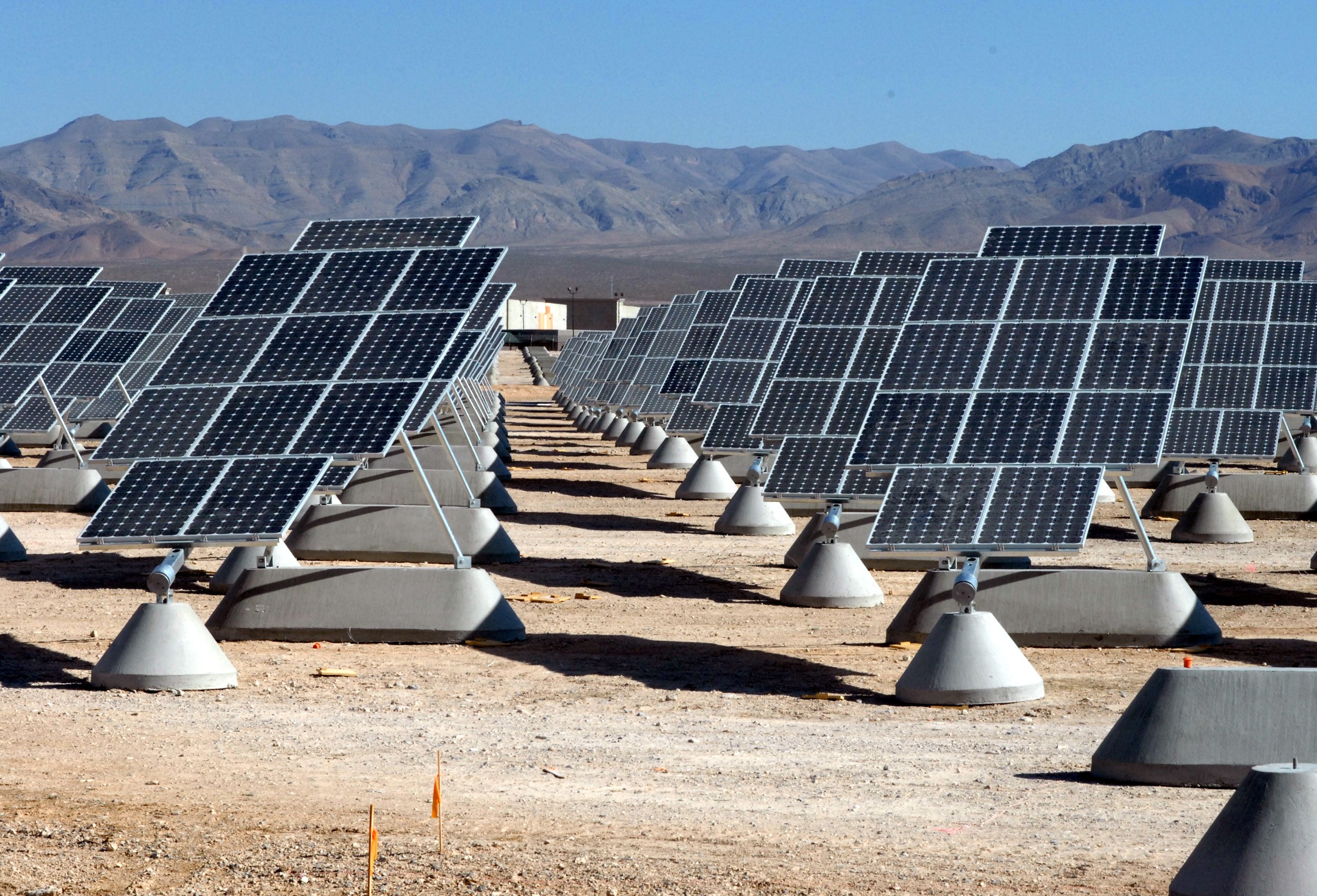
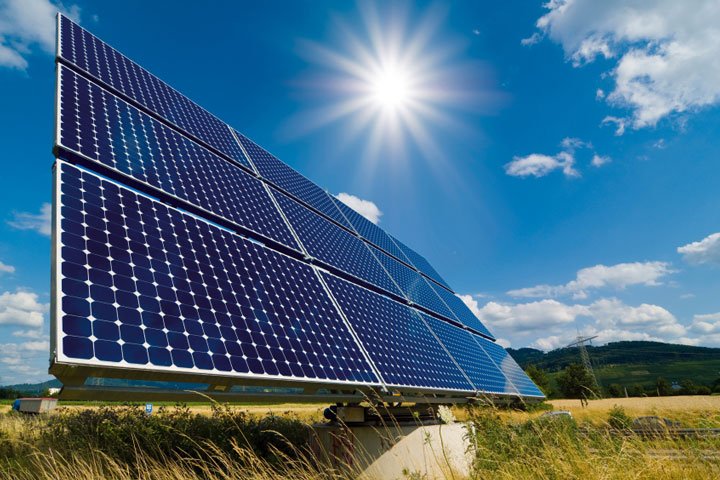
__________is the energy generated from the sun by using solar panels.
a)
Wind
b)
Hydro
c)
Nuclear
d)
Solar
59.
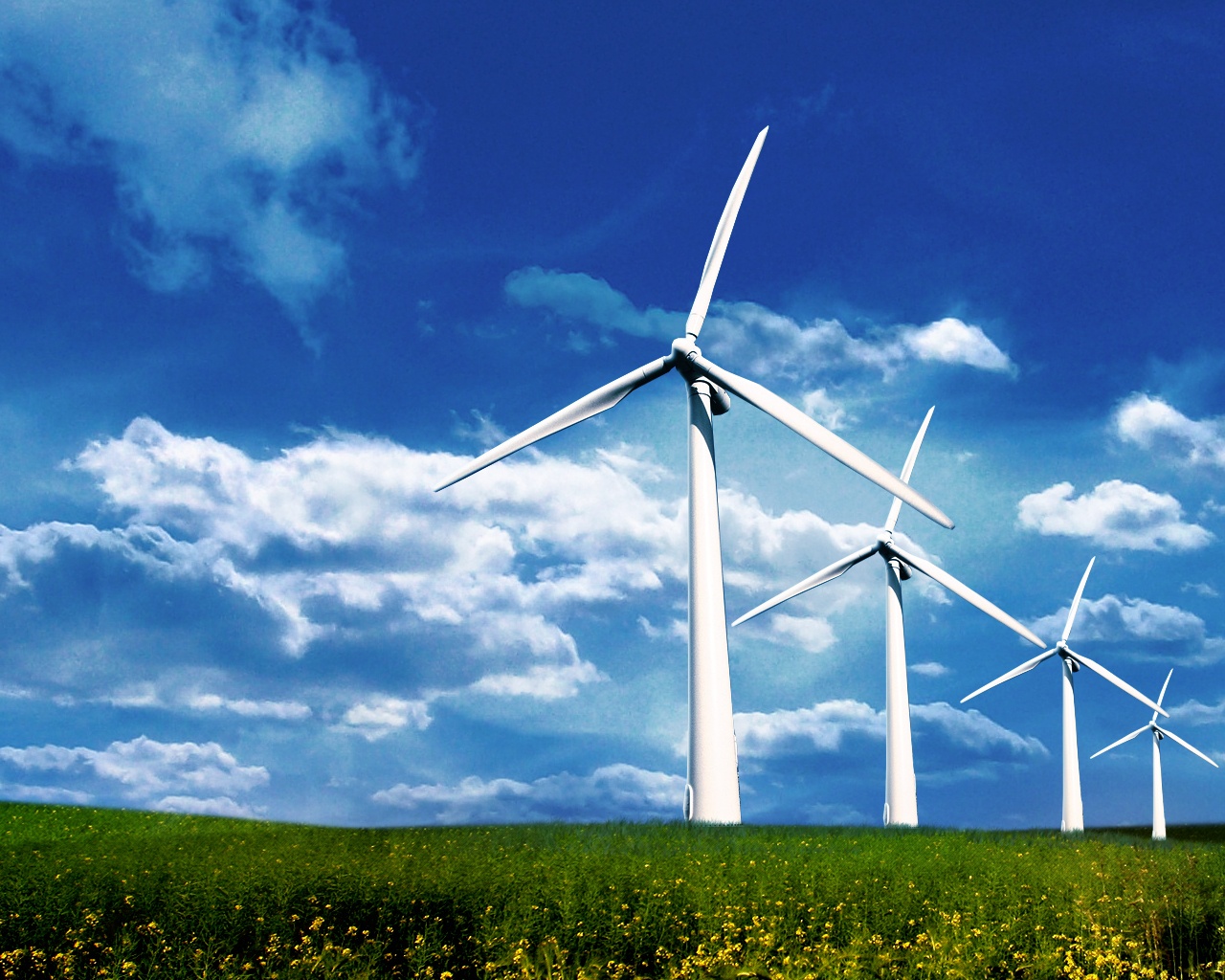
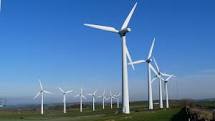
__________is the energy created by wind turning wind turbines.
a)
Geothermal
b)
Hydro
c)
Wind
d)
Nuclear
60.
Renewable energy means we will not run out.
a)
True
b)
False
61.
Solar energy is 
a)
Energy from the uneven heating of the earth.
b)
Energy from burning fossil fuels.
c)
Energy from the sun.
d)
Energy from turbines.
62.
Sunlight, water, and wind are examples of inexhaustible forms of energy.  What does inexhaustible mean?
a)
We will run out at any minute.
b)
We will never run out.
c)
We will run out in 100 years.
d)
We will run out in 20 years.
63.
What type of energy resource is wind?
a)
Nonrenewable
b)
Renewable
c)
Exhaustible 
64.
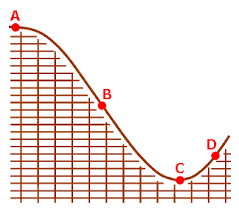
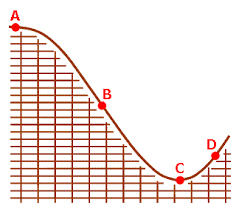
At which point(s) on the roller coaster is the gravitational potential energy at its maximum?
a)
A
b)
B
c)
C
d)
D
65.
At which point(s) on the roller coaster is the kinetic energy at its maximum?
a)
A
b)
B
c)
C
d)
D
66.
What is mechanical energy?
a)
It is what metal creates when heated.
b)
All potential and kinetic energy in a system.
c)
It is motion of all matter.
d)
Energy of momentum.
67.
What does the Law of Conservation of Energy state?
a)
Energy cannot be created or destroyed
b)
Nothing can exchange energy
c)
Energy will increase over time.
d)
Energy will decrease over time.
68.
Is energy always conserved?
a)
Always
b)
Often
c)
Never
d)
Sometimes
69.
Energy of motion is which type of energy?
a)
Potential
b)
Kinetic
c)
Sound
d)
Gravitational
70.
Work is:
a)
A transfer of energy by a force to move and object
b)
Something you get paid for
c)
Something you take home
d)
Makes you sweat
71.
The formula for work is:
a)
d = r x t
b)
p = m x v
c)
f = m x a
d)
w = d x f
72.
What force ultimately slows the roller coaster to a stop?
a)
Applied
b)
Normal
c)
Friction
d)
Magnetic
73.

What is energy?

a)

The ability to do work and cause change and move an object some distance.

b)

The push and pull exerted on an object.

c)

The relationship between matter and substances..

d)

The feeling you get after drinking a Monster or Red Bull

74.

What is radiant energy?

a)

Kinetic energy that results in the movement of molecules

b)

Kinetic energy sent off in the form of electromagnetic waves.

c)

The potential energy stored in the nucleus of an atom.

d)

Energy produced by a radiator.

75.

What is nuclear energy?

a)

Kinetic and potential energy that is stored and produced by an electrical field.

b)

The potential energy an object has because of the movement of its molecules

c)

The potential energy stored in the nucleus of an atom.

76.

Which energy does the sun produce? (2 answers)

a)

Mechanical Potential Energy

b)

Electrical Kinetic Energy

c)

Radiant Kinetic Energy

d)

Thermal Kinetic Energy

77.

Energy can be __________ from one object to another. (2 answers)

a)

Transported

b)

Teleported

c)

Transferred

d)

Transposed

e)

Transformed

78.

If the speed of an object increases, what also increases?

a)

potential energy

b)

solar energy

c)

static energy

d)

kinetic energy

79.

What two factors will increase an objects potential energy?

a)

speed

b)

mass

c)

chemical properties

d)

height

80.

You bend your arm at the elbow and pick up a candy bar. This is an example of what?

a)

gravitational potential energy

b)

mechanical kinetic energy

c)

radiant energy

d)

cosmic energy

81.

What type of energy does a battery contain?

a)

electrical kinetic energy

b)

electrical potential energy

c)

electrical neuron energy

d)

electromagnetic pulsar energy

82.

What is chemical energy?

a)

A form of potential energy that is stored in chemical bonds between atoms.

b)

The potential energy an object has because of the movement of its molecules

c)

Kinetic and potential energy that is stored and produced by an electrical field.

d)

Energy sent out in the form of electromagnetic waves.

83.

The molecules of a given substance are rapidly expanding at an excited state. What type of energy is present?

a)

Mechanical Energy

b)

Thermal energy

c)

Sound energy

d)

Vibratory energy

84.

True or false

You do work when you mannequin pose with an object in your hand.

a)

true

b)

false

85.

Two factors that determine work are

a)

force

b)

acceleration

c)

mass

d)

distance

e)

velocity

86.

units of force are

a)

newtons

b)

grams

c)

joules

d)

meters

87.

units for work are

a)

newtons

b)

joules

c)

meters

d)

seconds

88.

if you push a cart with a force of 60 N for 2 m... how much work have you done

a)

120 J

b)

30 J

c)

120 N

d)

30 N

89.
work transfers
a)
sweat
b)
energy
c)
velocity
d)
effort
90.
What is the formula for work?
a)
Force = work x distance
b)
Distance = force x work
c)
Work = force x distance
d)
Work = force x mass
91.

Fred kicks a ball with a force of 20N to George, who is 5M away. How much work was done to the ball?

a)

25J

b)

100J

c)

4J

d)

75J

92.
Gravitational potential energy depends on the ________ and ________ of the object. 
a)
Height and mass
b)
Friction and movement
c)
Mass and Movement
d)
Height and Friction 
93.
The faster an object moves, the ________ kinetic energy it has. 
a)
more
b)
less
c)
none of the above
d)
all of the above 
94.
The movement of thermal energy from a warmer object to a cooler object is called:
a)
heat
b)
temperature
c)
motion
d)
momentum
95.
A material was cooled from 100ºC to 40ºC.  What is the temperature change?
a)
60ºC
b)
40ºC
c)
-60ºC
d)
-40ºC
96.
What unit do you use to measure Thermal Energy?
a)
J/Kg ºC
b)
Kg
c)
ºC
d)
J
97.
Heat transfer occurs:
a)
in many directions
b)
both from warm objects to colder ones and from cold objects to warmer ones
c)
only from warm objects to colder ones
d)
only from cold objects to warmer ones
98.
A measure of the average kinetic energy of the individual particles in an object is called:
a)
thermal energy
b)
conduction
c)
convection
d)
temperature
99.
When you touch something that feels cold, 
a)
heat from your hand moves into the cold substance.
b)
coldness moves from the cold substance into your hand.
c)
it melts.
d)
it freezes.
100.
Energy that moves particles of matter is 
a)
temperature
b)
thermal energy
c)
heat
d)
friction
101.
What does absolute zero mean?
a)
A failed quiz.
b)
The lowest temperature possible.
c)
The hottest temperature possible.
d)
A race.
102.
The temperature of a substance increases as___.
a)
the substance expands
b)
the average kinetic energy of its particles increases
c)
the substance's volume increases
d)
the substance's mass increases
103.
The more particles an object has at a given temperature,
a)
the higher the temperature
b)
the more thermal energy it has
c)
the more degrees it has 
d)
the more Kelvins it has
104.
You're holding hands with your best friend.  Your friend's hands are REALLY warm and yours are really cold.  After a few minutes, this has changed.  How might you explain what happened?
a)
The cold energy from your hand transferred to your friend's hand through conduction.
b)
The heat energy from your friend's hand transferred to your hand through conduction. 
c)
The cold energy from your hand transferred to your friend's hand through convection.
d)
The heat energy from your friend's hand transferred to your hand through convection.
105.
Thermal energy ALWAYS moves from _____ to _____.
a)
solid to liquid
b)
ice to water
c)
hot to cold
d)
solid to gas
106.
The measure of average kinetic energy of all the particles within an object is called ____________. 
a)
temperature
b)
conduction
c)
radiation
d)
heat 
107.
In an exothermic reaction, heat is ...
a)
taken in
b)
given out
108.
What do we call a change from one form of energy to another?
a)
Energy change
b)
Energy transformation
c)
Energy conversion
d)
Energy creation
109.
What type of change is it when plants use energy from the sun in a process of photosynthesis.
a)
electrical to sound
b)
radiant to chemical
c)
electrical to radiant
d)
mechanical to sound
110.
Solar panels placed on the top of the roof use the sun's energy to heat water for a swimming pool.
a)
Radiant to thermal
b)
Radiant to electrical
c)
Radiant to sound
d)
Sound to thermal
111.
A lamp is plugged in and light and heat is given off when turned on
a)
Electrical to Thermal
b)
Electrical to Sound
c)
Electrical to Radiant
d)
Radiant to Electrical
112.
Turbines (Hand Generators) are used to convert 
a)
mechanical energy to thermal energy
b)
 thermal energy to  mechanical energy
c)
electrical to mechanical 
d)
  mechanical to electrical
113.
Some furnaces burn coal to heat building
a)
Sound to Light
b)
Sound to Electrical
c)
Chemical to Thermal
d)
Chemical To Sound
114.
An alarm clock begins to beep and the radio turns on.  The display shows it is 9:40 am
a)
Electrical to Heat
b)
Electrical to Sound
c)
Electrical to Radiant
d)
Heat to Sound
115.
Water is heated until it becomes steam.  The pressure of the steam turns a turbine.
a)
Thermal to Mechanical
b)
Thermal to Radiant
c)
Thermal to Electrical
d)
Sound to Electrical
116.
Plug a fan into a wall socket.  Turn on the fan and blades begin to spin
a)
Electrical To Radiant
b)
Electrical To Mechanical
c)
Electrical To Thermal
d)
Electrical To Sound
117.
Which energy conversion is taking place when you put gasoline in a car?
a)
Thermal To Mechanical
b)
Mechanical To Electrical
mechanical -> electrical
c)
Chemical To Mechanical
d)
Chemical To Radiant
118.

What are the three types of heat transfer?

a)

Radaition, Conduction, Convection

b)

Radiation, Conductors, Sun

c)

Insulator, Radiation, Conuction

d)

Thermal Energy, Sun, Heat

e)

Radiation, Conduction, Convection

119.

What type of heat energy is MOST likely to start a forest fire?

a)

Thermal Energy

b)

Radiation

c)

Conduction

d)

Convection

120.

A candle is lit by a lighter, what is the name of the heat transfer that caused the candle to ignite?

a)

Condcution

b)

Convection

c)

Radiation

d)

Conduction

121.

A pot is on a burning stove, what heat transfer is causing the handle to get hot?

a)

Conudction

b)

Convection

c)

Conduction

d)

Radiation

122.

Ian thinks that if he sticks his finger in the ocean it will SLIGHTLY become warmer is he correct?

a)

Yes

b)

No

123.

A grill had to much heat on a caught a paper plate on fire causing the whole kitchen on fire what heat transfer caused this?

a)

Radiation

b)

Conductoin

c)

Convection

d)

Conduction

124.

Landon has set a metal fork on a hot burner. After 1 minute has passed with the fork on it he puts the fork on the ice which causes it to melt. What kind of heat transfer caused the fork to heat up and melt the ice?

a)

Radiation

b)

Conduction

c)

Convection

125.

Makai is boiling water in a pot on the stove. He wonders how all of the water in the pot gets hot even though only the bottom level of the water is near the heat source. What kind of heat transfer causes all of the water to get hot?

a)

Conduction

b)

Convectoin

c)

Convection

d)

Conuction

126.

What is the best insulator from these choices?

a)

Styrofoam

b)

Wool

c)

Wood

d)

Car tires

127.
The handle of a frying pan is often coated in rubber because rubber provides...
a)
Heat insulation
b)
Heat conduction
c)
A low melting point
d)
A nonstick surface
128.
Which of the following is NOT an insulator?
a)
Wool
b)
Plastic
c)
Copper
d)
Styrofoam
129.
What is NOT an example of an insulator in the kitchen?
a)
An oven mitt
b)
Pots and pans
c)
A wooden spoon
d)
A plastic measuring cup
130.
A great conductor of energy is:
a)
wood
b)
plastic
c)
metal
d)
cloth
131.
Conductors are materials that...
a)
Allow heat to pass through
b)
Stop heat from passing through
c)
Allow cold to pass through
d)
Stop cold from passing through
132.
All of the following are conductors except _______.
a)
metal spoon
b)
wire
c)
iron nail
d)
plastic spoon
133.
Gloves help keep your hands warm in winter because:
a)
They are conductors of heat.
b)
They are fuzzy.
c)
They are conductors of electrical energy.
d)
They are insulators.