
Font size
 Worksheets
Review final test grade 7
Total questions: 102
Worksheet time: 54mins

What structure is in plant cells but not animal cells.
cell membrane
cell wall
vacuole
Structure X of a cell is missing. This results in the lack of control of the activities that take place in the cell. Part X is likely the
nucleus
cytoplasm
chloroplasm
cell membrane
What does the nucleus coordinate?
The oxygen levels
the process of photosynthesis
the cells activities

What kind of cell is this?
animal cell
bell bell
plant cell
vacuole
What is a cell membrane ?
it protects the cell
it protects the box
it protects the bees
it protects the animal


Which part of the cell passes on information to new cells?
cell wall
nucleus
cell membrane
vacuole
Which part of a plant cell absorbs energy from the Sun?
Cell membrane
Cell wall
Chloroplast
Cytoplasm
What is a feature of a ciliated cell?
Has hairs
Contains haemoglobin
Has a tail
Has branches at the end
Which of the following does NOT contain a nucleus?
Neuron cells
Red blood cells
Root hair cells
Sperm cells
Which of the following receives, carries and passes on electrical impulses?
Muscle cells
Neuron cells
Red blood cells
White blood cells
An oak tree is adapted to grow in a wood. Which of the following is NOT true?
It has a large root system to absorb water and minerals
It has a large root system to anchor the tree
It has plenty of leaves to absorb sunlight
It loses its leaves in autumn to save food
A cactus is adapted to survive in desert conditions. Which of the following is NOT true?
Flowers only open during the heat of the day
The leaves are spines to prevent water loss
The leaves are spines to stop animals eating them
The swollen stem stores water
A polar bear is adapted to live in the arctic. Which of the following is NOT true?
They have a thick layer of fat for insulation
They have big feet to produce high pressure on the snow
They have waterproof fur for insulation when in water
Their fur looks white to blend in with their surroundings
The area in which an organism lives is called .......
A habitat
A river
A wood
An environment
Secondary consumers are usually:
carnivores
decomposers
herbivores
producers
Which of the following shows a correct food chain?
Barn Owl → Dormouse → Barley
Dormouse → Barley → Barn Owl
Fox → Rabbit → Grass
Grass → Rabbit → Fox
In the following food chain 'lettuce → rabbit → hawk', the rabbit is:
the primary consumer
the producer
the secondary consumer
the top carnivore
In the following food chain 'grass → grasshopper → rat → snake → hawk', the rat is:
a herbivore
the primary consumer
the secondary consumer
the top carnivore


Click on the image to make it larger-- Choose all that apply: The hawk gets energy from...
mouse
rabbit
wildflowers
snake

Click on the image to make it larger-- Choose the living things that are producers...
wildflowers
rabbit
snake
grass

Click on the image to make it larger--The rabbit gets energy from the ....
hawk
mouse
wildflowers
grass

Click on the imgae to make it larger-- Choose the herbivores in the food web....
hawk
mouse
rabbit
snake
A ____________________ shows how energy is passed from one living thing to another...
ecosystem
food chain
habitat
A ____________________ shows the competition in food chains
Environment
Food Web
Ecosystems

Why might an organism have more than one arrow coming from them in a food web?
More than one organism may eat them.
They may eat more than one other organism.
This organism gets its energy from multiple sources.


What cause air pollution ?
Factories produce too much waste water and oil.
Factories produce too much smoke.
What cause land pollution?
People throw too much rubbish in the sea.
People throw too much rubbish everywhere.
People reduce making rubbish.
People reuse things.
What cause noise pollution?
People take public transport.
People turn down TV.
The traffic makes too much noise.
The traffic makes too many fumes.
What cause water pollution?
People dump things in the countryside.
Factories produce too much waste water and oil.
Factories produce good products.
Factories produce too much smoke.
If we keep on causing noise pollution, what will happen?
Sea animals will die.
People won’t have a quiet place to live in
People may have hearing problems
We can’t see the sky.
If we keep on causing air pollution, what will happen?
We won’t have fresh air to breathe .
We may have health problems.
Sea animals will die.
Plant and animals will die.
If we keep on causing water pollution, what will happen?
We won’t have a quiet place to live in.
We won’t have clean water to drink.
We will have hearing problem.
Sea animals will die.
If we keep on causing land pollution, what will happen?
Plants and animals will die.
Sea animals will die.
People may have health problems .
People won’t have clean water to drink.
Adding harmful things to the environment is called
Pollution
Waste
Acid rain
Sulfur dioxide
__________________is the introduction of chemical, physical, or biological agents into water that degrade water quality and adversely affect the organisms that depend on the water.
potable
water pollution
watershed
When harmful substances build up in the air to unhealthy levels, it is called
Air pollution
Smog
Which of these problems can be caused by air pollution?
Respiratory problems
Increased disease for humans
Reduced food sources for humans
Decrease in global temperatures
The ____________________ protects people from the effects of too much ultraviolet radiation.
smog layer
cloud cover
temperature inversion
ozone layer
____________________ are pollutants released into the air.
Emissions
Ozone molecules
Wastes
Acid rains
The ozone layer protects us from
Increased atmospheric heat
CFCs
UV rays
Decreased atmospheric heat
The ozone layer is damaged by
Increased global temperatures
CFCs
Increase in greenhouse gases
Sulfuric and nitric acids
Ozone absorbs UV _________
Heat
Radiation
The ozone layer is a consequence of _________________
Biochemical reactions
Chemical reactions
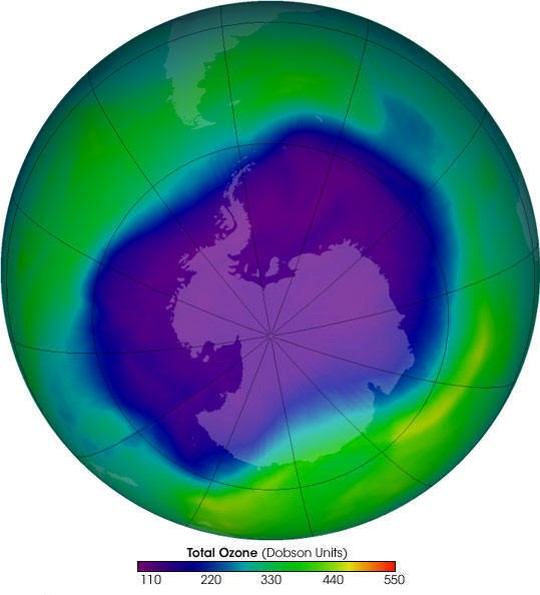
Location of the large whole in the ozone.
Antarctica
Artic
Iceland
Africa


What happens to fossil fuels to create electricity?
They are stored
They are burned
They are melted
They are frozen

Which of these is a true statement about nuclear power?
It's waste can destroy habitats and ecosystems.
It doesn't cost a lot of money to build.
It does not produce radioactive waste.
It produces very little amounts of energy.
One benefit of geothermal energy is that ________________________________.
a plant can be built ANYWHERE
it doesn't cost a lot of money to build
it can provide power 24 hours a day
it harms ecosystems where it's built
Why are coal, oil, and natural gas classified as nonrenewable resources?
They are limitless
They exist in many places on Earth.
They are originally from once-living things.
They take millions of years to form.

What is a disadvantage to Hydroelectricity?
lots and lots of pollution
Kills wild bird population
Radioactive waste
Increases potential for flooding
What are two advantages of geothermal energy?
cheap and a lot pollution
expensive and a lot of pollution
cheap and little pollution
expensive and little pollution

Why is solar energy considered renewable energy?
It's cheaper than fossil fuels
The sun's energy would not run out for billions of years
Solar energy recharges batteries
All of them

Which renewable resource uses the natural resource in the picture below to produce energy?
wind
tidal
biomass
geothermal

Which of the following is an advantage of using coal as an energy resource?
There is not an abundant supply of coal.
Coal is less expensive than oil.
Burning coal contributes to global warming.
Coal can be used to produce electricity.
Group of organisms that all share the same characteristics.
Family
Species
Order
Kingdom
A species is a group of organisms with the same ...............
colour
size
features
appearance
Organisms that belong to the same species can .......... with each other.
interact
fight
breed
When organisms of the same species breed together they will have ......................
sons and daughters
offspring
children
When organisms of the same species breed together, their offspring, sometimes, belong to an other species.
True
False
Organisms that belong to different species cannot usually breed with each other
True
False
Occasionally two organisms form different species do breed with each other. Their offspring are ................... of the two species.
hybrids
mixture
combination
A male lion and a female tiger, in a zoo, breed together. The young animals that are produced are called.......
Tigerions
Tigions
Lioners
Ligers
Which plant makes spores?
iris
fern
pine tree
apple tree
On a pumpkin vine, the pumpkin is considered the fruit and inside the pumpkin is where the seeds are housed. Which plant would scientists group with pumpkin plants?
fern
moss
pine tree
apple tree
A student observes a tree throughout the year. The tree has cones. The tree has needle-shaped leaves. The leaves do not fall in the winter. How should the student classify this tree?
as an evergreen tree
as a deciduous tree
as a spore producer
as a flowering plant
Plant part that contains a tiny new plant, or embryo
flower
frond
seed
spore
This part of the plant takes in water and nutrients from the soil.
roots
leaves
stems
flowers
Plants that form seeds in cones are called
coniferous
deciduous
spore producers
fruiting trees

The large feathery leaf of a fern is called a(n)__________________________.
embryo
dicot
frond

_________________________ are reproductive cells of ferns and mosses.
vascular plant
seed
spores

Most conifers have _______________ that are green all year round.
broad leaves
flowers
needle-shaped leaves

Plants that must live in moist, shady places are ____________.
angiosperms
mosses
conifers
The plant group and the animal group are called
groups
conifers
mosses
kingdom
Guess the plant group:
Small plants. They have thin leaves that dry out easily


What is a FROND?
needl
seed
fruit
leaf

What are those black spots?
bacterium
cells
spores
flowers

