
 Worksheets
Ocean Properties OC.2
Total questions: 50
Worksheet time: 36mins
The pH of an acidic solution will be...
Lower then 7
Above 7
Exactly 7
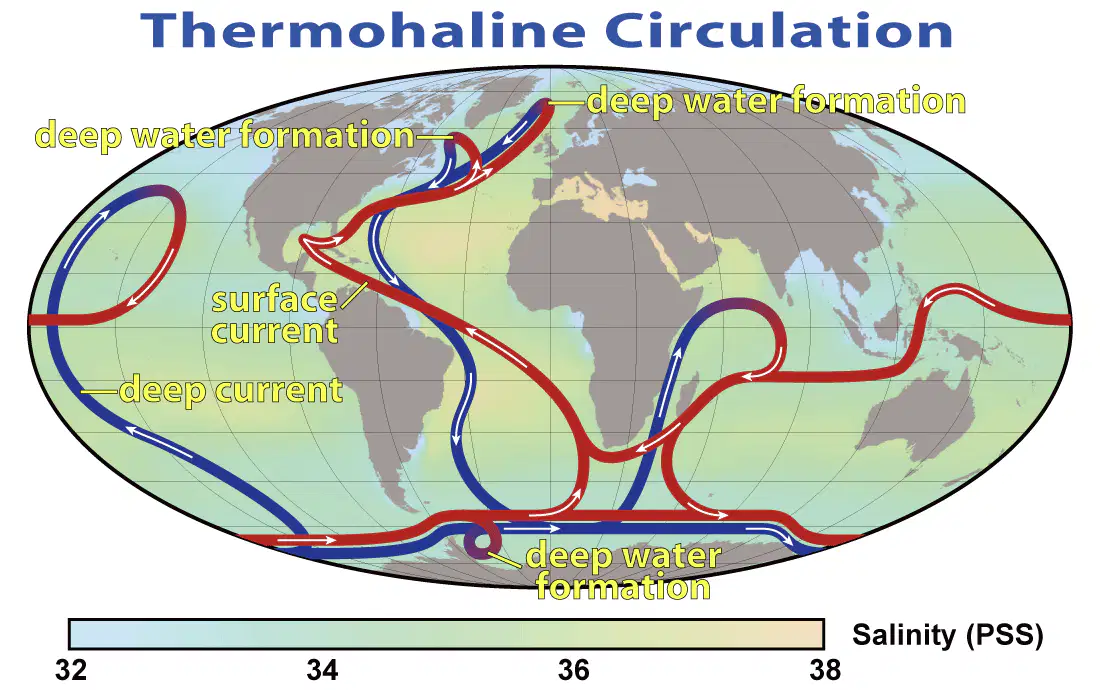
Thermohaline circulation is also known as...
The undersea escalator
The deep current
The fishy highway
The Great Ocean Conveyor Belt
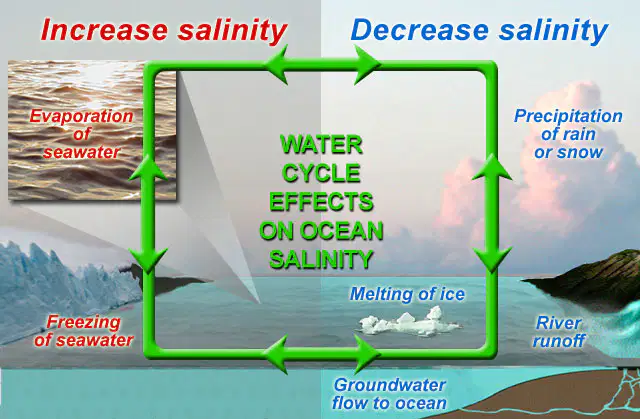
Which of these processes causes salinity to increase?
Precipitation
Ice melt
evaporation
Deep water formation
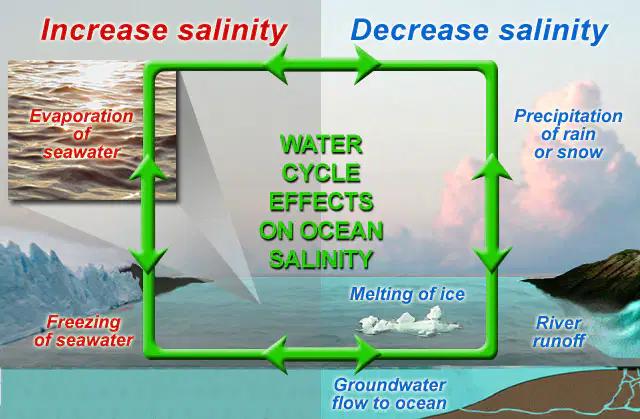
Which process causes salinity to decrease
weathering of rocks
Ice melting
evaporation
ice formation
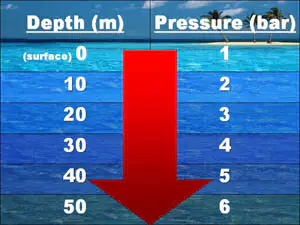
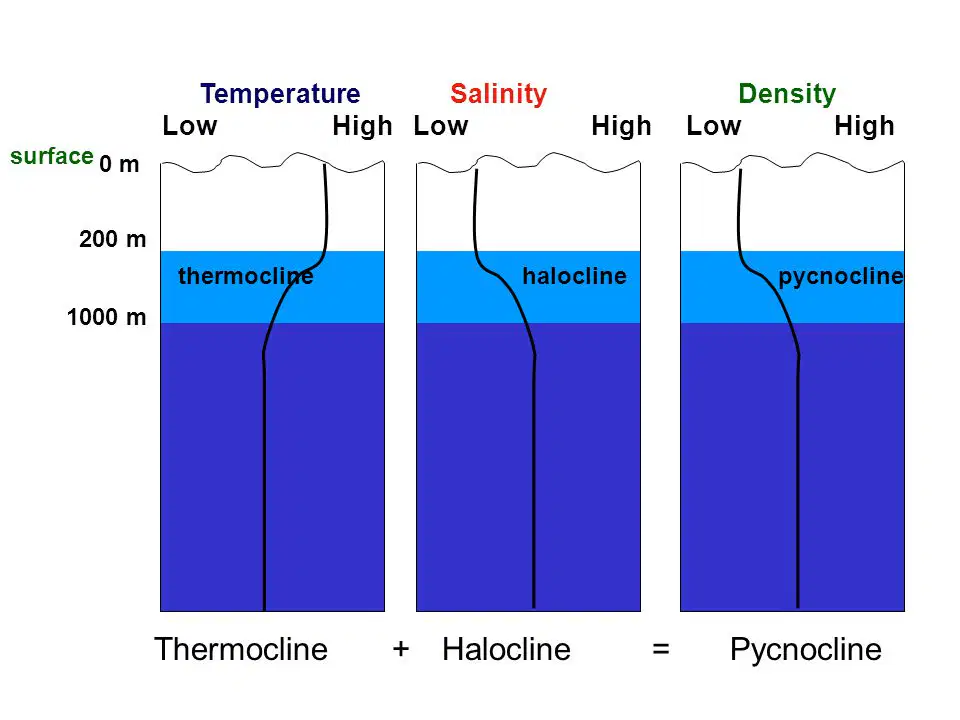
How does salinity change with ocean depth?
deeper water has lower salinity
surface water has the highest salinity
deep water has the highest salinity

What is the average salinity of the ocean?
3.5%
6.5%
10%
1%


Oxygen (O2), Carbon dioxide (CO2), and Nitrogen (N2) are all _________________________ that are important to marine life.
ions
dissolved gases
carbohydrates
carbon compounds

Carbon dioxide (CO2) is also produced in the ocean by ______________________________.
photosynthesis of marine plants
cellular respiration of marine organisms
sea water freezing
increased alkalinity

Density of seawater is affected by these two factors:
clarity and color
hydrogen ions and dissolved oxygen
transparency and turbidity
temperature and salinity

Ocean acidification occurs when too much _______________________________ enters the ocean from the atmosphere.
calcium carbonate
carbon dioxide
sulfur dioxide
nitrogen gas
Why is the ocean salty?
chemical weathering of rocks and mineral and volcanic eruptions
Melting sea ice and condensation

A change in salinity with an increase in depth is called a
thermocline
halocline
pycnocline
salinocline
Ocean acidification begins with
pollution from ships
carbon dioxide released from combustion
dumping of waste from cities into the ocean
respiration of organisms
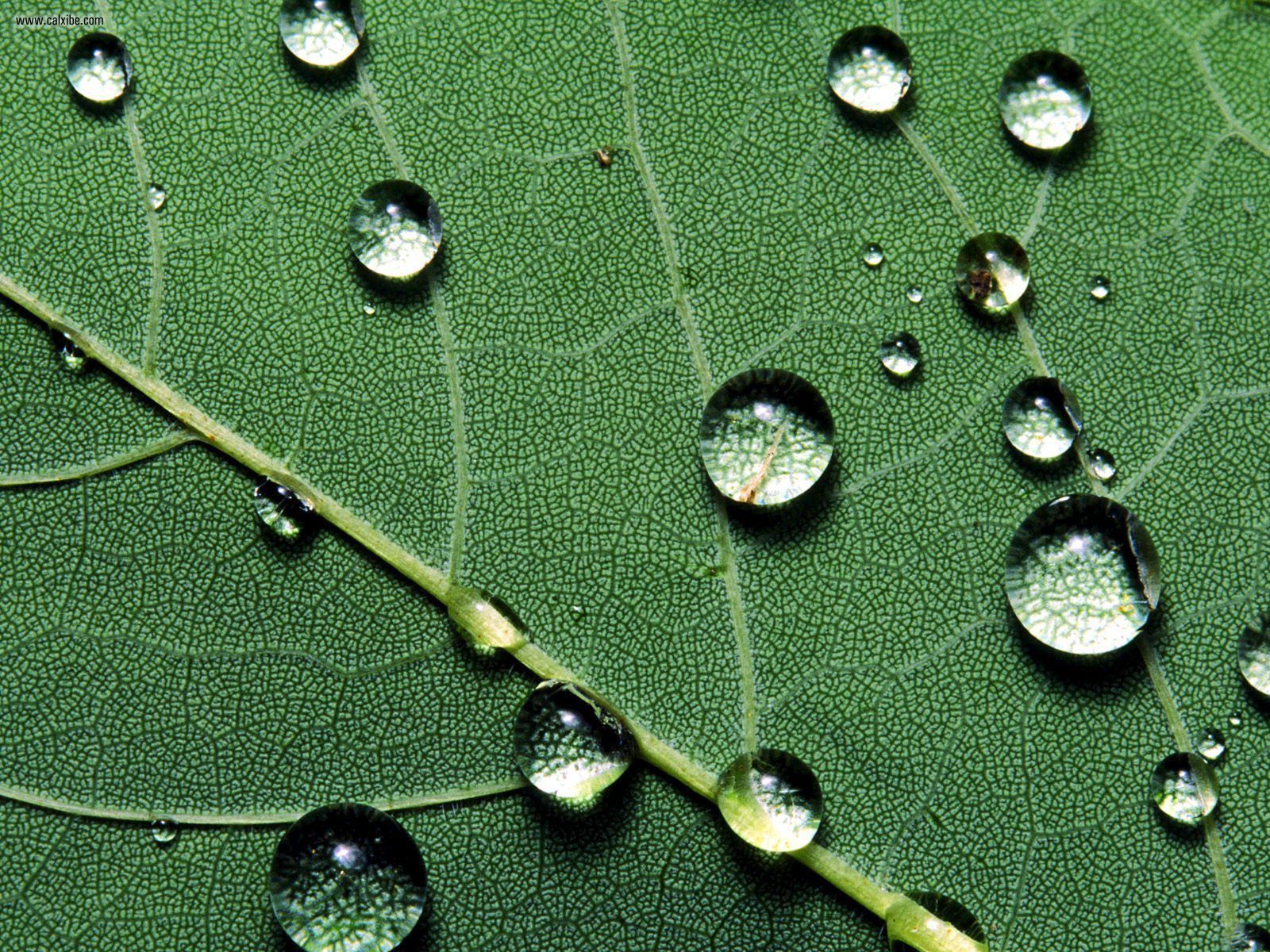
Refer to the picture of water sticking to a leaf; this is occurring because of:
Adhesion
Cohesion
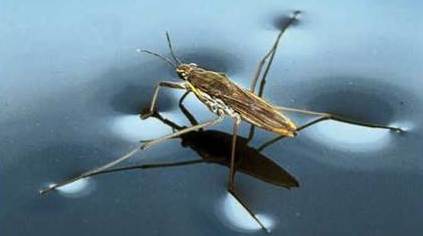
Refer to the picture; the water strider can walk over waters surface. This is occurring due to:
Adhesion & surface tension
Cohesion & surface tension
What kind of molecule is water?
Ionic
Polar
Nonpolar Covalent
Metallic
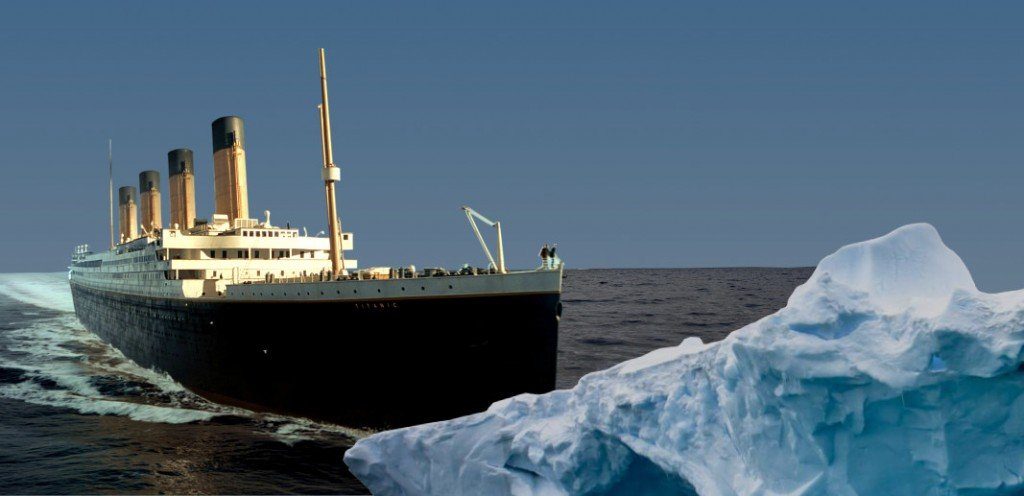
Why does ice float?
water expands when it freezes, making ice less dense than water
water compacts when it freezes, making ice more dense than water
hydrogen bonds in water push the ice to the surface
ice is afraid of water, and avoids it
What percentage of Earth is covered with water?
97
65
30
71
Why is carbonate important? (pick 2 answers)
Used as a buffer to keep ocean pH stable
Used by animals to make shells and exoskeletons
Used as an acid to keep ocean more acidic
Used as a food source for animals
If something has a pH of 7, what would we consider it as?
An acid
Neutral
A base
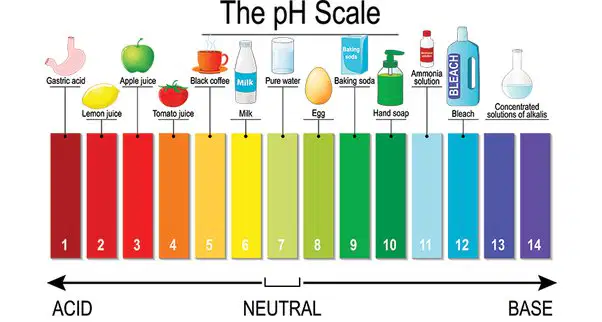
If something has a pH of 9, what would it be considered as?
An acid
Neutral
A base/alkaline
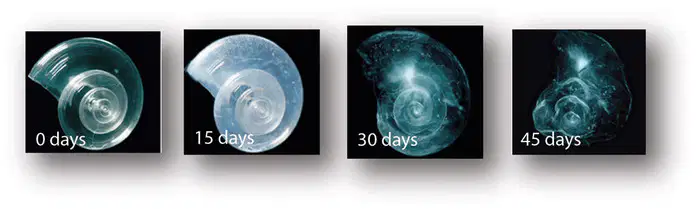
What happens to the organisms with shells made of calcium carbonate in the ocean when the pH level drops below its optimal pH of 8.3?
Their shells get stronger
Their shells start to break down and get weaker
They die immediately
They starve to death

Oceans are important to our environment and atmosphere because... (Choose all that apply)
They absorb heat and carbon dioxide.
They hold 97% of the world's water
They generate 50% of the oxygen we breathe?
They create opportunities for family outings and activities.

Which of these is a consequence of global warming to our oceans? (choose all that apply)
Acidification: Ocean is becoming more acidic.
Sea level is rising due to land ice melting.
Coral bleaching which results in them dying.
Animals are getting strangled by plastic 6 pack rings.
Phytoplankton inhabit areas near:
the bottom of the ocean
the middle of the ocean
the surface of the ocean
the beginning of the ocean
Pollution from the atmosphere enters our oceans in many ways EXCEPT:
Polluted runoff
Polluted rain
Wind and waves mixing the air and ocean
Evaporation of sea water
When too many nutrients enter the water causing algae blooms it may lead to a:
Healthy biome
Dead Zone
Acidic environment
Growth of shellfish
Which organisms provide more than half of the worlds oxygen?
Trees
Zooplankton
Phytoplankton
Sea grasses
The ability of water to dissolve most solutes makes it:
A polar molecule
Adhesive
Cohesive
A universal solvent
Due to the density of water, what can travel faster and longer distances in water?
Heat waves
Sound waves
Light waves
Rockets
What are the 2 most common ions dissolved in water?
Iron
Sodium
Potassium
Chloride
Which classification of water has the highest salinity?
Fresh
Brackish
Saline
Brine
Which ocean has the highest salinity?
Pacific
Atlantic
Arctic
Indian
Which latitude has the decreased surface salinity because the increased precipitation freshens the water?
Near the poles, 90o
60o
30o
0o near the Equator
Hydrothermal vents near underwater volcanoes are responsible for most of the ocean heat.
True
False
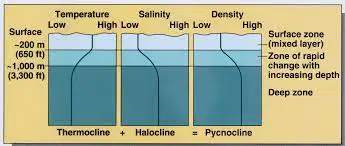
The Thermocline, Pycnocline, and the Halocline change the most significantly:
At the ocean surface
Between 200 and 1000 meters
Between 2000 and 5000 meters
Below 6000 meters
If a deep sea diver rises too quickly from deep dive what illness might result?
The shakes
The breaks
The bends
The compressions
Which 2 factors cause thermohaline currents?
Salinity
Water pressure
Temperature
Global winds
Which water conditions can hold MORE dissolved gasses? (choose 3 answers)
Cold water
Warm water
Fresh water
Shallow water
Deep water
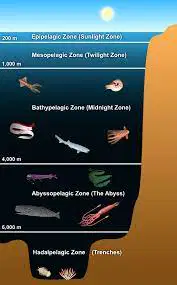
Why is there more oxygen near the surface of the ocean?
Respiration
Photosynthesis
Winds
Precipitation
How does the ocean help neutralize the acids in the ocean?
Chemosynthesis
Evaporations
Buffers
Decomposition

