
 Worksheets
Solar System (Astro)
Total questions: 82
Worksheet time: 24mins


Why isn't Pluto considered a planet any more?
It doesn't orbit the Sun.
It doesn't have enough gravity to crush itself into a sphere.
It didn't clear it's orbital path.
It doesn't have a moon.
Heliocentrism states that:
Saturn is at the center of the universe
The sun is at the center of the universe
Jupiter is at the center of the universe
The Earth is at the center of the universe
Geocentrism states that:
The Earth is at the center of the universe
Jupiter is at the center of the universe
The Sun is at the center of the universe
The Moon is at the center of the universe
Ptolemy's model of the universe:
Used ellipses instead of circles
Explained retrograde motion of planets with epicycles
Did not include the Earth at all
Had the sun at its center
Motion in the universe in classical astronomy (as per Plato and Aristotle) _____.
has the sun at its center
disregards the sun
is based on imperfect circular motion
is made up of circles turning at uniform rates
What is it called for when a planet is moving backwards in the night sky?
retrograde
prograde
heliograde
geograde
Who was the person that popularized the geocentric model?
Galileo
Aristotle
Copernicus
What was the biggest problem with the geocentric model?
it was too complicated
it couldn't explain the movement of the planets
it was against what popular religions believed
Which person popularized the heliocentric model?
Ptolemy
Aristotle
Copernicus
What is the biggest difference between the Geocentric Model and the Heliocentric Model?
the shape of the planets' orbits
the movement of the moon
the center of the solar system
Kepler's first law states that the orbits of the planets are in the shape of a/an...
perfect circle
ellipse
spiral
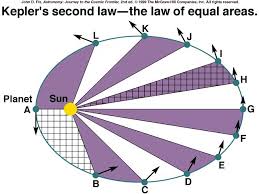
Kepler's second law of planetary motion states that a planet moves____________ when ______________ to/from the sun.
slower, closer
faster, farther
faster, closer
What does the Heliocentric system look like?


Which scientific instrument did Galileo use to change the world?
telescope
spyglass
mirror
magnifying glass
Who supported Copernicus's Heliocentric Model
Galileo
Plato
Ptolemy
Aristotle
Which astronomer first observed the phases of Venus and Jupiter's moons with the help of a telescope?
Gailieo
Aristarchus
Kepler
Aristotle
Copernicus
Who discovered the shape of a planet's orbit is actually an ellipse?
Ptolemy
Copernicus
Kepler
Galileo
What does the word "Helio" mean?
Earth
Mars
Sun
Juputer
These two astronomers confirmed Copernicus's heliocentric theory with more evidence.
Galileo and Aristotle
Kepler and Galileo
Ptolemy and Kepler
Aristotle and Ptolemy
What did Ptolemy's and Aristotle's model have in common?
Both models had Earth as the center of the solar system.
Both discovered galaxies beyond the Milky Way.
Both models had the sun as the center of the solar system.
Both model had objects in solar system have epicycles.
Who discovered Jupiter's four moons?
Copernicus
Galileo
Brahe
Aristotle

According to Kepler, which planet travels the fastest?
Earth
Jupiter
Mercury
Neptune
What trait do all solar system models share?
All planets have epicycles.
The moon orbits Earth.
The stars rotate around the Sun.
The planets have a circular orbit around the Sun.
How did the Ptolemaic model differ from other proposed solar system models?
It said that the planets have epicycles.
It said that the planets rotate on their axes.
It said that the planets revolve around the Sun.
It said that the planets and the Sun revolve around Earth.
Why was Copernicus’s heliocentric model not believed until Galileo and Kepler provided more evidence?
The model had the moon orbiting Earth.
The model was against religious teachings.
The model could not explain retrograde motion.
The model did not include all eight planets in the solar system.
In order to explain retrograde motion, Ptolemy added these to the orbits of planets.
Ellipses
Epicycles
Cycloids
Parabolas
Kepler was only able to formulate his laws of planetary motion because of the observations this scientist made.
Tycho Brahe
Galileo Galilei
Linus Pauling
Nicholas Copernicus
Newton's first law states that an object at rest ____ and an object in motion ______ unless it experiences an unbalanced force.
remains at rest; remains in motion
remains in motion; remains at rest
begins motion; stops
stops; begins motion
Newton's second law states: the unbalanced force acting on an object equals _____ ?
gravity times acceleration
mass times acceleration
graivity divided by acceleration
mass divided by acceleration

What is Astronomical Unit?
1000 km
The size of our solar system
The average distance between Earth and the Sun
The average distance between Earth and Moon
Planet Zion has an orbital period of 1,509 days. If you are 25 years on Earth, how old would you be on Planet Zion?
0.25 years
4 years
6 years
103 years
Planet Juice has an orbital period of 133 days. If you are 25 years on Juice, how old would you be on Planet Zion?
2.7 years
68.6 years
1,942 years
48,545 years
This type of planet is very cold and Icy
Terrestrial
Jovian
This type of planet has a thin atmosphere or no atmosphere at all
Terrestrial
Jovian
These planets are often called "gas giants" or "ice giants"
terrestrial
jovian
An example of this type of planet is Mars
Terrestrial
Jovian
This type of planet is relatively small
Terrestrial
Jovian
These planets are typically hot or warm
Terrestrial
Jovian
These planets are made of heavier elements or metals
Terrestrial
Jovian
These planets typically have a thick Hydrogen/ Helium atmosphere
Terrestrial
Jovian
This type of planet may have rings
Terrestrial
Jovian
This type of planet typically has many moons
Terrestrial
Jovian
Based on Solar Nebular theory the planets all orbit the sun in the same direction
True
False
Based on Solar Nebular Theory, the planets of our solar system should all rotate the same way on their axes.
True
False
Solar Nebular Theory is the most widely accepted theory of how the solar system began
True
False


What is it called when dust, gas, and rock particles accumulate together into massive objects like planetesimals?
Accretion
Contraction
Condensing
Heating
What term describes a cloud of dust and gas many light-years across?
Accreting
Condensing
Contracting
Nebula
True or False: Planetesimals form because gravity pulls dust and debris particles together.
True
False
What do you call a "baby" planet that is just starting to form?
Planetesimal
Protostar
Nebula
Accreting

