
NEW
Font size
 Worksheets
Forensic Science Fall Final Exam Review
Total questions: 75
Worksheet time: 56mins

Hair with a flattened cross section, clumped densely distributed pigment granules and a small to moderate diameter is classified as...?
Asian
African
European
A sample of hair was found without a root. The hair analysis may be used to determine all of the following except:
manner in which the hair was removed
body region from which the hair came from
broad racial background of the individual from which the hair came from
identity of the individual from which the hair came from

Identify the type of cuticle labelled as B commonly found in rodents and bats
imbricate
spinous
coronal
elongate
We know hair is from a human if…
The medullary index is 0.5 or greater
The medullary index is 0.33 or less
The cuticle is coronal
The medulla is cellular


What cuticle pattern is shown?
imbricate
spinous
coronal

In order to determine if a hair is from an animal or human, one should divide the diameter of the...
medulla by the entire hair
medulla by the cuticle
cortex by the medulla
cortex by the entire hair

B
Cuticle
Hair Follicle
medulla
Cortex

What must be present in a hair sample to obtain nuclear DNA?
keratin
cortex over 0.3
healthy cuticle
follicular tag
The following information can be determined from hair analysis EXCEPT-
ancestry
maternal lineage
toxins/drugs
age

Identify the type of medulla.
Solid
Interrupted
Fragmented
Double
A sample of hair was found at a crime scene. The hair is black in color, with a thick cuticle, dense pigment and continuous medulla. On cross section, it is round with a large diameter. This hair sample belongs to a person of ________ descent.
European
Asian
African
Natural fibers can be harvested from
plants and animals
only from plants
only from animals
plants, animals, and minerals
All of the following are characteristics of a synthetic fiber except
They are formed by combining monomer compounds into polymer molecules.
They are man-made.
They are used in the production of carpet fibers.
They do not contain any natural fibers.
What is Loccard's Exchange Principle?
Perpetrators always leave evidence behind.
Every contact leaves a trace.
All animals leave evidence.
Long, violent confrontations leave evidence.
Fiber does NOT fall into what type of evidence?
Individual
Class
Trace
Circumstantial
Which of the following is a manufactured fiber?
Rayon
Polyester
Acrylic
All of these choices are manufactured
Fiber evidence is gathered with
vacuums
tape or lint roller
forceps
all choices are correct

Identify the weave pattern for A
silk
twill
basket
plain

Identify the weave pattern (2 wefts over 2 warps and under 2 warps)
plain
basket
twill
satin
Which weave pattern has 1 weft going over 1 warp and under 1 warp?
plain
twill
satin
basket
Fiber evidence is
indirect
direct
Plant fibers are made of
cellulose
petroleum
polyester
keratin
Synthetic fibers are made from-
cellulose
petroleum
wool
cotton

Identify the weave pattern.
twill
basket
plain
weave

Identify the weave pattern.
weave
twill
basket
plain

This fiber does not have uniform edges and is twisted in appearance. What does this tell us about the fiber?
It is manufactured.
It is natural.
It is regenerated.
It is made from petroleum products.
Which of the following observations are used during a BURN TEST to help identify a specific fiber?
smell of the burned fiber
on contact with the flame, does the fiber coil or melt?
color and structure of the residue left after the fiber burns
all of choices mentioned
Fibers are an excellent source of trace evidence because
They are easily transferred from victim to suspect.
They are often overlooked by a suspect.
They can be easily collected and stored.
All of the above.
What occurs to natural fibers like plant and animal material during a burn test?
They melt into a solid substance
They produce ash
They do not ignite
The produce a red residue

Identify the fiber
This fiber has imperfect edges because it is a natural fiber. This is an animal fiber from hair.
This fiber has smooth and uniform edges because it is a manufactured fiber. This fiber is a regenerated fiber, meaning that it is made from modified natural fibers. It is almost transparent in color and consistent throughout.
This fiber has imperfect edges because it is a natural fiber. This is a plant fiber from a seed.
This fiber has smooth and uniform edges because it is a manufactured fiber. This fiber is synthetic because it is manufactured from petroleum products.
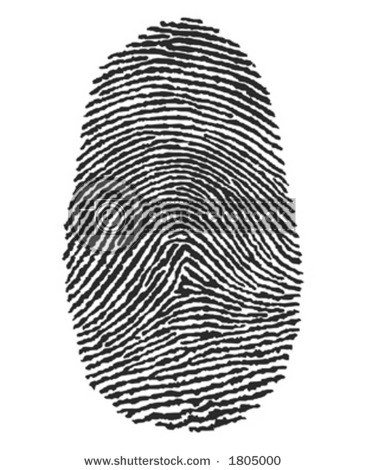



Type of fingerprint that is left by a person with soiled or stained fingertips
plastic
patent
latent
Which type of fingerprint cannot be seen the naked eye?
patent fingerprint
latent fingerprint
plastic fingerprint
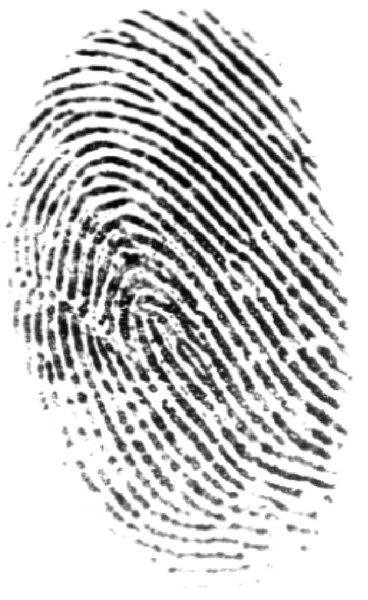

What type of fingerprint is this? It is made in a soft medium.
plastic
patent
latent
What pattern is this? (Right hand)
Ulnar Loop
Radial Loop
Plain Whorl
Tented Arch
What pattern is this? (Left Hand)
Radial Loop
Ulnar Loop
Plain Whorl
Plain Arch

What type of fingerprint is this?
Central Pocket Whorl
Plain Whorl
Accidental Whorl
Double Loop Whorl

What type of fingerprint is this?
Central Pocket Whorl
Plain Whorl
Accidental Whorl
Double Loop Whorl

What type of fingerprint is this?
Plain Arch
Tented Arch
Accidental Whorl
Radial Loop

What type of fingerprint is this?
Central Pocket Whorl
Ulnar Loop
Accidental Whorl
Double Loop Whorl

What is the name of this minutiae?
Bifurcation
Splitting Ridge
Delta
Y

What is the name of this minutiae?
Enclosure/Eye
Island
Dot
Bifurcation

What is the name of this minutiae?
Ending Ridge
Spur
Half-Ridge
Partial Ridge

What is the name of this minutiae?
Bridge
Junction
Connector
Zigzag

What is the name of this minutiae?
Island
Speck
Dash
Hyphen

What is the name of this minutiae?
Spur
Hanging Ridge
Overhang
Mini-fork
What is the most common type of fingerprint? (65%)
Arch
Loop
Whorl

What are the red triangles?
deltas
useless
forks
loops
identification based on the size and shape of body parts
anthropometry
anthropomorphism
archepelago
forensic archaeology
Arches have no deltas or cores.
True
False

Given the following:
An individual has a fingerprint record with a LWAALALWLA pattern series (the series begins with Finger 1, the right thumb, and ending with Finger 10, the left pinky). What is the primary grouping ratio of the individual?
10/1
19/1
21/1
28/1

a person with whorls on the right middle finger (#3), the left little finger (#10) and the left index finger (#7) would have the primary classification of
17/1
2/11
23/1
1/23

