wayground logo

Free Printable Worksheets

Font size

S
M
L
XL
Worksheets

cell biology

Total questions: 130

Worksheet time: 2hrs 31mins

Name
Class
Date
1.

Which of the organelles has a phospholipid bilayer?

a)

cell membrane

b)

cell wall

c)

chromatin (DNA)

d)

mitochondria

e)

chloroplast

2.

Stomach cells produce a large amount of enzymes to digest food. What organelle do stomach cells have to perform their job?

a)

ER

b)

nucleus

c)

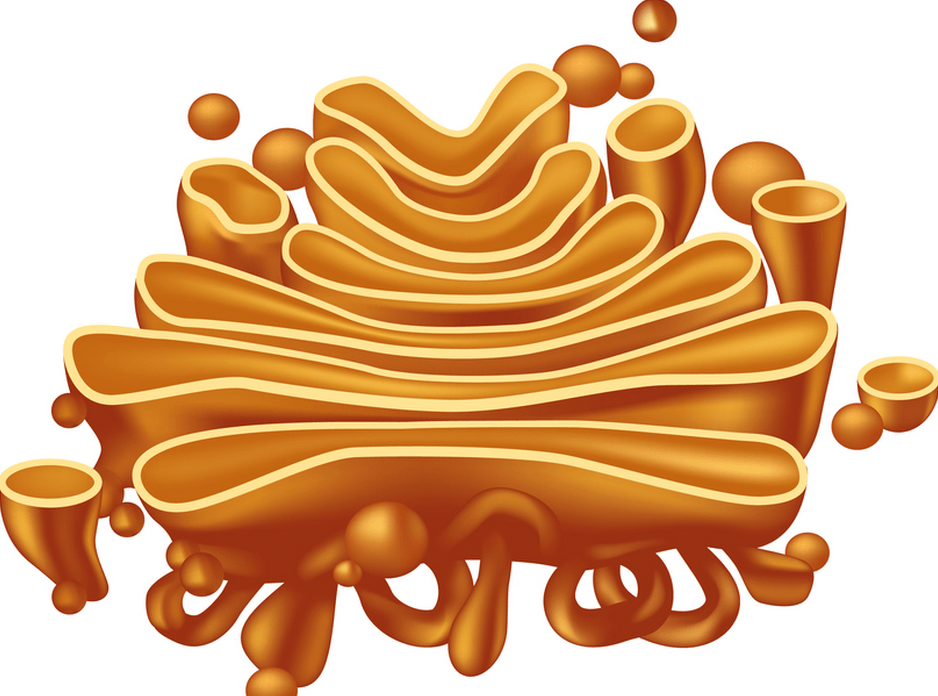
golgi apparatus

d)

ribosome

3.

Pancreatic cells produce the hormone insulin. After the protein-based hormone is made, it is transported throughout the cell and eventually expelled into the environment through vesicles. What organelles do pancreatic cells have to perform their job?

a)

vesicles

b)

golgi

c)

rough ER

d)

smooth ER

4.

Discovered the nucleus of a cell

a)

Hooke

b)

Schleiden

c)

Virchow

d)

Brown

5.

Scientists who created the cell theory.

a)

Virchow

b)

Brown

c)

Schleiden

d)

Schwann

6.

A =? B = ?

a)

lipid bilayer; peripheral protein

b)

lipid bilayer; integral protein

c)

carbohydrate; peripheral protein

d)

carbohydrate; integral protein

7.
a)

phagocytosis

b)

pinocytosis

c)

exocytosis

d)

endocytosis

e)

active transport

8.
a)

osmosis

b)

diffusion

c)

facilitated diffusion

d)

endocytosis

9.
a)

lyse

b)

hypotonic

c)

plasmolysis

d)

isotonic

10.

Explains various observations regarding the structure of functional cell membranes.

a)

permeable

b)

impermeable

c)

fluid mosaic

d)

takes many shapes and made of a bunch of parts

11.
Which organelle is responsible for packaging and modifying molecules to be secreted out of a cell?
a)
Ribosome
b)
Golgi apparatus
c)
Endoplasmic reticulum
d)
Lysosome
12.
A human cell with .9%NaCl is placed in a hypotonic that has 0%NaCl, 100% H2O, the cell will:
a)
shrink
b)
swell
c)
stay same
d)
regain salt
13.
Protein synthesis occurs in the:
a)
lysosomes
b)
peroxisomes
c)
ribosomes
d)
nucleolus
14.
Cytokinesis is completed during:
a)
Metaphase
b)
Telophase
c)
Anaphase
d)
Prophase
15.
Pinocytosis is refers to:
a)
Cell eating
b)
Cell producing
c)
Cell drinking
d)
Phagocytosis
16.
Cytokinesis is completed during:
a)
Metaphase
b)
Telophase
c)
Anaphase
d)
Prophase
17.
Pinocytosis is refers to:
a)
Cell eating
b)
Cell producing
c)
Cell drinking
d)
Phagocytosis
18.
Chromsomes line up in the middle of the cell during:
a)
Anaphase
b)
Metaphase
c)
Prophase
d)
Telophase
19.
Organelles that contain powerful digestive enzymes that break down substances inside a cell are called:
a)
Mitochondria
b)
Lysosomes
c)
Ribosomes
d)
Centrioles
20.
Smooth Endoplasmic Reticulum lacks _____________ attached.
a)
Mitochondria
b)
Particles
c)
Ribosomes
d)
Lysosomes
21.
These form a cytoskeleton for a cell, function in support.
a)
Centrioles
b)
Microtubules
c)
Mitochondria
d)
Fibers
22.
The nucleus contains:
a)
ribosomes
b)
vesicles
c)
DNA (genetic material)
d)
Phospholipids
23.
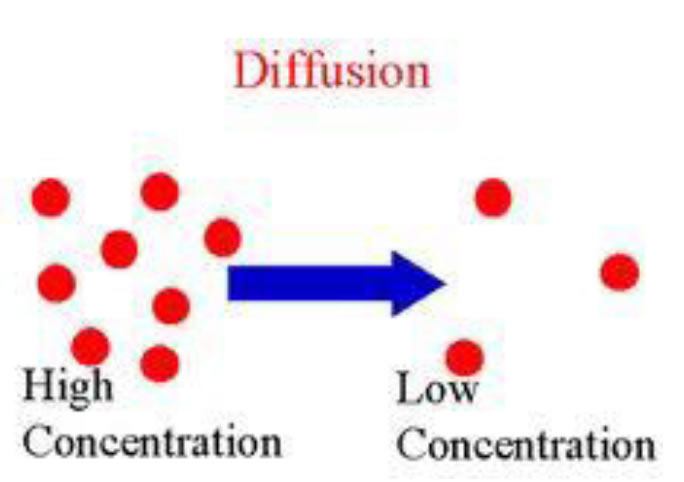
The movement of molecules from higher concentration to lower concentration is
a)
diffusion
b)
cell division
active transport
c)
active transport
d)
tonicity
24.
Active transport requires
a)
energy
b)
the nucleus
c)
chloroplasts
d)
lysosomes
25.
water moves from
a)
higher conc. H20 => lower conc H20
b)
lower conc. H20 => higher conc. H20
26.
The mitochondria....
a)
produces energy
b)
causes cell division
c)
is not an organelle
d)
is found in a prokaryote
27.
What organelle PRODUCES proteins?
a)
ribosomes
b)
centrioles
c)
lysosomes
d)
nucleus
28.
Cell organelles that are responsible for digesting food, worn out organelles and other cellular wastes are called ___________________.
a)
Mitochondria
b)
Vacuoles
c)
Lysosomes
d)
Chlororplasts
29.
Cells with a nucleus and membrane-bound organelles are called ____________________.
a)
prokaryotes
b)
eukaryotes
c)
bacteria
d)
protists
30.
In what organelle is the genetic material found inside?
 
a)
Endoplasmic Reticulum
b)
Golgi Complex
c)
Nucleolus
d)
Nucleus
31.
Which of the following is directly involved in the transportation of materials inside/within the cell?
a)
Endoplasmic Reticulum
b)
Vacuole
c)
Lysosome
d)
Mitochondria
32.
Which of the following is directly involved in the transportation of materials inside/within the cell?
a)
Endoplasmic Reticulum
b)
Vacuole
c)
Lysosome
d)
Mitochondria
33.
I am a protein packaging and shipping machine! Who am I?
a)
vacuole
b)
ribosome
c)
mitochondrion
d)
golgi apparatus
34.
Packages proteins into vesicles and ships them out.
a)
Endoplasmic Reticulum
b)
Ribosomes
c)
Golgi Apparatus
d)
Nucleus
35.
Acts like a subway system, carrying protein through the cell.
a)
Golgi Apparatus
b)
Nuclear Membrane
c)
Ribosomes
d)
Endoplasmic Reticulum
36.
The clear, jelly-like material in a cell that supports and protects the cell’s organelles.
a)
Cytoplasm
b)
Cell Membrane
c)
Nucleus
d)
Mitochondria
37.
Osmosis is the movement of _____ across a membrane.
a)
food
b)
energy
c)
oxygen
d)
water
38.
During osmosis
a)
water moves from high to low concentration
b)
large or oddly shaped molecules move across a cell membrane
c)
water moves when energy is used
d)
proteins are built
39.
An animal cell placed in a hypertonic (salty) solution will
a)
Shrink
b)
Swell
c)
Stay the same
40.
Ideally, your cells should be in a(n) _______ solution
a)
Hypertonic
b)
Hypotonic
c)
Isotonic
d)
Cola
41.
Passive transport requires no
a)
concentration gradients
b)
osmosis
c)
motion
d)
energy
42.
The movement of molecules against a concentration gradient
a)
simple diffusion
b)
facilitated diffusion
c)
active transport
d)
osmosis
43.
a)
Passive Transport
b)
Active Transport
44.
a)
Passive Transport
b)
Active Transport
45.
In a solution, salt is considered the _______.
a)
solvent
b)
solute
c)
solution
46.
 If a cell containing 5% salt is placed into a glass of water with 20% salt, the water is _______ compared to the cell.
a)
hypertonic-
b)
hypotonic
c)
isotonic
47.
_______ regulates what enters and leaves a cell.  
a)
Cell Membrane
b)
Nucleus
c)
Mitochondria
d)
Cytoplasm
48.
The cell below is in a _________ solution.
a)
Hypotonic
b)
Hypertonic
c)
Isotonic
49.
Which of these lists presents the stages of the cell cycle in the correct order?
a)
interphase, mitosis, cytokinesis
b)
cytokinesis, mitosis, interphase
c)
mitosis, interphase, cytokinesis
d)
interphase, cytokinesis, mitosis
50.
Which of these phases of mitosis take place first?
a)
anaphase
b)
telophase
c)
prophase
d)
metaphase
51.
Identify the stage of mitosis.
a)
interphase
b)
prophase
c)
anaphase
d)
cytokinesis
52.
Identify the stage of mitosis. 
a)
interphase
b)
prophase
c)
anaphase
d)
cytokinesis
53.
Which is NOT a form of active transport?
a)
Endocytosis
b)
Osmosis
c)
Exocytosis
d)
Pinocytosis
54.
When cells take in a liquid through active transport, what is it called?
a)
Exocytosis
b)
Phagocytosis
c)
Pinocytosis
d)
Osmosis
55.
Which organelle is responsible for packaging and modifying molecules to be secreted out of a cell?
a)
Ribosome
b)
Golgi apparatus
c)
Endoplasmic reticulum
d)
Lysosome
56.
Organelles that contain powerful digestive enzymes that break down substances inside a cell are called:
a)
Mitochondria
b)
Lysosomes
c)
Ribosomes
d)
Centrioles
57.
The nucleus contains:
a)
ribosomes
b)
vesicles
c)
DNA (genetic material)
d)
Phospholipids
58.
Who is credited with the "discovery" of cells?
a)
Robert Hooke
b)
Antoine von Leeuwenhoek
c)
Matthias Schleiden
d)
Theodore Schwann
59.
Which of these is NOT one of the principles of the Unified Cell Theory?
a)
All life is made of cells.
b)
Cells are the basic unit of life.
c)
New cells come from existing cells
d)
All cells have a nucleus
60.

The main difference between prokaryotes and eukaryotes is that...

a)

only prokayrotes have ribosomes.

b)

only eukaryotes have a nucleus

c)

only eukaryotes have cell membranes.

d)

only prokayrotes have chloroplasts

61.
Human cells are...
a)
prokaryotic
b)
eukaryotic
c)
bacteria
d)
photosynthetic
62.
The nucleolus is where...
a)
lipids are made.
b)
organelles are broken down.
c)
ribosomes are made.
d)
food is turned into energy.
63.
The difference between the smooth ER and the rough ER is that...
a)
the smooth ER makes proteins, but the rough ER makes lipids.
b)
the rough ER has ribosomes, but the smooth ER does not.
c)
the rough ER is in eukaryotic cells, but the smooth ER is in prokaryotes.
d)
the rough ER has lysosomes, but the smooth ER does not.
64.

Flagella and cilia are both used for...

a)

cell movement

b)

protein production

c)

cell reproduction

d)

photosynthesis

65.
The cell membrane is made of a...
a)
phospholipid monolayer
b)
phospholipid bilayer
c)
phospholipid trilayer
d)
lipophosphorous binucleosome
66.
When a protein is required for particles to diffuse across a semi-permeable membrane, this is called...
a)
simple diffusion
b)
facilitated diffusion
c)
osmosis
d)
fluid mosaic model
67.
Phagocytosis and pinocytosis are both examples of...
a)
endocytosis
b)
exocytosis
c)
diffusion
d)
osmosis
68.

Plant Cell or Animal Cell?

a)

Plant Cell

b)

Animal Cell

c)

Could be either Plant or Animal Cell

d)

Neither Plant Nor Animal Cell

69.

Plant Cell or Animal Cell?

a)

Plant Cell

b)

Animal Cell

c)

Could be either Plant or Animal Cell

d)

Neither Plant Nor Animal Cell

70.

In plants, the cell wall is made of a carbohydrate called...

a)

Cellulose

b)

Chitin

c)

Starch

d)

Glycogen

71.
This cell part is in ALL cells. It is the gel-like substance that provides cell shape.
a)
Chloroplasts
b)
Chromosomes
c)
Cytoplasm
d)
Mitochondria
72.
This organelle is in all eukaryotic cells. It is the control center of the cell because it holds the DNA.
a)
Mitochondria
b)
Nucleus
c)
Chloroplasts
d)
Ribosomes
73.
Tiny cell structures that carry out specific functions within the cell.
a)
membranes
b)
nucleus
c)
organelles
d)
animalicules
74.
This structure is a storage area for the cell. Plants usually have one large one.
a)
Lysosome
b)
Vacuole
c)
Ribosome
d)
Golgi Body
75.
What is the difference between rough and smooth ER?
a)
There is no difference.
b)
Plants have rough ER, animals have smooth ER.
c)
What type of injuries the Doctors treat.
d)
Rough has ribosomes, smooth does not.
76.
What is the name of the genetic material that is inside the nucleus?
a)
ER
b)
ATP
c)
YOLO
d)
DNA
77.
I am only found in a plant cell. What am I?
a)
cell wall
b)
mitochondria
c)
cytoplasm
d)
chloroplast
78.
I am only found in a plant cell. What am I?
a)
cell wall
b)
mitochondria
c)
cytoplasm
d)
chloroplast
79.
In this given scenario, corn syrup is hypertonic to an egg with a dissolved shell. What will happen to the egg when it is place in corn syrup?
a)
It will stay the same.
b)
It will swell- get bigger.
c)
It will shrink- get smaller.
80.
What does selectively-permeable mean?
a)
The cell controls what passes in and out of the cell
b)
Nothing gets through
c)
The cell lets only large substances through
81.
Channels and sodium-potassium ion pumps in the cell membrane that act like gates to help carry particles across the membrane are made up of ______________
a)
proteins
b)
carbohydrates
c)
nucleotides
d)
fatty acids
82.
Diffusion is the movement of molecules from an area of _____________ concentration.
a)
low to high
b)
high to low
c)
equal to high
d)
all of these
83.
___________ allow cells to recognize each other. 
a)
Carbohydrates 
b)
Proteins
c)
Phospholipids 
d)
Cholesterol
84.
___________ helps keep the phospholipid tails from sticking together and makes it more fluid.
a)
Carbohydrates 
b)
Proteins 
c)
Phospholipids 
d)
Cholesterol
85.
During what phase of the cell cycle is DNA replicated?
a)
G1 phase
b)
S phase
c)
G2 phase
d)
M phase
86.
What is the longest stage of the cell cycle called?
a)
Cytokinesis
b)
M phase
c)
Interphase
d)
G1 Phase
87.
What type of cell has a nucleus? 
a)
eukaryotic
b)
prokaryotic 
88.

Plant and animal cells are examples of

a)

prokaryotic cells

b)

eukaryotic cells

89.

Which of the following structures is ALWAYS found in both eukaryotic and prokaryotic cells?

a)

nucleus

b)

mitochondria

c)

ribosomes

d)

cell wall

90.

Which of the following is only found in EUKARYOTIC cells?

a)

nucleus

b)

DNA

c)

cell membrane

d)

ribosomes

91.

PROKARYOTIC cells do NOT have

a)

membrane bound organelles

b)

cell membrane

c)

DNA

d)

ribosomes

92.

The smallest unit of a living thing are

a)

atoms

b)

cells

c)

DNA

d)

organelles

93.

Which type of cell developed first?

a)

Prokaryotic Cells

b)

Eukaryotic Cells

94.
The most abundant organisms on Earth are?
a)
Insects
b)
Viruses
c)
Microbes
d)
Humans
95.
How many cells does one bacteria have?
a)
Two
b)
One
c)
Three
d)
Multi-celled
96.
Bacteria share similar structures that plants have.  What are two of these structures?
a)
Nucleus & Cell Wall
b)
Cell Wall & Tail
c)
Cell Wall & Cell Membrane
d)
Cell Membrane
97.
Bacteria are the only living things that are prokaryotes.  What does this mean?
a)
Have a nucleus
b)
They are really small
c)
Don't have a nucleus
d)
They can move
98.
The bacteria we collected here at OGMS belong to which Kingdom?
a)
Norbacteria
b)
Archaebacteria
c)
Protist
d)
Eubacteria
99.
A group of bacteria growing
in a Petri plate are called a?
a)
Colony
b)
Settlement
c)
Group
d)
Blob
100.
Bacteria can move.  What is the name of the structure that moves them?
a)
Flagellum
b)
Tail
c)
Appendage
d)
Whip
101.
Bacteria have the ability to reproduce both sexually and asexually.  What is the best reason provided for having this type of adaptation? 
a)
Speeds up reproduction
b)
Scientists aren't sure what the benefit is?
c)
Slows down reproduction
d)
Better chance for survival
102.
How do bacteria reproduce most of the time?
a)
Asexually
b)
Sexually
c)
Equal amounts
103.
What type of medicine kills bacteria?
a)
Cough Medicine
b)
Aspirin
c)
Vaccine (flu shot)
d)
Antibiotics
104.
Bacteria are known to make medicine.  What do they make for people who suffer from diabetes?
a)
Insulin
b)
Antibiotics
c)
Vaccines
d)
Advil
105.
A person with AIDS is likely to develop infectious diseases because the virus that causes AIDS
a)
destroys cancerous cells
b)
damages the immune system
c)
increases the rate of antibody production
d)
increases the rate of microbe destruction
106.
What does invading the host cell enable the virus to do?
a)
increase its size
b)
synthesize needed oxygen
c)
obtain nutrients
d)
reproduce
107.
When a new viral infection appears in a population, scientists usually try to develop a vaccine against the virus. Which substances would most likely be contained in the new vaccine?
a)
live bacteria that ingest viruses
b)
white blood cells from an infected individual
c)
weakened viruses associated with the infection
d)
a variety of microbes that will attack the virus
108.
The diagram represents a cycle initiated when a virus (bacteriophage) infects a bacterial cell. Which nutritional relationship exists between the virus and the bacterial cell?
a)
parasitism
b)
mutualism
c)
commensalism
d)
saprophytism
109.
Nitrogen-fixing bacteria live on the roots of leguminous plants in swellings called nodules. The bacteria synthesize nitrogen compounds that are used by the plants, and the plants provide moisture and nutrients for the bacteria. The interaction between the nitrogen-fixing bacteria and the leguminous plants is known as
a)
parasitism
b)
mutualism
c)
saprophytism
d)
commensalism
110.
Which type of bacteria performs the first step in recycling nitrogen compounds from the bodies of plants and animals?
a)
nitrogen-fixing bacteria
b)
bacteria of decay
c)
nitrifying bacteria
d)
denitrifying bacteria
111.
Atmospheric nitrogen can only be used by most living things after it has been
a)
converted to nitrates with the help of nitrogen-fixing bacteria
b)
taken in by plants through the lenticels
c)
converted to ammonia by bacteria of decay
d)
combined with carbon dioxide to form protein
112.
Nodules on the roots of legumes contain
a)
nitrogen-fixing bacteria, which help produce nitrates
b)
denitrifying bacteria, which produce amino acids
c)
bacteria that release uric acid into the soil
d)
bacteria that produce protein for absorption by plants
113.
A piece of refrigerated, cooked meat will remain safe to eat for a longer period of time than a refrigerated piece of raw meat of similar size. Which statement is a valid inference based on this information?
a)
Cooking meat kills many bacteria and fungi.
b)
Cool temperatures stimulate the growth of microbes on raw meat.
c)
Raw meat cannot be preserved.
d)
Cooked meat contains antibodies that destroy decomposers.
114.
The graph represents the results of an investigation of the growth of three identical bacterial cultures incubated at different temperatures. Which inference can be made from this graph?
a)
Temperature is unrelated to the reproductive rate of bacteria
b)
Bacteria cannot grow at a temperature of 5°C.
c)
Life activities in bacteria slow down at high temperatures.
d)
Refrigeration will most likely slow the growth of these bacteria.
115.
Bacteria of decay are important components of an ecosystem because they
a)
are involved in photosynthesis
b)
recycle organic matter
c)
absorb solar energy
d)
slow the spread of disease
116.
What would most likely happen if most of the bacteria and fungi were removed from an ecosystem?
a)
Nutrients resulting from decomposition would be reduced.
b)
Energy provided for autotrophic nutrition would be reduced.
c)
The rate of mutations in plants would increase.
d)
Soil fertility would increase.
117.
Enzymes are used in moving sections of DNA that code for insulin from the pancreas cells of humans into a certain type of bacterial cell. What will this bacterial cell's offspring be able to produce?
a)
human insulin
b)
antibodies against insulin
c)
enzymes that digest insulin
d)
a new type of insulin
118.

Which of the following is one of the 3 domains?

a)

Animals

b)

Bacteria

c)

Prokaryote

d)

Fungi

119.

Which domain has organisms that live in many environments (in normal conditions)?

a)

Archaea

b)

Bacteria

c)

Both

120.

True or False: ALL bacteria are bad and will make you sick.

a)

True

b)

False

121.
Viruses are made of
a)
Nucleic Acids and DNA
b)
Nucleic Acids and Proteins
c)
Proteins and Bacteriophages
d)
Proteins and Capsids
122.
A Pathogen is a
a)
disease causing agent
b)
endospore
c)
bacteria
d)
virus
123.
What is the process by which a bacteria cell replicates its DNA and divides in half?
a)
Lysis
b)
Binary Fission
c)
Conjugation
d)
Prophage
124.
What is letter A pointing to?
a)
Flagellum
b)
Pili
c)
Capsid
d)
DNA
125.
The picture here is a :
a)
Eubacteria
b)
Eukaryote
c)
Virus
d)
Fungus
126.
The top arrow is pointing to...
a)
Capsid
b)
Cell Wall
c)
DNA
d)
Flagellum
127.
What is pictured?
a)
T4 Bacteriophage
b)
Prion
c)
Tobacco Mosaic Virus
d)
Prophage
128.
Which of these could successfully be treated with antibiotics?
a)
HIV
b)
Strep Throat
c)
Influenza
d)
Common Cold
129.
Retroviruses are made of
a)
RNA only
b)
Proteins Only
c)
DNA and a protein coat
d)
RNA and a protein coat
130.
True or False Jonas Salk developed the Polio Vaccine?
a)
True
b)
False