wayground logo

Free Printable Worksheets

Font size

S
M
L
XL
Worksheets

Adaptation and variation

Total questions: 105

Worksheet time: 4hrs 34mins

Name
Class
Date
1.

Which scientist wrote the 'origin of species'?

a)

Einstein

b)

Rosalind Franklin

c)

Darwin

d)

Marie Curie

2.

Tongue rolling, eye color and blood type are all examples of...

a)

environmental variation

b)

Inherited variation

3.
What is an adaptation?
a)
A characteristic that helps an animal survive.
b)
The food that an animal eats.
c)
How energy moves in a food web.
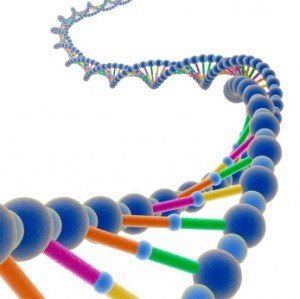
d)
How animals evolve throughout time.
4.
How do adaptations help animals?
a)
to hide from predators
b)
to hunt for food
c)
to survive in their habitats
d)
All of these are correct
5.
The environment in which an animal lives, along with other animals and nutrients including sunlight and rain is called its...
a)
habitat
b)
adaptation
c)
variation
d)
ecosystem
6.
Which of these is an example of inherited variation only?
a)
Blood type
b)
Height 
c)
Weight 
d)
Skin colour 
7.
Which of these is an example of both inherited and environmental variation?
a)
Blood group 
b)
Weight
c)
Eye colour 
d)
Dimples
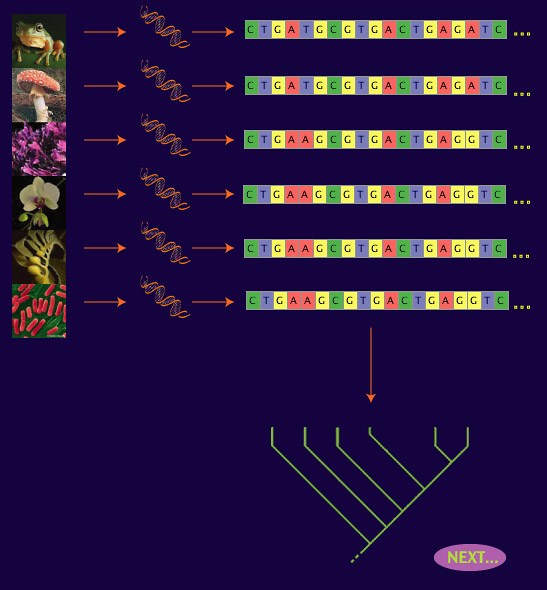
8.
The purpose of selective breeding is to 
a)
Get bigger animals
b)
get smaller animals
c)
create animals with desirable traits
d)
create animals with bad traits
9.

How is it possible that pedigree dog breeds have different traits even though they are the same species?

a)

its just chance

b)

selective breeding

c)

natural selection

10.
What are vertebrates?
a)
Animals with a backbone
b)
Animals without a backbone
11.

What is the advantage of having different shaped beaks?

a)

To look different from other species.

b)

To be able to eat the food readily available in the environment.

c)

To protect itself against predators.

d)

To protect itself against prey.

12.

Beak shape depends on...

a)

where birds live

b)

who they hang out with

c)

diet (fish or seeds)

d)

exercise

13.

What adaptation is represented by the image?

a)

Dormancy

b)

Camouflage

c)

Hibernation

d)

Seed Dispersal

14.

A group of organisms that share similar characteristics and can reproduce among themselves to produce fertile offspring.

a)

Mutation

b)

Species

c)

Adaptation

d)

Variation

15.

This is the organisms with traits best suited to their environment are more likely to survive and reproduce.

a)

Variation

b)

Mutation

c)

Natural Selection

d)

Gradualism

16.

This is an inherited trait that makes an individual different from other members of its species.

a)

Variation

b)

Mutation

c)

Punctuated Equilibrium

d)

Embryology

17.

This is any variation that makes an organism better suited to its environment.

a)

Evolution

b)

Graduation

c)

Species

d)

Adaptation

18.
Which feature helps an animal hide from other animals?
a)
looking like a dangerous animal
b)
being the same color as the place it lives (camoflauge)
c)
having sharp claws or a strong shel
d)
having only a few young and caring for them
19.

A giraffe has a long neck in order to better reach leaves to eat. This is an example of _____.

a)

an adaptation

b)

environment

c)

response

d)

stimulus

20.

How do adaptations help animals?

a)

To escape animals

b)

to hunt for food

c)

to survive in their habitats

d)

All of these are correct

21.

Plants with spines and waxy leaves are well suited for life in which environment?

a)

Desert

b)

Temperate forest

c)

Grassland

d)

Tropical Rainfroest

22.

Adaptation that refers to how an organism behaves and how interacts with other.

a)

adaptations

b)

mimicry

c)

behavioral

d)

camouflage

23.

An organism that hunts and feeds on another organism is a ______________________.

a)

prey

b)

producer

c)

predator

d)

decomposer

24.

An animal that is hunted as food

a)

prey

b)

predator

c)

decomposer

d)

producer

25.
The role an organism plays in its ecosystem
a)
niche
b)
behavior
c)
structure
d)
function
26.
When an organism copies a characteristic of something else in order to better its chances for survival and reproduction
a)
hibernation
b)
camouflage
c)
mimicry
d)
migration
27.

Structural adaptation

a)

are physical features of an organism like the bill on a bird or the fur on a bear

b)

Mental adaptation, of the thinking of the animal

28.
Which feature of a rose helps it grow without being eaten by large animals?
a)
flowers with bright colors
b)
sharp thorns
c)
small seeds
d)
deep roots
29.
A giraffe has a long neck in order to better reach leaves to eat.  This is an example of _____. 
a)
an adaptation
b)
environment
c)
response
d)
stimulus
30.
Which adaptation (for the underlined animal) serves the function of defense?
a)
A walking stick looks like the twig on which it rests.
b)
A porcupine’s quills cause a predator to seek another meal.
c)
A whale filters plankton and krill from the water in which it swims.
d)
A penguin is dark on top and white below to blend in with the water.
31.
Which of the following is a physical adaptation for the underlined animal?
a)
A butterfly has bright colors to warn predators that it is poisonous.
b)
A hognose snake rolls over, slows its breathing, and hangs its tongue out to play dead.
c)
A herd of buffalo encircle their young to protect them from a pack of wolves.
d)
A dung beetle rolls a piece of dung across the desert.
32.
How do adaptations help animals?
a)
To escape animals
b)
to hunt for food
c)
to survive in their habitats
d)
All of these are correct
33.
Dandelions have light furry seeds that allow them to spread easily. 
a)
True
b)
False
34.
Why do animals use camouflage?
a)
To look pretty
b)
To stay safe
c)
To play Hide and Go Seek
d)
To eat food
35.
How an animal protects itself Adaptation: Skunk and its spray
a)
Defense
b)
Hibernation
c)
Locomotion
d)
Migration
36.
The space, conditions and all the living and non-living things around an organism is its _________________.
a)
home
b)
environment
c)
neighborhood
d)
ecosystem
37.
EVOLUTION
a)
A trait that helps an organism survive and reproduce
b)
Competition where offspring compete for food and other resources in order to survive
c)
The gradual change of species over time
d)
Most species produce far more offspring than can possibly survive
38.
Which of the following best describes a DNA molecule?
a)
double helix
b)
contains ribose
c)
made of amino acids
d)
contains Uracil
39.
Which of the following units are repeatedly joined together to form a strand of DNA?
a)
amino acids
b)
nucleotides
c)
fatty acids
d)
polysaccharides
40.
Guanine bonds with ______________.
a)
Adenine
b)
Guanine
c)
Cytosine
d)
Thymine
41.
Adenine bonds with ______________.
a)
Guanine
b)
Thymine
c)
Cytosine
d)
Adenine
42.
Which organelle is DNA usually found in?
a)
cell membrane
b)
vacuole
c)
chloroplast
d)
nucleus
43.
What does DNA stand for?
a)
Deoxyribonucleic acid
b)
Denitrogenous acid
c)
Deribonucleic acid
d)
Diribonucleic acid
44.
How did Rosalind Franklin's photo 51 affect th work of Watson and Crick?
a)
It was used to determine the physical structure of DNA
b)
It was used to identify the four bases that make up DNA
c)
It was used to determine the theory of independent assortment
d)
It was used to show DNA was the molecule of inheritance
45.
Who was responsible for determining the structure of DNA?
a)
Watson and Crick
b)
Chargaff
c)
Rosalind Franklin
d)
All of the above
46.

According to most scientists, what is the ultimate cause of most mass extinctions?

a)

overhunting

b)

evolution of new species to replace old ones

c)

major change in environment

d)

asteroid impact

47.
Which of these describes a species that has become extinct?
a)
fewer members of the species are dying than being born
b)
more members of the species are dying than being born
c)
very few members of a species are alive
d)
all members of a species have died
48.
Which of the following species is extinct?
a)
woolly mammoth
b)
giant panda
c)
bald eagle
d)
green sea turtle
49.
Which of the following is NOT a reason a species may become extinct?
a)
competition
b)
reproducing
c)
habitat loss
d)
overhunting
50.
Suppose a pond dries up. What will most likely happen to the fish that lived there?
a)
They will learn to live on land.
b)
They will move to another pond.
c)
They will learn to breathe air.
d)
They will not survive.
51.

True or False? Many scientists think that an asteroid caused the dinosaurs to go extinct.

a)

True

b)

False

52.

What to carnivores eat?

a)

Meat

b)

Plants

c)

Plants & Meat

53.

Species that are in danger of becoming extinct are called __________.

a)

endangered

b)

not lucky

c)

extinct

d)

in a jam

54.

Evidence of an animal or plant that lived a long time ago on Earth is called a ________.

a)

fossil

b)

tiger

c)

extinct

d)

endangered

55.

A ______________ species is on its way to becoming endangered or extinct.

a)

threatened

b)

cuddly

c)

sleeping

d)

fossil

56.
What is a mass extinction?
a)
When all the species in a particular area on earth suddenly go extinct
b)
When multiple species from all over the earth suddenly go extinct 
c)
When one species goes extinct due to habitat changes
d)
When all life on earth is wiped out 
57.
Humans are causing extiction in which ways?
a)
By over hunting animals for food or products.
b)
By destroying the natural habitat of species.
c)
By polluting the environments of the world.
d)
All of the above.
58.
What event marks the end of each geologic area?
a)
1 million years
b)
burst of new life forms
c)
mass extinction
d)
ice age
59.
 Which is LEAST LIKELY to push a species toward extinction?  
         
a)
a.   Cutting down entire forest 
b)
b.  Putting animals in a zoo 
c)
 c.   Polluting mountain streams 
d)
d.   Introducing new species to an ecosystem with no known natural predator    
60.
What word do we use to describe a species which has no members still living?
a)
endangered
b)
extinct
61.

What is one of the main threats to tigers?

a)

Human impact

b)

deers are becoming extinct

c)

global warming

d)

the grass is dying

62.

What is one of the main threats to tigers?

a)

Human impact

b)

deers are becoming extinct

c)

global warming

d)

the grass is dying

63.

Kew gardens in West London has the largest ________ bank in the world.

a)

Barclays

b)

Seed

c)

Monkey

d)

Sperm

64.

Which of theses is not considered to be a possible theory for dinosaur extinction?

a)

Climate change

b)

Asteroid

c)

Overbreeding

d)

Volcanic eruptions

65.
Which feature of a rose helps it grow without being eaten by large animals?
a)
flowers with bright colors
b)
sharp thorns
c)
small seeds
d)
deep roots
66.
Which feature helps an animal hide from other animals?
a)
looking like a dangerous animal
b)
being the same color as the place it lives (camoflauge)
c)
having sharp claws or a strong shel
d)
having only a few young and caring for them
67.

What breed is this?

a)

Husky

b)

Akita

c)

Alaskan Malamute

d)

Samoyed dog

68.

What breed is this?

a)

Pug

b)

French bulldog

c)

English Mastiff

d)

Bull mastiff

69.

What breed is this?

a)

Border Collie

b)

Shih Tzu

c)

chihuahua

d)

cocker spaniel

70.
Scientist find dinosaur fossils in the bottom of a cliff and mammals fossils in the middle layer, what can be inferred?
a)
dinosaurs ate plants
b)
dinosaurs were eaten by the mammals
c)
they lived at the same time
d)
dinosaurs lived before the mammals
71.
Change over time...
a)
Evolution
b)
Nucleotide 
72.
Charles Darwin came up with this theory 
a)
Natural Selection
b)
Mutation
73.
To adjust to a changing environment
a)
Mutation
b)
Adapt
74.
Darwin wrote that organisms with traits that are best suited to the environment will ________________
a)
increase in number
b)
become extinct
75.
Another word for adapt is ____________.
a)
change
b)
create
76.
Which of the following is NOT an example of natural selection? 
a)
People selectively breeding hamsters.
b)
Insect populations developing resistance to certain pesticides.
c)
Bacteria becoming resistant to antibiotics.
d)
Male birds of certain species developing colorful feathers to attract female mates.
77.
What characteristic did Darwin observe about the finches on the Galapagos Islands?
a)
Their feathers 
b)
Genotypes 
c)
Their beaks
d)
Their body sizes
78.
Which term refers to the process by which individuals that are better suited to the environment survive and reproduce therefore passing down their genes to their offspring? 
a)
Evolution 
b)
Variation 
c)
Adaptation
d)
Natural Selection 
79.
When an organism completely dies out, it is called.....
a)
Adaption
b)
Extinction
c)
Fossilization
d)
Mutation
80.
Two organisms that are closely related would have
a)
very similar DNA sequence
b)
exactly the same DNA sequences
c)
no proteins in common
d)
completely different DNA sequence
81.

An adaptation that helps a cactus live in the desert is its

a)

wide, flat leaves to catch water

b)

bright green color

c)

thin, spiny needles

d)

tall stems

82.

What is it called when a plant or animal has a trait that helps it survive in a specific environment?

a)

instinct

b)

mimicry

c)

camouflage

d)

adaptation

83.

Which of the following adaptations best​ explains how pine trees are able to prevent water loss or damage from freezing temperatures?

a)

Pine trees have thick bark

b)

Pine cones produce seeds.

c)

Pine tree roots go deep underground.

d)

Pine needles are thin and have a wax coating.

84.

Why does the carnivorous plant eat bugs?

a)

Soil in the swamps has few nutrients.

b)

Soil in the pond has few fish.

c)

Soil in the swimming pool has few plants.

85.

The trees that remain almost green throughout the year

a)

Terrestrial

b)

Aquatic

c)

Deciduous

d)

Evergreen

86.

Plants that grow in water

a)

Terrestrial plants

b)

Aquatic plants

c)

Aerial plants

87.

How do tree survive winter?

a)

Drink alot of water.

b)

Sleep all winter.

c)

Leaves change color.

88.

Ways plants adapt to thrive in the habitats where they live, is called?

a)

Plant adaptation

b)

Tree adaptation

c)

flower adaptation

89.

What do plants need to survive?

a)

sunlight, water, air, and nutrients

b)

sunlight, winter, fall, and nutrients

c)

swamps, bees, leaves, and nutrients

90.

Carnivorous plants eat?

a)

fish

b)

birds

c)

bugs

91.

Plants need sunlight, water, air and nutrients to survive

a)

True

b)

False

92.

Some trees remain green all year.

a)

True

b)

False

93.

Some plants have brightly colored flowers to attract bees, birds, and butterflies.

a)

False

b)

True

94.
In recent years "SuperBugs" (bacteria that aren't effected by antibiotics) are becoming more and more common. How could natural selection explain this?
a)
Superbugs survive antibiotics and reproduce
b)
Antibiotics cause bacteria to become superbugs
c)
We have always had the same amount of superbugs; modern media just discusses them more.
d)
There is no reliable data on the origin of super bugs.
95.
Why do peppered moths tend to be the same color as the trees on which they live?
a)
The coloring goes along with tasting like the tree. 
b)
It keeps the moth the same temperature as the tree. 
c)
It makes the moths faster than the birds
d)
It makes the moths harder to see.
96.
Which of these is an example of natural selection?
a)
The largest animal in a population will have more opportunities for reproduction.
b)
Several species of organisms work together so that they all succeed.
c)
One species takes all the resources in an environment leaving none for others.
d)
Organism that are best suited to an environment tend to survive and reproduce more often.
97.
Which of the following explains adaptation.
a)
An individual organism changes to meet its needs in the environment. These changes pass down to their offspring.
b)
The species as a whole changes their characteristics.
c)
Beneficial traits allow organism to survive and pass on those traits
d)
New characteristics arise in a species as needed.  If these traits are helpful, they are passed down.
98.
A large herd of goats lives in a field full of poison ivy.  Some goats are able to eat the poison ivy while others have become sick when they eat it. Over time the herd as a whole will tend to
a)
Become more likely to eat poison ivy.
b)
Become less likely to eat poison ivy.
c)
Not change in the proportion of goats that can and can not eat poison ivy.
d)
Eat all the poison ivy and leave only plants all the goats can eat.
99.
Darwin studied which of these species on Galapagos?
a)
Pigeons and tortoises
b)
Tortoises and finches
c)
Finches and Pigeons
d)
Zebras and Mockingbirds
100.
Breed an organism for a desired trait is the definition of
a)
selective breeding
b)
natural selection
c)
natural breeding
d)
biological evolution
101.
Which of these would best form a fossil?
a)
Muscle
b)
Bone
c)
Skin 
d)
Leaves
102.
When an environment changes faster that an species can adapt, the most likely outcome is...
a)
...biological evolution.
b)
...voluntary mutation
c)
...species extinction
d)
...selective breeding
103.
Evolution works by 
a)
individuals changing to suit their environment
b)
Individuals learned new traits and pass them on
c)
sudden change in the environment cause a species change 
d)
small changes pass down through many generations
104.
What might account for the fact that all of these limbs share similar structures?
a)
They came from the same source
b)
They are all from one animal
c)
They are very similar organisms
d)
Cooincidence
105.
These cause variations.
a)
mutations
b)
adaptations
c)
a desire to change
d)
injuries