wayground logo

Free Printable Worksheets

NEW

Font size

S
M
L
XL
Worksheets

Chem Midterm Study Guide

Total questions: 61

Worksheet time: 2hrs 36mins

Name
Class
Date
1.
a)

mass

b)

number

c)

radius

d)

density

2.

Convert 127 m to centimeters

a)

127 cm

b)

0.00127 cm

c)

127000 cm

d)

12700 cm

3.

Horizontal rows on the periodic table are called ___?

a)

groups

b)

periods

c)

rows

d)

families

4.

In an atom, an orbital represents

a)

the most probably location of a proton

b)

the most probable location of an electron

c)

the least probably location of a neutron

d)

photons emitted as electrons move to lower energy levels

5.

How would you classify NaCl?

a)

element

b)

compound

c)

heterogeneous mixture

d)

homogeneous mixture

6.

Which pair of atoms will form ionic bonds?

a)

S and F

b)

Mg and O

c)

F and Cl

d)

H and Ne

7.
Which element contains 3 valence electrons?
a)
helium
b)
lithium
c)
beryllium
d)
boron
8.
How many significant figures: 216 m
a)
1
b)
2
c)
3
d)
0
9.
How many significant figures: 2016 m
a)
1
b)
2
c)
3
d)
4
10.
How many significant figures: 153.0 mL
a)
1
b)
2
c)
3
d)
4
11.
a)

A

b)

B

c)

C

d)

D

12.
How would you write 0.0005 in scientific notation?
a)
50 x 105
b)
5 x 10⁴
c)
5 x 10³
d)
.5 x 103
13.
How do you write
1001
in scientific notation?
a)
1.0001 x 10⁴
b)
1.01 x 10⁵
c)
1.001 x 10³
d)
10.1 x 10³
14.
Write 9.8 x 10⁻⁵ in standard form
a)
0.00098
b)
0.000098
c)
.098
d)
98,000
15.
Write 0.000972 in scientific notation.
a)
9.72 x 10⁻⁴
b)
9.72 x 10⁻³
c)
972 x 10-4
d)
9.72 x 10⁴
16.
How many minutes are in a year?
a)
I can't count that high.
b)
525,600min
c)
52,560min
d)
31,536,000min
17.
A passenger jet has a speed of 900 km/h.
What is its speed in m/s?
(1 km = 1000 m)
a)
250 m/s
b)
324 m/s
c)
1,500 m/s
d)
2,500 m/s
18.
A bicycle has a speed of 6 m/s. What is its speed in km/h?  (1 km=1000 m)
a)
21.6 km/h
b)
16.67 km/h
c)
2.16 km/h
d)
1.67 km/h
19.

A group of fitness club members lose a combined total of 28 kilograms in 1 week. There are approximately 2.2 pounds in 1 kilogram. Assuming the weight loss happened at a constant rate, about how many pounds did the group lose each day?

a)

8.8 pounds

b)

12.7 pounds

c)

61.6 pounds

d)

89.1 pounds

20.
Convert 17 m to cm:
a)
0.17 cm
b)
0.017 cm
c)
1,700 cm
d)
170 cm
21.
Convert 8 kilometers to meters
a)
800 m
b)
80,000 m
c)
8,000 m
d)
.008 m
22.
Carmen conducted an experiment to determine if listening to different types of music would affect a person’s pulse. Her hypothesis was that pulse rate would change with different types of music. Each person listened to seven different selections of music for 30 seconds each. Each person’s pulse was taken before the music and then after each 30-second interval of music. The pulses were taken again after the music selections were completed. Based on her experiment, Carmen concluded that a person’s pulse rate changed when the person listened to different types of music.  Which component is missing from Carmen’s experiment?
a)
a question
b)
a hypothesis
c)
a control group
d)
a description of the experiment
23.
How many variables should be tested at a time?
a)
Three
b)
Zero
c)
Two
d)
One
24.
What is the first step in the scientific method?
a)
Make an observation --> Question
b)
Design and conduct an experiment
c)
Make an hypothesis
d)
Share your results
25.
Which type of data involves numbers that are obtained by counting or measuring?
a)
quantitative
b)
qualitative
26.
Which type of data involves descriptions that cannot be counted or measured?
a)
qualitative
b)
quantitative
27.

Flammable materials, like alcohol, should never be dispensed or used near

a)

an open door

b)

an open flame

c)

another student

d)

a sink

28.

You have been injured in the laboratory (cut, burn, etc.). First you should

a)

visit the school nurse after class

b)

see the doctor after school

c)

tell the science instructor at once

d)

apply first aid yourself

29.

True or False: Never remove chemicals or other equipment from the laboratory.

a)

True

b)

False

30.

You should never ______ chemicals in the lab without your teachers permission.

a)

taste

b)

touch

c)

smell

d)

all of the above

31.

Whose responsibility is it to help clean up the lab and classroom?

a)

1st period, the next morning

b)

custodians.

c)

each and every student.

d)

only the teacher.

32.

Bob and Lizzy are working in the lab. They are goofing off and break a glass beaker. Which rule did they break?

a)

Know the location of the safety equipment.

b)

Do not eat or drink in the lab.

c)

Read instructions.

d)

No playing around!

33.
_________________ is the study of the structure and properties of matter
a)
chemistry
b)
Christmas Tree
c)
biology
d)
physics
34.
Evaporation refers to the change of state from a 
a)
liquid to a gas
b)
gas to a liquid
c)
solid to a liquid
d)
liquid to a solid
35.
The law of conservation of mass states that mass cannot be
a)
burned
b)
changed in form
c)
created or destroyed
d)
heated or cooled
36.
The process of a liquid becoming a solid is called
a)
condensation
b)
freezing  
c)
melting
d)
evaporation 
37.
Which state of matter has a definite volume, but not a definite shape?
a)
plasma
b)
gas
c)
liquid
d)
solid
38.
What is a homogeneous mixture?
a)
a mixture that is the same throughout.
b)
a mixture that is made up of one type of atom.
c)
a mixture that is made up of one type of compound
d)
a mixture that cannot be separated through physical changes
39.
A combination that can be separated by physical processes is a .....
a)
Atom
b)
Compound
c)
Element
d)
Mixture
40.
A mixture that is NOT evenly distributed is called ....
a)
Compounded
b)
Homogenous
c)
Heterogenous
d)
Salty
41.
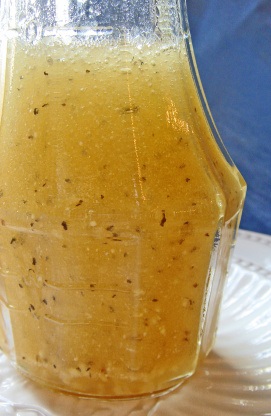
Italian Salad Dressing is a . . .
a)
heterogeneous mixture
b)
homogeneous mixture
c)
Pure Substance
d)
Compound
42.
NaCl
a)
Element
b)
Compound
c)
Homogeneous Mixture
d)
Heterogeneous Mixture
43.
A(n) ________ is the single smallest particle of an element that retains the chemical identity of that element.
a)
atom
b)
element
c)
compound
d)
particle
44.
Pure substances are classified into two groups known as_______________.
a)
elements and mixtures
b)
elements and compounds
c)
heterogeneous and homogeneous
d)
atoms and elements
45.
Matter is classified into two main groups known as_______.
a)
solids and fluids
b)
pure substances and mixtures
c)
homogeneous and heterogeneous
d)
elements and compounds
46.
Fluids are.....
a)
liquids
b)
solids
c)
gases
d)
liquids and gases
47.
What is matter?
a)
Anything that has substance and takes up space.
b)
Stuff
c)
Has mass
d)
fluids and solids
48.

All matter is made of

a)

energy

b)

electrons

c)

atoms

d)

compounds

49.

What are the three particles that make up the atom?

a)

protons, neutrons and isotopes

b)

protons, negatives and electrons

c)

neutrons, isotopes and electrons

d)

protons, neutrons and electrons

50.

The central region of an atom where its neutrons and protons are is its

a)

nucleus

b)

core

c)

electron cloud

d)

centre

51.

The positive particles of an atom are

a)

electrons

b)

neutrons

c)

nucleus

d)

protons

52.

Electrons have this type of charge

a)

negative

b)

neutral (no charge)

c)

positive

53.

Neutrons have a negative charge

a)

True

b)

False

54.
Which scientist developed the atomic theory?
a)
JJ Thomson
b)
Ernest Rutherford
c)
John Dalton
d)
James Chadwick
55.
What did Thomson discover?
a)
electron
b)
proton
c)
neutron
d)
electron cloud
56.
Subatomic particles with a positive charge
a)
neutrons
b)
atomic mass
c)
protons
d)
isotopes
57.

Subatomic particles with a negative charge

a)

Electrons

b)

Neutrons

c)

Protons

d)

Quarks

58.
A tiny but very dense, positively charged portion of the atom that holds most of the atomic mass
a)
Electron Shells
b)
Orbitals
c)
Electron Cloud
d)
Nucleus
59.

Rutherford discovered what part of the atom

a)

nucleus

b)

neutron

c)

proton

d)

electron

60.

Thomson Experimented with ______

a)

Gold Foil

b)

alpha particles

c)

cathode rays

d)

protons

61.

Rutherford experimented with ____

a)

Gold foil and alpha particles

b)

Cathode rays and alpha particles

c)

electron and alpha particles

d)

gold foil and cathode rays