wayground logo

Free Printable Worksheets

Font size

S
M
L
XL
Worksheets

Bonding in organic chemistry

Total questions: 50

Worksheet time: 56mins
Name
Class
Date
1.
How do covalent bonds form?
a)
Donating & receiving valence e- between atoms.
b)
Opposite slight charges attract each other between compounds.
c)
Scientists are still not sure how they form.
d)
Sharing valence e- between atoms.
2.
What two types of atoms make a covalent bond?
a)
2 Nonmetals
b)
1 Nonmetal and 1 Metal
c)
2 Metals
d)
2 Noble Gases
3.
Which of the following is NOT formed by a covalent bond?
a)
K2S
b)
H2O
c)
I2
d)
CO2
4.
What do we call a covalent bond where electrons are shared UNEVENLY or UNEQUALLY?
a)
Ionic
b)
Polar Covalent
c)
Nonpolar Covalent
d)
Van der Waals Force
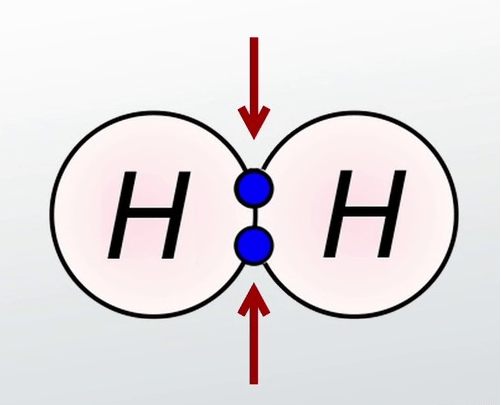
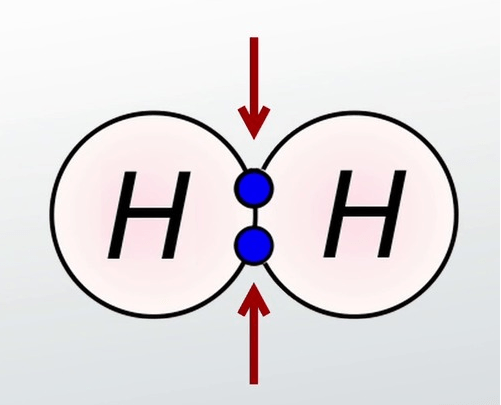
5.
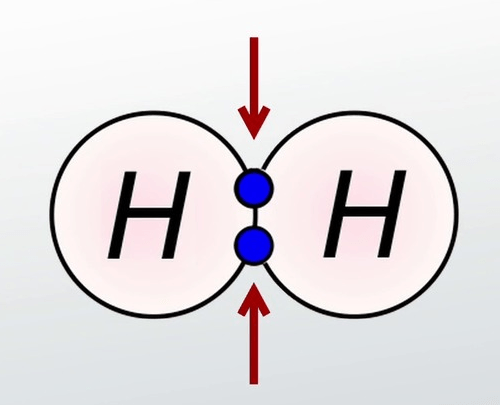
What type of bond is shown in this image?
a)
Ionic
b)
Polar Covalent
c)
Nonpolar Covalent
d)
Van der Waals Force
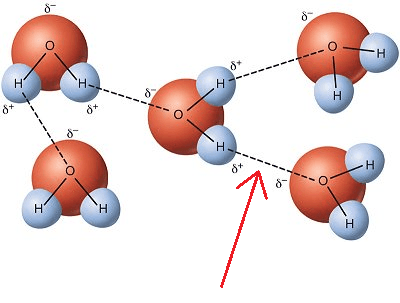
6.

What type of bond is shown in this picture? It is the WEAKEST type & attracts one water compound to another!

a)

Ionic bond

b)

Polar Covalent

c)

Nonpolar Covalent

d)

Hydrogen bonding

7.
Which of the following is NOT considered a diatomic element?
a)
Carbon
b)
Nitrogen
c)
Chlorine
d)
Iodine
8.
Diatomic elements are defined as IDENTICAL elements that bond with each other (i.e. Oxygen with Oxygen).  What type of bond should they form?
a)
Ionic
b)
Polar Covalent
c)
Nonpolar Covalent
d)
Van der Waals force
9.
Diatomic elements are defined as IDENTICAL elements that bond with each other (i.e. Oxygen with Oxygen).  What do we call it when this forms?
a)
Compound
b)
Molecule
c)
Atom
d)
None of the above
10.
In an electron dot diagram, two pairs of shared electrons represents a ...
a)
single bond
b)
double bond
c)
triple bond
d)
quadruple bond
11.
A Nitrogen molecule (N2) has one triple bond. How many electrons do the nitrogen atoms share?
a)
1
1
b)
3
c)
4
d)
6
12.
Compared to ionic compounds, molecular compounds generally have...
a)
good conductivity
b)
greater densities
c)
more chemical bonds
d)
a low boiling point
13.
Compared to ionic compounds, molecular compounds generally have...
a)
stronger chemical bonds
b)
poor conductivity
c)
a high melting point
d)
lower densities
14.
The chemical bond formed when two atoms share electrons  is called a(an) IONIC bond. 
a)
True
b)
False
15.
A(n) ION is a neutral group of atoms joined by covalent bonds.
a)
True
b)
False
16.
If a molecule contains polar bonds, the molecule MAY OR MAY NOT be polar overall. 
a)
True 
b)
False
17.

Number of covalent bonds can form in group 16

a)

three

b)

two

c)

four

18.

What is the EN difference range to classify if the covalent compound is non polar?

a)

greater than 1.9

b)

less than 1.9 and more than 0.4

c)

0.4 and below

d)

0.5 to 0.6

19.

What is the classification of F2 ?

a)

ionic

b)

non polar covalent

c)

polar covalent

d)

metallic

20.

Which of the following substances does not conduct electricity?

a)

monosodium glutamate (vetsin) dissolved in water

b)

salt dissolved in water

c)

sugar dissolved in water

d)

gold

21.

An atom of nitrogen (N) has _______ open bonding sites.

a)

5

b)

4

c)

3

d)

8

22.

Which is the correct lewis structure for carbon dioxide?

a)
b)
c)
d)
23.
How many Valence Electrons are on Oxygen
a)
2
b)
7
c)
6
d)
1
24.
Which of these forces applies to all molecules
a)
London Dispersion
b)
Dipole dipole
c)
Hydrogen Bonding
d)
Covalent bonding
25.
Define electronegativity
a)
ability to donate electron
b)
tendency to lose electron
c)
tendency to lose electron to its neighbor
d)
tendency of atom to attract shared electron to itself
26.
Polarity of a molecule is determined by
a)
shape and charge
b)
shape and difference in EN value
c)
difference in EN value and size
d)
difference in EN value and charges
27.
CCl4 has polar bonds but is a non polar molecule. Why?
a)
bond polarity exist between atoms
b)
bond polarity between atoms cancel
c)
dipole moment exist between atoms in molecule
d)
difference in EN between C and Cl
28.
HCCl3 is a polar molecule with polar bonds. Why?
a)
it has an asymmetrical shape
b)
bond polarity between atoms cancel
c)
net dipole moment exist between atoms in molecule
d)
difference in EN between C and Cl
29.
CO2 has polar bonds but is a NON POLAR molecule. Why?
a)
it has an asymmetrical shape
b)
bond polarity between C and O atoms cancel
c)
net dipole moment exist between atoms in molecule
d)
bond polarity exist between C+ and O-
30.
Which of the following is FALSE about intermolecular forces between molecules?
a)
It is also called London or Van Der Waals forces
b)
Dipole dipole attraction between molecule
c)
Also due to instantaneous dipole attraction between molecule
d)
Must have permanent dipole moment before it can exist
31.
Factors affecting the strength of VDF and boiling point are
a)
size and charge of molecules
b)
shape and molar mass of molecule
c)
shape and surface area of molecule
d)
shape and polarity of molecule
32.
The following statement is true for hydrogen bonding EXCEPT
a)
It is a dipole dipole forces of attraction
b)
Electronegative element like N, O and F must be present
c)
Hydogen bonding is stronger than covalent bonding
d)
ESF attraction bet H atom with lone pair electron from N,O,F
33.
Arrange the boiling point of molecules (RMM given), from lowest to highest.
a)
lowest H2 - N2 - H2O - CI2 highest
b)
lowest H2 - H2O - N2 - CI2 highest
c)
lowest H2 - N2 - CI2 - H2O highest
d)
lowest H2O - N2 - H2 - CI2 highest
34.
Arrange the boiling point for molecules (RMM given) from lowest to highest.
a)
lowest A - B - C- D highest
b)
lowest A - C - B - D highest
c)
lowest D - A - B - C highest
d)
lowest D - A - C - B highest
35.
Why BCI3 is non polar while NCI3 is polar?
a)
BCI3 is symmetrical and bond polarity exist
b)
BCI3 does not have polar bonds, while NCI3 does
c)
BCI3 is asymmetrical and bond polarity exist
d)
BCI3 is symmetrical and bond polarity cancel
36.

A molecular geometry with 2 lone pairs and 2 bonding pairs is

a)

Tetrahedral

b)

Trigonal pyramidal

c)

Bent

d)

Linear

37.

HCN is a linear molecular geometry. What is the polarity of HCN molecule?

a)

Polar molecule

b)

Non-polar molecule

38.
What explains the very high melting and boiling point of water
a)
Strong dipole-dipole bonds between water molecules
b)
Strong hydrogen bonds between water molecules
c)
Dispersion forces which are present in all molecules
d)
Asymmetrical shape of the polar bonds.
39.

The weaker the intermolecular forces of a substance the _____________ the boiling point

a)

higher

b)

lower

40.

Which of the following is a permanent electron displacement effect?

a)

Inductomeric

b)

Electromeric

c)

Inductive

d)

All of the mentioned

41.
Define the term resonance structure
a)
Delocalization of electrons in an atom
b)
Delocalization of π electrons within a molecule
c)
Spread of π electrons in an atom
d)
Spread of π electrons within a molecule
42.
How many resonance structure can you draw for benzene?
a)
1
b)
2
c)
3
d)
4
43.

An electrophile is a Lewis...............

a)

Base

b)

Acid

c)

Radical

d)

Anion

44.

A neutral species that has an unpaired electron is called a ........

a)

Electrophile

b)

Nucleophile

c)

Carbanion

d)

Free radical

45.

The carbon bearing the unpaired electron in a simple alkyl free radical is ........... hybridized

a)

sp

b)

sp2

c)

sp3

d)

sp2d

46.

What kind of bond cleavage yields charged fragments?

a)

Heterolysis

b)

Homolysis

c)

substitution

d)

Unifrom

47.

Number of alpha hydrogen atoms in 2-butene molecule is..........

a)

2

b)

6

c)

4

d)

3

48.

The order of the stability is....

a)

IV>III>II>I

b)

II>I>III>IV

c)

I>II>III>IV

d)

II>III>I>IV

49.

The following effect is called by

a)

Hyperconjugation effect

b)

Inductive effect

c)

Mesomeric effect

d)

Resonance effect

50.

Which type of reaction is this

a)

SN1

b)

SN2

c)

E1

d)

None