Wayground logo

Free Printable Worksheets

Font size

S
M
L
XL
Worksheets

Electricity Review Two

Total questions: 75

Worksheet time: 19hrs 45mins
Name
Class
Date
1.
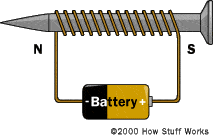
What kind of magnet can be turned on and off?
a)
refridgerator magnet
b)
electromagnet
c)
magnetite
d)
iron
2.
A compass needle responds to a magnetic field, because the compass needle is a
a)
A. generator.
b)
B. motor.   
c)
C. magnet.
d)
D. transformer.
3.

Particles with opposite charges ____________ and particles with same (or like) charges ____________.

a)

attract, repel

b)

repel, repel

c)

attract, attract

d)

repel, attract

4.

What would happen with the magnets in the picture above?

a)

They would repel

b)

Nothing

c)

They would attract

d)

They would repel and then attract

5.

A magnet will pick up an object that is made of...

a)

plastic

b)

iron or steel

c)

glass

d)

copper

6.
True or False: All metals stick to magnets.
a)
True
b)
False
7.
Why does a compass needle point north?
a)
The compass is a bar magnet
b)
Because north is up
c)
Because it's magic
d)
It lines up with the Earth's magnetic field
8.

Protons have a ____________ charge.

a)

negative

b)

neutral

c)

positive

9.

Electrons have a ____________ charge.

a)

negative

b)

neutral

c)

positive

10.

A current is produced when _______________ flow in a circuit.

a)

protons

b)

neutrons

c)

electrons

d)

nucleons

11.

What three minerals are attracted to a magnet?

a)

Gold, copper, cobalt

b)

Cobalt, aluminum, silver

c)

Iron, copper, aluminum

d)

Iron, nickel, cobalt

12.

The area of magnetic force around a magnet is known as its ____________.

a)

magnetism

b)

magnetic current

c)

magnetic field

d)

electric current

13.
What can demagnetize a magnet?
a)
A. high altitudes
b)
B. high temperatures
c)
C. low altitudes 
d)
D. low temperatures
14.
Which of the following are two kinds of magnets?
a)
A. atoms, domains
b)
B. magnetic fields, magnetic poles
c)
C. ferromagnets, electromagnets
d)
D. magnesia magnets, magnetite magnets
15.

What is magnetic force?

a)

A force exerted by electrically charged particles

b)

The attractive and repulsive forces between two poles

c)

A force exerted by magnets that makes an object become electrically charged

d)

A force exerted by a magnet only when it physically touches an object

16.

What is responsible for creating a magnetic field around Earth?

a)

Earth's crust

b)

Earth's iron core

c)

Earth's mantle

d)

Earth's atmosphere

17.

How can you make a magnetic material a temporary magnet?

a)

heat it

b)

drop it

c)

strike it on a magnet in the same direction

d)

electrify it

18.

What must the electrons do in an object to give it a magnetic field?

a)

Flow in the same direction

b)

Flow in the opposite direction

c)

Collide into one another

d)

Equal the number of protons and neutrons

19.
The needle of a compass points towards the north because...
a)
the Earth's magnetic south pole is situated near the Geographic North Pole.
b)
there is a battery inside the compass.
c)
The Earth attracts the south pole of the needle.
d)
There is a mass of iron inside the compass.
20.
Hans Christian Oersted observed that if we put a compass near to an electric current...
a)
it points to the West.
b)
we intensify the electric current.
c)
the needle moves.
21.
What are the ends of a magnet called?
a)
East and west poles
b)
Left and Right ends
c)
North and South ends
d)
North and South poles
22.
How do electromagnets differ from regular magnets? 
a)
A. They  can be turned off and on 
b)
B. Their polarity can be reversed
c)
C. Their strength can be changed
d)
D. All of the above
23.

Magnets on refrigerator cannot be turned off. Which type of magnets they belong?

a)

electromagnets

b)

battery

c)

permanent magnets

d)

copper wire

24.
__________ is an energy resource that WILL run out in the next several hundred years.
a)
Renewable Energy Resource
b)
Nonrenewable Energy Resource
c)
Fossil Fuels
d)
Forever Fuels
25.
__________ is an energy resource that WILL NOT run out in the next several hundred years.
a)
Renewable Energy Resource
b)
Nonrenewable Energy Resource
c)
Fossil Fuel
d)
Forever Fuel
26.
Coal is a __________ energy resource.
a)
Renewable
b)
Nonrenewable
27.
Solar Power is a __________ energy resource.
a)
Renewable
b)
Nonrenewable
28.
Natural Gas is a __________ energy resource.
a)
Renewable
b)
Nonrenewable
29.
Oil is a __________ energy resource.
a)
Renewable
b)
Nonrenewable
30.
Geothermal Power is a __________ energy resource.
a)
Renewable
b)
Nonrenewable
31.
Wind is a __________ energy resource.
a)
Renewable
b)
Nonrenewable
32.
Why are fossil fuels like coal, oil, and natural gas called nonrenewable resources?
a)
a.  They can never be replaced.
b)
a.  They cannot be easily replaced.
c)
a.  They can be recycled.
d)
a.  They can be made in factories.
33.
Some power plants pump water down deep holes into hot rock. The hot rock heats the water, which turns the water into steam. The steam rushes back to Earth’s surface and is used to make electricity. This plant is generating which alternative energy resource?
a)
biomass
b)
wind
c)
solar energy
d)
geothermal energy
34.
Biomass
a)
Renewable
b)
Nonrenewable
35.
Nuclear
a)
Renewable
b)
Nonrenewable
36.
What characteristic do all renewable resources share?
a)
Produced by waste products
b)
Form underground from dead organisms.
c)
Replaced in a short period of time
d)
Allow energy to pass through them easily
37.
What are the 3 main fossil fuels?
a)
Coal, Oil, and Gasoline
b)
Coal, Oil, and Natural Gas
c)
Electricity, Gasoline, Petroleum
d)
Coal, Oil, Non-renewable Resources
38.
Why is burning fossil fuels harmful? 
a)
then we won't have any fossil fuels if we burn them all
b)
They can get extremely hot
c)
Increases the amount of greenhouse gases in the air
d)
this would destroy fossils
39.

What does "clean" mean for energy sources?

a)

not dirty

b)

does not create pollution

c)

creates pollution

d)

smells good

40.

What is an energy resource?

a)

a natural product that can be changed into other energy forms to do work

b)

something formed from buried plants and animals

c)

force that opposes motion

d)

resource that can never be replaced

41.

What are fossil fuels?

a)

energy producers that comes from radioactive elements

b)

a natural product that can be changed into other energy forms to do work

c)

energy resources that formed from buried plants and animals that lived a very long time ago

d)

resources that are replaced faster than they are used

42.

What changes chemical energy from fossil fuels into electrical energy?

a)

electric generators

b)

nuclear fission

c)

power plants

d)

windmills

43.

Where does nuclear energy come from?

a)

Electric generators

b)

radioactive elements

c)

fossil fuels

d)

geothermal energy

44.

Nuclear fission is a process where the nucleus of an atom splits into two smaller nuclei.

a)

True

b)

False

45.
What are two advantages of geothermal energy?
a)
cheap and a lot pollution
b)
expensive and a lot of pollution
c)
cheap and little pollution
d)
expensive and little pollution
46.
What is a disadvantage to Hydroelectricity?
a)
lots and lots of pollution
b)
Kills wild bird population
c)
Radioactive waste
d)
Increases potential for flooding 
47.
Hydroelectric power produces electricity using.....
a)
Wind
b)
Sunlight
c)
Moving water
d)
Dung
48.
Wastes produced by agriculture, households, industry, mining, and other human activities can end up in ______________.
a)
groundwater
b)
streams and rivers
c)
oceans
d)
All of these choices
49.
Increase in which gas is primarily responsible for increased global warming?
a)
Carbon dioxide
b)
Water vapor
c)
Methane
d)
Nitric oxides
50.
Which human activity would preserve nonrenewable resources?
a)
deforestation
b)
removing carnivores from a forest 
c)
recycling
d)
heating homes with fossil fuels  
51.
Increased industrialization will most likely
a)
decrease available habitats 
b)
increase environmental carrying capacity 
c)
increase the stability of ecosystems 
d)
decrease global warming
52.
Which human activity is correctly paired with its likely future consequence?
a)
overfishing in the Atlantic — increase in supply of flounder and salmon as food for people 
b)
development of electric cars or hybrid vehicles — increased rate of global warming 
c)
use of fossil fuels — depletion of underground coal, oil, and natural gas supplies 
d)
genetically engineering animals — less food available to feed the world’s population
53.
Albert wants to practice conservation. He has decided to examine his lifestyle in order to identify areas in which he can reduce the resources he consumes, reuse resources he already has, and recycle resources that he cannot reuse. In which of the following ways can Albert best reduce the resources he currently consumes?
a)
Use paper grocery bags as gift wrap
b)
Ride a bike to work instead of taking his car
c)
Subscribe to a daily rather than a weekly newspaper
d)
Use an organic rather than synthetic fertilizer in his garden
54.

What harmful health effects do scientist say that the UV radiation that passes through our "shield" will cause?

a)

increase in skin cancer

b)

immune deficiencies

c)

cataracts

d)

all of the answers

55.

Which of the following is the most common ozone destroying pollutants?

a)

Chloroflurocarbons

b)

particular matter

c)

Nitrogen dioxide

d)

carbon monoxide

56.

The ozone destroying pollutants primarily comes from air conditioner coolants, refrigerator coolant, aerosol spray, and plastic foam.

a)

true

b)

false

57.

Engineers are not working on new technologies to help save the ozone and stop its destruction by CFCs.

a)

true

b)

false

58.

Adding harmful things to the environment is called

a)

Pollution

b)

Waste

c)

Acid rain

d)

Sulfur dioxide

59.

__________________is the introduction of chemical, physical, or biological agents into water that degrade water quality and adversely affect the organisms that depend on the water.

a)

potable

b)

water pollution

c)

watershed

60.

When harmful substances build up in the air to unhealthy levels, it is called

a)

Air pollution

b)

Smog

61.

The ____________________ protects people from the effects of too much ultraviolet radiation.

a)

smog layer

b)

cloud cover

c)

temperature inversion

d)

ozone layer

62.

The ozone layer is damaged by

a)

Increased global temperatures

b)

CFCs

c)

Increase in greenhouse gases

d)

Sulfuric and nitric acids

63.
A colorless, odorless gas that decreases the blood's ability to carry oxygen.  Can cause faintness, death.
a)
Nitrogen oxides
b)
Ground-level ozone
c)
Carbon monoxide
d)
Sulfur dioxide
64.

______________ ______________ is produced when fuels containing sulfur are burned in the presence of oxygen.

a)

Carbon dioxide

b)

Sulfur dioxide

c)

Carbon monoxide

d)

Greenhouse gas

65.

Source of carbon monoxide

a)

Incomplete combustion of fossil fuels

b)

Combustion of fossil fuels

c)

Decomposition of plant and animal matters

d)

Photochemical reaction of CO2

66.

This primary pollutant creates a reddish brown gas creating photochemical smog and tropospheric ozone.

a)

sulfuric acid

b)

VOC

c)

nitrogen dioxide

d)

particulate matter

67.

We can prevent water pollution by:

a)

Reduce the use of plastic.

b)

Properly dispose of chemicals.

c)

Clean up after your animals.

d)

All of the above

68.

What are the main sources of water pollution?

a)

Plastic, Paper, and Metal

b)

Snails in water

c)

Help, there is a boot with a snake inside of it that somehow in the nearby lake.

d)

Agriculture, Industry, and Community

69.

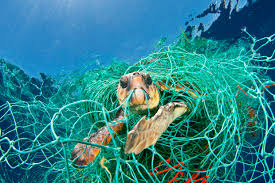
Marine debris can cause animals to:

a)

Starve

b)

strangle

c)

Suffocate

d)

all of the above.

70.

Which of the following is an unsafe material that can be found in drinking water?

a)

Fish

b)

Pathogens

c)

Minerals

d)

None of these

71.

Device designed to remove thin layers of oil from the surface

a)

vacuum

b)

sponge

c)

skimmer

72.

Which of the following is not a possible source of pollution?

a)

oil spilled by broken machines

b)

leaves that fell from the trees onto the ground

c)

soap from washing clothes

d)

waste from fertilizer and farm animals

73.

A ship was involved in an accident. You notice that it has spilled oil into the ocean. What is the FIRST thing you would do prevent further damage to the environment?

a)

Use a material to contain the oil so it doesn't spread.

b)

Use an absorbent material to soak up the oil.

c)

Use a tool to scoop up the oil.

d)

Spread out the oil so it isn't in one spot.

74.

Recycling is the process of:

a)

Buying new things

b)

Taking old or unwanted products and using the materials to make new things.

c)

Putting unwanted products in landfill.

d)

Burning unwanted products.

75.

Select some benefits of recycling:

a)

Uses fewer limited resources.

b)

Uses less energy.

c)

Difficult to separate components of some materials.

d)

Makes less rubbish, which ends up in landfill sites.