Worksheets
Semester 1 Exam Marine Study guide
Total questions: 95
Worksheet time: 1hrs 21mins

Also called the manipulated variable, it is the one thing the scientist purposely changes to test what will happen:
independent variable
controlled variable
dependent variable
induction variable

This responds to the test variable...
dependent variable
independent variable
control
data

The factors that might influence or affect outcomes in an experiment, and the scientist decides to keep the same, or constant:
data
conclusions
controls
observations

The set of procedures that scientists use to learn about the world is called the...
scientific theory
scientific method
scientific materials
scientific experiment

Reasoning from specific observations to a general conclusion, for example stating that if sailfish, sharks, and tuna are all fish (specific), then all fish must have gills (general).
induction
deduction
subjunctive
introspection

Reasoning from general principles to specific conclusions: such as stating that if all fish have gills (general), then sharks must have gills (specific).
introduction
induction
deduction
reduction

Based on repeated experiments and observations, this PREDICTS a range of natural phenomena.
scientific method
scientific theory
scientific experimentation
scientific law

When a hypothesis has passed all testing and is supported by overwhelming evidence, it EXPLAINS why a natural phenomenon occurs. This is a comprehensive EXPLANATION of our observations of how the world works.
scientific method
conclusion
scientific theory
scientific law
How much of the Earth is covered by oceans?
85%
70%
75%
90%
What was one of the discoveries in Marine Science in the 20th Century?
Magnetic Compass
Waterproofing for ships
Navigation techniques
Submersibles
An untethered robot used to explore underwater locations
bathysphere
Remote Operated Vehicle
Autonomous Underwater Vehicle
Bathyscape

True of False: The temperature of the ocean water decreases as the depth of the water increases
True
False
Science is
a body of knowledge
static and unchanging
an organized method
both A and C

As water teperature increases, what happens to dissolved oxygen levels
increase
stay the same
decrease
flucuate
Wipe out all life on land and life would still exist in the ocean. Wipe out all life in the sea and nothing would be left on land.”
True
False
Choose the best physical characteristics of water
segment, temperature,turbity
color, density,depth
pressure , currents,salinity
saltiness,measurement,motion
What is the first step in the Scientific Method?
Form a Hypothesis
Design an Experiment
Identify a Problem
Gather Information
Which of the following questions could be tested using the scientific method?
(HINT: Which one could you actually design a hypothesis and experiment for?)
Which color is the prettiest?
What day of the week is best for rain?
Where are the scariest caves?
How does sunlight affect plant growth?
Which of the following variables are YOU in control of changing?
Independent Variable
Dependent Variable
Constants
Facts
What is the definition of a Hypothesis?
An educated guess
An uneducated guess
A testable explanation to a question
Wishful thinking

What information is true about the Y axis in this graph?
Read your choices carefully before you pick an answer!
The Y axis is the dependent variable - pressure
The Y axis is the independent variable - pressure
The Y axis is the dependent variable - volume
The Y axis is the independent variable - volume

Why was the aqualung such an important invention?
It allowed scientists to stay under water for longer periods of time
It looked really cool
It has neat name
It allowed scientists to swim with the fishes
Peyton wants to see if the salinity of water affects the population numbers of anchovies in a local body of water.
What would be the INDEPENDENT variable in his experiment?
Biomass of aquatic plants
Level of salinity in a given area
Water temperature
Total number of fish observed
Peyton wants to see if the salinity of water affects the population numbers of anchovies in a local body of water.
What would be the DEPENDENT variable in his experiment?
Biomass of aquatic plants
Level of salinity in a given area
Water temperature
Total number of fish observed
Peyton wants to see if the salinity of water affects the population numbers of anchovies in a local body of water.
What type of data should he collect?
Quantitative Data
Qualitative Data
Funky Fish Facts

Based on the graph, which year had the Lowest Total Population of Deer?
1920
1812
1492
1776

The _______ colored water is the least dense in this graduated cylinder.
purple
blue
green
red

The flow of water around an ocean basin is called...
an Ekman Spiral
an eddy
a gyre
a current

What kind of wave is this? (Hint: this picture was taken from a ship at sea!)
rogue wave
spilling breaker
whitecap
tsunami

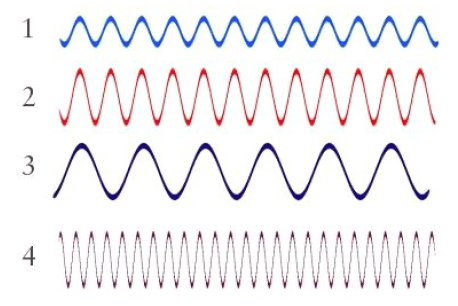
Which wave has the lowest frequency?
Red
Blue
Green
What force drive surface currents?
water temperature
water salinity
ships sailing across
wind friction
An increases in acidity represents what kind of change in pH?
Increase
Decrease
None
What is another term for the study of Marine Science?
Meteorology
Oceanography
Astronomy
Geology
Which of the following are reasons scientists share the results of their scientific experiments.
To alert scientists to new developments.
To encourage repeat experiments for validation or disproof.
To contribute to a developing theory.
All of the above
True or False: Theories can change over time
True
False
True or False: When proven again and again over time, scientific theories will eventually become laws.
True
False

A nonliving element in an ecosystem is a/an ---
biotic factor.
abiotic factor.

All living things or organisms in an ecosystem are
None
biotic factors
abiotic factors

Which is an example of a biotic factor in an ocean?
water
starfish
waves
sand

What are tiny organisms that float near the surface of the water?
plankton
organisms
abiotic factor
insects

True of False: The temperature of the ocean water decreases as the depth of the water increases.
True
False

Salinity is described as -
The plant life of in the ocean
The variety of organisms in the ocean
The pH of the ocean
The saltiness of the ocean
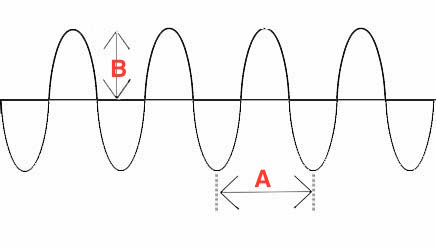
What is the term that means the distance from crest to crest or trough to trough in a wave?
(a)
A tsunami can be caused by
landslides.
earthquakes.
volcanoes.
All of the above.
The _______ is the distance between two consecutive crests or troughs.
period
trough
wavelength
amplitude
The speed of shallow water waves depends on:
surface tension
temperature
depth
wavelength
When can waves be refracted?
when they move from deep to shallow water
when they move from shallow to deep water
when they move from north to south
when they move from south to north
This technology uses sound wave reflections to see what is beneath the water (like the ocean floor!)
ROVs
AUVs
Scuba
Sonar
This technology is cost effective, portable, and allows for human interaction with the ocean...but it can only go about 100-200 meters below the ocean's surface
ROVs
AUVs
Scuba
Submersible
This technology is very expensive, but allows humans to safely travel to very deep depths of the ocean
ROVs
AUVs
Scuba
Submersible

Why does water attract so many other kinds of molecules?
It has no charge
It is positively charged
It is negatively charged
It is both positively and negatively charged

Heat capacity refers to the amount of energy it takes to raise the temperature of a substance by
1 degree
5 degrees
10 degrees
20 degrees

An ecosystem includes all of the following EXCEPT:
microscopic organisms
the organisms that are predators
the environment in which organisms live
organisms that live in similar environments in other regions

Secondary succession is often found in which of the following?
estuaries
tide pools
coral reefs
low-tide zones

All of the following could cause diffraction of a wave EXCEPT:
a large ship
another wave
a small island
a protruding rock
Why is the field of Marine Biology important?
The ocean supplies a lot of food
Lots of medicines come from the ocean
Marine organisms can help predict the affect of human activities
All answers are correct
Oceanography is the study of:
geological properties of the ocean (sea floor, volcanoes, trenches)
chemical properties of the ocean (density, temperature, pressure)
Both answers are correct


Flammable materials, like alcohol, should never be dispensed or used near
an open door
an open flame
another student
a sink

Approved eye protection devices (such as goggles) are worn in the laboratory
to avoid eye strain
to improve your vision
only if you don’t have corrective glasses
any time chemicals, heat or glassware are used

Work areas should be kept clean and tidy
True
False

The vast majority (over 95%) of aquatic ecosystems are made up of this type of environment.
Freshwater
Brackish water
Marine (saltwater)
Bottled water

As saltwater evaporates in a tide pool what happens to the salinity level of that water?
decreases
stays the same
increases

Cold salt water and hot salt water were added to the cup. Which layer represents the cold salt water?
The bottom blue layer
The top red layer
Neither
Nutrients are brought to the surface for phytoplankton to use at _______.
gyres
eddies
upwellings
the equator


Area of ocean that extends from the low-tide line out to the edge of the continental shelf
deep zone
neritic zone
open ocean
aphotic zone
permanently dark layer of the oceans below the photic zone
aphotic zone
photic zone
surface zone
intertidal zone
Portion of the shoreline that lies between the high and low tide lines
open ocean
deep zone
intertidal zone
aphotic zone
Portion of the marine biome that is shallow enough for sunlight to penetrate.
open ocean
aphotic zone
photic zone
deep zone
the earth's surface from the edge of a continent to the deep part of the ocean
aphotic zone
deep zone
open ocean
continental shelf


SELECT THE ANSWERS THAT YOU CONSIDER MAY BE RIGHT.
The zones based on distance from shore are:
Intertidal Zone.
Photic Zone.
Neritic Zone.
Oceanic Zone.

TRUE OR FALSE:
Water closer to shore tends to have more nutrients.
TRUE
FALSE

Black dragonfish are monstrous-looking, scaleless fish with very sharp, fang-like teeth. These fish have specialized organs known as photophores that produce light.
Intertidal Zone (Low Tide)
Intertidal Zone (High Tide)
Ocean (Photic Zone)
Ocean (Aphotic Zone)

A mother turtle digs a nest on the shore and lays her eggs in it. The process takes takes 1-3 hours in the middle of the night, after which the mother turtle slowly drags herself back to the ocean.
Coral Reef
Intertidal Zone (High Tide)
Intertidal Zone (Low Tide)
Ocean (Aphotic Zone)