wayground logo

Free Printable Worksheets

NEW

Font size

S
M
L
XL
Worksheets

Biology Final Exam

Total questions: 65

Worksheet time: 1hrs 2mins

Name
Class
Date
1.

The diagram shows homologous chromosomes during prophase I of meiosis. Which of the following correctly describes the process being illustrated?

a)

Segregation of sister chromatids

b)

Mutation in which the DNA content of the gene is altered

c)

Crossing over in which alleles are exchanged

d)

Condensation and segregation of alleles

2.

A gene is_______________________.

a)

located only in sex cells

b)

a whole chromosome

c)

a section of DNA that codes for a trait

d)

not expressed in the dominant form

3.

Which of the following levels of organization BEST represents the sequence from smallest to largest?

a)

Cell, tissue, organism, organ

b)

Cell, organism, organ, tissue

c)

Cell, tissue, organ, organ system

d)

Cell, organism, tissue, organ system

4.

Identify the cellular organelle that the process of cellular respiration occurs in:

a)

mitochondria

b)

chloroplast

c)

nucleus

d)

golgi

5.

Identify the gas that is an input (reactant) of photosynthesis:

a)

oxygen

b)

Water

c)

carbon dioxide

d)

nitrogen

6.

Identify the cellular organelle that the process of photosynthesis occurs in:

a)

mitochondria

b)

chloroplast

c)

nucleus

d)

vacuole

7.

The amount of energy expected to be transferred from one trophic level to another is ___?

a)

1%

b)

10%

c)

90%

d)

100%

8.

In DNA, cytosine always pairs with

a)

guanine

b)

uracil

c)

thymine

d)

adenine

9.
Which type of variable is chosen and controlled by the scientists?
a)
dependent
b)
independent
10.
Where does photosynthesis occur?
a)
ribosomes
b)
mitochondria
c)
chloroplasts
d)
nucleus
11.
Enzymes...
a)
decrease activation energy
b)
increase activation energy
c)
slow down reaction rate
d)
do not affect reaction rate
12.
What are the products of photosynthesis?
a)
glucose + water
b)
glucose + oxygen
c)
oxygen + water
d)
oxygen + carbon dioxide
13.
What process takes place in the mitochondria?
a)
Photosynthesis
b)
Cell Respiration
c)
Mitosis
d)
Meiosis
14.
Scientifically, what causes cancer?
a)
exposure to chemicals
b)
poor diet
c)
genetics
d)
uncontrollable cell growth
15.
Which of the following is the correct equation for PHOTOSYNTHESIS?
a)
CO+ light + H2O --> O+ Sugar
b)
CO+ sugar + H2O --> O+ light
c)
O2 + light + H2O --> CO+ Sugar
d)
CO+ O2 + H2O --> Light+ Sugar
16.
a)

The reaction occurred FASTER with the enzyme

b)

The reaction occurred SLOWER with the enzyme

c)

Energy is absorbed and stored

d)

Energy absorbed increases, then decreases
17.
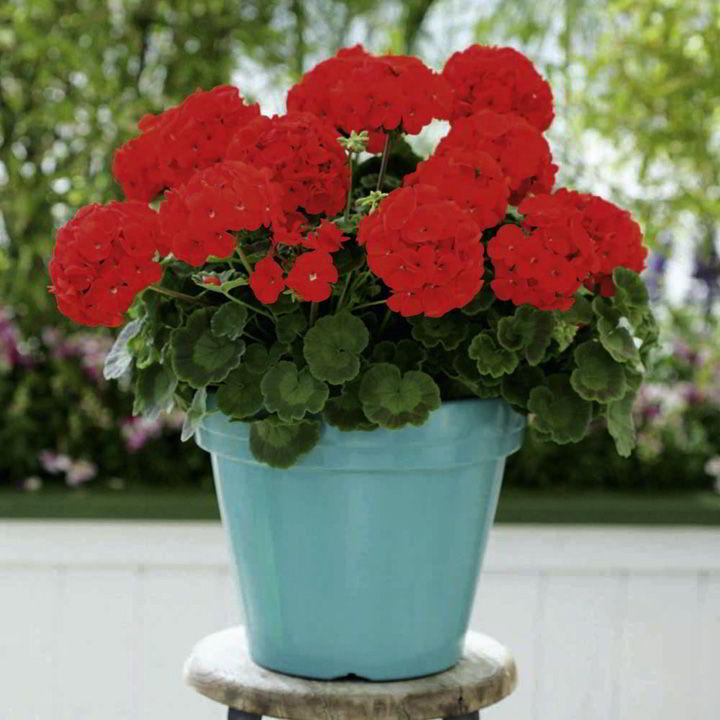
Susan said, “If I fertilize my geranium plants, they will blossom.”
a)
recognize a problem
b)
test the hypothesis with an experiment
c)
form a hypothesis   
d)
draw conclusions
18.
Cell theory was first proposed in 1838. Evidence obtained through additional scientific investigations resulted in the current cell theory. Which statement describes a component of the original cell theory that was removed because of the new scientific knowledge?
a)
 All living things are made of cells.
b)
All cells come from other preexisting cells.
c)
Cells form through spontaneous generation.
d)
 Cells are the basic structural and functional units of life.
19.
Directs all cell activities through the DNA located there.
a)
Lysosomes
b)
Nucleus
c)
ribosomes
d)
Mitochondria
20.
What is the name of the genetic material that is inside the nucleus?
a)
ER
b)
ATP
c)
YOLO
d)
DNA
21.
Osmosis is the movement of _____ across a membrane.
a)
food
b)
energy
c)
oxygen
d)
water
22.
Passive transport requires no
a)
concentration gradients
b)
osmosis
c)
motion
d)
energy
23.

Active transport is the movement of large materials across a cell membrane from ______ to ______ concentration

a)

high to low

b)

low to high

c)

high to high

d)

low to low

24.
During what phase of the cell cycle is DNA replicated?
a)
G1 phase
b)
S phase
c)
G2 phase
d)
M phase
25.
Put the following stages of mitosis in order: anaphase, prophase, metaphase, and telophase. 
a)
prophase, metaphase, telophase, anaphase
b)
prophase, anaphase, metaphase, telophase
c)
prophase, metaphase, anaphase, telophase
d)
prophase, telophase, metaphase, anaphase
26.
a)

Cytokinesis

b)

Interphase

c)

Anaphase

d)

Metaphase

27.

In simple (Mendelian) inheritance...The genotype "Tt" would have the ____________ phenotype expressed.

a)

recessive

b)

dominant

c)

blend/mix of the two parents

d)

maternal

28.

What must the genotype of person I-2 be?

a)

XHXh

b)

XHXH

c)

XhXh

d)

XHYh

29.

Human blood type would be an example of this mode of inheritance. Use the picture for reference.

a)

multiple allele

b)

polygenic

c)

incomplete dominance

d)

simple dominance

30.

All of the following would be examples of traits controlled by polygenic inheritance EXCEPT

a)

human height

b)

human skin color

c)

human blood type

d)

human weight

31.

A black chicken and a white chicken have a codominant pattern of inheritance which results in a checkered chicken. If two checkered chickens were to have chicks...what % chance would they have a white chick?

a)

0%

b)

25%

c)

50%

d)

75%

e)

100%

32.

If a chimpanzee has 48 chromosomes in its somatic cells. How many chromosomes would you expect to find in its gametes?

a)

23

b)

24

c)

48

d)

96

33.

______ produces cells with identical DNA (to the original cell)

a)

meiosis

b)

mitosis

c)

both mitosis and meiosis

d)

neither mitosis nor meiosis

34.

What is the correct analysis for this karyotype?

a)

male with trisomy 21 (down syndrome)

b)

female with trisomy 21 (down syndrome)

c)

male with XXY (klinefelter syndrome)

d)

female with XYY (jacob's syndrome)

35.
What does a food web represent?
a)
All connections of energy flow throughout all organisms in a habitat.
b)
The specific ways that mutualism is carried out.
c)
A single pathway or energy flow between organisms. 
d)
How carnivores get their food. 
36.
What is the original source of energy is almost all ecosystems?
a)
Water
b)
Sunlight
c)
Energy
d)
organisms
37.
What is a Biotic factor?
a)
The sun.
b)
Is any living component that affects the population of another organism, or the environment. 
c)
How the climate affect the environment.
38.
The maintenance of an organism’s internal environment is called:
a)
compensating
b)
homeostasis
c)
balancing
d)
routine
39.
The four most common elements that make up all living things are carbon, hydrogen,
a)
nitrogen, and iron.
b)
oxygen, and nitrogen.
c)
calcium, and phosphorus.
d)
oxygen, and iron.
40.
Polymers are made up of...?
a)
Monosaccharides
b)
Monomers
c)
Proteins
d)
None of the above
41.
The picture shown shows which class of biomolecule?
a)
Protein
b)
Nucleic Acid
c)
Carbohydrate
d)
Lipid
42.
The cell below is in a _________ solution.
a)
Hypotonic
b)
Hypertonic
c)
Isotonic
43.

Special proteins help move particles, but NO energy is needed. This is...

a)

facilitated diffusion

b)

exocytosis

c)

active transport

d)

equilibrium

44.
Which type of transport requires an input of energy?
a)
Passive Transport
b)
Osmosis
c)
Simple Diffusion
d)
Active Transport
45.
Which of the following is a phenotype?
a)
Aa
b)
red hair
c)
heterozygous genes
d)
mutated DNA
46.
What term is used to describe having two of the same genes for the trait?
a)
homozygous
b)
hetrozygous
c)
protein
d)
chromosome
47.
Changes in the genes (DNA) of a population over generations of time is__________________.
a)
Natural Selection
b)
Specification
c)
Evolution
48.
All of the living and nonliving things in an area that interact with each other are called a/an ______.
a)
community
b)
habitat
c)
population
d)
ecosystem
49.

The sides of the helix labeled as A are made of _______________________ groups.

a)

sugar-phosphate

b)

nitrogen

c)

nucleotide

d)

protein

50.

What sex is the individual in the above Karyotype

a)

male

b)

female

51.

What is the greenhouse effect?

a)

It is a phenomenon where the sun’s rays are absorbed by clouds.

b)

It is a phenomenon that occurs when heat escapes into space.

c)

It is when heat is trapped by gases, then sent back to earth’s surface.

d)

It describes the atmosphere’s composition.

52.

In the woods, there are ducks and mice. They both compete for grasshoppers as the only source of food in that area at that time. The ducks outcompete the mice, and the mice die out in that area. This is an example of:

a)

Neutralism

b)

Commensalism

c)

The competitive exclusion principle

d)

Mutualism

53.

Barnacles are animals that cannot move. In order to get food, they attach to whales and catch any floating plankton in the water. The whale is neither helped nor harmed in the interaction. What type of symbiosis is this?

a)

Mutualism

b)

Commensalism

c)

Parasitism

d)

Neutralism

54.

In the wild, some alligators gets their teeth cleaned by birds. The birds gets their food from the alligators' teeth.

What type of symbiosis is this?

a)

Mutualism

b)

Commensalism

c)

Parasitism

d)

Neutralism

55.

In an ecosystem, there are populations of moose, rabbits, grass, and pine trees. Suddenly, a fire blazes through the area, which kills all of the populations. As the months go on, new species of grass begin to take root. This attracts animals, and eventually the ecosystem is restored.


What type of ecological succession happened?

a)

Primary succession

b)

Secondary succession

c)

Tertiary succession

d)

None of the above

56.

In this photo, what is an abiotic factor?

a)

Deer

b)

Grass

c)

rain

57.
What does a food web represent?
a)
All connections of energy flow throughout all organisms in a habitat.
b)
The specific ways that mutualism is carried out.
c)
A single pathway or energy flow between organisms. 
d)
How carnivores get their food. 
58.
The rabbit in this food web would be considered a:
a)
Decomposer
b)
Producer
c)
Secondary Consumer
d)
Primary Consumer
59.
In this Food Web Pyramid Which type of consumer gets only 10% of the energy stored in plants?
a)
Herbivore
b)
Carnivore
c)
Omnivore
d)
Secondary Consumer
60.
The living portions of the ecosystem.
a)
Biotic factors
b)
Abiotic factors
61.

A phenotype that improves an organism’s chance of survival in their environment is considered a(n) ____________.

a)

natural selection

b)

adaption

c)

speciation

62.

The pelvic bone of whales is not needed for movement within the water. This is an example of a(n) ______________ structure.

a)

vestigial

b)

analogous

c)

homologous

63.

The forelimbs of mammals have similar anatomy because these groups descended from a recent common ancestor. Their bone structure is an example of a(n) ______________ structure.

a)

vestigial

b)

analogous

c)

homologous

64.
Change over time is
a)
evolution
b)
generation
c)
growth
d)
biogenesis
65.
Natural selection is
a)
survival of the fittest
b)
humans change
c)
two species are the same
d)
more animals survive