wayground logo

Free Printable Worksheets

Font size

S
M
L
XL
Worksheets

Biology 20% Packet

Total questions: 100

Worksheet time: 3hrs 20mins

Name
Class
Date
1.

What is the independent variable in this experiment.......... If real worms are used during a fishing trip, then more fish will be caught than someone fishing with plastic grubs.

a)

the number of fish caught

b)

the type of bait

c)

the time of day

d)

the type of boat

2.
This variable in an experiment is the one being deliberately changed by the scientist. 
a)
dependent variable
b)
independent variable
c)
data
d)
control group
3.
The part of the experiment that remains the same for the control and experimental group.
a)
constants
b)
control
c)
independent
d)
dependent
4.
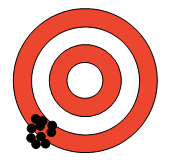
This bullseye demonstrates...
a)
High Accuracy & High Precision
b)
High Accuracy & Low Precision
c)
Low Accuracy & High Precision
d)
Low Accuracy & Low Precision
5.
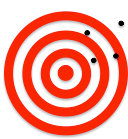
Describe the accuracy and precision of the image
a)
Accurate and Precise
b)
Accurate and not precise
c)
Not Accurate and Precise
d)
not accurate and not precise
6.
What two elements make up water?
a)
Helium and oxygen
b)
Hydrogen and oxygen
c)
helium and carbon
d)
oxygen and carbon
7.
When water molecules stick easily to other water molecules, this is called what?
a)
cohesion
b)
adhesion
c)
solution
d)
polar molecule
8.
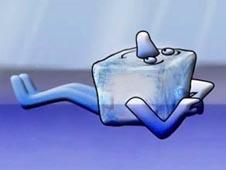
The fact that ice floats on liquid water is due to the fact that water's solid is ___________ than it's liquid form
a)
less polar
b)
more polar
c)
less dense
d)
more dense
9.
What are the building blocks of proteins?
a)
amino acid
b)
fatty acid
c)
nucleotide
d)
lipid
10.
What are the single sugars that are the building blocks of carbohydrates?
a)
monosaccharides
b)
disaccharides
c)
polysaccharides
d)
amino acid
11.
DNA and RNA are examples of 
a)
Carbohydrates
b)
Lipids
c)
Proteins
d)
Nucleic Acids
12.
Waxes, oils and fats are examples of
a)
Carbohydrates
b)
Lipids
c)
Proteins
d)
Nucleic Acids
13.
What type of macromolecule are enzymes?
a)
Protein
b)
Carbohydrate
c)
Lipid
d)
Nucleic Acid
14.
Carbohydrates are made of... 
a)
C H O
b)
C H O N
c)
C H O N P
d)
C H O N S
15.

Proteins are made of...

a)

C H O

b)

C H O N

c)

C H O N P

d)

C H O N S

16.
Which macromolecule stores energy, insulates us, and makes up the cell membrane?
a)
lipids
b)
proteins
c)
carbohydrates
d)
nucleic acids
17.
What is the primary function of carbohydrates in your body?
a)
Speed up chemical reactions.
b)
Give immediate energy.
c)
Help to store energy.
d)
Build cell walls in plants.
18.
Where does the energy from our food originally come from?
a)
the Sun
b)
chemical reactions
c)
carbohydrates
d)
mitochondria
19.
Every living organism is made up of one or more cells
a)
True
b)
False
20.
Which of the following are NOT found in animal cells
a)
chloroplasts and cytoplasm
b)
chloroplasts and cell wall
c)
cell wall and cell membrane
d)
mitochondria and nucleus
21.

Which of the following converts food into energy for the cell?

a)

vacuole

b)

mitochondria

c)

cytoplasm

d)

cell membrane

22.
What do vacuoles do? 
a)
They actually do not have an important role
b)
They protect the cell
c)
They are the brain of the cell
d)
storage area for cells; water storage in plants 
23.

The _____________ controls the activity of the cell.

a)

mitochondrion

b)

cell membrane

c)

cytoplasm

d)

nucleus

24.

This is a

a)

animal cell

b)

plant cell

c)

tissue

d)

flower

25.

What tool will you use to see a cell?

a)

telescope

b)

microscope

c)

glasses

d)

hand lens

26.

"Small organs" of the cell that carry out specific functions

a)

Organelles

b)

Organs

c)

Cell Wall

d)

Cell

27.

builds proteins, each cell contains thousands, found on ER and floating throughout cell

a)

Ribosomes

b)

Nucleus

c)

Vacuole

d)

Golgi Body

28.
The ____________ regulates what enters and leaves the cell.
a)
mitochondria
b)
cell membrane
c)
golgi bodies
d)
cytoplasm
29.
Which of the following is the correct acronym for the stages of the cell cycle?
a)
IPMATC
b)
MPIATC
c)
CAPMIT
d)
IMATCP
30.
The sister chromatids of each chromosome are separated (come apart) and move to opposite ends of the cell. Name that Stage!
a)
Prophase
b)
Metaphase
c)
Anaphase
d)
Telophase
31.
DNA is copied in the S part of this stage. Name that Stage!
a)
Interphase
b)
Prophase
c)
Metaphase
d)
Anapahse
32.
Identify the stage of the cell cycle while looking at the picture.
a)
Prophase
b)
Metaphase
c)
Anaphase
d)
Telophase
33.
In mitosis, the two resulting cells are
a)
different from the starting cell and identical to each other.
b)
different from the starting cell and different from each other.
c)
identical to the starting cell and different from each other.
d)
identical to the starting cell and identical to each other.
34.
Osmosis is the movement of _____ across a membrane.
a)
food
b)
energy
c)
oxygen
d)
water
35.
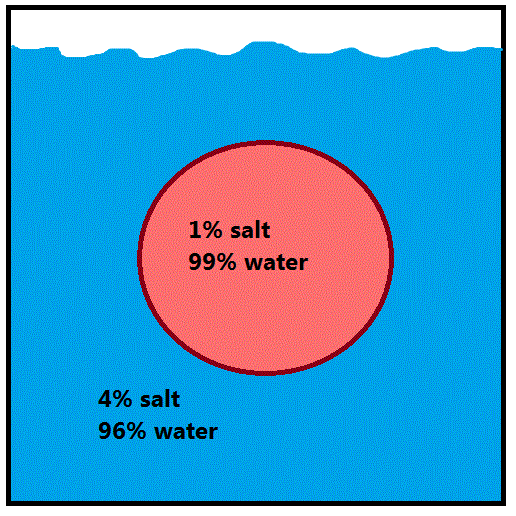
Where will the water go?
a)
Into the cell
b)
Out of the cell
c)
Equally in & out - it's isotonic
d)
There is no water
36.
Which pathogen needs a host cell to reproduce?
a)
virus
b)
bacteria
c)
fungus
d)
parasite
37.
Which pathogen reproduces using binary fission (Asexual Reproduction)?
a)
Virus
b)
Bacteria
c)
Fungi
d)
Parasite
38.
A(n) _____ is a virus that enters a bacterial cell.
a)
endospore
b)
decomposer
c)
plasmid
d)
bacteriophage
39.
How could you describe the size of a virus?
a)
Smaller than bacteria
b)
Larger than a parasite
c)
About the size of a dime
d)
Smaller than a proton
40.
The bacteria seen in the picture is
a)
cocci
b)
bacillus
c)
spirilla
41.

A microbe that can cause harm is known as a

a)

Pathogen

b)

Cat

c)

Virus

d)

Bacteria

42.
Energy is released from ATP when
a)
a phosphate group is added
b)
adenine bonds to ribose
c)
ATP is exposed to sunlight
d)
a phosphate group is removed
43.
Which of the following can be compared to a battery in need of recharging?  (empty wallet)
a)
ADP
b)
ATP
c)
Ribose
d)
Adenosine
44.
Which cellular organelle is responsible for manufacturing ATP?
a)
Ribosome
b)
Nucleus
c)
Mitochondria
d)
Chloroplast
45.
Which form of cellular transport requires would not occur if there were no ATP present
a)
Active Transport
b)
Diffusion
c)
Osmosis
d)
Facilitated Diffusion
46.
____________________ provides the energy necessary for photosynthesis.
a)
water
b)
sunlight
c)
glucose
d)
soil
47.
the products of photosynthesis are...
a)
glucose and sunlight
b)
carbon dioxide and water
c)
glucose and chlorophyll
d)
oxygen and glucose
48.
Glucose is a ...
a)
sugar
b)
carbohydrate
c)
source of quick energy
d)
all are correct
49.
The formula for glucose is...
a)
C12 H22 O11
b)
NaCl
c)
NaOH
d)
C6 H12 O6
50.
This is ...
a)
mitochondria
b)
chloroplast
c)
cell
d)
phloem
51.
The reactant of photosynthesis are...
a)
sunlight and chlorophyll
b)
glucose and oxygen
c)
carbon dioxide and water
d)
sunlight and water
52.

Where do the leaves and stems of plants get their green color from?

a)

glucose

b)

oxygen

c)

carbon dioxide

d)

chlorophyll

53.
In which way are photosynthesis and cellular respiration different?
a)
Cellular respiration stores ATP, while photosynthesis releases ATP.
b)
Cellular respiration produces oxygen, while photosynthesis uses oxygen.
c)
Photosynthesis releases energy, while cellular respiration stores energy.
d)
Photosynthesis uses carbon dioxide, while cellular respiration produces carbon dioxide.
54.
What is the correct equation for cellular respiration?
a)
6O2 + C6H12O6 -> 6CO2 + 6H2O + Energy
b)
6O2 + C6H12O6 + Energy -> 6CO2 + 6H2O
c)
6CO2 + 6H2O -> 6O2 + C6H12O6 + Energy
d)
6CO2 + 6H2O + Energy -> 6O2 + C6H12O6
55.

Which organism go through cellular respiration?

a)

animals

b)

plants

c)

both animals and plants

d)

none

56.
What type of respiration requires oxygen?
a)
Aerobic
b)
Anaerobic
57.
The purpose of cellular respiration is to 
a)
make water
b)
make ATP
c)
make glucose
d)
make  oxygen
58.

Animals that eat only meat are called:

a)

herbivores

b)

carnivores

c)

omnivores

59.

Animals that eat both plants and animals are called:

a)

herbivores

b)

carnivores

c)

omnivores

60.

A system of many food chains that interact with each other:

a)

predator

b)

consumer

c)

food web

61.
Which best describes what a food chain shows you?
a)
Energy flow through an ecosystem
b)
Food flowing through an ecosystem
c)
Consumers going into other consumers
d)
Who eats who
62.
What are animals called in a food chain?
a)
Producers
b)
Consumers
c)
Decomposers
d)
Plants
63.
What is the role of decomposers in a food chain?
a)
Use sunlight to make food
b)
Eat other organisms to gain energy
c)
Make the food for the whole food chain
d)
Break down dead organisms and add nutrients to the soil
64.
Which is the correct food chain order?
a)
Plant-->1st Consumer--> 2nd Consumer 
b)
Plant <-- 1st Consumer <-- 2nd Consumer
c)
2nd consumer     --> 1st consumer  --> Plant
d)
1st Consumer      --> 2nd consumer --> Plant
65.
What is it called when a sperm and egg meet?
a)
meiosis
b)
fertilization
c)
cell division
d)
mitosis
66.
Which process and type of resulting cells are represented?
a)
mitosis, gametes
b)
mitosis, body cells
c)
meiosis, gametes
d)
meiosis, body cells
67.
The chromosomes that pair up during meiosis, are called __________ chromosomes.  
a)
homozygous 
b)
asexual
c)
homologous
d)
genes
68.
A male shark has 40 chromosomes in each of its sex cells. How many would be present in its body cells?
a)
20
b)
40
c)
80
d)
160
69.
Compared to the number of chromosomes contained in a body cell, how many chromosomes would normally be contained in a gamete?
a)
The same number
b)
One-fourth as many
c)
Twice as many
d)
Half as many
70.
What is one of the advantages, why is it better to reproduce sexually versus asexually?
a)
survival of the fittest
b)
overproduction
c)
genetic variation
d)
cloning
71.
Females have ____ and males have _____ chromosomes.
a)
XX, XY
b)
XY, XX
c)
XX, XX
d)
XY, XY
72.
A human being has a somatic cell that has 46 chromosomes.  What is the haploid number found in a gamete?
a)
23
b)
46
c)
69
d)
92
73.
Which of the following best describes a DNA molecule?
a)
double helix
b)
contains ribose
c)
made of amino acids
d)
contains uracil
74.
In a molecule of double-stranded DNA, the amount of adenine present is always equal to the amount of _________.
a)
cytosine
b)
guanine
c)
thymine
d)
uracil
75.
What determines the code, or information, of a DNA molecule?
a)
the shape (structure) of the nitrogen bases
b)
the order (sequence) of the nitrogen bases
c)
the color of the nitrogen bases
d)
the frequency (number) of nitrogen bases
76.

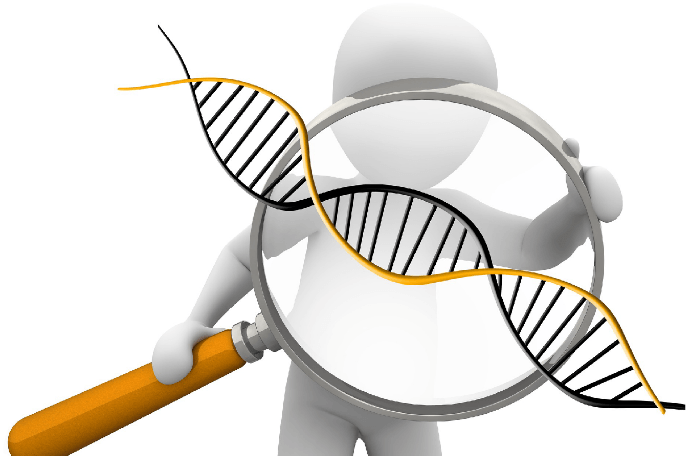
A process in which DNA has the unique ability to make an exact copy of itself.

a)

Replication

b)

Translation

c)

Transcription

d)

Protein Synthesis

77.
nitrogen base that pairs with guanine
a)
adenine
b)
cytosine
c)
nucloetide
d)
deoxyribose
78.
If we think of DNA as a ladder, which parts are the steps of the ladder?
a)
the nitrogenous base pairs
b)
the phosphate-sugar backbone
c)
the genes
d)
the phospholipid bilayer
79.
The process to go from DNA to mRNA is _______
a)
translation
b)
transcription
c)
replication
80.
The main function of tRNA is to...
a)
carry a message that, when translated, forms proteins
b)
form a portion of ribosomes
c)
string together complementary RNA and DNA strands
d)
bring amino acids from the cytoplasm to the ribosomes
81.
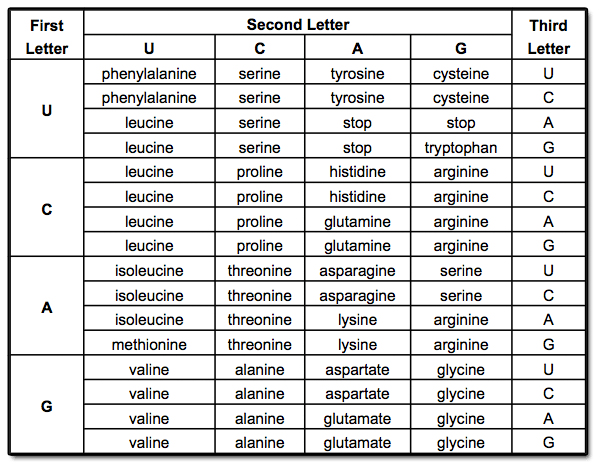
What amino acid is represented by the codon UUA?
a)
Phenylalanine
b)
Tyrosine
c)
Leucine
d)
Stop codon
82.
What is the three base sequence of mRNA that codes for a single amino acid?
a)
Anticodon
b)
Codon
c)
Protein
83.

The study of heredity

a)

Genetics

b)

Genome

c)

Allele

d)

Punnett Square

84.

The observable traits dictated by the genotype

a)

Phenotype

b)

Genotype

c)

Homozygous Recessive

d)

Homozygous Dominant

85.

Who is the "father" of modern genetics?

a)

Gregor Mendel

b)

Andreas Vesalius

c)

James Watson

d)

Charles Darwin

86.

A _______ is an alternative form a gene.

a)

chromosome

b)

sister chromatid

c)

allele

d)

telomere

87.

a trait that is always expressed if present is _____________________

a)

Recessive

b)

Dominant

c)

Strong

d)

True

88.

a trait that is masked unless 2 copies are present is ________________________

a)

recessive

b)

dominant

c)

weak

d)

hidden

89.

alleles for a trait that are the same

a)

Homozygous

b)

Heterozygous

c)

Quasizygous

d)

Juxtazygous

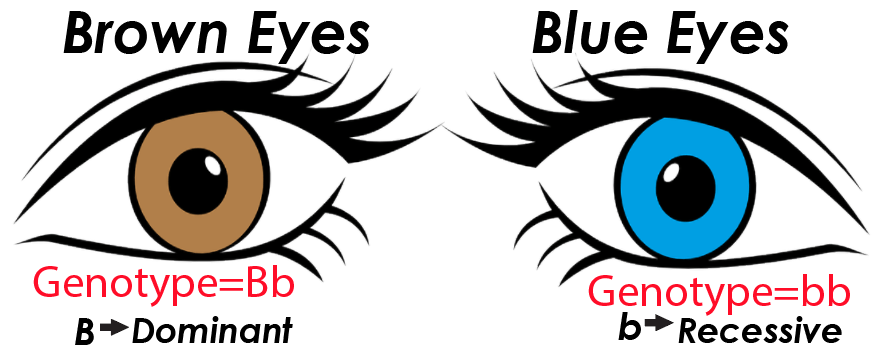
90.

the organism's genetic makeup

a)

phenotype

b)

genotype

91.

What genotype is homozygous dominant?

a)

RR

b)

Rr

c)

rr

92.
A calico cat shows both the traits for orange fur and black fur. What kind of allele expression is this?
a)
Incomplete Dominance
b)
Co dominance
c)
Independent assortment
d)
Recessive inheritance
93.

This type of inheritance pattern is a MIXTURE of both traits, when the traits blend together.

a)

incomplete dominance

b)

co-dominance

c)

complete dominance

d)

recessive pattern

94.
I have 1 X chromosome and 1 Y chromosome. What am I?
a)
Male
b)
Female
95.
What genotype is missing from this Punnett Square?
a)
RrYy
b)
RRYY
c)
rryy
d)
RrYY
96.
How many females are in this pedigree?
a)
3
b)
4
c)
6
d)
7
97.

In a pedigree chart, a male is represented by a

a)

circle

b)

square

c)

rhombus

d)

triangle

98.
What is it called when better adapted organisms survive to pass traits along to their offspring.
a)
Evolution
b)
Natural Selection
c)
Extinction
d)
Artifical Selection
99.
Ostrich wings are examples of
a)
homologous structures
b)
vestigial structures
c)
adaptations
d)
traits
100.
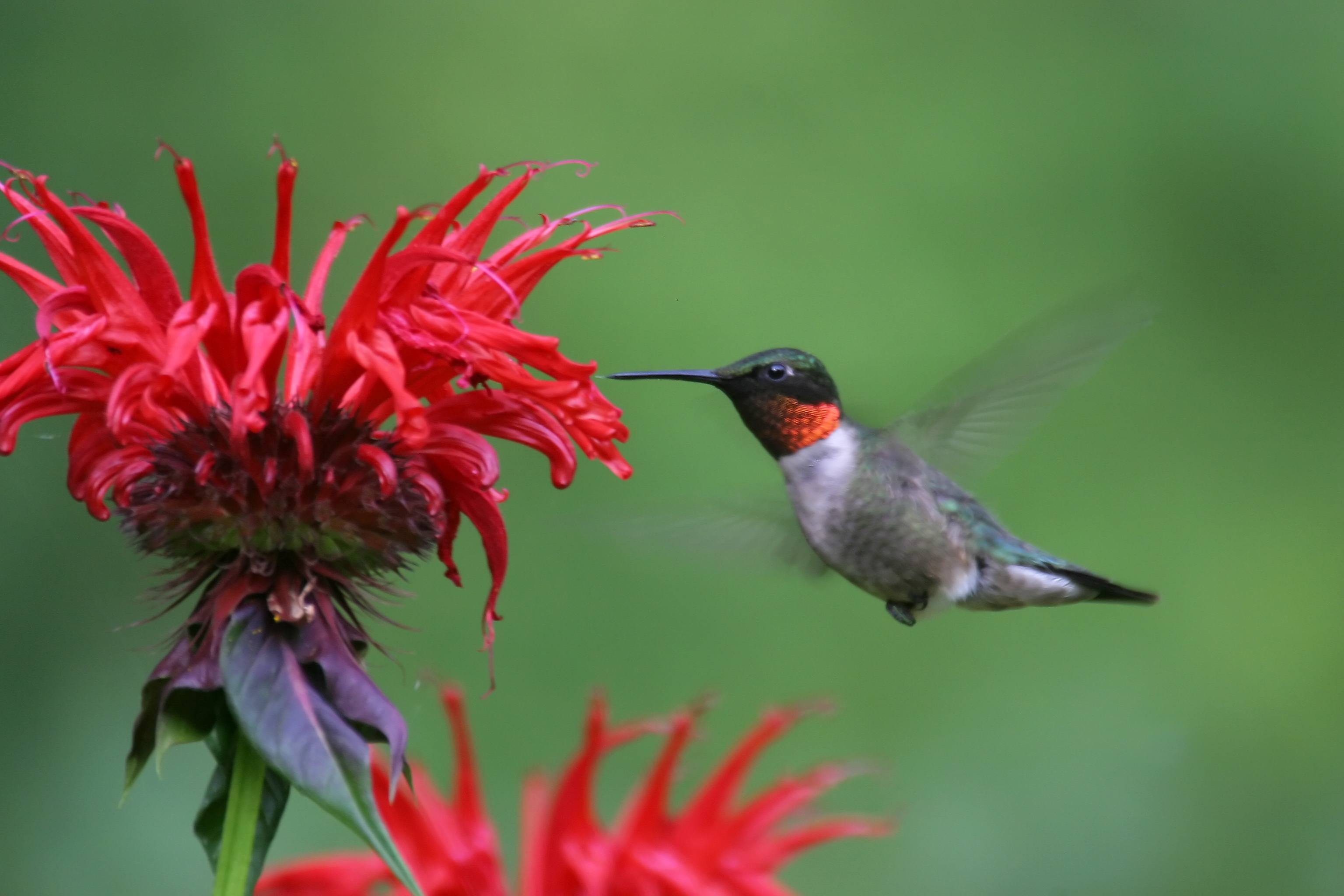
What type of symbiosis?  Hummingbirds feed on nectar from flowers.  The flowers are pollinated by hummingbirds as they move from flower to flower.
a)
commensalism
b)
mutualism
c)
parasitism
d)
predation