
 Worksheets
Asexual, Sexual, Cells and Body Systems Review
Total questions: 32
Worksheet time: 32mins

This body system is responsible for
Este sistema corporal es responsable de
production of hormones that regulate growth and metabolism
transports oxygen and nutrients, and picks up waste
exchange gases with the environment
regulate the body through electrical signals

Which number represents the thick, jelly-like substance that fills the cell and keeps the organelles in place?
¿Qué número representa la sustancia espesa y gelatinosa que llena la célula y mantiene los orgánulos en su lugar?
1
2
3
4

This organelle is the brain of the cell.
Este orgánulo es el cerebro de la célula.
1
2
3
4

This organelle controls the contents of the cell
Este orgánulo controla el contenido de la celda.
1
2
3
4
When people run long distances their muscles require increases amounts of oxygen. which system is responsible for carrying this oxygen to the muscles?
Cuando las personas corren largas distancias, sus músculos requieren una mayor cantidad de oxígeno. ¿Qué sistema es el responsable de llevar este oxígeno a los músculos?
nervous
circulatory
respiratory
digestive

The roots are showing negative geotropism.
Las raíces muestran un geotropismo negativo.
true
false
The stem is showing negative geotropism.
El tallo muestra un geotropismo negativo.
true
false

What type of cell is this?
El tallo muestra un geotropismo negativo.
Plant
Fungi
Animal
Prokaryote
Which of the following list includes cellular structures found both in plant and animals?
¿Cuál de la siguiente lista incluye estructuras celulares que se encuentran tanto en plantas como en animales?
Vacuoles, cell membrane, nucleus, mitochondria
Chloroplasts, cell wall, cell membrane, cytoplasm
Cell membrane, cytoplasm, nucleus, cell wall
Chloroplasts, vacuoles, cell wall, cytoplasm

How many parents does asexual reproduction involve?
¿Cuántos padres involucra la reproducción asexual?
one
two
three
four
If two organisms reproduce sexually, then their offspring will exhibit a genetic makeup that is -
Si dos organismos se reproducen sexualmente, entonces su descendencia exhibirá una composición genética que es:
identical to only one parent
identical to all of its siblings
a unique combination of traits
the recessive traits of each parent

Prokaryotes (bacteria) reproduce asexually via -
Los procariotas (bacterias) se reproducen asexualmente a través de:
spore formation
bud creation
vegetative propagation
binary fission

Provided is a table of organisms and some data on their characteristics. Based on the information in the table, which organism is likely to produce offspring with the greatest genetic diversity?
Se proporciona una tabla de organismos y algunos datos sobre sus características. Según la información de la tabla, ¿qué organismo es probable que produzca descendencia con la mayor diversidad genética?
Black mold
Bell tree dahlia
Spruce
Hydra

When comparing the offspring of sexually and asexually reproducing organisms, we would expect the genetic material (DNA) of the sexually reproducing organism to -
Al comparar la descendencia de organismos que se reproducen sexualmente y asexualmente, esperaríamos que el material genético (ADN) del organismo que se reproduce sexualmente:
contain fewer mutations
be lesser in quantity
be simpler overall
show more variation


The male typically deposits a spermatophore on the ground or in the water and the female picks this up. The female salamander then lays its eggs on a stick or rock near water or on land. There are several different species of salamanders with different colorful patterns.
Which type of reproduction is taking place?
El macho deposita típicamente un espermatóforo en el suelo o en el agua y la hembra lo recoge. Luego, la salamandra pone sus huevos en un palo o roca cerca del agua o en tierra. Hay varias especies diferentes de salamandras con diferentes patrones de colores.
¿Qué tipo de reproducción se está produciendo?
Asexual reproduction with uniform offspring
Sexual reproduction with diverse offspring
Asexual reproduction with diverse offspring
Sexual reproduction with uniform offspring

Asexual reproduction like mitosis produces
La reproducción asexual como la mitosis produce
Two offspring cells with the same genetic material as the parent cell.
Two offspring cells with half genetic material as the parent cell.
Four offspring cells with the same genetic material as the parent cell.
Four offspring cells with half the genetic material as the parent cell.
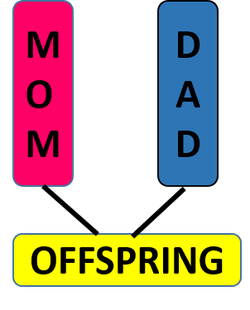
Requires two parents
Requiere dos padres
sexual
asexual
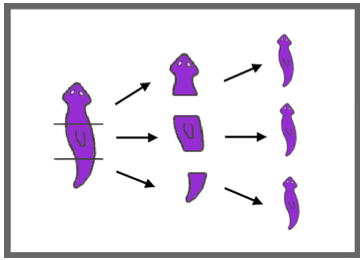
Requires only one parent
Requiere solo una madre o padre
sexual
asexual
Which of the following describes the main advantages of sexual reproduction?
Cuál de las siguientes describe las principales ventajas de la reproducción sexual?
requires lots of time/energy
no new gene combos can arise
diversity
looks identical to the parent
What is one advantage of asexual reproduction?
¿Cuál es una de las ventajas de la reproducción asexual?
offspring are different from parents
diseases are not passed from parent to offspring
it takes a longer time
it takes less time
What is an advantage of sexual reproduction?
¿Qué es una ventaja de la reproducción sexual?
it is a faster process
negative traits of parents may not always be passed to offspring
it takes more energy and time
finding a mate is necessary
A parent cell breaks into pieces and each piece becomes a new offspring.
Una célula madre se rompe en pedazos y cada pieza se convierte en una nueva descendencia.
Binary Fission
Budding
Fragmentation
Vegetative Reproductions
Which is not an advantage for sexual reproduction?
¿Cuál es la ventaja de la reproducción sexual?
more genetic variation
better chance or surviving environmental changes
small number of offspring can be produced
disease can easily spread and kill entire populations
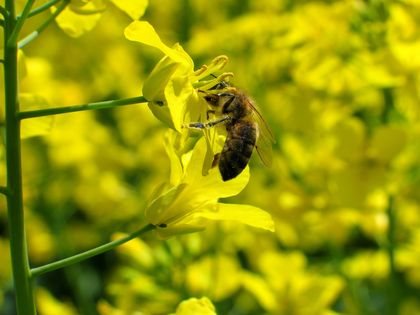
What is the a disadvantage of asexual reproduction?
¿Cuál es la desventaja de la reproducción asexual?
requires two different parts so not all the offspring will be able to reproduce due to competition.
requires a lot of energy and therefore produces small number of organisms
One parent required to reproduce.
no genetic diversity means organisms are vulnerable to disease and environmental changes.
Organs and tissues that perform the same function is called _____________? (Los órganos y tejidos que realizan las mismas funciones se llaman _____________?)
cells
tissues
organs
organ systems
A group of cells that have similar functions? Examples are nervous, epithelial, muscle and connective... (¿Un grupo de células que tienen funciones similares? Los ejemplos son nerviosos, epiteliales, musculares y conectivos ...)
cells
tissues
organs
organ systems
sex cells are called
las células sexuales se llaman
dna
chromosomes
ovaries
gametes
Identify the type of reproduction involved:
it is different from its parent(s)
Identifique el tipo de reproducción involucrada:
es diferente de su (s) padre (s)
asexual
sexual
Identify the type of reproduction involved:
it is identical to its parent
Identifique el tipo de reproducción involucrada:
es idéntico a su padre
asexual
sexual
Identify the type of reproduction involved:
it is a clone to its parent(s)
Identifique el tipo de reproducción involucrada:
es un clon de su padre (s)
asexual
sexual

