wayground logo

Free Printable Worksheets

NEW

Font size

S
M
L
XL
Worksheets

Unit 4 Review

Total questions: 67

Worksheet time: 2hrs 8mins

Name
Class
Date
1.
Which of the following is NOT a step in forming an ionic bond?
a)
One atom shares its electrons with another one.
b)
Opposite charged ions form due to e- transfer
c)
One atom gives electrons to another one
d)
Opposite charged ions attract
2.
Why do ionic bonds form?
a)
So the number of protons equals the number of electrons.
b)
To stabilize the atom with a full outer shell.
c)
So an atom can become unstable.
d)
So atoms will stick together to form molecules.
3.
What is the charge on a noble gas & why?
a)
0; they don't exchange electrons
b)
+1; they give away an electron
c)
-1; they gain an electron
d)
1; they form only single bonds
4.
An ionic bond is the attraction between:
a)
oppositely charged ions
b)
similarly charged ions
c)
neutral ions
d)
neutral atoms
5.
 Which of the following is the correct formula for these two ions:
Al+3 +  S-2
a)
AlS3
b)
Al2S3
c)
Al3S2
d)
Al3S
6.
What type of elements will form an ionic bond?
a)
Metals + Metals
b)
Nonmetals + Nonmetals
c)
Metals + Nonmetals
d)
None of the above
7.
To form a charge of +2 an atom must _ electrons.  To form -3 it must _ electrons.
a)
Gain 2; Lose 3
b)
Gain 3; Lose 2
c)
Lose 2; Gain 3
d)
Lose 3; Gain 2
8.

Boron is in column 13 & has a charge of _. Potassium is in column 1 & has a charge of _.

a)

-3; +1

b)

+3; -1

c)

-3; -1

d)

+3; +1

9.
A charged particle that has gained or lost electrons is called a _____.
a)
molecule
b)
ion
c)
isotope
d)
element
10.
A cation is a ____ ion.
a)
negative
b)
positive
c)
neutral
d)
ficticious
11.
A anion will be a ____ ion.
a)
negative
b)
positive
c)
neutral
d)
ficticious
12.

Nitrogen, N, will form which of the following ions?

a)

N

b)

N-3

c)

N-5

d)

N+5

13.

Beryllium, Be, will ____ valence electrons when forming an ionic bond.

a)

lose 4

b)

gain 4

c)

lose 2

d)

gain 2

14.
In the compound aluminum oxide, which is the cation?
a)
Al+3
b)
Al
c)
O-2
d)
O
15.

Ionic bonds happen because of the ____ of valence electrons.

a)

sharing

b)

transfer

c)

keeping

d)

covering

16.

Boron, B, will ____ valence electrons when forming an ionic bond.

a)

lose three

b)

gain three

c)

lose 5

d)

gain 5

17.

Sulfur, S, will ____ valence electrons when forming an ionic bond.

a)

gain 1

b)

lose 1

c)

gain 2

d)

lose 2

18.
How many electrons are needed in the outer energy levels of an atom to be stable?
a)
2
b)
4
c)
6
d)
8
19.
Which of the following would produce an anion?
a)
Ca
b)
Al
c)
K
d)
F
20.
In the chemical formula for an ionic compound, which item is written first?
a)
positive ion
b)
negative ion
c)
subscript
d)
the female
21.
Write the formula for barium + nitrogen
a)
Ba2N3
b)
Ba3N2
c)
BaN
d)
BaN3
22.
Write the correct chemical formula for Ag  and  Br -
a)
AgBr
b)
silver bromide
c)
Ag2Br2
d)
gold bromide
23.
Write the correct formula for an ionic compound formed from S2- and Rb1+.
a)
SRb2
b)
SRb
c)
Rb2S
d)
RbS2
24.

Which element below would have a 3+ charge as an ion?

a)

nitrogen (N)

b)

boron (B)

c)

silicon (Si)

d)

argon (Ar)

25.
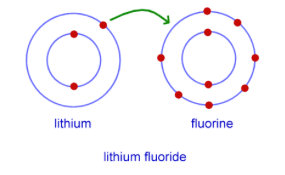
What is the name for LiF?
a)
Lithium Fluoride
b)
Lithium Fluorine
c)
Fluorine Lithide
26.
Which is the correct name for CaBr2?
a)
Calcium Bromine
b)
Bromine Calcium
c)
Calcium Bromide
27.
The sum of all oxidation numbers in a neutral compound is ___.
a)
0
b)
1
c)
-1
d)
depends on the compound
28.
What type of bond is this?
a)
ionic
b)
covalent
29.
What will be the compound name of the following chemical formula?
NaCl
a)
Potassium Chloride
b)
Sodium Chloride
c)
Calcium Chloride
d)
Sodium Chlorine
30.
If my charge becomes 2+ what does that say about me?
a)
I am stealing 2 electrons
b)
I am losing 2 electrons
c)
I am in period 2
d)
I have an atomic # of 2
31.
Magnesium bromide is an ionic compound with the chemical formula MgBr₂.  What does the "2" tell you?
a)
There are 2 bromide ions for every magnesium ion
b)
Bromide has a 2- charge
c)
Bromide has a 2+ charge
d)
There are 2 magnesium ions to every bromide ion
32.
Which is the correct name for CaBr2?
a)
Calcium Bromine
b)
Bromine Calcium
c)
Calcium Bromide
d)
Carbon and Bromine
33.
What is the formula of Sodium oxide?
a)
Na2O
b)
NaO2
c)
Na2O2
d)
Na2O
34.
What is the name for LiI?
a)
lithium oxide
b)
lithium iodide
c)
lithium monoiodide
d)
monolithium iodide
35.
How many valence electrons does nitrogen have?
a)
3
b)
2
c)
5
d)
1
36.
What can be generalized about covalent bonds?
a)
Electrons will be exchanged.
b)
Electrons will be transferred.
c)
Electrons will be given and taken.
d)
Electrons will be shared.
37.
What two types of atoms make a covalent bond?
a)
2 Nonmetals
b)
1 Nonmetal & 1 Metal
c)
2 Metals
d)
2 Noble Gases
38.

Which formula is for phosphorus trichloride?

a)

KCl3

b)

PCl3

c)

K3Cl

d)

P3Cl

39.

Silicon dioxide is the compound in sand. What is its formula?

a)

SO2

b)

NaO2

c)

SiO2

d)

SiO

40.
Is Hydrogen considered a metal or a non-metal?
a)
Metal
b)
Non-metal
41.
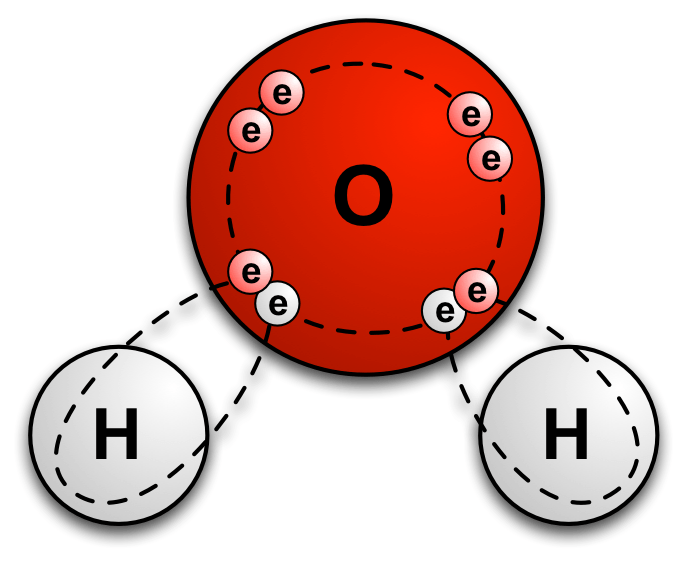
What would you name this molecule?
a)
SNa3
b)
H3O
c)
NaCl
d)
H2O
42.
Which of the following elements wants to bond 3 times
a)
Oxygen
b)
Phosphorous
c)
Fluorine
d)
Germanium
43.
Which of these would be covalently bonded
a)
Fr and K
b)
Sc and O 
c)
F and Cl
d)
He and Pt
44.
How many electrons should Lithium have around its Lewis dot model?
a)
1
b)
2
c)
3
d)
4
45.

What is the reason why Noble gases are so stable?

a)

They have an even number of electrons

b)

They have no electrons

c)

They have a full outer shell of electrons

d)

They bond with other atoms

46.

How many ATOMS are in one molecule of CH4?

a)

2

b)

4

c)

5

d)

3

47.

What is the correct formula for this molecule?

a)

CH

b)

C1H4

c)

CH4

d)

C4H

48.
What is a valence electron?
a)
The sum of neutrons and protons.
b)
The # of electrons in the last shell.
c)
A type of bond.
d)
A popular compound.
49.
Why do elements bond?
a)
To be friends
b)
To create a new element
c)
To become stable
50.
Ionic or covalent?
NaBr
a)
Ionic
b)
Covalent
51.
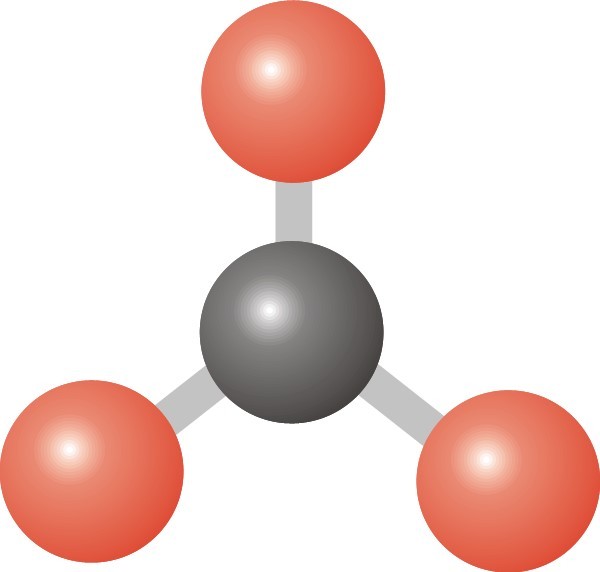
What molecule could this be? 
a)
BF3
b)
CH4
c)
H2O
d)
CO2
52.
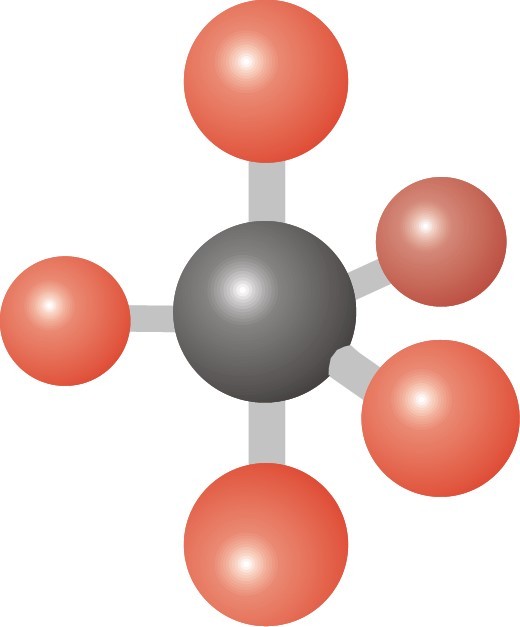
What molecule could this be? 
a)
H2O
b)
CCl4
c)
PCl5
d)
NaCl
53.
How many Hydrogen are in 4H2O?
a)
6
b)
8
c)
2
d)
4
54.
How many Magnesium are in 10MgCl2?
a)
10
b)
5
c)
20
55.
How many O's are in Al₂(SO₄)₃
a)
4
b)
12
c)
7
d)
24
56.
How many atoms are there TOTAL in:
H2SO4
a)
6
b)
5
c)
7
d)
3
57.
How many elements are in C6H12O6?
a)
1
b)
2
c)
3
d)
4
58.
Number of N in (NH₄)₂CrO₄
a)
1
b)
2
c)
8
d)
16
59.
SiCl4
a)
silicon tetrachloride
b)
silicon quadchloride
c)
monosilicon tetrachloride
d)
silicon chloride
60.
What is the name of N2O3
a)
Nitrogen trioxide
b)
Dinitrogen oxide
c)
Dinitrogen trioxide
d)
Nitrogen oxide
61.
What is the name of C3Cl?
a)
Carbon octachloride
b)
Tricarbon octachloride
c)
Carbon trichloride
d)
Octacarbon trichloride
62.
What is the OFFICIAL name for H2O
a)
Hydrogen Oxide
b)
Oxygen Dinitride
c)
Agua
d)
Dihydrogen Monoxide
63.
The name of SO₃ compound is
a)
sulfate
b)
sulfur oxide
c)
sulfur trioxide
d)
monosulfur trioxide
64.

The name of FeCl₂ is

a)

iron chloride

b)

iron (II) chloride

c)

iron (I) chloride

d)

iron dichloride

65.

LiBr is called

a)

lithium bromine

b)

lithium (I) bromine

c)

lithium bromide

d)

lithuim (I) bromide

66.

Name the ionic compound SnSe2

a)

Tin diselenide

b)

Tin (IV) Selenide

c)

Tin selenide

d)

Tin (II) triselenide

67.

Name the following ionic compound: BeCl2

a)

beryllium chlorine

b)

beryllium II chloride

c)

beryllium chloride

d)

beryllium dichloride