
 Worksheets
APES U5 Land use (forestry,Mining,farming&laws) & Water use
Total questions: 87
Worksheet time: 4hrs 35mins
What is a convergent boundary and what do they create?
What is a divergent boundary and what do they create?
What is a transform boundary and what do they create?
What are the two types of weathering?
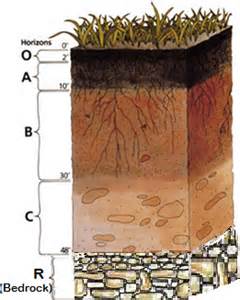
What are the 6 soil horizons?
Which type of soil holds water really well?
What is a watershed?
What is an upwelling?
What happens in El Nino and what happens in La Nina?
Is the climate more variable near land or near water?
What is the rain shadow effect?


Where do the majority of earthquakes and volcanoes occur?
on oceanic islands
in the middle of a continent
along the border of continents
in the middle if the ocean
New technology and farming methods began as a result of the _____________ revolution
red
blue
yellow
green
The practice of planting a nitrogen-using plant with a nitrogen-fixing plant is called
intercropping
contour farming
agroforestry
monoculture
Over use of farmland can cause a depletion in soil nutrients and can lead to
waterlogging
desertification
irrigation
intercropping
When roots become saturated with water due to over-irrigation, it causes death in plant roots. This is called:
salinization
desertification
agroforestry
waterlogging
When irrigation water evaporates, salts are left behind on the soil surface and can cause plant death or lead to
soil salinization
desertification
waterlogging
monocropping
Which of the following would be an environmental impact of high density animal farming?
bad smells
livestock can escape
water pollution due to runoff
improvement of feeding efficiency
Because global fisheries have dramatically seen a reduction in fish numbers, this technique has been used recently to supplement that loss.
monocropping
IPM
contour farming
aquaculture

Which is NOT an example of an externality?
the use of national forests by private companies
the use of the atmosphere for air pollution
the use of forested watersheds for aquifer purification
roads maintained with a tax on gasoline

The belief that people should maximize use of resources, based on the greatest good for everyone.
Resource conservation ethic
Multiple-use lands
Bureau of Land Management
Habitat/Species Management
Ecologically sustainable


Extensive logging can lead to
Mudslides
Deforestation
Lost of species
All of the above

What's the largest cause of species extinction
Climate change
Change of landscape
Predators
Increased population of humans

Why do limited resources become depleted
Because people don't care about other lands
People don't have private property that prevents this
People act on short term gain and self interest
All of the above
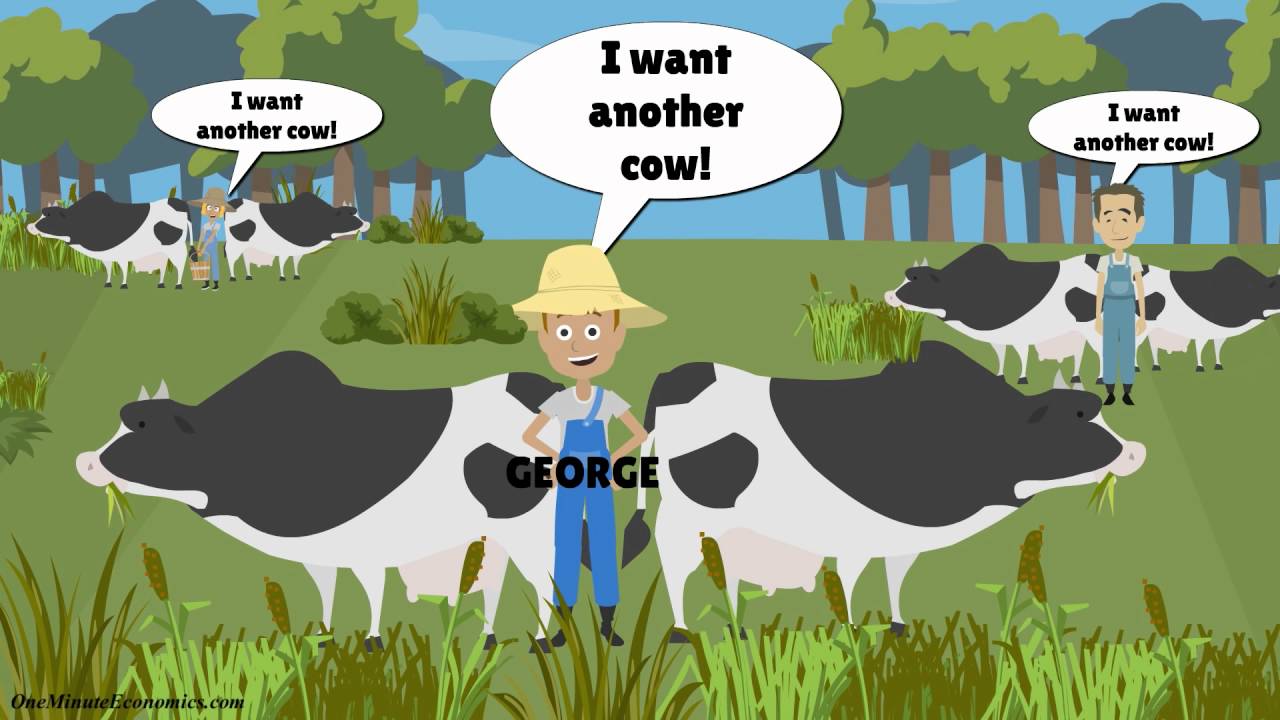
What's an example of a negative externality
Sheep grazing too much
Losing sleep thanks to a drum shop next door (noise)
Farmer plants too much crops causing erosion
All of the above

What happens when individuals share a common resource without agreement/regulation
Becomes overused
They make an agreement
They will fight for rights
People act on self interest
For tree farmers who harvest wood for lumber or paper production, the greatest profit can be realized by growing the maximum number of trees on an acre of land. The table below shows three different tree species and how many of each can be grown per acre.
Type of trees per acre # of tree Trees per acre
Loblolly pine. . . . . . . . . . . . . . . . 350
Red oak . . . . . . . . . . . . . . . . . . 200
Tulip poplar . . . . . . . . . . . . . . . . 180
How many more pine trees than oak trees can be grown on 1,000 acres of land?
350,000 more pines
200,000 more pines
150,000 more pines
180,000 more pines
The right of a government or its agent to expropriate private property for public use, with payment of compensation.
Eminent Domain
Sense of place
Stakeholder
Induced demand


An economics problem in which every individual has an incentive to consume a resource, but at the expense of every other individual.
(a)

A method of cultivation in which forests are burned and cleared for planting
(a)

A system of crop irrigation involving the controlled delivery of water directly to individual plants through a network of tubes or pipes.
(a)

A method of irrigation where farmers flow water down small trenches running through their crops.
(a)

This method of irrigation is conducted by creating small parallel channels along the field length in the direction of predominant slope.
(a)

This is a method of applying water to a controlled manner in that is similar to rainfall. The water is distributed through a network that may consist of pumps, valves, pipes, and sprinklers.
(a)

The process by which water-soluble salts accumulate in soil.
(a)

A naturally occurring solid material from which a metal or valuable mineral can be profitably extracted.
(a)

A method of extracting minerals near the surface of the Earth
(a)

The process or industry of obtaining ore or coal by open-pit mining.
(a)
Fire suppression has caused
flooding
bigger and more dangerous fires
loss of biodiversity
smaller and less dangerous fires
Overgrazing of grasslands can lead to reduced range quality. Two of the major effects of overgrazing are
erosion and desertification
eutrophication and increased methane production
higher fire potential and increased productivity
higher primary productivity and ammonification
The cutting and burning of trees
has no affect on the environment.
releases carbon dioxide and contributes to climate change.
is beneficial to ecosystems and animal habitats.
reduces flooding and erosion.
Monocropping has a number of disadvantages. These include all of the following EXCEPT
Erosion due to exposure of large areas of soil during planting.
Nutrition and pesticide needs should be similar throughout a single crop.
Pests are likely to attack a monocrop due to the high concentration.
Loss of habitat for natural pest predators.
A mineral or group of minerals from which we extract metal.
metal
ore
magma
overburden
The systematic removal of rock or other substance for financial gain.
smelting
mining
urban farming
forestry
The Green Revolution was
a dramatic increase in crop yields in developing countries
change to more sustainable agriculture
way of fighting soil erosion
power grab by the Green party in the 1980s
Mining involves the _____________, _________________ and _________________ of minerals.
Retrieving, Highjacking, and Selling
Extraction, Refining, Processing
Locating, Destroying and Incineration
Extraction, Fermenting and Tasting
Reclamation is the process of
Removing coal from a subsurface seam
Extracting ore minerals from gangue minerals
Returning land to its original or better condition
Protecting the habitats of local wildlife
Which of the following is the leading use of water globally?
Domestic/Residential
Industry
Business/Commercial
Agriculture
Because global fisheries have dramatically seen a reduction in fish numbers, this technique has been used recently to supplement that loss.
monocropping
IPM
contour farming
aquaculture
What is a natural part of a forest ecosystem and may be required for seed germination?
floods
tornadoes
fire
polar vortex
What is the problem with timber plantations?
low biodiversity
prone to forest fires
cause soil erosion
absorb excess CO2 from atmosphere
Which of the following is an example of a solution to the tragedy of the commons?
Improving literacy among urban populations
Raising tax rates for large corporations
Inventing stronger antibiotics
Passing a law to set limits for fishermen

Externality
The cost or benefit of a good or service that is not included in the purchase price of that good or service
Land that a community shares
The maximum number of plants that one can harvest
Resources managed by the government or an organization
Minerals are
nonrenewable
renewable
pretty
scarce and expensive
One way a local community might regulate a shared and limited resource and reduce the tragedy of the commons is to ....
eliminate ownership of the resources and make them available to all
divide the resources into parcels and assign them to individuals
offer subsides to users of the resources in the form of tax breaks
reduce the cost of access to the resources
Ore leftovers after valuable minerals have been removed
tailings
smelting piles
extraction heap
gravel
Surface Mining and Control Reclamation Act
mandates that miners give half of what they find to the government
allows miners to place a stake on public land for $5 per acre
mandates reclamation
is meant to bankrupt mining companies
Why mine tailings can be dangerous
can cause miners to trip
can be full of sharp objects
can cause acid leaching into water bodies
are full of conflict minerals
The National Forest Management Act
prevents further building of roads in national forests
was repealed by the Clinton administration
requires national forests to have a management plan
allows mining in national forests
Has the most restrictive land use
national park
wilderness area
national forest
national monument
Lands managed by agencies of the government
National Parks
National Rivers
Public Lands
Restricted-use Lands
This agency manages about 253 million acres of America's public lands as well as 700 million acres of subsurface mineral estate.
U.S. Department of Agriculture
Bureau of Land Management
National Park Service
US Department of the Interior
This agency is managed by the US Department of Agriculture and manages the 155 National forests and 20 National grasslands.
US Forest Service
US Fish and Wildlife Service
National Oceanic and Atmospheric Administration
Bureau of Reclamation
This agency manages all national parks, many monuments, and other conservation and historic properties.
U.S. Department of Agriculture
Bureau of Land Management
National Park Service
US Department of the Interior
What are considered "the commons"
Common house hold items like knifes, spoons, and forks.
A resource owned by no one and available for use by anyone at little or no charge
A field where college students can sit outside in between classes

Public lands are classified according to:_________________
Their color
their percentage of acid to soil
their use
Their temperature

