
 Worksheets
2nd 9 Weeks Test Review
Total questions: 83
Worksheet time: 2hrs 48mins


By replacing the element symbol, this could be a diagram of which element?
Li
Al
C
Be

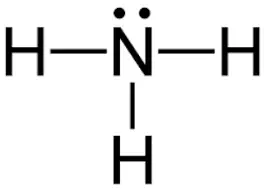
What is the correct Lewis Dot Structure for ammonia NH3


Which is the correct molecular structure for carbon dioxide?


What is the geometry of this molecule?
bent
tetrahedral
trigonal planar
What is the geometry of this molecule?
bent
trigonal planar
trigonal pyramid
tetrahedral

What is the geometry of this molecule?
bent
tetrahedral
see saw
linear
1s22s22p63s23p64s23d10


Which orbital is displayed correctly?
A
B
C
D


Which element is the orbital diagram showing?
Manganese
Chromium
This is an invalid orbital diagram
Chlorine

Which element is the orbital diagram representing?
Nitrogen
Oxygen
Sulfur
This is an invalid orbital diagram

Which of the orbital diagrams is correct?
Only C
Only D
Both C and D
All of them
Both B and D
Which of the orbital diagrams is correct?
Only C
Only D
Both C and D
All of them
Both B and D


How many electrons does sulfur have
16
32
48
12

Elements in the same group or column have the same ...
# of valence electrons
# of shells
# of protons
Mass Number
Noble gases are inert because
They are highly reactive
They are unreactive
They are noble
They have 8 electrons in their outer most energy level
Which pair of elements has the most physical and
chemical properties in common?
Ge and Se
K and Kr
Al and Ga
Ba and Bi
Electronegativity (a) as you go down a group.
According to their positions on the Periodic Table, place the elements Ba, Mg, Cl, Ca, and P in the order of increasing electronegativity.
Ba, Ca, Mg, P, Cl
Mg, P, Cl, Ca, Ba
Cl, P, Mg, Ca, Ba
Cl, P, Ba, Ca, Mg
Which of the following element is an example of Halogen
Sodium
Magnesium
Fluorine
Carbon
Which of the following is a noble gas?
Neon (Ne)
Sodium (Na)
Iron (Fe)
Sulfur (S)
How did Mendeleev hope other scientists that were studying the periodic table?
By discovering over 100 elements on his own.
He did not help future scientists.
They were able to fill in the blank spaces. It is organized by the atomic number.
Who arranged the Periodic Table by atomic mass?
Mendeleev
Moseley
Rutherford
Bohr
Who arranged the periodic table by atomic number?
Mendeleev
Moseley
Rutherford
Bohr
The charge on the manganese in the salt MnCl3 is __________.
1+
1-
2+
2-
3+
Cr and Cl form an ionic compound whose formula is CrCl3. This compound is _______.
chromium chlorine
chromium(III) chloride
monochromium trichloride
Chromium(III) trichloride
chromic trichloride
The correct formula of iron(III) bromide is __________.
FeBr2
FeBr3
FeBr
Fe3Br3
Fe3Br
Which one of the following compounds is chromium(III) oxide?
Cr2O3
CrO3
Cr3O2
Cr3O
Cr2O4
The charge on the iron ion in the salt Fe2O3 is __________.
1+
2+
3+
5-
6-
What's the correct formula for titanium (II) nitrate?
Ti(NO3)2
Ti(NO3)
(NO3)Ti
none of the above
What's the formula for iron(II) sulfide?
FeS
Fe2S
SFe
S2Fe
What is the formula for tin(IV) bromide?
SnBr
BrSn
Sn4Br
SnBr4
Name this compound:
CaCO3
Calcium carbon oxide
Calcium (II) carbonate
Calcium carbonate
Carbonate (I) calcide

Match the following shapes to their Names

Trigonal Planar

Tetrahedral

Trigonal Pyrimidal

Linear

Bent


Which Structure has a different shape than the others?


NH3 is a ... molecule
Polar
Nonpolar

Chloroform (CHCl3) is a .... molecule.
polar
nonpolar
ionic

CCl4 is a ... molecule.
polar
nonpolar
ionic
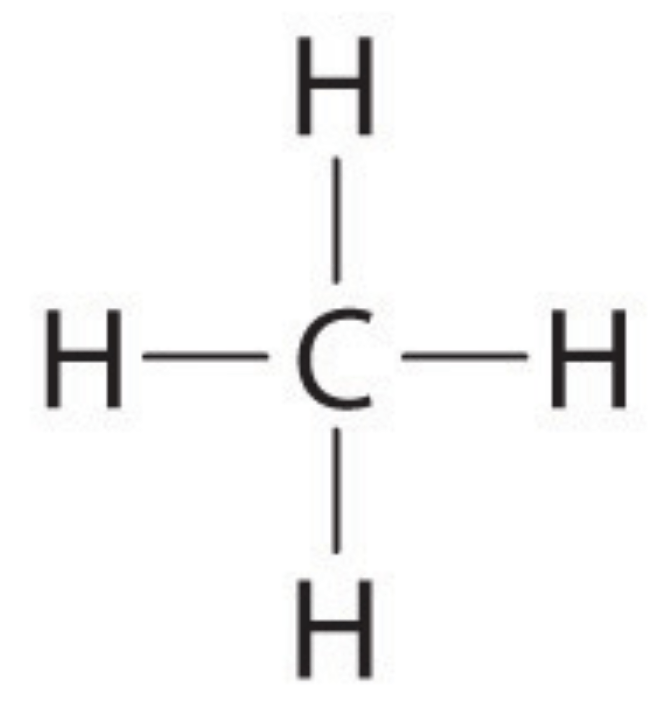
Classify the following molecule.
polar
nonpolar

Classify the following molecule.
polar
nonpolar

CH4 is a nonpolar molecule because ...
It is NOT symmetrical
It is symmetrical
It has polar bond between its atoms
It dissolves in water
F2
Polar
Nonpolar
A metallic bond is a bond between ________.
nonmetals
metals
transition metals
metalloids
What do electrons do in a metallic bond?
They stay on the metal atom.
They are transferred from atom to atom.
They form a covalent bond with another atom.
They float around freely.
What is meant by the term "sea of electrons"?
It's what we call all the free floating electrons in a metal.
It's what we call electrons that are floating in a liquid.
It's the total number of electrons in a metal atom.
It's the total number of electrons in the ocean.

What do we call electrons that move freely in a metallic bond?
sea of electrons
lone electrons
unpaired electrons
covalent electrons
What is the one thing responsible for a metal being malleable, ductile, and conductive?
metal atoms
its covalent bonds
its valence electrons
its sea of free-floating electrons
Why are metals good conductors?
they have mobile electrons
they have mobile atoms
they have crystal structures that can rearrange
they have mobile protons
Malleability means
the ability to be drawn into a wire
the electrons of metals are mobile
the ability to be hammered into a shape
the ability to be a conductor of electricity
Metals are hard because metals have a
sea of electrons that tightly hold the nuclei together
they form triple bonds
low melting point
high luster

