wayground logo

Free Printable Worksheets

NEW

Font size

S
M
L
XL
Worksheets

Unit 5 TEST Review

Total questions: 80

Worksheet time: 5hrs 23mins
Name
Class
Date
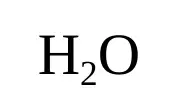
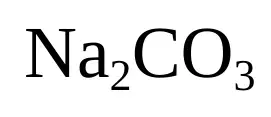
1.
How many total atoms are in the compound below?
a)
3
b)
4
c)
5
d)
6
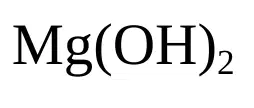
2.
How many total atoms are in the compound below?
a)
1
b)
2
c)
3
d)
4
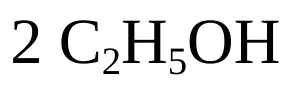
3.
How many total atoms are in the compound below?
a)
10
b)
2
c)
5
d)
6
e)
7
4.
How many total atoms are in the compound below?
a)
3
b)
4
c)
5
d)
6
5.
How many atoms of Hydrogen (H) are found in the compound below?
a)
12
b)
2
c)
5
d)
6
e)
9
6.
In ionic compounds, NONMETALS are referred to as
a)
Cations.
b)
Anions.
c)
Neutral.
7.
In ionic compounds, METALS are referred to as
a)
Cations.
b)
Anions.
c)
Neutral.
8.
An ionic bond is when two atoms....
a)
Share their electrons
b)
Both lose electrons for a full shell
c)
One loses an electron(s) and one gains an electron(s)
d)
Both gain electrons till they have a full shell
9.
In ionic compounds, nonmetals tend to _________electrons, giving them a ____________________ charge.
a)
gain, positive
b)
gain, negative
c)
lose, positive
d)
lose, negative
10.
In ionic compounds metals tend to _________electrons, giving them a ____________________ charge.
a)
gain, positive
b)
gain, negative
c)
lose, positive
d)
lose, negative
11.
Ionic Compounds have _____ melting points, and _______ conduct electricity.
a)
high, can
b)
high, cannot
c)
low, can
d)
low, cannot
12.
When Magnesium (Mg) is bonding with Oxygen (O), what kind of charge will Magnesium have?
a)
+2
b)
-2
c)
+8
d)
-8
13.
When Lithium (Li) is bonding with Chlorine (Cl), what kind of charge will Chlorine have?
a)
+1
b)
-1
c)
+8
d)
-8
14.
What changes occur as an aluminum atom, Al, becomes an aluminum ion, Al+3?
a)
The aluminum atom gains 3 electrons and the number of protons stays the same.
b)
The aluminum atom loses 3 electrons and the number of protons increases.
c)
The aluminum atom loses 3 electrons and the number of protons stays the same.
d)
The aluminum atom gains 3 electrons and the number of protons increases.
15.
Covalent Compounds have _____ melting points, and _______ conduct electricity.
a)
high, can
b)
high, cannot
c)
low, can
d)
low, cannot
16.
A covalent bond that is a triple bond contains this (TOTAL) amount of shared electrons
a)
2
b)
4
c)
6
d)
8
17.
How many electrons do MOST atoms need to fill their valence shell?
a)
2
b)
4
c)
6
d)
8
e)
10
18.
The octet rule states that:
a)
Atoms will lose, gain, or share electrons to obtain a full valence shell
b)
Bonding in unlikely to occur between oppositely charged ions
c)
A single covalent bond involves two pairs of shared electrons
d)
A covalent bond results between two oppositely charged ions
e)
Halogens often bond with alkaline earth metals
19.
Two hydrogen atoms sharing one pair of electrons to fill their valence shells with two electrons each is called a ______ covalent bond.
a)
Single
b)
Double
c)
Triple
d)
ionic
20.
Two Nitrogen atoms sharing three pairs of electrons to fill their valence shells with eight electrons each is called a ______ covalent bond.
a)
Single
b)
Double
c)
Triple
d)
ionic
21.
This could be the Lewis Dot diagram of which element?
a)
O
b)
Mg
c)
Cl
d)
B
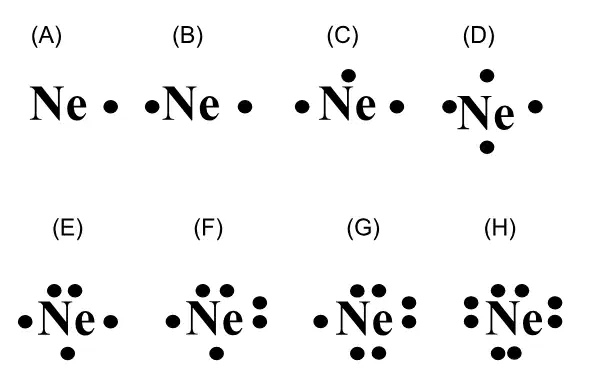
22.
Which of the following is the correct Lewis Dot diagram for Neon?
a)

H

b)
A
c)

G

d)
C
e)
D
23.
How many electrons should chlorine have around its Lewis Dot diagram?
a)
7
b)
5
c)
17
d)
35
24.
In the lewis dot structure of two covalently bonded atoms, a line between a dot of each of two atoms represents
a)
Electrostatic Force
b)
An ionic bond
c)
A shared pair of electrons
d)
The electron cloud
e)
Valence electrons
25.
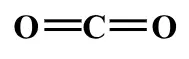
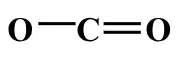
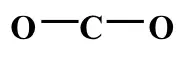
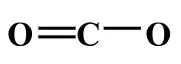
Which is the correct representation of Carbon Dioxide (CO2)?
a)
Option 1
b)
Option 2
c)
Option 3
d)
Option 4
26.
What type of bond is the compound shown below?
a)
Ionic
b)
Covalent
27.
What type of bond is the compound shown below?
a)
Ionic
b)
Covalent
28.
What type of bond is the compound shown below?
a)
Ionic
b)
Covalent
29.
What type of bond is the compound shown below?
a)
Ionic
b)
Covalent
30.
What type of bond is the compound shown below?
a)
Ionic
b)
Covalent
31.

How many elements are in this chemical formula?

H2SO4H_2SO_4  

a)

1

b)

2

c)

3

d)

4

32.

How many atoms of Carbon are in this formula? C6 H12O6C_{6\ }H_{12}O_6  

a)

6

b)

1

c)

12

33.

What is the total number of atoms in this formula? H2O2H_2O_2  

a)

2

b)

4

c)

3

34.

Which of the following elements is least likely to form a compound?

a)

Hydrogen

b)

Sodium

c)

Argon

d)

Potassium

35.

Which chemical formula correctly displays 1 atom of nickel and 2 atoms of Fluorine?

a)

niF2

b)

NIF2

c)

Ni1F2

d)

NiF2

36.

What is the total number of atoms in this chemical formula? C8H3NaBr12C_8H_3NaBr_{12}  

a)

18

b)

12

c)

25

d)

24

37.

Which element has the greatest number of atoms? AgNO3AgNO_3  

a)

Silver

b)

Gold

c)

Nitrogen

d)

Oxygen

38.
If I gain electrons I become
a)
Positive because I've added to my atom
b)
negative because I've added electrons
c)
same because i'm balanced
d)
equal because now I have electrons
39.
When metals bond with non-metals they form what type of bonds
a)
covalent
b)
ionic
c)
cooperative
d)
lewis
40.
How do the following two elements bond together?
Na1+  F1-         
a)
NaF
b)
NaF3
c)
Na3F
d)
Na1F2
41.
How do the following two elements bond together?
K1+  S2- 
a)
KS
b)
K8S
c)
K6S3
d)
K2S
42.
When a nonmetal gains electrons, it becomes this type of ion.
a)
Anion
b)
Cation
43.
When a metal loses electrons, it becomes this type of ion.
a)
anion
b)
cation
44.
When an ionic compound is formed, its charge is 
a)
negative
b)
neutral (no charge)
c)
positive
45.
The first step in naming an ionic compound is always...
a)
Naming the anion
b)
Changing the ending to -ide
c)
Naming the cation
d)
Writing the cation charge
46.
How many valence electrons does a bromine atom have?
a)
1
b)
2
c)
6
d)
7
47.
What is the charge on the simple (single atom) ion that sulfur forms?
a)
1-
b)
2+
c)
3+
d)
2-
48.

How many electrons would a Nitrogen ion gain/lose? If it has 5 valence electrons.

a)

lose 5

b)

gain 5

c)

lose 3

d)

gain 3

49.

What is the ion formed from Sulfur? If it has 6 valence electrons.

a)

S+2

b)

S-2

c)

S+6

d)

S-6

50.

How many electrons would a Calcium ion gain/lose? If it has 2 valence electrons.

a)

lose 1

b)

gain 1

c)

lose 2

d)

gain 2

51.

If an atom loses electrons, the charge will be positive.

a)

true

b)

false

52.

A Bromine ion gains 1 electron, which of the following is the correct symbol for a Bromine ion?

a)

Br-1

b)

Br+1

c)

Br+7

d)

Br-7

53.

An atom with 2 protons, 3 neutrons, and 4 electrons has a charge of ____.

a)

+2

b)

-2

c)

+3

d)

0

54.

If an element has 3 valence electrons, what charge will likely form on its ion ?

a)

+3

b)

+5

c)

-3

d)

-5

55.
Ions are: 
a)
atoms with a positive or negative charge
b)
atoms with no charge
c)
atoms with ONLY a positive charge
d)
atoms with ONLY a negative charge
56.

Na has 1 valence electron. It will have a charge of _______

a)

+1

b)

+2

c)

-1

d)

-2

57.

Iodine has 7 valence electron. It will have a charge of _______

a)

-2

b)

-1

c)

+1

d)

+2

58.

S has 6 valence electron. It will have a charge of _______

a)

-2

b)

-1

c)

+1

d)

+2

59.

How do covalent bonds form?

a)

Donating & receiving valence electrons between atoms

b)

Oppositely charged ions attract each other & form bonds

c)

Scientists are still not sure how they form

d)

Sharing valence electrons between atoms

60.

The formation of a covalent bond relies on the interaction or bonding of...

a)

2 Nonmetals

b)

1 Nonmetal & 1 Metal

c)

2 Metals

d)

2 Noble Gases

61.

This is the displayed formula for what covalent compound?

a)

Water

b)

Hydrogen peroxide

c)

Hydrogen oxide

d)

Ethanol

62.

Chlorine is a diatomic element which means in nature, it is found in two's. (Cl2) Chlorine shares one pair of electrons to make sure each atom complete the octet rule. This creates a...

a)

single bond

b)

double bond

c)

triple bond

63.

Oxygen is a diatomic element which means in nature, it is found in two's. (O2) Oxygen shares two pairs of electrons to make sure each atom completes the octet rule. This creates a...

a)

single bond

b)

double bond

c)

triple bond

64.

Nitrogen is a diatomic element which means in nature, it is found in two's. (N2) Nitrogen shares three pairs of electrons to make sure each atom completes the octet rule. This creates a...

a)

single bond

b)

double bond

c)

triple bond

65.

How many covalent bonds are created in a single water molecule?

a)

0

b)

1

c)

2

d)

3

e)

4

66.

How many covalent bonds are created in a single ammonia molecule?

a)

0

b)

1

c)

2

d)

3

e)

4

67.

How many pairs of valence electrons are being shared in a single water molecule?

a)

0 pair - 0 valence electrons

b)

1 pair - 2 valence electrons

c)

2 pair - 4 valence electrons

d)

3 pair - 6 valence electrons

68.

What type of elements share electrons and form covalent bonds?

a)

Nonmetals

b)

Metals

c)

Metalloids

d)

A Metal & A Nonmetal

69.

What type of bond will this compound likely form H-Cl?

a)

Ionic compound

b)

Covalent compound

c)

Metallic compound

70.

What type of bond will this ammonia compound likely form (NH3)?

a)

Ionic compound

b)

Covalent compound

c)

Metallic compound

71.

What type of bond will this compound likely form [Na]+ & [Cl]- ?

a)

Ionic compound

b)

Covalent compound

c)

Metallic compound

72.

When assigning the number of individual atoms in a chemical formula it is written as a...

a)

superscript

b)

subscript

c)

coefficient

d)

script

73.

How many total atoms are in the ionic compound Ca(NO3)2 (Calcium nitrate)?

a)

3

b)

5

c)

6

d)

9

e)

10

74.

How many total atoms are in the covalent compound C4H10 (Butane)?

a)

6

b)

8

c)

10

d)

12

e)

14

75.
H2O2← ?
This number tells the number of atoms present.
a)
coefficient
b)
molecule
c)
subscript
d)
atom
76.
 2H2O
How many Hydrogen atoms are present?
a)
2
b)
4
c)
1
d)
10
77.
2H2O
How many Oxygen atoms are present?
a)
2
b)
4
c)
1
d)
5
78.
2H2O
How many H2O molecules are present?
a)
1
b)
4
c)
2
d)
8
79.

The big number on the front of the chemical formula is called the ______

a)

Coefficient

b)

Element Symbol

c)

Subscript

d)

Atomic Number

80.

How many of each element are in 3Al2(SO4)3

a)

6Al, 9S, 36O

b)

3Al2, 3S, 12O

c)

18Al, 9S, 12O

d)

6Al, 12SO