
 Worksheets
EARTH AND LIFE SCIENCE REVIEW (1ST QUARTER)
Total questions: 80
Worksheet time: 13mins
You are part of a team exploring advanced cosmological theories. During a discussion, a colleague suggests that our universe is just one of many universes that exist in a vast multiverse. Which concept is being described?
Steady State Theory
Big Bang Theory
Inflation Theory
A fellow student asks you about the state of the universe before the Big Bang. You explain that all matter, energy, space, and time were concentrated in a single point with infinite density and temperature. What is this point called?
Event Horizon
White Dwarf
Singularity
What is the Big Bang theory?
A theory that states that the universe started from a small mass and then expanded; the expansion cooled down the temperature, resulting in the formation of matter, energy, space, and time.
A theory that states that the universe was there, will be, and is there. It is homogeneous and isotropic.
A theory that states that the universe is slowly coming back to a center.
A theory that states that the universe started from a large mass and then imploded to form everything.
The universe is expanding! This means that:
all of the galaxies are spreading out.
the universe must have started from a single point.
the universe is cooling down.
all of the above.
The galaxy we are a part of is called:
Milky Way
Andromeda
Whirlpool
Sombrero
Geocentrism is the theory that says that the Earth is the center of the universe.
True
False
A Greek philosopher who believed in the primordial universe.
Democritus
Anaxagoras
Aristotle
Ptolemy
States that the universe expands but did not change its density
Multiverse Theory
Atomic Universe
Steady State Theory
Primordial Universe
Most scientists believe the Big Bang Theory explains which of the following questions?
How our planets and moons formed
How our universe began
How the sun turns hydrogen into helium
How fast light travels through space
What separates the inner and outer planets?
Oort cloud
Sun
Kuiper belt
Asteroid belt
Which of the following is NOT a characteristic of the inner planets?
Smaller
Rocky
Gaseous
Shorter years
Which of the following is a terrestrial planet?
Saturn
Jupiter
Mars
Uranus
The only place in universe that is inhabited by living things
Mars
Earth
Jupiter
Uranus

What is the function of the Earth's atmosphere?
Allows the Earth to rotate on its axis
Protects the surface of the Earth from solar wind and harmful ultraviolet rays
Reduces the sun's
heat
Deflects huge objects from heating the Earth
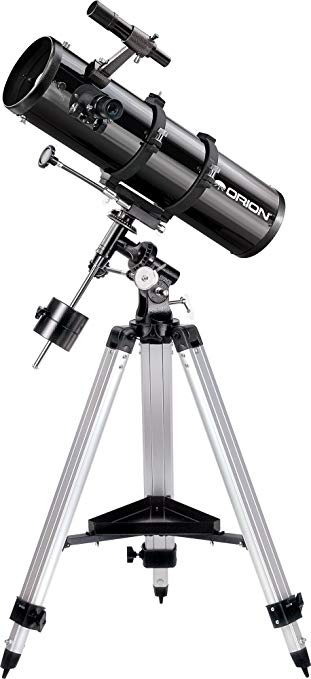
Reflecting telescopes use _______ to focus light.
Lenses
Flat mirrors
Curved Mirrors
A lens and lasers

Which of these light types cannot be captured by a telescope?
Radio waves
Microwaves
Ultraviolet
All of them can be captured
Which of the following characteristics of the Earth that sustain life makes it possible for water to exist in its liquid form?
Atmosphere
Magnetic field
Proper distance
Oxygen
Which of the following characteristics of the Earth that supports life protects the earth from harmful solar wind and cosmic rays?
Atmosphere
Magnetic field
Proper distance
Oxygen
How does the presence of atmosphere sustains life on earth?
It is the main constituent of the hydrosphere
It made it possible for water to exist in its liquid form
It protects the earth from the solar wind
It traps the sunlight inside, and keeps the earth warm
The (a) is a zone in the Solar system where water can exist in its liquid form.

Which of the following factors that makes earth habitable is being analogize in the picture?
Proper distance
Magnetic field
Atmosphere
Oxygen
Which of the following gases contributes to the 21% of the earth's atmosphere?
Argon
Nitrogen
Carbon dioxide
Oxygen
How do the biosphere and the atmosphere interact?
Air contains water.
Volcanic ash can enter the atmosphere.
Living things need air to survive.
What word refers to the solid Earth?
atmosphere
biosphere
geosphere
hydrosphere
What part of the Earth includes all life forms & even organic matter?
atmosphere
biosphere
geosphere
hydrosphere
What percentage of the Earth is covered with water?
50%
60%
70%
80%
How do the geosphere and the hydrosphere interact?
The geosphere stores parts of the hydrosphere.
The geosphere erodes (shapes) the hydrosphere.
The hydrosphere stores parts of the geosphere.
How do the geosphere and the biosphere interact?
Soil contains living parts.
Water rains onto the geosphere.
Bacteria is in the air.
A layer of the atmosphere that contains ozone which protects life on earth?
Mesosphere
Stratosphere
Thermosphere
Troposphere
13.Taal Volcano spews gases and ashes into air. Which two spheres are interacting in this scenario?
a. Biosphere and Geosphere
b. Biosphere and Atmosphere
c. Geosphere and Hydrosphere
d. Geosphere and Atmosphere
14.Water availability impacts the growth animals like cows which depend on plants for food. Which of the following subsystems are involved in this situation?
a. Atmosphere and Biosphere
b. Hydrosphere and Biosphere
c. Hydrosphere and Geosphere
d. Atmosphere and Hydrosphere
15. Which of the following is an interaction between geosphere and atmosphere?
a. Water evaporating from the soil
b. Bacteria converting nitrogen to ammonium
c. Plants undergoing the process of transpiration
d. Rocks undergoing the process of weathering due to flood
A type of rock that is created using sediments that goes through compaction and sementation.
Metamorphic
Sedimentary
Igneous
A naturally occurring substance that can form rocks.
Mineral
Nutrient
Substance
A property of minerals which allow them to be turned into copper wire.
Luster
Ductility
Malleability
A type of rock that is created with the cooling and crystallization of hot molten magma.
Igneous
Sedimentary
Metamorphic
This means a mineral is NOT a product of an organism.
Inorganic
Chemical composition
Crystalline structure
This is the hardest known mineral made up of flat thin sheets of pure carbon.
Topaz
Ruby
Diamond
A type of rock that is created with HIGH heat energy and HIGH PRESSURE underneath the crust.
Igneous
Sedimentary
Metamorphic
Igneous was derived from the term (a) meaning fire.
This rocks are formed when magma cools and solidifies slowly beneath the Earth's surface
Volcanic rocks
Plutonic rocks
Which of the following is not an example of metamorphic rocks?
Slate
Gneiss
Marble
Gypsum
Which of the following is the physical disintegration or chemical alteration of rocks?
weathering
mass wasting
transportation
erosion
Which type of weathering decomposes and dissolves rocks through chemical reactions?
biological
chemical
mechanical
glacial
This type of weathering is caused by small organisms, animals & humans
biological
glacial
mechanical
chemical

What kind of exogenic process is happening with the moss covering the rock?
erosion
mass wasting
weathering
deposition

The pictures shows a before and after scenario of a marble statue. Marble is known to be a carbonate. The carbonates in the rocks react with water that produces weak acids resulting to the after situation. What kind of weathering happened to the statue?
chemical
mechanical
biological
technical
When a river picks up small particles of soil, rocks, and other materials and moves them down the river leaving them miles from where they originated. This is known as____.
Deposition
Volcanic eruption
Continental drift
Tsunamis
What are the most abundant elements inside the Earth's core?
Silicon and Oxygen
Iron and Nickel
Both A and B
Neither A nor B
Which of the following is not an example of an endogenic process?
Volcanic Eruption
Metamorphism
Earthquake
Weathering
It refers to the process of producing magma.
Volcanic Eruption
Magmatism
Both Volcanic Eruption and Magmatism
None of these
It refers to an endogenic process wherein magma are released through the process of eruption.
Magmatism
Earthquake
Volcanic Eruption
Seismic Activities
The term used to describe the difference in temperature as we go downwards the Earth's crust is called geothermal gradient.
TRUE
FALSE
When does magma form?
when volcanoes erupt
when grains have been compacted together
when temperature are hot enough to melt rock
when new minerals form due to chemical changes in the rock
He is the proponent of the continental drift theory.
Frances Bacon
Alfred Wegener
Antonio Pellegrini
It is a process that involves the interaction of moving crustal plates and results in major structural features of the Earth.
Plates
Tectonics
Plate Tectonics

Wegener found fossils of land reptiles on two different continents. This was important because
Land reptiles are often found all over the world, showing that they can survive in most climates
Land reptiles cannot swim, so the continents must have been connected for them to get across
Land reptiles are never moved around the Earth by humans, so they must have travels to these continents by themselves
Land reptiles fossilized much better than other animal species

What was not a piece of evidence Wegener used to support continental drift theory?
Rock Formation Evidence
Climate Evidence
Soil Evidence
Fossil Evidence

Why was Wegener's hypothesis not accepted?
He could not explain what force was moving the continents
He was a meteorologists, so no one took him seriously
He did not have enough types of fossils to support his theory
Because scientists thought Harry Hess' theory was better
Relating or denoting to the most recent era
Paleozoic
Mesozoic
Cenozoic
Era comprising of the Triassic, Jurassic, and Cretaceous periods
Paleozoic
Mesozoic
Cenozoic
Record of Earth's history
Rock record
Grand Canyon
Geologic TIme Scale
Earth's record


Which letter is a fault?
E
F
G
H

What is the oldest feature?
A
Fault
L
Q
D
If you will study the relative age of a rock layer, which indicator below is the more appropriate to use?
The thickness of the layer
The chemical makeup of the layer
The distance of the layer extends over the Earth
The position of the layer compared to other layers
Where do the oldest rocks found in an undisturbed rock profile?
at the bottom
in the middle
on the top
anywhere
What is the half life of Carbon-14?
5730 yrs
1.2 billion years
713 million years
1.3 billion years
The element that is the product of radioactive decay is known as the...
daughter element
half-life
parent element
carbon-14

