wayground logo

Free Printable Worksheets

NEW

Font size

S
M
L
XL
Worksheets

unit 2 biochemistry review

Total questions: 80

Worksheet time: 44mins

Name
Class
Date
1.
What are the positively charged particles in an atom?
a)
Protons
b)
Neutrons
c)
Electrons
2.
Electrons have what charge?
a)
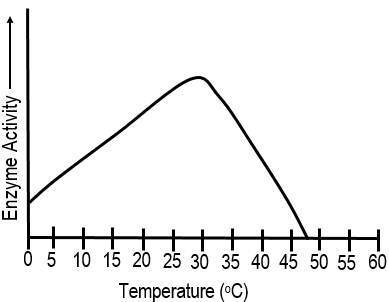
Negative
b)
Positive
c)
Neutral
 (No Charge)
3.
Neutrons have what charge?
a)
Negative
b)
Positive
c)
Neutral
 (No Charge)
4.
The nucleus of an atom is made up of...
a)
Protons and Neutrons
b)
Neutrons and Electrons
c)
Protons and Electrons
5.

Which macromolecule is this the chemical structure of?

a)

Protein

b)

Lipid

c)

Nucleic Acid

d)

Carbohydrate

6.

Which elements make up nucleic acids?

a)

Carbon, Hydrogen, Oxygen

b)

Carbon, Hydrogen, Oxygen, Nitrogen

c)

Carbon, Hydrogen, Oxygen, Nitrogen, Phosphorous

d)

None of the above

7.

The monomer of a protein is a...

a)

Monosaccharide

b)

Amino Acid

c)

Fatty Acid

d)

Polypeptide

8.

What is the function of a protein?

a)

It is involved in short-term energy store.

b)

It is involved in almost every function of the human body.

c)

It transmits genetic information.

d)

It is involved in long-term energy and body insulation.

9.

Which macromolecule makes up the cell membrane?

a)

Proteins

b)

Nucleic Acids

c)

Lipids

d)

Carbohydrates

10.

A carbohydrate is made up of all of the following elements except for...

a)

Carbon

b)

Nitrogen

c)

Hydrogen

d)

Oxygen

11.

What is the function of a nucleic acid?

a)

it transmits genetic information.

b)

It is involved in body insulation.

c)

It provides your body with the energy it needs.

d)

It is involved in energy storage.

12.

Which macromolecule has the chemical structure shown above?

a)

Protein

b)

Lipid

c)

Carbohydrate

d)

Nucleic Acid

13.

What is the monomer of a lipid?

a)

Nucleotide

b)

Fatty Acid & Glycerol

c)

Polysaccharide

d)

Amino Acid

14.

Which macromolecule provides your body with short term energy?

a)

Nucleic Acid

b)

LIpid

c)

Carbohydrate

d)

Protein

15.

The function of a lipid is to...

a)

Provide your body with energy.

b)

Transmit genetic information.

c)

Insulate your body and store energy.

d)

Aid in almost every function of the human body.

16.

Which macromolecule is this the chemical structure of?

a)

Carbohydrate

b)

Nucleic Acid

c)

Lipid

d)

Protein

17.

Which elements make up a lipid?

a)

Carbon, Hydrogen, Oxygen

b)

Carbon, Oxygen, Hydrogen, Phosphate

c)

Carbon, Hydrogen, Nitrogen

d)

Carbon, Hydrogen, Oxygen, Nitrogen, Phosphate

18.

The polymer of a carbohydrate is a...

a)

Polypeptide

b)

Polysaccharide

c)

DNA

d)

Amino Acid

19.
Which macromolecule is shown?
 View Figure 3 (if not visible)
a)
lipid
b)
protein
c)
nucleic acid
d)
carbohydrate
20.
Which macromolecule is shown?
 View Figure 2 (if not visible)
a)
lipid
b)
protein
c)
nucleic acid
d)
carbohydrate
21.
Waxes, oils and fats are examples of
a)
Carbohydrates
b)
Lipids
c)
Proteins
d)
Nucleic Acids
22.
Monosaccharides are monomers of
a)
Carbohydrates
b)
Lipids
c)
Proteins
d)
Nucleic Acids
23.
DNA and RNA are examples of 
a)
Carbohydrates
b)
Lipids
c)
Proteins
d)
Nucleic Acids
24.
The element _______is found in all of the organic compounds.
a)
Iron
b)
Nitrogen
c)
Carbon
d)
Oxygen
25.
What is being represented by letter C? 
a)
Enzyme
b)
Active site
c)
Substrate
d)
Lipid
26.
TRUE or FALSE
Enzymes function best at a specific temperature.
a)
True
b)
False
27.
Which major macromolecule is being represented in this image? 
a)
carbohydrate
b)
lipid
c)
protein
d)
nucleic acid
28.
According to the pH range which substance is more acidic than lemon juice
a)
Hydrochloric acid
b)
cabbage
c)
milk
29.
What is the attraction between molecules of different substances?
a)
Adhesion
b)
Suspension
c)
Cohesion
d)
Solution
30.
What is a catalyst?
a)
Process that changes one set of chemicals into another
b)
Element or compound that enters into a chemical reaction
c)
Element or compound produced by a chemical reaction
d)
Substance that speeds up the rate of the chemical reaction
31.
What property of water helps to moderate earth's temperature?
a)
adhesion
b)
chohesion
c)
Specific heat capacity
d)
Latent heat of vaporization
32.
Why does ice float?
a)
As water freezes, it expands and its density decreases.
b)
As water freezes, it takes up more hydrogen from the atmosphere, causing it to have a greater buoyancy.
c)
As water freezes, air becomes trapped between the hydrogen bonds of water molecules.
d)
As water freezes, it takes up more oxygen from the atmosphere, causing it to have a greater buoyancy.
33.
Which of the following is LEAST likely to dissolve in water?
a)
nonpolar fats and oils
b)
polar sugar molecules
c)
salt made of a positive sodium ion and a negative chloride ion
d)
all of the substances will dissolve easily in water
34.
What is the purpose  of an enzyme?
a)
give permission for the reaction
b)
raise activation energy
c)
speed up reactions
d)
control how many reactions occur
35.
Enzymes are capable of increasing the rate of a chemical reaction within a living cell.  Enzymes accomplish this through which of the following means?
a)
reducing the number of products   
b)
reducing the activation energy
c)
increasing the temperature of the cell
d)
increasing the concentration of reactants 
36.
Which of the following conclusions can be drawn from this graph?
a)
The optimum pH of the enzyme is 6.6.
b)
The optimum pH of the enzyme is 5.8
c)
The enzyme’s activity increases as pH increases 5.0 to 9.0
d)
The enzyme’s activity is greater around pH of 8.0 .
37.
Which is NOT a unique property of water?
a)
Frozen water floats on liquid water.
b)
Water covers most of the Earth’s surface and retains a large amount of heat.
c)
Water molecules stick to each other through hydrogen bonds.
d)
Water cools very rapidly.
38.
Building blocks of polymers.
a)
monomer
b)
polypeptide
c)
monosaccharide
d)
glycerol
39.
Attractions between water molecules are called
a)
Covalent bonds
b)
Ionic bonds
c)
Polar bonds
d)
Hydrogen bonds
40.
How many different amino acids are there?
a)
4
b)
20
c)
6
d)
46
41.
Enzymes are _________ that __________ chemical reactions.
a)
proteins, slow down
b)
proteins, speed up
c)
lipids, slow down
d)
lipids, speed up
42.
Identify the products in this reaction: 6H2O + 6CO2  C6H12O6+ 6O2.
a)
6H2O and 6CO2
b)
6CO2 and C6H12O6
c)
6H2O, C6H12O6, and 6O2
d)
C6H12O6 and 6O2
43.

What is the bond called between a metals and a nonmetal?

a)

Ionic bonding

b)

Covalent bonding

c)

Hydrogen bonding

d)

Atomic bonding

44.

What is it called when two atoms share electrons?

a)

Ionic bonding

b)

Covalent bonding

c)

Hydrogen bonding

d)

Atomic bonding

45.

Which is the strongest base?

a)

ph of 1

b)

ph of 4

c)

ph of 7

d)

ph of 9

46.

Which is the strongest acid?

a)

ph of 1

b)

ph of 4

c)

ph of 7

d)

ph of 9

47.

Water is a _ molecule.

a)

nonpolar

b)

polar

48.
Based on the graph, what temperature does this enzyme work best? 
a)
15 C
b)
40 C
c)
30 C
49.
What happens when enzymes are heated to a high temperature?
a)
The enzymes die.
b)
The shapes of the enzyme are altered or denatured
c)
The enzymes' amino acid sequence changes.
d)
The enzymes remain the same
50.
The property where water molecules are attracted to other water molecules.
a)
adhesion
b)
capillary action
c)
cohesion
d)
universal solvent
51.

In a covalent bond, atoms

a)

share electrons

b)

transfer electrons

c)

attract water molecules to each other

d)

do not bond

52.

What is the name of the macromolecule that makes up a majority of the cell membrane?

a)

carbohydrate

b)

lipid

c)

nucleotide

d)

protein

53.

The table shows the results of an experiment done by Jalen and Keegan. Jalen placed hydrogen peroxide on several food samples and recorded the relative amount of fizz each produced. The fizz was produced by oxygen bubble released by the enzyme catalase. Which of these is a valid conclusion from their experiment?

a)

Raw liver produced the most oxygen bubbles, followed by potato

b)

Boiled potato and cooked liver produced the most oxygen bubbles

c)

Cooking food seems to increase the activity of the catalase enzyme

d)

Plant cells produce more oxygen bubbles than animal cells

54.

Unlike saturated fatty acids, UNSATURATED fatty acids are found mostly in animals fats and oils and ....

a)

are often covalently bonded to sugars

b)

contain double covalent bonds in between carbons in the hydrocarbon chain

c)

contain hydrogen, carbon, nitrogen, and oxygen

d)

lack a carboxyl group

55.

Reducing activation energy...

a)

requires higher temperatures than those found within cells

b)

is accomplished by the action of enzymes on reactants

c)

occurs only when reactants are added quickly to a mixture

d)

violates the laws of nature

56.

Look at the graph. Of the two enzymes, which would be active in a pH of 4.5?

a)

both would be active

b)

Trypsin

c)

neither would be active

d)

Pepsin

57.

Which of these choices is a way in which carbohydrates and lipids are similar?

a)

Both are a source of energy

b)

Both are replicated during meiosis

c)

Both lower the activation energy of reactions

d)

Both store genetic information

58.

Which of the following statements about biomolecules is FALSE?

a)

Polymers are larger than monomers

b)

Monomers are specific to each macromolecule

c)

Monomers make up polymers

d)

Monomers and polymers are roughly the same size

59.

What is activation energy?

a)

Energy released during a reaction

b)

Energy used during a reaction

c)

Energy required to create an enzyme

d)

Energy used to start a reaction

60.
Which of the following conclusions can be drawn from this graph?
a)
The optimum pH of the enzyme is 6.6.
b)
The optimum pH of the enzyme is 5.8
c)
The enzyme’s activity increases as pH increases 5.0 to 9.0
d)
The enzyme’s activity is greater around pH of 8.0 .
61.

A carbohydrate, lipid, protein, and nucleic acid were all looking for jobs at the nearest cell. The following description is posted on the job board. Which biomolecule is best qualified for the jobs listed?

a)

Carbohydrate

b)

Protein

c)

Lipid

d)

Nucleic Acid

62.
What does letter c stand for?
a)
Enzyme
b)
Substrate
c)
Active Site
d)
Products
63.
What does letter b stand for?
a)
Enzyme
b)
Substrate
c)
Active Site
d)
Products
64.
What does letter a stand for?
a)
Enzyme
b)
Substrate
c)
Active Site
d)
Products
65.
Water is a universal solvent because it...
a)
It can be found anywhere
b)
It freezes when it gets cold
c)
floats when frozen
d)
Dissolves most substances
66.
In an exothermic reaction, heat is ...
a)
taken in
b)
given out
67.

In an endothermic reaction, heat is ...

a)

taken in

b)

given out

68.
As food travels through the digestive system, it is exposed to a variety of pH levels. The stomach has a pH of 2 due to the presence of hydrochloride acid (HCl), and the small intestine has a pH ranging from 7 to 9. HCl converts pepsinogen into pepsin, an enzyme that digests proteins in the stomach. Which of the following most likely happens to pepsin as it enters the small intestine?
a)
 It becomes inactive.
b)
It begins to replicate.
c)
 It's shape changes to engulf large proteins.
d)
It's activity increases to digest more proteins.
69.
The human body maintains a temperature of around 98.6 degrees at all times. Enzymes are involved in almost every chemical reaction in the body. Which of the following describes the connection between these two statements? 
a)
 Enzymes function best at a specific temperature.
b)
The body needs to be warm to prevent hypothermia.
c)
The body is kept relatively warm to prevent too much enzyme action.
d)
 There is no connection between the two statements. 
70.
Which of the following elements is required in an organic compound?
a)
nitrogen
b)
oxygen
c)
carbon
d)
sodium
71.
In a sample of salt water, NaCl would be considered the ______.
a)
Solution
b)
Solute
c)
Solvent
d)
Solvation
72.
If we are making Kool-aid with sugar, Kool-aid powder, and water, which part is the solvent?
a)
water
b)
powder
c)
sugar
d)
powder and sugar
73.
Produces water as a by-product
a)
Dehydration synthesis
b)
Hydolysis
74.
Water is used to break bonds between polymers
a)
dehydration synthesis
b)
Hydrolysis
75.
Connects monomers to form a polymer
a)
Dehydration synthesis
b)
hydrolysis
76.
The following figure is illustrating
a)
Dehydration Synthesis
b)
Hydrolysis
77.
The following figure is illustrating
a)
Dehydration Synthesis
b)
Hydrolysis
78.

What type of reaction is this?

a)

Exothermic

b)

Endothermic

c)

Kinetic

d)

Potential

79.

6 CO2+ 6 H2O + Energy  C6H12O6 + 6 O26\ CO_2+\ 6\ H_2O\ +\ Energy\ \rightarrow\ C_6H_{12}O_6\ +\ 6\ O_2

a)

endothermic reaction

b)

exothermic reaction

80.
In an exothermic reaction, heat is ...
a)
taken in
b)
given out