wayground logo

Free Printable Worksheets

NEW

Font size

S
M
L
XL
Worksheets

PSH Unit 3 sect 1-2

Total questions: 65

Worksheet time: 54mins

Name
Class
Date
1.

Which two elements are in the same period?

a)

K and Na

b)

Sn and Au

c)

Ne and C

d)

He and Rn

2.

Which element would have properties similar to Calcium?

a)

Magnesium

b)

Gold

c)

Potassium

d)

Boron

3.

How many electrons does Iron have?

a)

26

b)

55.845

c)

29

d)

0

4.

Protons have a ____________ charge.

a)

negative

b)

neutral

c)

positive

d)

quark

5.

How many electrons are in the outermost energy level of an atom of Phosphorus?

a)

2

b)

15

c)

1

d)

5

6.

How many neutrons are in an atom of Sodium if it has a mass number of 23?

a)

11

b)

23

c)

22.9

d)

12

7.

Atoms that have the same number of protons but different numbers of neutrons are called ___________.

a)

atoms

b)

isotopes

c)

electron cloud

d)

quarks

8.

The atomic number of an element ______________________.

a)

equals the number of neutrons

b)

equals the number of protons

c)

equals the mass number

d)

is always a decimal

9.

All carbon atoms have ___________________.

a)

6 protons

b)

8 neutrons

c)

8 protons

d)

12 neutrons

10.

Which of the following atoms has four valence electrons?

a)

fluorine

b)

titanium

c)

beryllium

d)

silicon

11.

What is the atomic number of Boron-11?

a)

10

b)

5

c)

11

d)

10.81

12.

What is the mass number of an atom with 16 protons, 16 electrons, and 20 neutrons?

a)

32

b)

16

c)

36

d)

52

13.

How many protons does cobalt have?

a)

59

b)

6

c)

29

d)

27

14.

The nucleus of an atom contains _______________.

a)

protons

b)

neutrons

c)

electrons and protons

d)

neutrons and protons

15.

What is the atomic mass of mercury?

a)

88

b)

200.59

c)

160

d)

80

16.
The positive particles of an atom are 
a)
electrons 
b)
positrons 
c)
neutrons 
d)
protons 
17.
Particles in an atom that are neutral and have no charge are 
a)
negatrons 
b)
electrons 
c)
neutrons 
d)
protons 
18.

The smallest particle of an element that retains it's properties is an _____________________?

a)

Compound

b)

Atom

c)

Chemical

d)

Element

19.

If a neutral atom has 3 electrons, how many protons does it have?

a)

1

b)

2

c)

4

d)

3

20.
The subatomic particle with a negative charge is the
a)
electron
b)
proton
c)
neutron
d)
nucleus 
21.
What is the atomic number?
a)
the number of protons
b)
the number of protons and neutrons
c)
the number of neutrons
d)
the number of protons and electrons
22.

What is the mass number?

a)

the number of protons

b)

the sum of protons and neutrons

c)

the number of neutrons

d)

the sum of protons and electrons

23.
Two atoms of the same element but with different mass numbers are called________
a)
electrons
b)
isotopes
c)
variables
d)
electron cloud
24.

What is the atomic mass of "F"

a)

9

b)

28

c)

17

d)

19

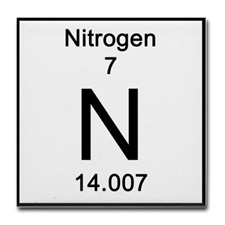
25.
What is the number of protons that the element in this image contain?
a)
14
b)
7
c)
15
d)
18
26.

The central region of an atom where its neutrons and protons are is its

a)

nucleus

b)

electron cloud

c)

core

d)

center

27.

An atom with atomic number 6 would have how many protons

a)

6

b)

12

c)

3

d)

cannot be determined

28.
Where are electrons of an atom found?
a)
Nucleus
b)
Electron Cloud
c)
Some are in the nucleus and some in the electron cloud.
d)
They are moving everywhere.
29.
Most of the mass in an atom is concentrated in the...
a)
electrons
b)
nucleus
c)
protons
d)
empty space
30.

What are the 3 subatomic particles that make-up the atom?

a)

protons, neutrons, and isotopes

b)

neutrons, isotopes, and electrons

c)

positives, negatives, and electrons

d)

protons, neutrons, and electrons

31.

What quantities vary between isotopes of an element?

a)

protons, electrons, and atomic mass

b)

protons, electrons, and atomic number

c)

neutrons and electrons

d)

neutrons and mass

32.

Which is true about the mass of subatomic particles

a)

electrons have very very little mass (basically none)

b)

neutron have no mass

c)

electrons have a mass of 1 amu

d)

protons have no mass

33.

Which is true about the mass of subatomic particles

a)

electrons have a mass of 1 amu

b)

neutron have no mass

c)

protons and neutrons each have a mass of 1 amu

d)

protons have no mass

34.
Particles in an atom that are neutral and have no charge are 
a)
negatrons 
b)
electrons 
c)
neutrons 
d)
protons 
35.
An atoms overall charge is 
a)
positive 
b)
depends on its mood 
c)
neutral 
d)
negative 
36.
An atom's mass number equals the number of...
a)
protons plus the number of electrons
b)
protons plus the number of neutrons
c)
protons
d)
neutrons
37.
Atoms have no electric charge because they...
a)
have an equal number of charged and non charged particles
b)
have neutrons in their nuclei
c)
have an equal number of electrons and protons
d)
have an equal number of neutrons and protons
38.
a)
2
b)
8
c)
3
d)
13
39.

Valence electrons are the number of

a)

protons in the atom

b)

electrons in the atom

c)

protons + neutrons in the nucleus

d)

electrons in the outside shell of the atom

40.

This could be the dot diagram of

a)

Mg

b)

Cl

c)

C

d)

O

41.

This is a correct dot diagram for neon (Ne)

a)

true

b)

false

42.

Which of these is incorrect?

a)
b)
43.
This could be the dot diagram of
a)
P
b)
Ar
c)
Na
d)
B
44.

This could be the dot diagram of an element with the atomic number

a)

8

b)

31

c)

19

d)

36

45.
This could be the dot diagram of 
a)
Ne
b)
Si
c)
Al
d)
Be
46.
Isotopes are atoms of the same element with different #’s of __________ & therefore different __________.
a)
n0 ;  atomic #’s
b)
p+ ; atomic #’s
c)
e- ; atomic masses
d)
n0 ; atomic masses
47.
How many neutrons does an atom of the isotope Neon-22 have?
a)
12
b)
10
c)
22
d)
20
48.
Four isotopes of lead include lead-204, lead-206, lead-207, and lead-208.  The average atomic mass of lead is 207.2.  Which isotope of lead is likely to be the most abundant.
a)
204
b)
206
c)
207
d)
208
49.
Two isotopes of carbon are carbon-12 and carbon-14.  These isotopes differ from one another by two protons.
a)
true
b)
false
50.
How many neutrons does a Carbon 13 atom have?
a)
6
b)
5
c)
7
d)
8
51.
How many neutrons does a Calcium 48 isotope have?
a)
16
b)
20
c)
28
d)
12
52.
How many neutrons does an Oxygen-19 isotope have?
a)
19
b)
8
c)
11
d)
10
53.
How many neutrons does a Flourine-14 isotope have?
a)
4
b)
5
c)
9
d)
14
54.
What is the name of the pictured isotope?
a)
Carbon-12
b)
Carbon-13
c)
Carbon-14
d)
Carbon-15
55.
Fluorine has an atomic number of 9. What can you conclude about an atom of fluorine from this fact?
a)
it has 9 protons
b)
it weighs 9 grams
c)
it has 9 electron shells
d)
it has a boiling point of 9 degree celsius
56.
If a sulfur atom has 16 protons, 16 electrons, and 16 neutrons, its atomic mass is:
a)
16
b)
32
c)
48
d)
64
57.
What is Bohr known for?
a)
atomos
b)
combining and separating atoms
c)
saying the atom is empty space
d)
saying electrons orbit on specific paths
58.

Which Scientist came up with the NUCLEAR model?

a)

Dalton & Democritus

b)

Rutherford

c)

Thompson& Milliken

d)

Heisenberg & De Broglie

59.
Who discovered the electron and when ?
a)
James Chadwick in 1897
b)
Rutherford in 1909
c)
JJ Thompson in 1897
d)
Marie Lavoisier in 1970
60.
Discovered elements changed as their protons increased. He rearranged the elements based on atomic number which fixed problems in the periodic table. 
a)
Johann Dobereiner
b)
John Newlands
c)
Dmitri Mendeleev
d)
Henry Moseley
61.

Which Scientist developed the solid sphere model of the atom?

a)

Bohr

b)

Dalton

c)

Democritus

d)

Moseley

62.

Which scientist arranged the elements on the periodic table by atomic mass?

a)

Mendeleev

b)

Moseley

c)

Bohr

d)

Schrodinger

63.

The attractive force that hold an atom together is the force between

a)

positive nucleus and negative electron cloud

b)

negative nucleus and positive electron cloud

c)

between negative electrons

d)

between positive protons

64.

The repulsive force in an atom is the force between

a)

the protons

b)

the neutrons

c)

the nucleus and the electron cloud

d)

the teenager chores

65.

A repulsive force in an atom is the force between

a)

the positive nucleus and the negative electron cloud

b)

the neutrons

c)

the electrons

d)

the magnetic force of north and south