wayground logo

Free Printable Worksheets

NEW

Font size

S
M
L
XL
Worksheets

Unit 7 Cell Reproduction Review

Total questions: 55

Worksheet time: 1hrs 3mins

Name
Class
Date
1.
What do we call the whole process of eukaryotic cell reproduction?
a)
Binary Fission
b)
Mitosis
c)
Cytokinesis
d)
Cell Cycle
2.

An organism that has been reproduced by asexual means receives ______________ of its chromosomes from its one parent.

a)

3

b)

25%

c)

50%

d)

100%

3.
During which phase of the cell cycle does the cell spend the most time?
a)
Mitosis
b)
Cytokinesis
c)
Interphase
4.
During which part of the cell cycle does the cell divide?
a)
Interphase
b)
Mitosis
c)
S phase
5.
During which part of the cell cycle is DNA copied?
a)
Mitosis
b)
Cytokinesis
c)
S phase
6.
During which parts of the cell cycle does the cell grow?
a)
G1 and G2
b)
G1 and S
c)
M phase and cytokinesis
7.
What is the purpose of the cell cycle?
a)
To create new daughter cells
b)
To prevent cancer from developing
c)
To help the body fight viruses and bacteria
8.
Put the following actions in order: DNA replicates, cell grows, cell divides, cell prepares for mitosis. 
a)
DNA replicates, cell grows, cell prepares for mitosis, cell divides
b)
cell grows, cell prepares for mitosis, DNA replicates, cell divides
c)
cell grows, DNA replicates, cell prepares for mitosis, cell divides
d)
DNA replicates, cell prepares for mitosis, cell grows, cell divides
9.
Mitosis and Meiosis are processes involved in cellular reproduction. Which of the following describes an event that occurs in/from mitosis but NOT meiosis? 
a)
Two stages of cell division
b)
Replication of cellular genetic material
c)
Daughter cells that are identical to the parent cell 
d)
Crossing over to increase genetic recombination
10.
Meiosis and mitosis are both involved in the processes of cell growth and division. They have similarities but also have differences. How is meiosis different from mitosis?
a)
Meiosis produces four identical daughter cells and mitosis produces two daughter cells. 
b)
Meiosis produces two identical daughter cells and mitosis produces four daughter cells.
c)
Meiosis produces cells with half the original chromosome number and mitosis produces cells with the original chromosome number.
d)
Meiosis produces nuclei that are genetically identical and mitosis produces nuclei that are genetically different.
11.
Imagine that sex cells divided by mitosis instead of meiosis. What would then be the result of fertilization of an ovum by a sperm cell? 
a)
Fertilization would result in the formation of two identical cells.
b)
The new individual would be identical to only one of the parents
c)
Fertilization would cause crossing-over and recombination of genes
d)
Cells of the new individual would have double the necessary number of chromosomes.
12.
Meiosis makes sperm and egg cells. In humans, sperm and egg cells each have _____ chromosomes. Therefore a fertilized human egg cell (sperm and egg cell combined) would create a cell with _____ chromosomes.
a)
23, 46
b)
46, 23
c)
2, 4
d)
50, 100
13.
Fruit fly body cells have 8 chromosomes. After mitosis, you would expect a resulting fruit fly daughter cell to have ...
a)
16 chromosomes.
b)
46 chromosomes.
c)
8 chromosomes.
d)
4 chromosomes.
14.
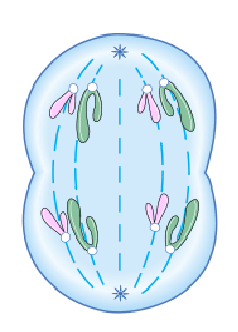
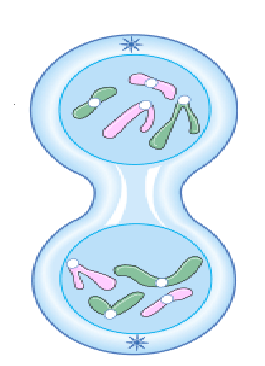
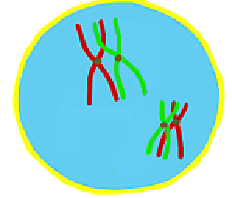
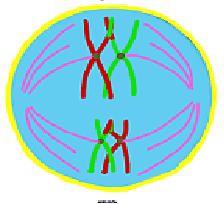
The process on the left is:
The process on the right is:
a)
Left: meiosis
Right: meiosis
b)
Left: meiosis
Right: cloning
c)
Left: mitosis
Right: meiosis
d)
Left: mitosis
Right: mitosis
15.
How are sexual reproduction and asexual reproduction different from each other?
a)
 sexual reproduction requires two parents and asexual reproduction requires only one parent
b)
asexual reproduction requires two parents and sexual reproduction requires only one parent
c)
mutation rates are lower in sexual reproduction than in asexual reproduction
d)
asexual reproduction occurs only in multicellular organisms
16.
Why would it be important to replicate DNA before a cell divides in mitosis or meiosis?
a)
In order for genetic information to be transferred into daughter cells.
b)
In order for the cell to be able to increase in size.
c)
In order for the DNA to be contained in the nucleus.
d)
In order for the cell to re-order the DNA sequencing in the new cells.
17.
Unlike mitosis, meiosis in male mammals results in the formation of
a)
one haploid gamete
b)
three diploid gametes
c)
four diploid gametes
d)
four haploid gametes
18.
Why do we need meiosis?
a)
To double the number of chromosomes going into sex cells
b)
To halve the number of chromosomes going into sex cells
c)
To triple the number of chromosomes going into sex cells
d)
To not change the number of chromosomes going into sex cells
19.
When an area of a chromatid is exchanged with the matching area on a chromatid of its homologous chromosome, _________________ occurs
a)
crossing over
b)
mutagenesis
c)
hybridization
d)
fertilization
20.
The chromosomes that pair up during meiosis, are called __________ chromosomes.  
a)
homozygous 
b)
asexual
c)
homologous
d)
genes
21.
How are your chromosomes inherited?
a)
most of your chromosomes from your mother
b)
most of your chromosomes from your father
c)
a random number of chromosomes from each parent
d)
half your chromosomes from your mother and half from your father.
22.
Name the growth phase of the cell cycle for both Mitosis and Meiosis.
a)
metaphase
b)
telophase
c)
interphase
d)
anaophase
23.
The stages of the cell cycle are shown in random order below.  Starting with prophase, sequence the diagrams to show the stages of mitosis.  
                       
a)
5-3-1-2-4
b)
3-1-4-2-5
c)
4-1-2-5-3
d)
2-3-1-5-4
24.
A daughter cell that resulted from a mitotic division has 24 chromosomes.  How many chromosomes did the parent cell have?   
a)
6
b)
12
c)
24
d)
48
25.
Any change in the sequence of DNA is...
a)
transgenic shift
b)
Single Genotype
c)
Monohybrid Trait
d)
Mutation
26.

Which organelle is DNA usually found in?

a)

cell membrane

b)

vacuole

c)

chloroplast

d)

nucleus

27.

ATT-TGA-GCC- Original

ATT-GAG-CC - Mutated

The example above is an example of a

a)

Insertion- Frameshift

b)

Deletion- Substitution

c)

Deletion -Frameshift

d)

All of the above

28.

Original DNA: CAT GAT CCA

New DNA: CAT TGA TCC A

What mutation occurred?

a)

deletion

b)

substitution

c)

tranverse

d)

insertion

29.
Which of the following would result in a frameshift mutation?
a)
Insertions only
b)
Substitution only
c)
Deletion only
d)
Insertions and Deletions
30.

Why are insertion and deletion mutations so harmful?

a)

They change all of the codons from the mutation on down the line, which changes the amino acid sequence

b)

They insert things that an organism doesn't need.

c)

They often delete things that organisms need.

d)

Insertion and deletions are not any more harmful than substitution mutations.

31.
Which process and type of resulting cells are represented?
a)
mitosis, gametes
b)
mitosis, body cells
c)
meiosis, gametes
d)
meiosis, body cells
32.
A male shark has 40 chromosomes in each of its sex cells. How many would be present in its body cells?
a)
20
b)
40
c)
80
d)
160
33.
Which letter(s) in the diagram correspond to cells that are haploid? 
a)
A
b)
B
c)
C
d)
A and B
34.
Females have ____ and males have _____ chromosomes.
a)
XX, XY
b)
XY, XX
c)
XX, XX
d)
XY, XY
35.
In which type of cells will mitosis occur?
a)
egg cells
b)
sperm cells
c)
jail cells
d)
Body cells except the sperm and egg cells
36.
If you have a gap in your skin (such as a cut), what will happen?
a)
The cells next to it will divide faster until the hole is covered up, and then go back to normal mitosis speed.
b)
The cells next to it will stretch to cover the hole.
c)
The cells next to it will send a signal to the brain to stop mitosis.
d)
The cells of the brain will send repair cells to fix the problem. 
37.
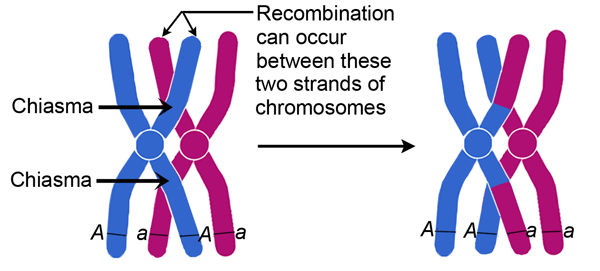
This image shows chromosomes during Prophase 1. Which of the following correctly describes the process shown?
a)
segregation of sister chromatids
b)
condensation and segregation of alleles
c)
mutationin which the DNA content of the gene is altered
d)
crossing - over in which alleles are exchanged
38.

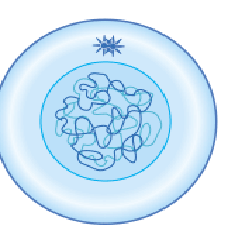
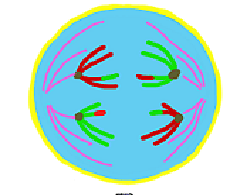
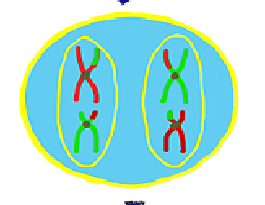
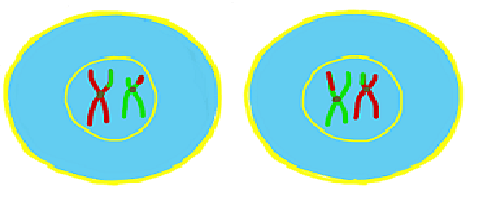
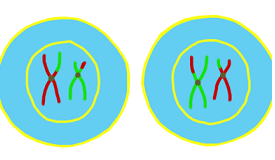
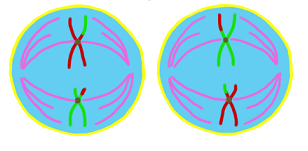
What phase am I?

a)

Interphase

b)

Prophase

c)

Metaphase

d)

Anaphase

e)

Telophase

39.

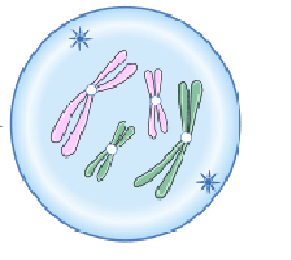
What phase am I?

a)

Interphase

b)

Prophase

c)

Metaphase

d)

Anaphase

e)

Telophase

40.

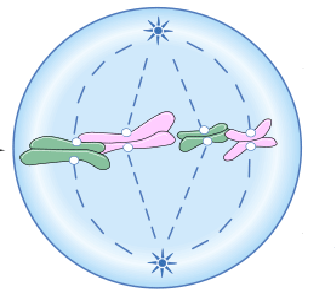
What phase am I?

a)

Interphase

b)

Prophase

c)

Metaphase

d)

Anaphase

e)

Telophase

41.

What phase am I?

a)

Interphase

b)

Prophase

c)

Metaphase

d)

Anaphase

e)

Telophase

42.

What phase am I?

a)

Interphase

b)

Prophase

c)

Metaphase

d)

Anaphase

e)

Telophase

43.

When the cells completely split it is call what?

a)

Telophase

b)

Cytokinesis

c)

Anaphase

44.

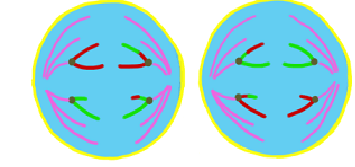
what phase am I?

a)

Prophase 1

b)

Metaphase 1

c)

Anaphase 1

d)

Telophase 1

e)

Cytokinesis

45.

what phase am I?

a)

Prophase 1

b)

Metaphase 1

c)

Anaphase 1

d)

Telophase 1

e)

Cytokinesis

46.

what phase am I?

a)

Prophase 1

b)

Metaphase 1

c)

Anaphase 1

d)

Telophase 1

e)

Cytokinesis

47.

what phase am I?

a)

Prophase 1

b)

Metaphase 1

c)

Anaphase 1

d)

Telophase 1

e)

Cytokinesis

48.

what phase am I?

a)

Prophase 1

b)

Metaphase 1

c)

Anaphase 1

d)

Telophase 1

e)

Cytokinesis

49.

At the end of Meiosis 1 the cytokinesis creates what?

a)

2 diploid cells

b)

2 haploid cells

c)

4 diploid cells

d)

4 haploid cells

50.

At the end of Meiosis 2 the cytokinesis creates what?

a)

2 diploid cells

b)

2 haploid cells

c)

4 diploid cells

d)

4 haploid cells

51.

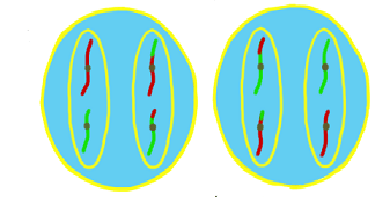
what phase am I?

a)

Prophase II

b)

Metaphase II

c)

Anaphase II

d)

Telophase II

e)

Cytokinesis

52.

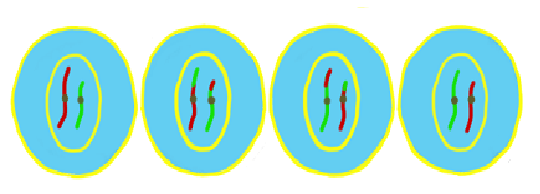
what phase am I?

a)

Prophase II

b)

Metaphase II

c)

Anaphase II

d)

Telophase II

e)

Cytokinesis

53.

what phase am I?

a)

Prophase II

b)

Metaphase II

c)

Anaphase II

d)

Telophase II

e)

Cytokinesis

54.

what phase am I?

a)

Prophase II

b)

Metaphase II

c)

Anaphase II

d)

Telophase II

e)

Cytokinesis

55.

what phase am I?

a)

Prophase II

b)

Metaphase II

c)

Anaphase II

d)

Telophase II

e)

Cytokinesis