
 Worksheets
Unit 2 - Structure of the Atom Practice
Total questions: 88
Worksheet time: 22hrs 0mins
The three subatomic particles are
proton, neutron, electron
proton, nucleus, electron
protein, neutron, electricity
proton, neutral, electives
99.9% of the atom's mass is found where?
nucleus
protons
electron cloud
neutrons
Electrons are
negative
positive
neutral
Protons are
negative
positive
neutral
Neutrons are
negative
positive
neutral
When an atom contains more electrons than protons, it is
a neutral atom with no charge
an ion and negatively charged
an ion and positively charged
an isotope and has more mass
When an atom contains more neutrons than another atom, it is
a neutral atom with no charge
an ion and negatively charged
an ion and positively charged
an isotope and has more mass
The nucleus is ____________ charged.
positively
negatively
neutral
The area around the nucleus of an atom where the atom's electrons are most likely to be found is called
electron cloud
quark
electron
nucleus
If a carbon atom has six protons and has a mass of 13 amu, how many neutrons are in that carbon atom?
5
6
7
8
If a neutral atom has 8 protons, how many electrons does it have?
7
8
9
10
A chemical symbol represents the _________ of an element.
name
structure
reaction
type
Atoms of the same element with different numbers of neutrons are called
metalloids
transition elements
radioactive
isotopes
A certain atom has 26 protons, 26 electrons, and 30 neutrons. What is its mass number?
26
30
52
56

What is 'E' pointing to?
electron cloud
electron
nucleus
proton
neutron


Which is the best definition of an atom?
The smallest unit of a substance that maintains its properties.
The smallest unit of an element that maintains its properties.
A substance that cannot be broken down in to simpler substances.
Any sample that has definite chemical and physical properties.
Which statement about the atomic nucleus is most correct?
The nucleus is made of protons and neutrons and has a negative charge.
The nucleus is made of protons and neutrons and has a positive charge.
The nucleus is made of electrons and has a positive charge.
The nucleus is made of electrons and has a negative charge.
The [electric] charge of a proton is
-2
0
+1
-1
The [electric] charge of a electron is
-1
+1
+2
0
Atoms [that are neutral] are said to have no electric [+ or -] charge because they:
have an equal number of charged and non-charged particles.
have neutrons in their nuclei.
have an equal number of electrons and protons.
have an equal number of neutrons and protons.
Which atomic particles have approximately the same mass [atomic mass unit, AMU]?
protons and neutrons
protons and electrons
neutrons and electrons
proton, neutron and electron
What information can you get from the atomic number of an element?
The number of protons.
The number of neutrons.
the number of particles in the nucleus.
the number of electrons only.
What information can you get from the atomic mass of an element?
The number of protons only.
The number of neutrons only.
The number of particles in the nucleus.
The number of electrons only.
The element Lithium (Li) has 3 protons, how many electrons will a stable non-ionized [no charge] atom have?
5
2
3
9
The element Mg-28 [magnesium-28] has an atomic mass of 28 AMU [atomic mass units]. How many of each subatomic partice does it have?
protons= 12, neutrons= 16, electrons= 12
protons= 12, neutrons= 28, electrons= 16
protons= 16, neutrons= 28, electrons= 16
protons= 16, neutrons= 12, electrons= 16

The number "18" in the periodic table square shows:
atomic mass.
atomic number.
elemental name.
elemental symbol.

The letters "Ar" in the periodic table square shows:
atomic number.
atomic mass.
elemental symbol.
elemental name.
The word "Argon" in the periodic table square shows:
elemental name.
elemental symbol.
atomic number.
atomic mass.

The number "39.948" in the periodic table square shows:
elemental name.
atomic number.
atomic mass.
elemental symbol.
What is the atomic mass of an atom with 16 protons, 16 electrons, and 18 neutrons?
34 AMU
18 AMU
16 AMU
2 AMU

What element is represented by this Bohr model of an atom?
Sulfur
Uranium
Argon
Fluorine

Because atoms are neutral, each positive charge is
the same as a neutral charge.
balanced by a negative charge.
the same as no charge.
balanced by a neutral charge.

If the atomic mass of an element is 32 and the atomic # is 16, then
the number of neutrons is also 16.
the element most likely has isotopes.
the number of electrons is also 16.
the number of protons is also 32.

Every neutral atom has the same number of protons and electrons, however
they may not have the same # of neutrons.
they cannot combine with other atoms.
they cannot form isotopes.
they may also have the same atomic mass.

What is the atomic number of chlorine?
35
18
7
17

How many protons are there in an atom of aluminium?
27
13
14
17

What is the charge of an electron?
Positive
Negative
Neutral
Variable
Which subatomic particle determines the identity of an element?
Electron
Proton
Neutron
Quark
In the periodic table, what does the atomic number represent?
Number of protons
Number of neutrons
Number of electrons
Atomic mass
Knowledge Check:
Why does Sodium become a +1 charge?
Sodium gives away 1 e-, so it now has 1 less negative (-) charge.
Sodium accepts 1 e-, so it now has 1 more negative (-) charge.

Sodium (Na) has 1 electron (e-) in its outer shell (orbital). How can it make a full outer shell? (HINT: Think of which option would be "easier" for the atom.)
Giving away or donating the outer electron.
Taking on or accepting 7 more electrons.
What is a positive ion called?
anion
cation
isotope
covalent
What is a negative ion called?
anion
cation
covalent
isotope
How many electrons would a Nitrogen ion gain/lose? If it has 5 valence electrons.
lose 5
gain 5
lose 3
gain 3
How many electrons would a Calcium ion gain/lose? If it has 2 valence electrons.
lose 1
gain 1
lose 2
gain 2
If an atom loses electrons, the charge will be positive.
true
false
A Bromine ion gains 1 electron, which of the following is the correct symbol for a Bromine ion?
Br-1
Br+1
Br+7
Br-7
If an element has 3 valence electrons, what charge will likely form on its ion ?
+3
+5
-3
-5
Oxygen has 6 valence electron. It will have a charge of _______.
+1
-1
+2
-2
Anions are nonmetals that form ____________ ions by __________ electrons.
negative, losing
negative, gaining
positive, gaining
positive, losing
Cations are metals that form ____________ ions by __________ electrons.
negative, losing
negative, gaining
positive, gaining
positive, losing
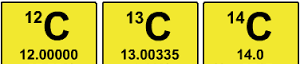
Isotopes are atoms of the same element with different #’s of __________ & therefore different __________.
neutrons ; atomic numbers
protons ; atomic numbers
electrons ; mass numbers
neutrons ; mass number
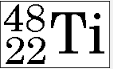

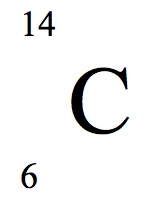
The photo above shows the isotopic notation for which isotope?
Carbon 12
Carbon 13
Carbon 14
Carbon 15


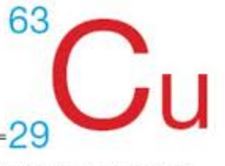


What type of atom is this?
Neutral atom
Cation
Anion
Isotope

