
 Worksheets
Economics Unit 1 Review
Total questions: 130
Worksheet time: 1hrs 12mins
While the wants and needs of consumers are unlimited, productive resources are limited, forcing consumers and producers to make choices. This concept is known as
Borrowing
Surplus
Scarcity
budgeting
In economics, the term “scarcity” is best illustrated by which of the following situations?
Producers lack the productive resources needed to produce goods and services.
Consumers lack the money needed to buy goods and services.
Entrepreneurs lack the customers needed to earn a profit.
Laborers lack the skills needed to earn a promotion.
What are the factors of production?
Land, labor, capital, entrepreneurship
Land, needs, wants, capitals
Rent, wages, interest, profit
Land, labor, scarcity, entrepreneurship
In the production of loaves of bread, which best represents the factor of capital?
The flour used in the dough
The retailer who sells the bread
The oven used to bake the bread
The worker who kneaded the dough
George decides to go back to school to earn an advanced degree. Which productive resource is most directly affected by George’s decision?
Entrepreneurship
Human capital
Natural resources
Physical capital
People’s education, skills/abilities, health, and motivation are all part of _________ capital.
Physical
Natural
Financial
Human
Which topic would a macroeconomist most likely study?
Supply and demand
Production costs
Inflation
Labor markets
Microeconomics focuses on
the economic impact of implementing fiscal and monetary policy.
the big picture, looking at the economy as a whole.
international trade and finance.
small economic units, such as individuals, firms, and markets.
Which description below best describes the relationship between opportunity costs and trade-offs?
Trade-offs are the opposite of opportunity cost.
Trade-offs decrease the opportunity cost of any decision.
Opportunity costs occur when trade-offs are made.
The opportunity costs of and trade-off are constant.
Imagine you have decided to buy a movie ticket for $15. Which of the following best describes the opportunity cost of your decision?
The $5 you pay for popcorn
The time spent watching previews before the movie
The money and time you spend on the movie
The time you spent deciding which movie you should watch
When one choice is made over another, the next best use of time, money, and/or resources is called a/an
rational decision
opportunity cost
favorable outcome
efficient outcome
In order to classify a decision as rational,
the decision is lawful.
the marginal cost outweighs the marginal benefit.
the producer makes a profit.
the marginal benefit outweighs the marginal cost.
Which of the following best describes marginal cost?
The additional expenses or effort you expend when performing one more unit of action
The additional benefit you receive from performing one more unit of action
The amount you pay for a good or service
When consumers wants and needs exceed scarce productive resources
Which of the following best describes marginal benefit?
The benefit you get when you sell a good or service
The additional expenses or effort you expend when performing on more unit of action
When scarce productive resources meet the needs of consumers
The additional benefit you receive from performing one more unit of action
Which of the following is the best example of an implicit cost?
The price of a movie ticket.
The homework you could have completed instead of going to see a movie
The cost of fuel to drive to the movie theater
The cost of popcorn and a drink.
Freedom of choice and competition are most commonly associated with which type of economic system?
Command
Market
Traditional
Communist
In a command economy, the role of the government is to
Make major economic decisions
Promote competition
Encourage entrepreneurs
Meet the needs and wants of consumers
Which of the following is a common role of government in a mixed economy?
Guarantee that all incomes are equal
Prevent regulators from interfering with markets
Provide public goods
Set production quotas
Which of the following lists the three basic economic questions?
What to produce, How to produce, Why to produce What to produce,
When to produce, For whom to produce When to produce
How to produce, For whom to produce What to produce
How to produce, For whom to produce
The way in which a society answers the three basic economic questions determines its:
Market Structure
Political system
Marketing system
Economic system
Private ownership and voluntary exchange are characteristics of which type of economic system?
Command
Traditional
Market
Planned
Which term below is a command economy most commonly associated with?
Capitalism
Government regulation
Competition
Private property
The concept of the invisible hand refers to which of the following?
Congress passing a new law
Government regulation
Individuals seeking their own self-interests
The Federal Reserve adjusting interest rates
A mixed economy allocates resources through
demand, but not supply.
by bartering.
government directives only.
supply, demand, and government intervention.
Which of the following is a common role of government in a market economy?
Provide public goods
Own the factors of production
Prevent competition
Encourage central planning
How are public goods and public assistance programs paid for in the United States?
Profits earned by corporations
Tax revenue collected from consumers and producers
Charitable donations
Income earned from the sale of stocks
Congress moved to pass a new antitrust (anti-monopoly) law. This new law is an example of which role of government?
Discouraging negative externalities
Promoting competition in the market
Protecting the environment
Preventing labor unions
Congress passed a new law that taxes car producers based on the amount of pollutants their factories release into the atmosphere. This new law is an example of which role of government?
Discouraging negative externalities
Promoting competition in the market
Protecting producers
Preventing labor unions
A negative externality results in a ________ for a different person other than the original decision-maker, while a positive externality results in a ________ for a different person other than the original decision-maker.
loss, cost
cost, benefit
gain, benefit
benefit, cost
Of the choices below, which role would the United States government least likely play?
A central planner determining what products to make
A regulator preserving competition in the market
A consumer of goods and services
A protector from negative externalities
Investing in technology and physical capital is most related to
Opportunity costs
Economic freedom
Supply and demand
Economic growth
Which of the following is an example of LAND.
Coal
Office Building

House: Goods or Service?
Goods
Service
Things purchased by consumers
goods
consumer
producer
supply
A person who provides a good or service
producer
need
want
consumer
A person who purchases a good or service
consumer
taxes
supply
good
Which of the following is not a good?
Clothes
Food
Dog Walker
Toys
A _____________ is a person who starts a business.
Teacher
Entrepreneur
Actor
Student
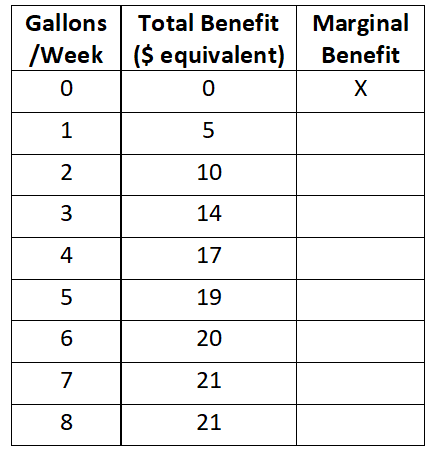
The table shows your total benefits from consuming different quantities of gas each week.
What is the marginal benefit of one more gallon of gas, when you currently have 0 gallons?
1
2
3
4
5
The table shows your total benefits from consuming different quantities of gas each week.
What is the marginal benefit of one more gallon of gas, when you currently have 1 gallon?
1
2
3
4
5
The table shows your total benefits from consuming different quantities of gas each week.
What is the marginal benefit of one more gallon of gas, when you currently have 2 gallons?
1
2
3
4
5
The table shows your total benefits from consuming different quantities of gas each week.
What is the marginal benefit of one more gallon of gas, when you currently have 3 gallons?
1
2
3
4
5
The table shows your total benefits from consuming different quantities of gas each week.
What is the marginal benefit of one more gallon of gas, when you currently have 4 gallons?
1
2
3
4
5
The table shows your total benefits from consuming different quantities of gas each week.
The price of gasoline is $2.50/gallon.
Given this information, the optimal number of gallons of gas to consume each week will be:
2
3
4
5
6
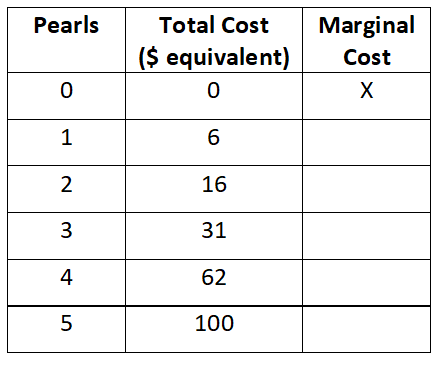
A deep-sea diver can sell each pearl he retrieves for $20 in the seaside market.
However, each time he dives in search of a pearl, it is harder to find than the one he found before. The table below describes the cost (in time and effort) of retrieving each successive pearl.
At what number of pearls harvested should the diver stop diving for more pearls?
1
2
3
4
5
An opportunity cost is entailed in which of the following situations?
I. A student decides to attend college full-time.
II. A family uses its $20,000 savings to purchase an automobile.
III. A farmer decides to grow more wheat and less corn.
I only
II only
III only
I and III only
I, II, and III
Katia is an accountant in a government-run business where she was placed after graduation.
Command
Traditional
Free Market
Mixed
Ted is working towards his dream of becoming a lawyer by working at a law firm as a legal clerk.
Free Market
Traditional
Command
Sarah would like to become a doctor when she grows up. Unfortunately, she lives in a country where her job will be decided for her by the government.
Traditional
Free Market
Mixed
Command
Sally works in a private company that has to follow government rules for public safety.
Free Market
Command
Mixed
Traditional
Who or what answers the basic economic questions in a mixed economy?
Individuals and Businesses
Government
Custom
Individuals, Businesses, and Government
What type of economy do most countries in the world have?
Market economy
Command economy
Traditional economy
Mixed economy
Which of the following is NOT one of the three basic questions of economics when looking at economic systems?
What goods and services will be produced?
What is the price of the goods?
Who is responsible for producing goods and services?
How will goods and services be distributed to customers?
If my government is selling me bread for $5 a loaf, and I have no choice but to buy that type of bread, I live in a _____ economy.
Traditional
Market
Command
Mixed
Nike and Under Armour sell similar products. This leads to a decrease in price and an increase in quality.
Free Market
Command
Traditional

Driving a car on crowded highway produces
a negative externality.
a positive externality.

Apartment dwellers who buy fire alarms or fire extinguishers generate a
negative externality.
positive externality.
What is the free rider problem?
scarcity even when you pay for a good
Reaping all the benefits without contributing
Common goods that don't have a price
none of the above
What statement best explains why the government provides goods and services to its citizens?
To provide benefits to small groups of people in certain areas of the country.
To provide goods and services that would not be available if individuals had to provide them.
To compete with businesses in the private sector.
To make a large profit by providing certain goods and services to it's citizens.
The government pays for public goods and services through —
donations from wealthy politicians
donations from foreign nations
revenue from sales and income taxes
revenue from the lottery
What is one reason that local law enforcement is considered a public good?
Everyone in the community benefits from it.
Nobody in the community has to pay for it.
Private firms make a profit from producing it.
Individual citizens pay directly for it.
Which of the following is an example of a positive externality resulting from an outdoor band concert?
An elderly woman in her apartment hears a song that she liked as a child.
A pair of endangered birds leave their nest in a nearby tree when the concert starts.
A pizza parlor closes early, because all of its customers are at the concert.
A traffic jam occurs as drivers hunt for parking spots near the concert.
Which of the following explains why a city fireworks display on the Fourth of July is provided as a public good?
Fireworks displays usually take place in a public area.
Fireworks are a scarce resource.
Nonpayers cannot be prevented from seeing the fireworks.
Each consumer pays a fee to see the fireworks.
The part of the economy that involves the transactions of the government.
Private sector
Free rider
Public sector
Externality
Someone who would not choose to pay for a certain good or service,but who would get the benefits of it anyway if it were provided as a public good.
Market failure
Externality
Public good
Free rider
The part of the economy that involves the transactions of individuals and businesses.
Public sector
Externality
Private sector
Public good
Is a situation in which the market, on its own, does not distribute resources efficiently.
Public good
Private sector
Externality
Market Failure
An Economic side effect of a good or service that generates benefits or costs to someone other than the person deciding how much to produce or consume.
Public good
Free rider
Externalities
Private sector
An example of a public good is...
Firefighters
police officers
parks
all of thee above
What does non-rival mean?
More than one person can use it
Only one person can use it
There are direct competitors for a product
None of the above
Excludable means:
Someone can deny access to a good
Everyone is able to access a good
Multiple people can use something at the same time
Only one person can use something at one time
Public goods are
rival and excludable
non-rival and non-excludable
rival and non-excludable
non-rival and excludable
TRUE or FALSE: We can have everything that we want because we have unlimited resources.
TRUE
FALSE
things purchased by consumers
goods
consumer
producer
supply
A person who provides a good or service
producer
need
want
consumer
A person who purchases a good or service
consumer
taxes
supply
good
It is the study of the nations economy as a whole.
Microeconomics
National economy
National output
Macroeconomics
Macroeconomis could be defined as ...
the part of economics concerned with large-scale or general economic factors and policies that affected millions of people.
is the study of what is likely to happen (tendencies) when individuals make choices in response to changes in incentives, prices, resources, and/or methods of production.
Microeconomics can be defined as ...
the part of economics concerned with large-scale or general economic factors, such as interest rates and national productivity.
the study of what is likely to happen (tendencies) when individuals make choices in response to changes in incentives, prices, resources, and/or methods of production.
WHAT ARE THE 4 FACTORS OF PRODUCTION?
Land, Capital, Need & Want
Land, Labor, Capital, Entrepreneurs
Water, Air, Food & Shelter
Land, Capital, Good & Service
_______________ IS KNOWN AS THE NATURAL RESOURCES USED TO PRODUCE GOODS AND SERVICES
Entrepreneurs
Capital
Labor
Land
_______________ IS KNOWN AS THE MANMADE RESOURCES USED TO PRODUCE GOODS AND SERVICES.
Entrepreneurs
Capital
Labor
Land

Which of the factors of production is this?
capital
entrepreneur
land
labor
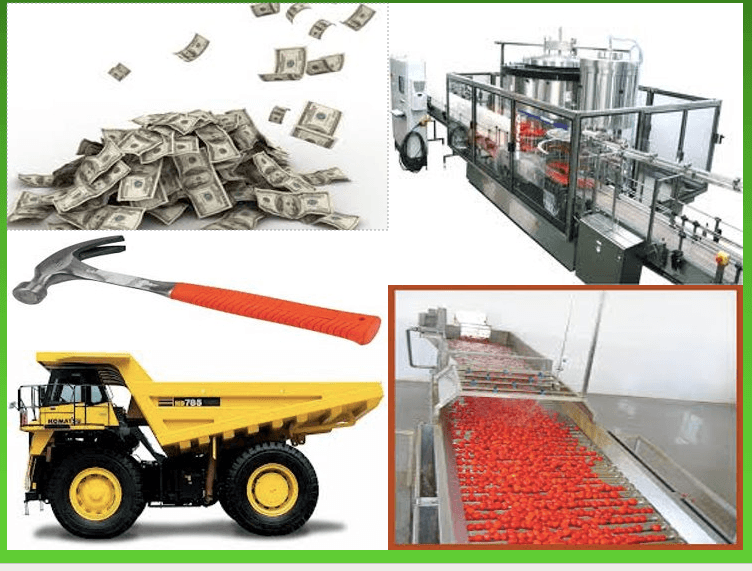
Which one of the factors of production is this?
capital
entrepreneur
land
labor
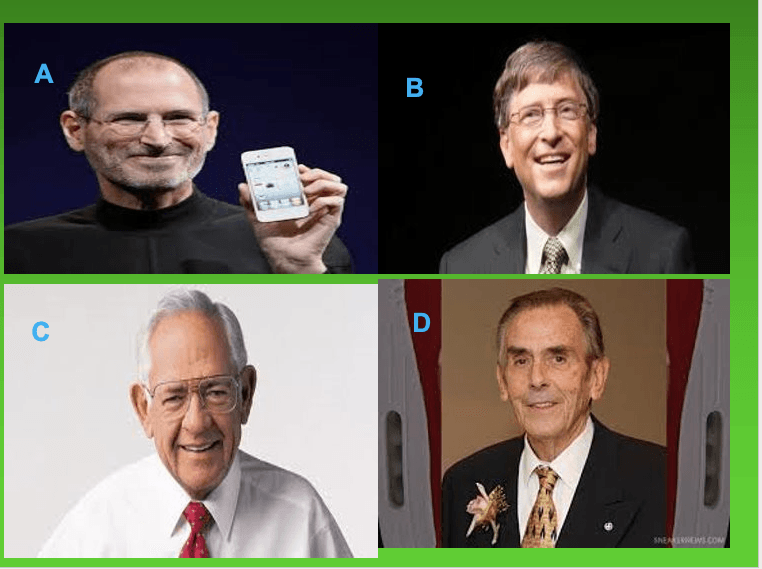
Steve Jobs the founder of Apple is holding up an I-phone. What is another name for someone who starts a business?
capital
entrepreneur
land
labor
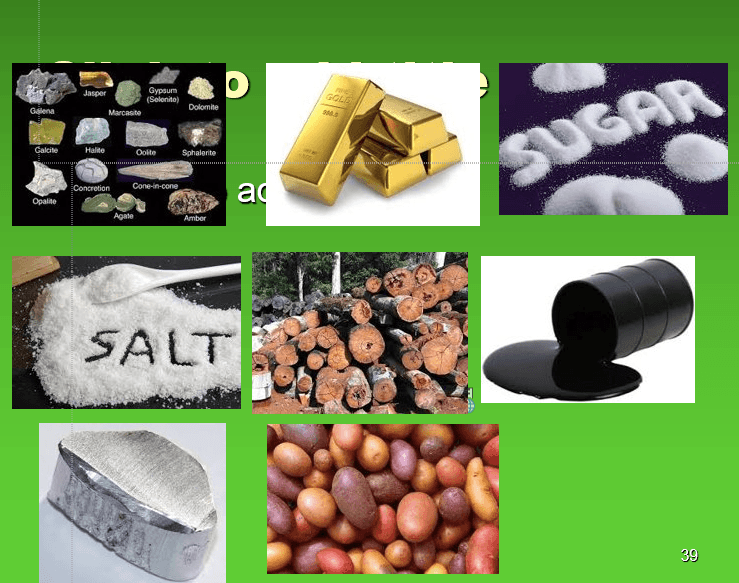
Which factor of production is this?
capital
entrepreneur
land
labor
In Economics, Trade-off and Opportunity Cost mean the same thing.
True!
False!
Because of scarcity, people are forced to make _________ about how to use resources.
Choices
Opportunities
Analyses
Investments
A Trade-off is
a purchase in a marketplace.
an alternative that we sacrifice when we make a decision.
any good or service a consumer needs.
a factor of production.
What is the most basic problem of economics?
scarcity
productivity
money
resources
Economics is the study of money and how to get rich.
True
False
Economics is the study of people and how they make decisions.
True
False
Every decision you make has a cost.
True
False
What name is given to the value of the next best alternative that you give up when you make a decision?
Trade-offs
Opportunity cost
Lost opportunities
Options
Juan came up with the following priority (in order) list of what he could do Friday after school.
1) Go to work (what he did)
2) Go to a football game
3) Go to a friend's house
4) Go home and sleep
What are the Trade-offs of Juan's decision to go to work?
Go to work
Go to a football game
Go to a friend's house
Go home and sleep
When you make a choice, all the options that you have are called...
Trade-offs
opportunity cost
lost opportunities
options
Opportunity cost can also be called the ____ of your decision.
Cost
Reward
Evaluation
Lost opportunity
Juan came up with the following prioritize (in order) list of what he could do Friday after school.
1) Go to work (what he did)
2) Go to a football game
3) Go to a friend's house
4) Go home and sleep
What is the opportunity cost of Juan's decision to go to work?
Go to work
Go to a football game
Go to a friend's house
Go home and sleep
The table shows your total benefits from consuming different quantities of gas each week.
What is the marginal benefit of one more gallon of gas, when you currently have 0 gallons?
(a)
The table shows your total benefits from consuming different quantities of gas each week.
What is the marginal benefit of one more gallon of gas, when you currently have 1 gallons?
(a)
The table shows your total benefits from consuming different quantities of gas each week.
What is the marginal benefit of one more gallon of gas, when you currently have 2 gallons?
(a)
The table shows your total benefits from consuming different quantities of gas each week.
What is the marginal benefit of one more gallon of gas, when you currently have 3 gallons?
(a)
The table shows your total benefits from consuming different quantities of gas each week.
What is the marginal benefit of one more gallon of gas, when you currently have 4 gallons?
(a)
The table shows your total benefits from consuming different quantities of gas each week.
The price of gasoline is $2.50/gallon.
Given this information, using the principle of Optimization at the Margin, the optimal number of gallons of gas to consume each week will be:
(a)
A deep-sea diver can sell each pearl he retrieves for $20 in the seaside market.
However, each time he dives in search of a pearl, it is harder to find than the one he found before. The table below describes the cost (in time and effort) of retrieving each successive pearl.
At what number of pearls harvested should the diver stop diving for more pearls?
(a)
Using cost-benefit analysis, a local government would decide to build a new bridge if
The additional tax paid by an individual resident is greater than the additional benefit of building the bridge for all residents.
The toll paid by an individual resident crossing the bridge is less than the resident’s benefit from crossing the bridge.
The total costs of building the bridge are less than the total benefits from building the bridge.
The total costs of building the bridge are greater than the total benefits from building the bridge.
Total costs are at a minimum and total benefits are at a maximum.
Assume a worker can either cut grass or wash windows in a given day. It takes 5 hours to mow a one-acre lawn and 2.5 hours to wash all the windows in a house. When a worker chooses to wash the windows of four houses in a neighborhood, what is the opportunity cost of this decision?
The pay the worker receives for washing the windows in the four houses
The pay the worker would receive for cutting one lawn
Cutting the grass at the same four houses
The pay the worker would have received from cutting the grass at two houses
The pay the worker would receive for cutting .25 lawns
I bougt a cup of Starbucks coffee for $1.50. I decided to have another cup. What was my cost?
My opportunity cost was $1.50
My Marginal Cost was $1.50
There was no marginal or opportunity cost
The additional amount of an individual gets from consuming another good or service
Marginal Utility
Opportuntity Costs
Negative Utility
Law of Diminishing Marginal Utility
As an individual consumes an additional good or servce, their satisfaction decreases
Marginal Utility
Law of Diminishing Marginal Utility
Utility
Negative Utility
Amount of personal satifisfaction or pleasure one gets from consuming a good or service
Utility
Marginal Utility
Marginal costs
Negative Utility
The additional benefit of the use/comsumption of an additonal good or service
Marginal benefit
Marginal cost
Utility

You made a good decision if:
Marginal cost is greater then marginal benefit
Marginal cost is less than marginal benefit
Marginal benefit is greater then marginal cost
Marginal benefit is less then marginal cost

Ava paid $10 for 14 pencil sharpeners and paid $2.00 for shipping. She sold them for $2 each. How much profit did Ava make when she sold all of the pencil sharpeners?
$16.00
$28.00
$10.00
$14.00

Donovan made a picnic table to sell for profit. He made a list about what he did:
*price paid for wood: $45
*price paid for nails: $5
*cost of paint: $10
*selling price: $100
What was Donovan's profit from selling the table?
$55
$60
$40
$50

