wayground logo

Free Printable Worksheets

Font size

S
M
L
XL
Worksheets

Chemistry Midterm Review

Total questions: 82

Worksheet time: 2hrs 27mins

Name
Class
Date
1.
What is length?
a)
the amount of matter in an object
b)
the amount of space an object takes up
c)
the distance between two points
d)
the amount of stuff in an object
2.
What is mass?
a)
the distance between two points
b)
the amount of matter (stuff) in an object
c)
the amount of space an object takes up
d)
the distance between three points
3.
What units do we use to measure length?
a)
meters (m)
b)
milliliters (mL)
c)
grams (g)
d)
cubic centimeters (cm3)
4.
What units do we use to measure mass?
a)
milliliters (mL)
b)
liters (L)
c)
centimeters (cm)
d)
grams (g)
5.
What is the length of the line?
a)
2.0 cm
b)
2.3 cm
c)
2.1 cm
d)
3.0 cm
6.
What is the volume of the liquid in this graduated cylinder?
a)
65ml
b)
65.5ml
c)
65.0ml
d)
64.7ml
7.
How many significant figures does the following number have: 0.002040
a)
6
b)
4
c)
3
d)
2
8.
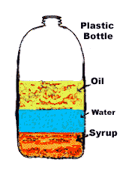
Which liquid is the least dense?
a)
oil
b)
water
c)
syrup 
d)
plastic bottle
9.
What is the formula for density?
a)
density = mass x volume
b)
density = mass / volume
c)
density = mass + volume
d)
density = mass - volume
10.
Frank has an eraser. It has a mass of 4g, and a volume of 2cm3. What is its density?
a)
8 g/cm3
b)
2 g/cm3
c)
1/2 g/cm3
d)
24 g/cm3
11.

Subatomic particles with a negative charge

a)

Electrons

b)

Neutrons

c)

Protons

d)

Quarks

12.
Subatomic particles with a positive charge
a)
neutrons
b)
atomic mass
c)
protons
d)
isotopes
13.
Subatomic particles that are neutral in charge
a)
Neutrons
b)
Protons
c)
Nucleus 
d)
Electrons
14.
The smallest particle of an element that shows all the properties of that element.
a)
Subatomic Particles
b)
Atom
c)
Quarks
d)
Gluons
15.
Where electrons are likely to be found as they travel around the nucleus
a)
Nucleus
b)
Electron Cloud
c)
Within a Proton
d)
Within a Neutron
16.
A tiny but very dense, positively charged portion of the atom that holds most of the atomic mass
a)
Electron Shells
b)
Orbitals
c)
Electron Cloud
d)
Nucleus
17.
Discovered the nucleus of the atom through the Gold Foil Experiment
a)
Rutherford
b)
Chadwick
c)
Thomson
d)
Dalton
18.
Discovered the electron within the atom
a)
Thomson
b)
Chadwick 
c)
Schrodinger & Heisenberg
d)
Dalton
19.

What subatomic particle has a negative charge and is found outside of the nucleus?

a)

Electron

b)

Proton

c)

Nucleus

d)

Neutron

20.

The majority of an atom's mass exists where?

a)

In the nucleus

b)

In the electron cloud

c)

In the space between the nucleus and the electrons

d)

In the neutrons

21.

An atomic number of 8 means the atom has ________ protons.

a)

7

b)

8

c)

16

d)

88

22.

The mass # tells us the mass of the atom. Which two subatomic particles make up the mass of the atom?

a)

protons and electrons

b)

neutrons and electrons

c)

Kyrontrons and Kytrons

d)

protons and neutrons

23.

What can you do to find the number of neutrons in an atom?

a)

It's the same as the atomic #.

b)

Ask Sierra!

c)

Subtract the atomic # (protons) from the mass # (protons and neutrons)

d)

Multiply the mass # (protons and neutrons) and the atomic # (protons)

24.

The number of electrons is usually the same as the number of protons.

a)

True

b)

False

c)

Only Abraham knows...

25.

What charge does an atom have when it GAINS electrons?

a)

Positive

b)

Negative

c)

Neutral

26.

Which of the following is a representation of an ion?

a)

Li

b)

Na-22

c)

O-2

27.

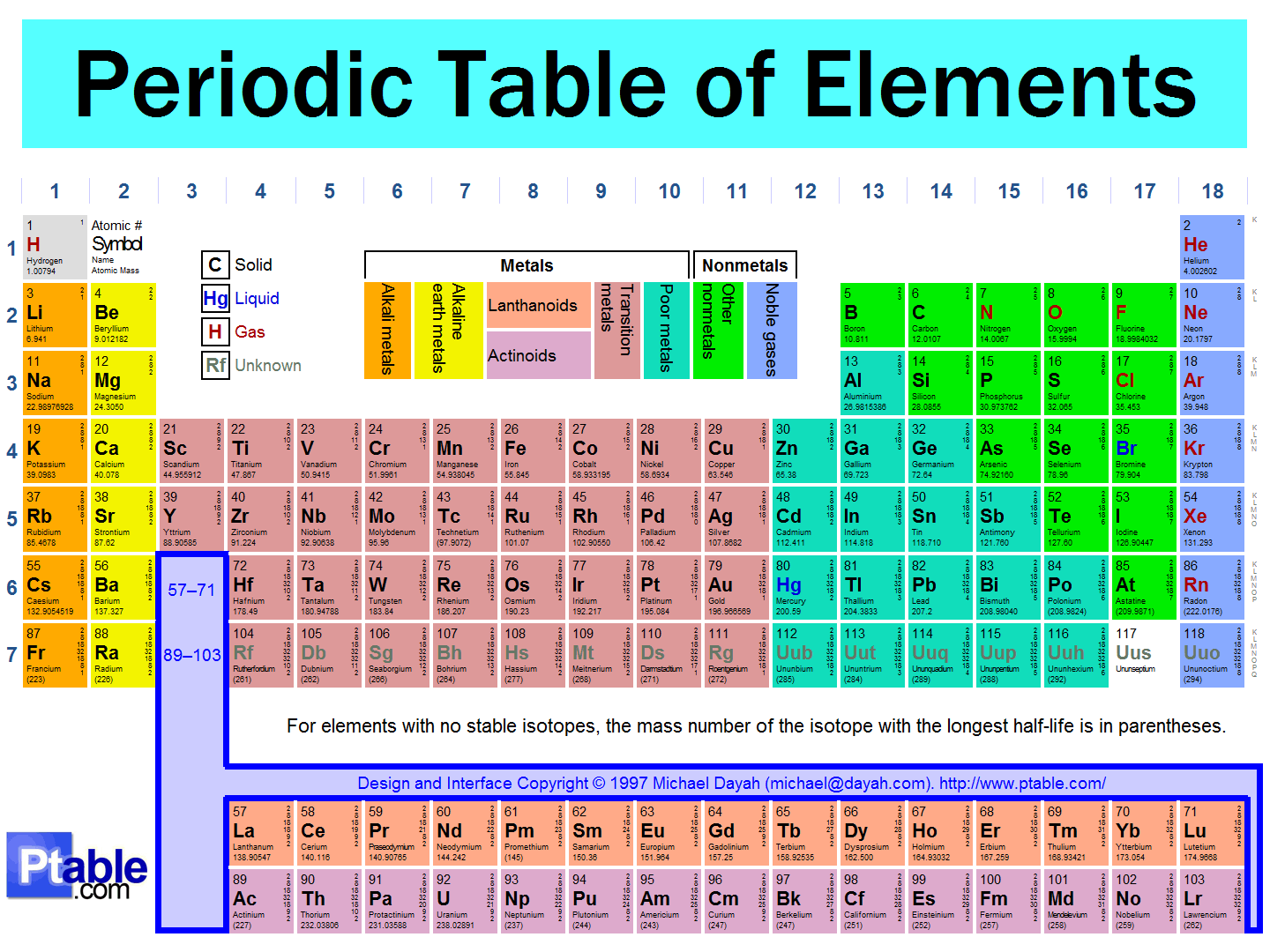
What is the mass number of bromine?

a)

35

b)

45

c)

80

d)

79.904

28.

How many neutrons does this bromine atom have?

a)

35

b)

45

c)

80

29.

What type of atom is this?

a)

Neutral atom

b)

Cation

c)

Anion

d)

Isotope

30.

How does an atom become an ion?

a)

A change in the number of electrons

b)

A change in the number of protons

c)

A change in the number of neutrons

31.

Is this an atom or ion?

a)

atom

b)

Cation

c)

Anion

32.

Different numbers of neutrons causes there to be __________________ of the same elements

a)

ions

b)

mixtures

c)

isotopes

d)

atoms

33.
What is the noble gas shorthand electron for Sulfur atom?
a)
[Ar] 3p4
b)
[He] 3s23p4
c)
[Ne] 3s23p4
d)
[Na] 3s23p4
34.
What is the electron configuration for this atom?
a)
1s22s22p6
b)
1s22s22p5
c)
1s22s22p3
d)
2s22p3
35.
What atom matches this electron configuration?
1s22s22p63s2
a)
Neon
b)
Magnesium
c)
Aluminum
d)
Potassium
36.
Which element is depicted from this orbital diagram
a)
Fluorine
b)
Neon
c)
Chlorine
d)
Argon
37.
What is the charge of an atom that has lost one electron?
a)
-1
b)
-2
c)
+1
d)
+2
38.
What is the charge of an atom that has gained one electron?
a)
-1
b)
-2
c)
+1
d)
+2
39.
How many electron can be found in a p orbital?
a)
2
b)
3
c)
4
d)
6
40.
A vertical column is called...
a)
group
b)
tower
c)
period
d)
crew
41.

Which of the following elements LOSES 1 electron in order to attain an octet?

a)

potassium

b)

calcium

c)

helium

d)

boron

e)

fluorine

42.

Which of the following elements LOSES 2 electrons in order to attain an octet?

a)

lithium

b)

magnesium

c)

helium

d)

sulfur

e)

bromine

43.
What determines the reactivity of an element?
a)
Size of its nucleus
b)
Number of total electrons
c)
Number of valence electrons
d)
Number of shells
44.
How do you determine the number of valence electrons an element has?
a)
Look at its period
b)
Look at its group
c)
Look at its atomic number
d)
Look at its atomic mass
45.
What group of elements is stable?
a)
halogens
b)
noble gases
c)
alkali metals
d)
alkali earth metals
46.

Electron in the outermost energy level are called?

a)

Valence Electron

b)

Valence Proton

c)

Valence Neutron

47.

The majority of the elements in the periodic table are

a)

Non-Metals

b)

Metals

c)

Metalloids

48.

Elements in the same _________ have the same number of valence electrons.

a)

Period

b)

Group

49.
Who arranged the first periodic table.
a)
Mosely
b)
Einstein
c)
Mendeleev
d)
Bohr
50.
What property did Menedleev use to organize his first periodic table?
a)
atomic number
b)
atomic mass
c)
alphabetical order
d)
chemical properties
51.

The period number tells you the number of

a)

protons

b)

energy levels

c)

valence electrons

52.
The atoms along the staircase are called 
a)
metals
b)
nonmetals
c)
metalloids
d)
noble gases
53.
Which of the following will have a larger radius than Zinc?
a)
Gallium
b)
Aluminum
c)
Magnesium
d)
Strontium
54.
Francium (Fr) has the lowest ionization energy in Group 1 because - 
a)
it has the smallest number of valence electrons
b)
it has the greatest atomic mass
c)
it has the greatest number of protons, so it attracts its electrons the strongest
d)
its 1 valence electron is very far from the nucleus, so little energy is needed to remove it
55.
As you move down a group, atomic radius increases because - 
a)
you add more and more neutrons
b)
you add more and more protons
c)
you add more and more shells (energy levels)
d)
you add more atomic mass
56.
Electronegativity is...
a)
the ability of an atom to attract/ accept electrons
b)
the ability of an atom to lose electrons
c)
the energy required to remove an electron from a specific atom
d)
how easy it is to make friends. 
57.
Which has the greater Electronegativity: 
N or C?
a)
C
b)
N
58.
The symbols W, X, Y, and Z represent four elements shown on the outline of a periodic table.
Which element has the highest electronegativity?

a)
W
b)
X
c)
Y
d)
Z
59.
Which of the following will have a larger radius than Zinc?
a)
Gallium
b)
Aluminum
c)
Magnesium
d)
Strontium
60.
Which of the following will have a higher electronegativity than arsenic (As)?
a)
Carbon (C)
b)
Neon (Ne)
c)
Antimony (Sb)
d)
Germanium (Ge)
61.
Which of the following will have a lower ionization energy than Scandium (Sc)?
a)
Helium (He)
b)
Titanium (Ti)
c)
Calcium (Ca)
d)
Magnesium (Mg)
62.

A bond between a metal and a nonmetal is called a(n)

a)

covalent bond

b)

ionic bond

c)

metallic bond

d)

transfer bond

63.

A bond between a nonmetal and a nonmetal is called a(n)

a)

covalent bond

b)

ionic bond

c)

metallic bond

d)

transfer bond

64.

What type of bond involves the sharing of electrons between atoms?

a)

covalent bond

b)

ionic bond

c)

metallic bond

d)

transfer bond

65.

Identify the following compound as ionic or covalent: MgO

a)

ionic

b)

covalent

66.

Identify the following compound as ionic or covalent: Na2SO4

a)

ionic

b)

covalent

67.

Identify the following compound as ionic or covalent: CF4

a)

ionic

b)

covalent

68.

When naming covalent compounds...

a)

You need roman numerals and no prefixes

b)

You do not need roman numerals or prefixes

c)

You need roman numerals and prefixes

d)

You do not need roman numerals but you do need prefixes

69.
What is a double bond?
a)
a bond between two atoms
b)
one pair of electrons shared between two atoms
c)
two pairs of electrons shared between two atoms
d)
James Bond's brother
70.
What is the charge on an Aluminum ion?
a)
3
b)
+3
c)
+2
d)
+1
71.
Name CCl4
a)
carbon carbon tetraiodide
b)
carbon tetrachloride
c)
monocarbon tetrachloride
d)
water
72.
What is the ionic compound formed between Ba and P?
a)
Ba2P3
b)
Ba3P2
c)
BaP
d)
Ba2P2
73.
Name the following compound: FeCl3
a)
iron chloride
b)
iron III chloride
c)
iron chlorate
d)
iron III chlorate
74.
What is the name of N2O3
a)
Nitrogen trioxide
b)
Dinitrogen oxide
c)
Dinitrogen trioxide
d)
Nitrogen oxide
75.
What is the chemical formula for Tetrasulfur pentoxide?
a)
SO
b)
S4O
c)
S4O5
d)
S5O4
76.
What is the name of C3Cl?
a)
Carbon octachloride
b)
Tricarbon octachloride
c)
Carbon trichloride
d)
Octacarbon trichloride
77.
What is the chemical formula for Nitrogen triiodide?
a)
NI
b)
N3I
c)
NI3
d)
None of these
78.

The name of FeCl₂ is

a)

iron chloride

b)

iron (II) chloride

c)

iron (I) chloride

d)

iron dichloride

79.

LiBr is called

a)

lithium bromine

b)

lithium (I) bromine

c)

lithium bromide

d)

lithuim (I) bromide

80.

Name the ionic compound SnSe2

a)

Tin diselenide

b)

Tin (IV) Selenide

c)

Tin selenide

d)

Tin (II) triselenide

81.

Which of the following combinations would need roman numerals in the name?

a)

potassium + fluorine

b)

beryllium + oxygen

c)

boron + iodine

d)

gold + oxygen

82.

What is the name of the compound Sc(OH)3?

a)

Scandium (III) hydroxide

b)

Scandium (I) hydroxide

c)

Scandium (II) hydroxide

d)

Scandium hydroxide