
 Worksheets
REVISION
Total questions: 144
Worksheet time: 2hrs 41mins
Which of the following is correct about the image of an object formed by a convex mirror?
Virtual , upright , diminished
Real , upright , diminished
Virtual , inverted , magnify
Real , inverted , magnify

Diagram 17 shows an object is placed in front of the plane mirror.
Which is the correct position of the image?
A
B
C
D
The depth of a swimming pool appears to be less than its actual depth. The light phenomenon which causes this is
Reflection
Interference
Diffraction
Refraction

Which property of light is illustrated in this image?
Light travels at 300,000,000m/s
Light travels in straight lines
Light is a wave
Light is a particle

What is the name given to a material which lets most of the light pass through it?
Opaque
Translucent
Clear
Transparent

What is the name given to the type of material which will not let any light pass through?
Opaque
Translucent
Clear
Transparent

What is the speed of light
300 m/s
300,000 m/s
300,000,000 m/s
300,000,000,000 m/s
Which of the following is non-luminous?


Which of the following is luminous?

Which of the following describes an image formed in a plane mirror?
Laterally inverted
Same size as object
Same distance behind mirror as object is in front
Enlarged
Inverted

Which letter is the normal line?
a
b
c
d
e

At what angle will the reflected ray strike the second mirror?
30
45
60
90
Which letter is the reflected ray?
a
b
c
d
e

What is the angle of incidence?
10°
30°
60°
80°

What is the angle of incidence?
10°
30°
60°
80°


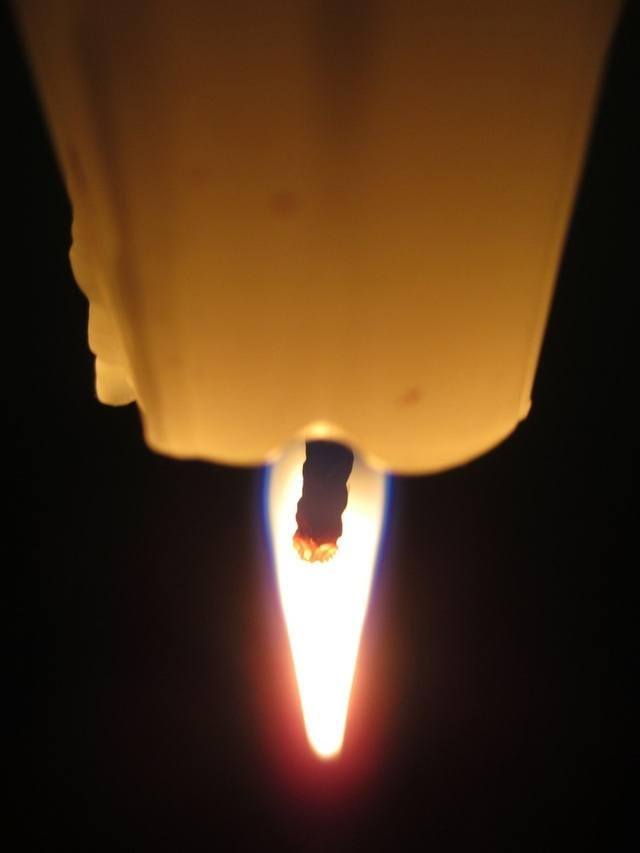


What is a cataract?
Shortening of the eyeball
Cornea has too little curvature
Double vision
Clouding of the lens
Which eye disease has blurred images and clouding of the lens?
Myopia
Pink Eye
Cataracts
Hypermyopia
Oil spill is a threat to organisms living in ..........................
Forests
Deserts
Seas
Plains
Relationship between a biotic community and an abiotic environment is called...............
Biodiversity
Ecosystem
Symbiosis
Survival
All the different kinds of animals living in their natural surroundings are called ..........of that place.
Fauna
Flora
Both of these
None of these
All the different kind of plants living in their natural surroundings are called the .........of that place
Flora
Fauna
Both of these
None of these
The book which keeps a record of all endangered animals, plants and other species is called..............
IUCN
Red Data Book
National park
Sanctuary
Large scale cutting of trees are called
Reforestation
Afforestation
Deforestation
None of these
Illegal hunting of wild animals for commercial uses is called
Pollution
Conservation
Poaching
None of these
A major threat of survival of organisms like variety of plants and animal which exist on earth is due to................
Desertification
Ecosystem
Deforestation
Both desertification and deforestation
The existence of a diverse variety of plants and animals living in a region is called_______.
Species
Flora
Fauna
Biodiversity
Loss of biodiversity is also because of _______ in human population.
Increase
Decrease
Spread
Fight
Group of organisms of the same species forms a ...............
Species
Population
Biosphere
Community
Which of the following activities cannot help in conservation?
Natural Disasters
Recycling of polythene
Recycling of metal
Recycling of cardboard
The natural environment of plant or animal species where it lives and reproduces is called
Ecosystem
Biosphere
Habitat
None of these
Clearing of forests and using that land for other purposes
Drought
Reforestation
Deforestation
Biologi
Does ground level water increases or decreases due to deforestation?
Increases
Decreases
What is desertification?
When desert turns into land
When soil turns into desert
When soil grows cactus
When desert collects a lot of sand
Areas where animals are protected from any disturbance to them and their habitat
National Park
Wildlife Sanctuary
Biosphere reserve
Zoo
Part of the earth in which living organisms exist or which supports life
Wildlife
Biodiversity
Biosphere
Biodegradable
Species of plants and animals which are found exclusively in a particular area
(a)
Group of population which are capable of interbreeding
(a)
Which substance give heat and light after combustion
Flame
Fuel
Combustion
None of these
Burning of charcoal in a closed room will produce
Carbon dioxide
Nitrogen dioxide
Carbon monoxide
Sulphur dioxide
The substances which have very low ignition temperature will
Catch fire easily
Will not catch fire
Catch fire after some time
None of these
Ignition temperature is
Lowest temperature at catch fire
Higher temperature at catch fire
Any temperature
1000 C
Combustion is a
Natural process
Chemical process
Physical process
None of these processes
When magnesium ribbon burnt it produce
Magnesium hydroxide
Magnesium oxide
Magnesium chloride
Magnesium sulphate
Which one of the following is fuel of our body?
Petrol
Diesel
Water
Food
Which one of the following is combustible?
Iron nail
Glass
Stone pieces
Paper
In the presence of water, ignition Temperature of paper is-
Decrease
Increase
Remain constant
None of these
Which of the following is inflammable Substances?
Petrol
Wood
Paper
Straw
Fire extinguisher-
Raise up temperature of fuel
Bring down the temperature of fuel
Cut off the supply of air
None of these
Which is the hottest part in the flame of the candle
Yellow
Wax part
Black
Blue
Combustion is a reaction in which a substance reacts with
hydrogen
Nitrogen
Oxygen
Chlorine
What is the main chemical component present in striking surface of a matchbox?
Potassium chlorate
Phosphorus
Potassium
Graphite
An ideal fuel is cheap, readily available, easily combustible and easy to transport. It has high calorific value. It does not produce gases or residues that pollute the environment. Based on the above statements which of the following is closest to being an ideal fuel?
Compressed Natural Gas (CNG)
Kerosene
Petrol
Coal
When a cracker is ignited, a sudden reaction takes place with the evolution of heat, light and sound. Identify the type of combustion?
Explosion
Random combustion
Rapid combustion
Spontaneous combustion
Which of the following is inflammable Substances?
Petrol
Wood
Paper
Straw
Which is the hottest part in the flame of the candle
Yellow
Wax part
Black
Blue
Good fuel is
Readily available
Cheap
Burn easily in air
All of these
Ideal fuel has ____________ calorific value
Zero
Low
Moderate
High
The least hot zone of a candle flame is
non-lumious zone
luminous
dark zone
blue zone at the base of the wick
Moderately hot zone in a candle flame
outer zone
middle zone
innermost zone
wax candle
which occurs rapidly and produce heat and light?
When water is poured over burning wood, the fire goes off. This is because
temperature of wood decreases
temperature of water goes up
molecules of water reacts with oxygen present in the flame
the flame vapourises
Fire is extinguished by
removing all combustible substance
cutting off supply of air
cooling the burning substance
all the these
CNG and LPG are the examples of
solid fuels
liquid fuels
gaseous fuels
they aren't fuels
what is combustion
chemical process
physical process
none of these
both a & b
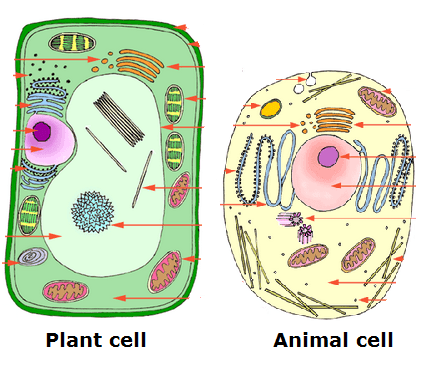
What distinguishes a plant cell from an animal cell? (How do you tell them apart) Hint: There's 3 ways (Check all 3)
Central Vacuole
Mitochondria
Cell Wall
Ribosomes
Chloroplasts
____ is credited with being the first scientist to observe cork cells.
Leewenhoek
Shleidon
Hooke
Bacteria is classified as a what?
Prokaryote
Eukaryote
Which organelle is the command center for eukaryotic (plant and animal) cells?
Cell wall
Nucleus
Mitochondria
Lysosome
What is the difference between a prokaryotic cell and a eukaryotic cell?
Prokaryotes do not have a nucleus or organelles, but a eukaryotic cell does
Eukaryotic cells do not have a nucleus or organelles, but prokaryotes do
Which of the following is a eukaryotic cell?
Bacteria
Plant
Plant and animal
Animal

How can you tell that this is a prokaryote or eukaryote cell?
It is a prokaryote because it doesn't have a nucleus
It is a eukaryotic cell because it has a cell wall and a nucleus
It is eukaryotic because it does not a nucleus nor a cell membrane
It is prokaryote because it has a cell wall
What is the purpose of the nucleus?
It is the command center, contains DNA, and cell division
It protects the cell
It stores energy for the cell
It gets rid of waste in the cell
The outermost layer of a plant cell and animal cell is...
Plant cell - cell membrane, animal cell - cell wall
Plant cell - cell wall; animal cell - cell membrane
Plant and animal cell - cell wall
Plant and animal cell - cell membrane
What does a plant cell have that an animal cell doesn't have?
Cell Membrane and Cell Wall
Cell Wall and Mitochondria
Cell Wall and Nucleus
Cell Wall and Chloroplast
What is the jelly-like substance that keeps the organelles floating?
Cell Membrane
Nucleus
ER
Cytoplasm
Which organelle holds the cell together? (found in both an animal and plant cell)
Cell Wall
Nucleus
Cell Membrane
Ribosome

The star which appears stationary from the earth
Pole star
Shooting Stars
Sirius
Alpha Centauri
It takes nearly how many solar days for the moon to make one complete revolution around the earth?
23.5
24.5
27.5
29.5
how many stars are there in the constellation 'THE GREAT BEAR' ?
5
6
7
8
Brightest star in the night sky
sun
Sirius
Pole star
Proxima centauri
Stars appears to move from
west to east
north to south
east to west
south to north
which of the following constellation is like a distorted form of letter W or M?
Big dipper
Small dipper
Cassiopeia
Sirius
............are the patterns of stars in the sky
Moon phases
Constellation
Solar system
Big dipper
The changes in the moon's appearance is called
Earth
Solar system
Moon phases
Constellation
The .............orbits the sun while the ......... orbit the eath.
Moon,earth
Earth,moon
Earth,sun
Moon,sun
........... is the closest planet to the sun.
Venus
Earth
Mercury
Mars
What causes earth to have day and night?
The moon moves between earth and the sun
Earth revolves around the sun
Stars move around earth in a pattern.
Earth rotates on its axis
Why do seasons occur?
Because of the distance earth is from the sun
Because earth tilts on its axis
Because earth rotates on its axis
Because earth is surrounded by air
In which direction does earth rotates?
North to south
South to north
West to east
East to west
The inner planets are
Jupiter Saturn Uranus Neptune
Earth Jupiter Mars Neptune
Mercury Neptune moon sun
Mercury Venus Earth Mars
The outer planets are
Jupiter Saturn Uranus Neptune
Pluto Neptune moon sun
Mercury Venus Earth Mars
Mercury Neptune moon sun
The differences between inner planets and Outer planets are
Inner planets are large and Rocky while outer planets are smaller and made mostly of gas
Inner planets are large and made of gas while outer planet are smaller and Rocky
Inner planet are small and Rocky while outer planets are large and made mostly of gas
Inner planets are small and made of gas while outer planets are large and rocks
The sun rises in the ..........., and set in the .............
North and South
South and north
West and East
East and West

What Moon phase is this?
Waxing gibbous
Waxing crescent
Waning gibbous
Waning crescent
The most suitable unit to measure the distance between stars and planets is ________
km
light year
light unit
trillion
Identify ursa minor


Identify hunter


Morning and evening star
mercury
mars
uranus
venus
Farthest planet from the sun
uranus
pluto
neptune
mercury
Most asteroids are found between the orbits of mars and Jupiter. This region is called (a)
On which day is the moon not visible to us?
Full moon
Crescent moon
New moon
Both Full moon and New moon
Which of the following is the largest planet?
Saturn
Jupiter
Earth
Mars
(a) comet appears after nearly 76 years.

What causes acid rain?
High concentrations of sulfuric or nitric acid from pollution
Fertilizer use
Pesticide use
CFCs

Acid rain can damage
Drinking water sources
Aquatic life
Architecture/buildings
All options are correct

The ozone layer is damaged by
CFCs
Increase in greenhouse gases
Increased global temperatures
Sulfuric and nitric acids
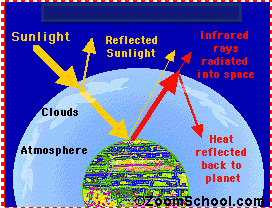
A rapid growth of algae could lead to:
A reduction of oxygen levels in the water
Water that can support more life
An increase in oxygen levels
There is nothing we can do to stop water pollution.
True
False
What can happen to fish when there is not enough oxygen in the water?
They can suffocate
They can't float
They can't see
Nothing. Fish don't need oxygen

